
Caregiver decision guide
How to Plan an Affordable Reykjavik Trip for Your Aging Parent
Learn how to plan a safe, comfortable, and budget-friendly trip to Reykjavik with an aging parent by leveraging senior discounts, small-group tours, and guesthouse stays in shoulder season.
The hard part of budget travel for seniors in Reykjavik is not only the price of Iceland. It is the number of small decisions that sit on the adult child: how far the walk is from the van to the viewpoint, whether the parent can eat before a morning tour, whether the museum discount is real or just vaguely advertised, whether renting a car will save money or quietly turn the caregiver into a weather monitor, navigator, parking attendant, and fatigue manager.
For two people, a realistic moderate-budget target is about $160–240 per day when several choices work together: use Reykjavik as the base, book kitchen-access lodging in May or September, use senior discounts deliberately, and choose one or two low-walking guided excursions instead of trying to self-drive everything. That range is not a guarantee. Lonely Planet has described Reykjavik budget travel around 15,000 ISK per person per day, while Your Friend in Reykjavik gives a budget range around $80–100 per person per day; prices and exchange rates still need checking before booking.[1][2]
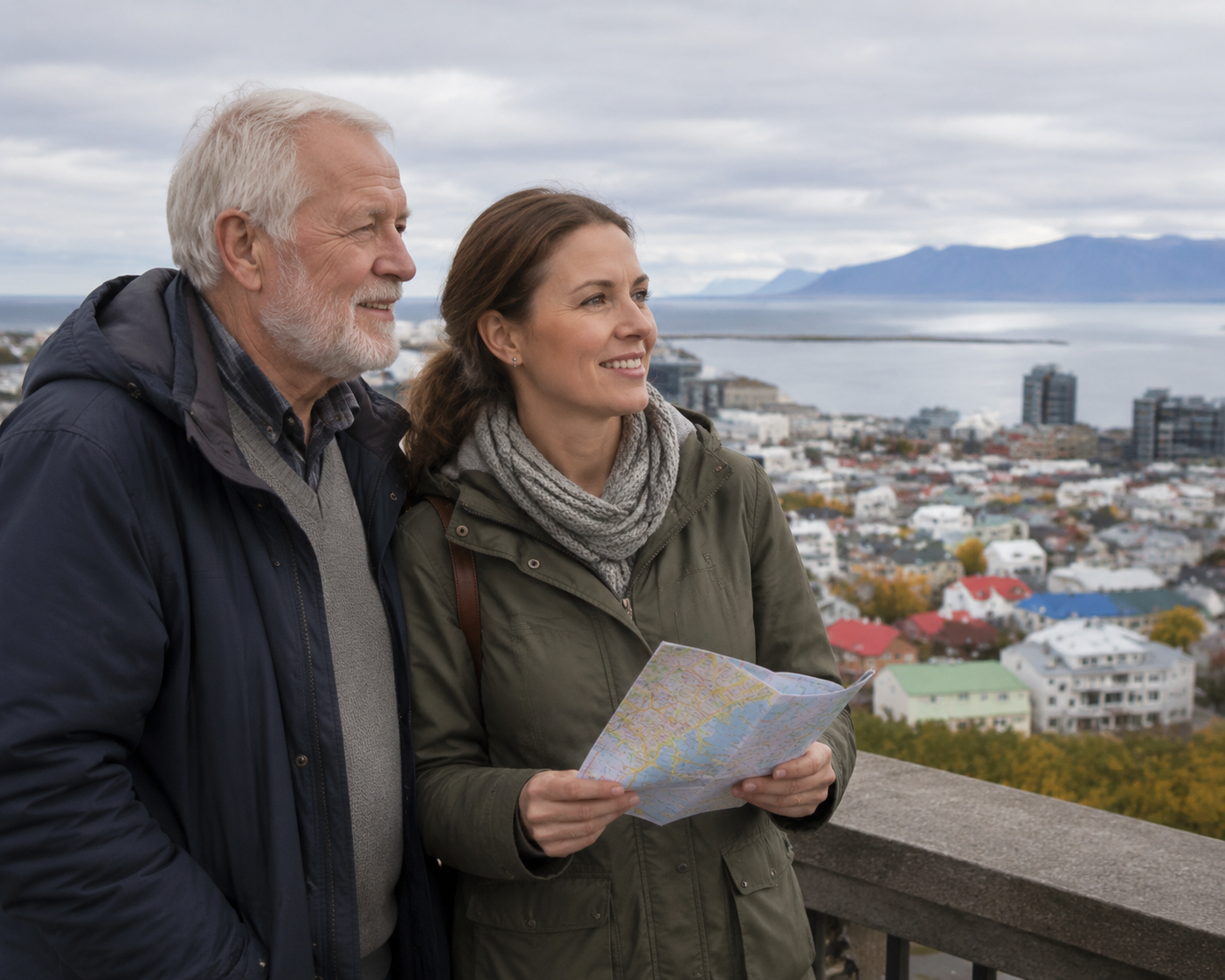
Start With the Daily Structure, Not the Flight Deal
A cheap flight can help, but it does not protect the trip from the expensive daily drift: breakfast out because no one bought groceries, a taxi because the day was planned too tightly, a restaurant dinner because the parent is too tired to wait for a table, a museum visit paid at full price because no one asked about the 67+ rate.
The more useful planning unit is a day that already has friction removed. For a parent-and-adult-child pair, that usually means breakfast at the guesthouse, one main outing, a pool or museum as the flexible second activity, and a simple meal that does not require another reservation. Reykjavik is especially workable for this because some of its most senior-friendly pleasures are ordinary city things: warm public pools, compact museums, short scenic drives from the city, and day tours that return to the same bed at night.
| Budget lever | What it changes for the caregiver | How it affects cost |
|---|---|---|
| Kitchen-access guesthouse | Breakfast can happen before the parent is dressed for the day; tired evenings do not require another restaurant decision. | Reduces dependence on three restaurant meals a day. |
| 67+ discounts | The parent can still choose museums and pools without every small outing feeling expensive. | Cuts or removes entry costs at specific city-run and national venues. |
| Small-group guided tour | Someone else handles driving, weather routing, parking, and timing. | Can be competitive with self-drive for two once rental, fuel, insurance, and stress are counted. |
| May or September timing | Long daylight gives more room to move slowly without planning in the dark. | Shoulder-season lodging demand is lower than summer peak. |
The Guided Tour Decision Is Really a Caregiver Workload Decision
The usual budget instinct is to ask, “Is it cheaper to rent a car?” With an aging parent, that is too narrow. The better question is: “What am I buying myself out of?” In Iceland, self-drive means pricing the car, fuel, insurance, weather risk, parking, navigation, and the mental work of deciding whether a stop is still worth it if the wind picks up or the parent’s knee is not cooperating.
A Golden Circle day is the clearest example. It is one of the classic Reykjavik-based excursions because it can deliver dramatic scenery without requiring a multi-day road trip. The version that works best for an older parent is not the most packed itinerary. It is the one that states pick-up location, vehicle size, stop sequence, expected walking, restroom access, and whether the main views are close to parking.

Senior-oriented Iceland tour pages and small-group tour marketplaces commonly emphasize nature routes, limited walking options, and guided day-trip formats from Reykjavik, including Golden Circle-style itineraries.[5][6] That does not make every tour suitable. It only means the right questions can be asked before booking: How long is the longest walk? Are paths paved, gravel, steep, or stepped? Can someone remain near the vehicle at a stop? Is the group small enough that boarding and restroom breaks are not a production?
The cost comparison should include what the adult child would otherwise absorb. If a guided Golden Circle tour is around $70–90 per person, two seats may look expensive at first glance.[2] But a self-drive day is not just the rental quote. It adds fuel, insurance choices, possible parking, weather judgment, and the quiet pressure of making every turn and every timing call while also watching the parent’s energy. For some travelers, driving will still be the right choice. For many caregiver-led trips, paying for one well-chosen guided day buys predictability.
This is also where commercial “senior travel” language needs skepticism. A tour being marketed to older adults is not enough. Road Scholar’s Iceland collection is useful as a comparison point because it shows one established model for educational, senior-oriented group travel, but an independent traveler still has to compare pace, group size, inclusions, and walking demands before assuming it fits their parent.[7]
What to Ask Before Booking a Reykjavik Day Tour
- What is the longest continuous walk, and what is the surface?
- How close does the vehicle park to the main viewpoint?
- Is hotel or nearby pick-up included, or is there a bus stop meeting point?
- How many people are usually in the vehicle?
- Are restroom and meal stops scheduled, or are they handled casually?
- What happens if weather changes the route?
Use the 67+ Discounts as a Plan, Not a Nice Surprise
Reykjavik has several unusually practical age-based savings for travelers 67 and older. These are not the kind of senior discounts that save a token amount on something no one wanted to do anyway. They apply to exactly the activities that help an older parent feel like a traveler while giving the caregiver flexible, weather-proof options.
As of July 2026, the Reykjavik Culture Pass 67+ is the first one to check. The city lists the pass at 2,550 ISK for people aged 67 and older, valid for a full year at all Reykjavik city museums.[3] For a short trip, the value depends on how many participating museums you actually plan to visit. For a caregiver, though, the pass has another value: it makes it easier to choose a calm indoor activity without redoing the budget every time the weather turns or the parent needs a gentler day.
Iceland’s official public-service information also lists free entry for people aged 67 and older to Reykjavik swimming pools and 50% discounts at several national cultural institutions, including the National Museum of Iceland, the Culture House, and the National Gallery of Iceland.[4] Smaller or private venues may have different rules, so this is not a blanket promise across every attraction in the city. It is still enough to shape the itinerary.
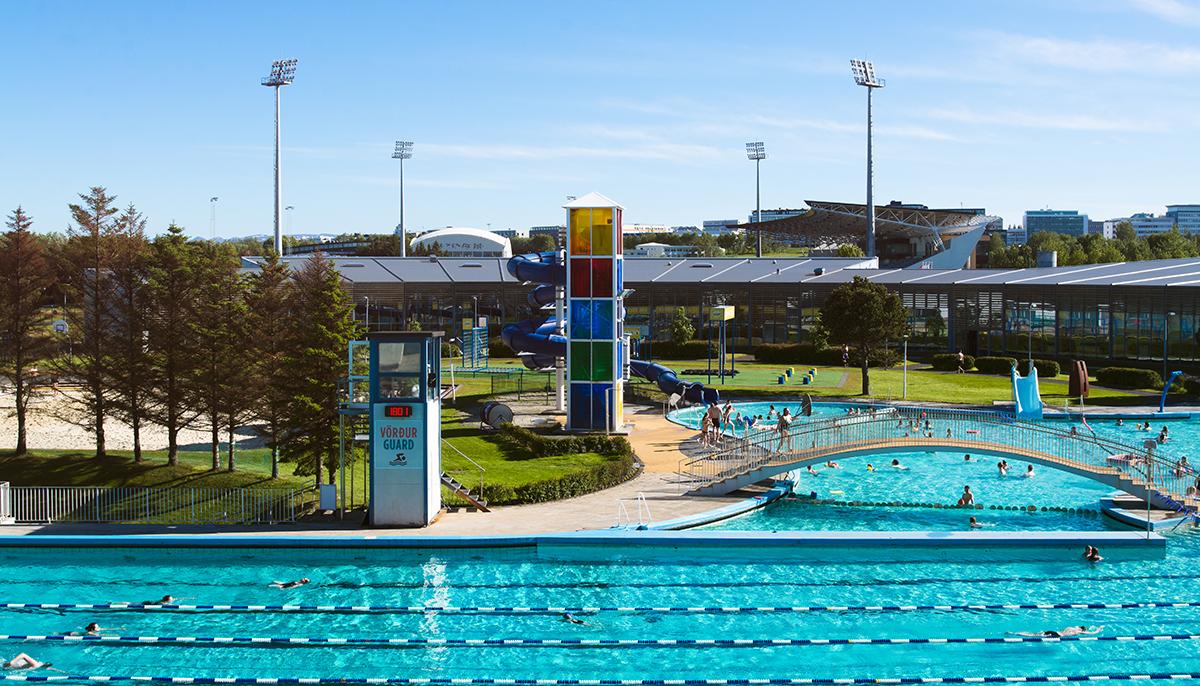
The public pool discount matters because a thermal pool can be the rare travel activity that is restorative rather than depleting. It does require practical checking: bring photo ID showing date of birth, verify the policy at the counter, and look at the pool layout before promising anything to a parent who has trouble with stairs, slippery surfaces, or communal changing rooms. The savings are real only if the activity is comfortable enough to use.
| Senior saving | What the source says | How to use it |
|---|---|---|
| Reykjavik Culture Pass 67+ | 2,550 ISK, valid for a full year at all city museums. | Buy if the parent will visit enough participating city museums to justify it, or if flexible indoor options are a priority. |
| Public thermal pools | Free entry for people aged 67+ is listed in official senior discount information. | Use as a low-cost rest-day activity; carry ID and verify at the specific pool. |
| National museums and galleries | 50% discounts are listed for venues such as the National Museum, Culture House, and National Gallery. | Ask at the desk before paying; do not assume every private museum participates. |
Kitchen Access Is Comfort, Not Just Frugality
Guesthouses with shared bathrooms and kitchen access are not the glamorous version of Iceland. They are, however, often the version that keeps the trip from becoming a string of expensive, tiring decisions. A practical planning range is roughly $85–130 per night for this style of lodging, often with breakfast, though individual prices vary by date and availability.[2]
For an older parent, breakfast access is not a minor perk. It means medication can be taken with food before leaving. It means no one has to stand in a cafe line before the day has even started. It means a slow morning is not automatically an expensive morning. A kitchen also gives the adult child a fallback dinner: soup, bread, yogurt, fruit, sandwiches, tea. Not memorable cuisine, maybe, but sometimes the kindest meal is the one that appears before everyone is too tired.
Supermarket shopping at Bónus or a similar grocery store is where the food budget changes. Your Friend in Reykjavik estimates that using supermarkets instead of restaurants can cut food costs by 60–70%.[2] The useful part is not squeezing every pleasure out of the trip. It is choosing which meals deserve restaurant money. A caregiver-led budget can still include a nice lunch or dinner; it just should not depend on restaurant meals three times a day.
- Before booking, confirm the kitchen is guest-accessible, not only staff-use.
- Check whether breakfast is included or only available for an added fee.
- Look for a nearby grocery store or bus connection before accepting a cheaper room farther out.
- Read recent reviews for stairs, bathroom distance, noise, and heating.
- If a shared bathroom is unrealistic for the parent, spend more on the room and save elsewhere.
Why May or September Usually Makes the Budget Easier
Shoulder season is not magic, but it gives the plan more room. May and September still offer long daylight, roughly 14–18 hours, while winter days can be much shorter at about 4–5 hours.[2] For an aging parent, daylight is not only scenic. It makes it easier to move slowly, come back early, rest, and still have time for a pool or museum later.
The lodging pressure is also different. Available occupancy data puts shoulder-season hotel occupancy around 51–62%, compared with an 86% summer peak. Lower occupancy does not automatically mean cheap rooms, but it improves the odds of finding a workable guesthouse without paying peak-summer rates.
The trade-off is weather. May and September can still be windy, wet, and changeable, and the brochure version of Iceland rarely mentions how much a cold sideways rain can change an older person’s willingness to walk from a bus stop. This is why the museum pass, pool access, and a kitchen matter together. They are not separate hacks; they are the backup system.
A Practical Four-Day Cost Logic
A caregiver-friendly Reykjavik trip does not need to cover all of Iceland. In fact, trying to make the trip “worth it” by adding too much is one of the easiest ways to make it expensive and exhausting. A four-day base plan can be enough if the days are built around one main demand at a time.
| Day | Main plan | Budget logic | Caregiver logic |
|---|---|---|---|
| Arrival day | Check in, buy groceries, short walk or early pool if energy allows. | Avoids an immediate restaurant-heavy start. | Lets the parent settle before the first full outing. |
| City museum and pool day | Use the Culture Pass 67+ or museum discounts, then choose a thermal pool if practical. | Entry costs are reduced or removed for 67+ activities. | Indoor options and warm water make this the flexible weather day. |
| Golden Circle or similar guided day | Book a small-group tour with clear walking information. | Two tour seats may compete well with self-drive once car costs and risk are included. | The caregiver hands off navigation, timing, and parking. |
| Slow Reykjavik day | Choose one museum, harbor walk, cafe, or pool; keep dinner simple. | Prevents the last day from becoming a spending catch-up. | Leaves space for fatigue, weather, or a favorite repeat activity. |
This structure is where the $160–240 daily target becomes plausible rather than decorative. Lodging is controlled by the guesthouse choice. Food is controlled by breakfast and groceries. Activities are controlled by 67+ discounts. The one expensive day is the guided excursion, and it is expensive for a reason: it removes the driving and decision load from the person already carrying the trip.
What Not to Over-Optimize
It is easy to lose hours comparing restaurants, dramatic winter itineraries, northern lights add-ons, rental-car bundles, and ring-road fantasies. Most of that does not solve the actual problem. With an aging parent, the trip succeeds when the daily plan has fewer weak points: food before outings, short walks when possible, warm indoor backups, clear transportation, and enough rest that the parent still feels like a traveler rather than someone being managed.
That does not mean stripping away pleasure. It means choosing the pleasures that do not require the adult child to gamble with everyone’s energy. A warm pool can be more valuable than a famous restaurant. A guided viewpoint stop close to the parking area can be better than a cheaper self-drive day that leaves the caregiver tense. A guesthouse kitchen can be the difference between a calm evening and one more negotiation about where to eat.
The Manageable Reykjavik Formula
Choose Reykjavik as the base. Travel in May or September if the parent can handle changeable weather. Book a guesthouse with real kitchen access. Use the Reykjavik Culture Pass 67+, free 67+ public pool access, and 50% museum discounts where they apply. Reserve one or two guided day tours only after confirming walking distance, vehicle size, pick-up details, and restroom stops. Carry photo ID for age-based discounts, and verify current prices before departure.
That is the version of affordable Reykjavik that matters most for a caregiver: not the cheapest possible Iceland trip, but a trip where the money, walking, weather, meals, and decisions are contained enough for both people to enjoy being there.
References
- Reykjavik on a budget, Lonely Planet
- 8 Tips for Traveling Iceland on a Budget, Your Friend in Reykjavik
- Culture Pass 67+, Reykjavik City
- Special benefits and discounts for older people, island.is
- Senior-friendly Iceland adventure tours for older travellers, Nordic Visitor
- Tours for Seniors in Iceland, Guide to Iceland
- Iceland, Road Scholar
Questions to bring to a clinician or OT
This is not medical, legal, or a family's final decision — only a framework. Bring these questions to a clinician, occupational therapist, or your local Area Agency on Aging.
Find Local HelpRelated reading
Noticed something outdated or inaccurate on this page? Flag a correction. We review every report against CDC, NIA, and AARP HomeFit guidance before updating a page.