
Caregiver decision guide
Personal Hygiene Assistance for Seniors: A Caregiver's Guide
A comprehensive, task-specific guide for family caregivers on how to assist aging parents or spouses with personal hygiene — covering why hygiene declines, step-by-step techniques for bathing, grooming, oral care, skin care, and incontinence, and how to manage resistance while preserving dignity and independence.
Helping an aging parent or spouse with personal hygiene is one of the most intimate tasks a family caregiver will ever take on. It crosses boundaries that have been in place for decades, reverses the direction of care in a relationship, and touches the senior's sense of identity and dignity in ways that few other caregiving tasks do. Many caregivers find themselves unprepared — not because they lack love or commitment, but because no one told them how to do this well.
This guide is organized around a single principle: understanding comes before technique. A caregiver who can identify why hygiene is declining — whether the root cause is physical limitation, fear of falling, cognitive change, depression, or loss of autonomy — will be far more effective than one who applies the same approach to every situation. The right technique for a senior with mild arthritis is different from the right approach for someone with mid-stage dementia. The right response to resistance driven by shame is different from resistance driven by confusion.
What follows covers the full spectrum of personal hygiene assistance: bathing and showering, grooming, oral care, skin care, and incontinence hygiene. Each section explains the health stakes, the practical technique, and the adaptive tools that can help. The guide closes with a quick-reference checklist designed for daily use.
Why Hygiene Declines in Older Adults
When an older adult stops bathing regularly, lets their hair go unwashed, or wears the same clothing for days, the instinctive caregiver reaction is often frustration or worry. But hygiene decline in older adults almost always signals something real — a physical barrier, a cognitive change, an emotional struggle, or some combination of all three. Treating it as laziness or indifference will make every subsequent conversation harder.
Physical Causes
- Mobility limitations — arthritis, stroke, joint replacement, or general deconditioning can make stepping into a tub, raising arms to wash hair, or gripping a washcloth genuinely painful or impossible.
- Fear of falling — research has found that some older adults begin restricting bathing in anticipation of future disability, even before any significant disability has occurred. Wet floors and smooth tub surfaces are real hazards, and that fear is rational.
- Medication side effects — dizziness, fatigue, dry mouth, and confusion are common side effects of medications frequently prescribed to older adults, and each can make hygiene tasks more difficult or dangerous.
- Pain — chronic pain from musculoskeletal conditions can make the physical demands of bathing and grooming exhausting rather than routine.
Cognitive Causes
Dementia-related hygiene decline is distinct from decline in cognitively intact seniors and requires a different caregiver response. A person with dementia may genuinely believe they already bathed when they have not. They may experience depth perception problems that make stepping into water frightening. They may not perceive any need to bathe. Memory loss, impaired sequencing ability, and altered perception all contribute — and none of these respond to reasoning or reminders.
Emotional Causes
- Depression — a previously fastidious person who stops caring for their appearance may be experiencing clinical depression, not simply declining motivation. This is worth ruling out early, particularly when the change is sudden.
- Loss of autonomy — many older adults resist hygiene assistance not because of the task itself but because of the feeling of being directed or managed. Resistance often signals a need for control, not a refusal of care.
- Diminished senses — age-related decline in smell and touch means many seniors genuinely cannot perceive their own body odor or recognize that their skin feels unclean. They are not in denial; they simply do not have the sensory feedback that would prompt action.
- Incontinence shame — seniors managing incontinence may avoid situations — including bathing — that draw attention to the issue, or may withdraw from hygiene routines out of a broader sense of shame about their body.
Signs Your Aging Parent or Spouse Needs Hygiene Help
Observable indicators of hygiene decline are often easier for family members to notice than the senior themselves — particularly when diminished senses are a factor. Knowing what to look for helps caregivers act early, before decline becomes entrenched or health consequences emerge.
- Wearing the same clothing for multiple days without washing
- Noticeable body odor or unwashed hair
- Bad breath that persists despite apparent oral care
- Skin rashes, redness, or irritation — particularly in skin folds
- Long, dirty, or ragged nails
- Increased frequency of urinary tract infections or fungal infections
- Visible soiling or staining on clothing or bedding
Pay attention to whether the decline is gradual or sudden. Gradual decline over weeks or months often reflects slowly worsening physical limitations or a progressive condition. Sudden onset — a person who was managing independently and abruptly stops — can signal a medical event such as a stroke, a new medication side effect, a urinary tract infection causing acute confusion, or the onset of depression. Sudden hygiene decline warrants a conversation with the senior's physician.
Starting the Hygiene Conversation
Raising the topic of hygiene assistance with an older adult requires care. For many seniors, accepting help with personal care feels like a confirmation of decline — a loss of the independence that has defined their adult life. The way the conversation is framed often determines whether it leads to cooperation or entrenched resistance.
Communication Principles for Cognitively Intact Seniors
- Use 'I' statements rather than 'you' statements. 'I've been worried about the bathroom floor being slippery' lands differently than 'You're not bathing enough.'
- Offer choices rather than directives. 'Would you like to shower before or after breakfast?' preserves a sense of control. 'You need to shower now' removes it.
- Focus on safety, not hygiene failure. Framing assistance as a safety measure — rather than a response to a hygiene problem — is less threatening to dignity.
- Involve the senior's physician as a trusted third-party authority. Many older adults who resist a family member's suggestion will respond differently when the same recommendation comes from their doctor.
- Acknowledge the difficulty directly. 'I know this is not easy, and I want us to figure it out together' is more effective than pretending the situation is straightforward.
Communication Principles for Seniors with Dementia
Reasoning and explanation are less effective when cognitive impairment is present. Arguing that the person needs to bathe — or explaining why — rarely works and often escalates distress. Instead, the focus shifts to environment, timing, and approach. Keep the tone calm and unhurried. Avoid announcing bath time far in advance, which can increase anticipatory anxiety. Prepare everything before introducing the idea. Offer simple binary choices. Use positive framing — 'It's time for your spa treatment' rather than 'You need to bathe.'
Bathing and Showering Assistance
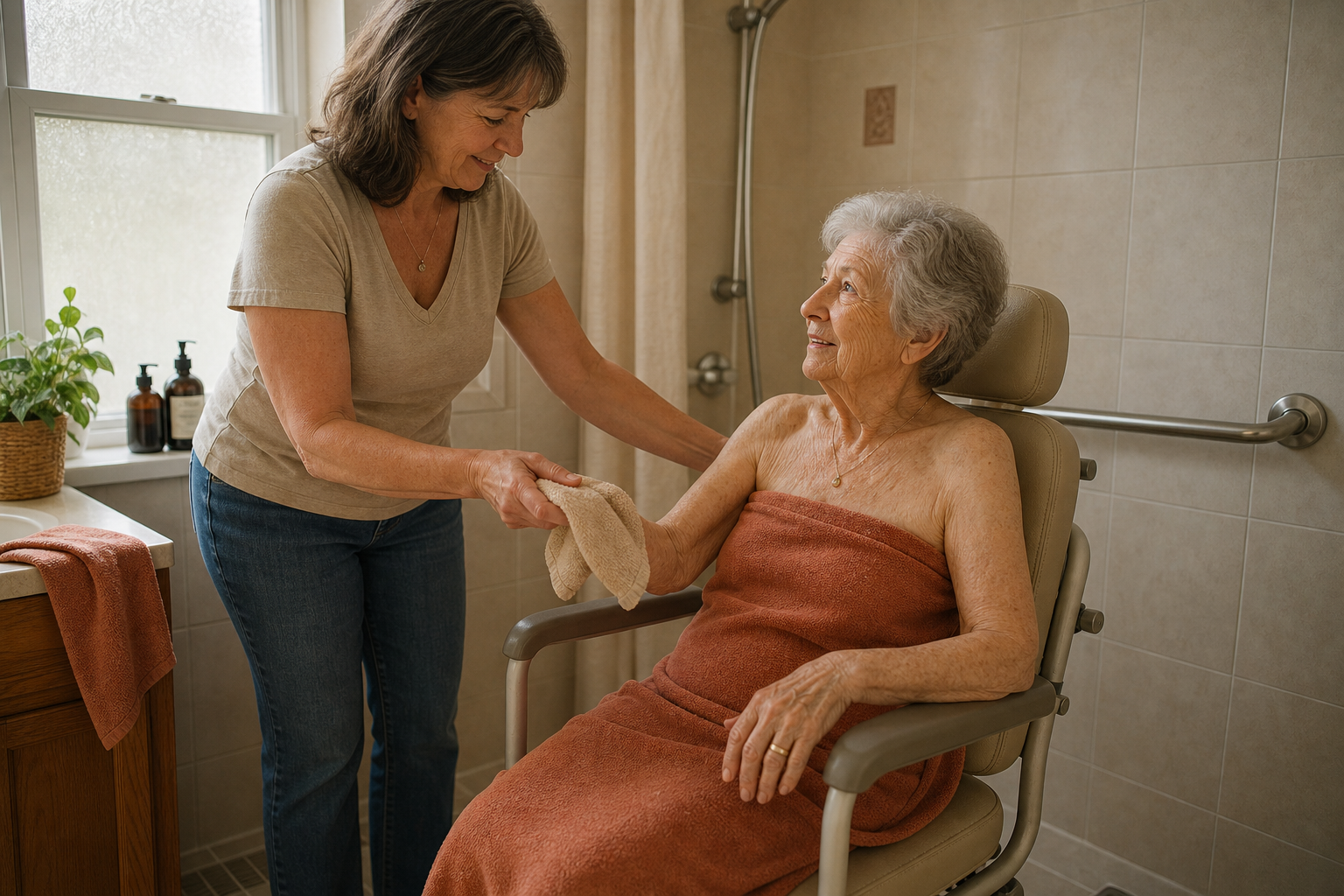
Before addressing technique, it helps to reset expectations about bathing frequency. Daily showering is not a clinical necessity for most older adults who are not generating heavy sweat. The National Institute on Aging recommends two to three full baths or showers per week for older adults, with sponge baths on other days. Over-bathing can strip aging skin of its natural oils, increasing dryness and irritation risk. This is not a compromise — it is the appropriate standard.
Before the Bath: Preparation
- Gather all supplies before announcing bath time — soap, shampoo, washcloths, towels, clean clothing, and any adaptive equipment. Leaving the senior alone mid-bath to retrieve something is a fall and distress risk.
- Pre-warm the bathroom if possible. Cold air is uncomfortable and can cause muscle tension.
- Set water temperature before the senior enters — warm, not hot. The American Academy of Dermatology recommends limiting baths to 10 minutes and using warm rather than hot water to protect aging skin.
- Place a non-slip mat inside and outside the shower or tub. Confirm that any grab bars are secure before the senior puts weight on them.
- If the senior uses a shower chair or bath seat, position it and confirm stability before transfer.
During the Bath: Technique
The guiding principle throughout bathing assistance is to support rather than replace the senior's participation. The less people do for themselves, the less they are able to do over time. Where the senior can manage a step — even partially — they should be allowed and encouraged to do so.
- Begin with hands or feet. These areas are less threatening and can help the person relax before moving to the face, torso, or head — a particularly important strategy for seniors with dementia.
- Narrate each step before doing it: 'I'm going to wash your arm now.' This reduces the startle response and preserves a sense of agency.
- Allow the senior to hold the washcloth or shampoo bottle, even if they are not actively using it. This preserves a sense of participation.
- Work systematically — face, neck, arms, torso, legs, feet, then perineal area last.
- Keep uncovered areas warm with a towel while washing other areas.
- Move calmly and without rushing. Hurried movements increase anxiety and resistance, particularly in dementia.
Bath Alternatives
On days between full baths, sponge baths cover the essential hygiene needs — face, underarms, genitals, and any areas prone to moisture or irritation. No-rinse body wash products, applied with warm wet towels, are a practical alternative when a full bath is not possible or is being refused. Research cited by the Alzheimer's Association indicates these products are equally effective to standard bathing for most hygiene purposes. They are particularly useful for dementia-related refusal, as they eliminate the shower or tub environment that triggers fear.
Grooming Assistance: Hair, Shaving, Nails, and More
Grooming is not a luxury — it is closely tied to identity and self-perception. Maintaining familiar grooming routines supports emotional well-being and helps preserve a sense of self for seniors experiencing physical or cognitive decline.
Hair Care
- No-rinse shampoos allow hair washing without a full shower or tub — useful for seniors with limited mobility or those recovering from surgery.
- Hair wash shields (inflatable or foam trays that channel water away from the face and ears) make in-bed or seated hair washing manageable.
- Mobile hairdressing services can come to the home for seniors who cannot access a salon — a practical option that also provides social engagement.
Shaving
Electric razors are the safest shaving option for older adults. Cuts from traditional razors heal more slowly in aging skin, and even minor nicks can become problematic for seniors on blood thinners. Electric razors reduce this risk substantially while still allowing the senior to participate in shaving if they are able.
Nail and Foot Care
Cardboard nail files are gentler and less intimidating than metal clippers for routine nail maintenance. For foot care, soaking feet in warm water before trimming softens nails and reduces the force needed.
Makeup and Personal Grooming as Identity Support
For seniors who wore makeup regularly throughout their adult lives, continuing that routine — even in a simplified form — can be meaningful. Helping a parent or spouse maintain their familiar appearance supports dignity and continuity of self. This is worth the time it takes.
Oral Hygiene Assistance
Oral hygiene is one of the highest-stakes personal care tasks for older adults, and it is frequently underestimated. Poor oral hygiene in older adults — particularly those with swallowing difficulties — is clinically linked to aspiration pneumonia, a serious and potentially fatal lung infection caused by bacteria from the mouth entering the airway. It is also associated with systemic infections and difficulty eating, which compounds nutritional risk.
Toothbrushing Technique
- Position the senior with their head propped at 45 degrees or greater — this reduces aspiration risk if any water or toothpaste is accidentally swallowed.
- Use a soft-bristled toothbrush and a small amount of fluoride toothpaste.
- Brush all surfaces — outer, inner, and chewing surfaces of each tooth, plus the gumline.
- Brush the tongue gently to reduce bacterial load.
- If the senior can rinse and spit, have them do so. If swallowing is a concern, use a minimal amount of toothpaste and suction or wipe away residue.
Denture Care
- Before cleaning dentures over a sink, line the basin with a folded towel. Dentures are fragile and can crack or break on a hard surface if dropped — a common and expensive accident.
- Use a denture brush and denture cleaner, not regular toothpaste, which is too abrasive.
- Clean the gums, tongue, and palate with a soft cloth or soft toothbrush even when dentures are out.
- Store dentures in water or a denture solution overnight to prevent warping.
Dry Mouth
Dry mouth is common in older adults, particularly those on multiple medications. It accelerates tooth decay and makes oral hygiene more uncomfortable. Encourage frequent small sips of water, and ask the senior's dentist or physician about saliva substitutes or oral moisturizing gels if dry mouth is persistent.
Skin Care for Aging Skin
Aging skin is thinner, drier, and more prone to breakdown than younger skin. It heals more slowly, tears more easily, and is more vulnerable to pressure injuries and fungal infections. Caregiver technique during bathing and daily skin care directly affects skin integrity — and skin breakdown is a serious, sometimes life-threatening complication when left unmanaged.
Daily Skin Care Routine
- Pat skin dry after bathing — do not rub. Rubbing creates friction that can damage fragile aging skin.
- Apply fragrance-free moisturizer to damp skin immediately after bathing, while the skin can still absorb moisture. This is more effective than applying lotion to fully dry skin.
- Use moisturizing soaps or gentle cleansers rather than harsh soaps that strip natural oils.
- Inspect skin folds daily — under the breasts, in abdominal folds, in the groin area, and at the neck. These areas trap moisture and are particularly prone to fungal infections and early skin breakdown.
- Apply a small amount of cornstarch or powder under skin folds to reduce chafing and moisture accumulation.
What to Watch For
- Persistent redness, particularly over bony prominences (heels, sacrum, hips) — this can indicate early pressure injury development
- Rashes or skin breakdown in folds — often a sign of fungal infection requiring medical treatment
- Skin tears, bruising, or open areas that are not healing
- Swelling in the legs or feet, which can affect skin integrity and comfort during hygiene tasks
Incontinence Hygiene and Perineal Care
Perineal care — cleaning the genital and rectal area — is among the most sensitive aspects of personal hygiene assistance. Done correctly, it prevents two serious health consequences: urinary tract infections (UTIs) and skin breakdown. Done incorrectly or infrequently, it can cause both.
Core Technique
- Always wipe front to back — from the genitals toward the rectum, never in the reverse direction. This prevents fecal bacteria from entering the urethra, which is the primary mechanism of UTI development in older adults.
- Use a fresh wipe or cloth for each stroke — do not re-use the same surface.
- Dispose of used wipes immediately and wash hands before and after.
- For incontinent seniors: perform a quick wash and thorough drying at each incontinence episode to prevent skin maceration. Conduct a more thorough wash with soap and water each morning and evening.
- Dry the perineal area thoroughly — moisture left on skin accelerates breakdown.
Barrier Products
Moisture barrier creams or ointments applied to the perineal area after cleaning create a protective layer between the skin and urine or stool. These products are widely available and significantly reduce the risk of skin breakdown for incontinent seniors. Apply a thin layer after each thorough cleaning. Do not apply over existing skin breakdown without medical guidance.
Managing Resistance and Refusal
Resistance to hygiene assistance is common, and the single most important step a caregiver can take is to identify the root cause before choosing a response. The same behavior — a senior saying 'I don't need a bath' — can stem from five different causes, each requiring a different approach. Applying the wrong strategy not only fails; it often makes future attempts harder.
| Root Cause | Signs | Effective Responses |
|---|---|---|
| Fear of falling | Reluctance to enter tub or shower, gripping walls or furniture, verbal expressions of fear | Install grab bars and non-slip mats; use a shower chair; offer a handheld showerhead; reassure with specific safety measures in place |
| Loss of control or autonomy | Resistance increases when directed; more cooperative when offered choices | Offer binary choices ('Now or in 15 minutes?'); involve the senior in planning the routine; avoid commanding language |
| Dementia-related confusion | Belief they already bathed; fear of water or drain; inability to sequence steps | Reframe as a 'spa treatment'; narrate each step before doing it; use the 'watch-me' demonstration technique; offer no-rinse alternatives; move slowly and calmly |
| Sensory discomfort | Complaints about water temperature, bright lights, or noise | Adjust water temperature; dim lighting if overhead lights are harsh; reduce noise; warm the bathroom in advance |
| Depression | Sudden withdrawal from all self-care; flat affect; loss of interest in appearance | Involve the senior's physician as a first step; do not attempt to motivate through persuasion alone; depression requires clinical attention |
Adaptive Tools and Assistive Equipment
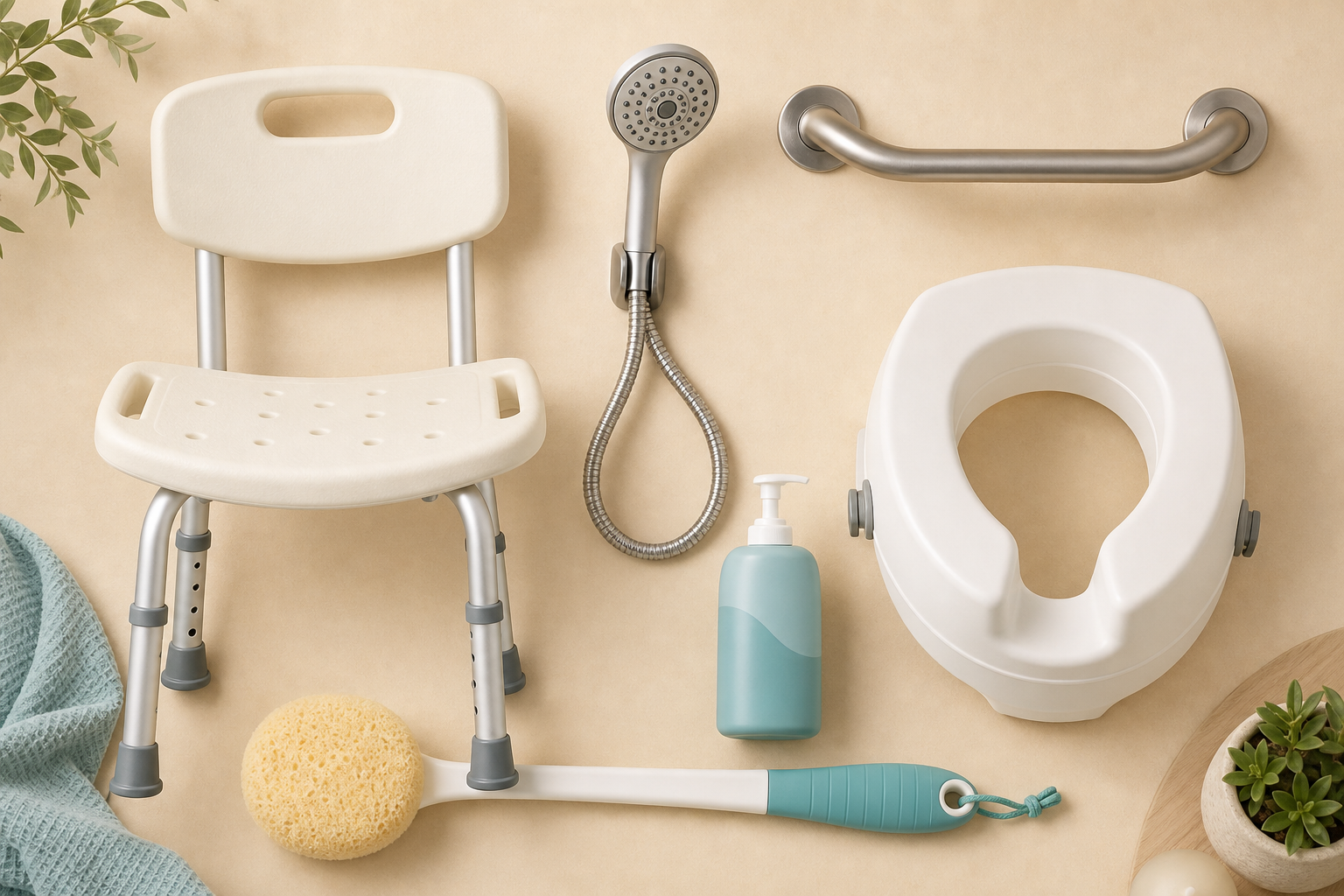
Adaptive equipment is not a last resort — it is often the most effective single intervention available to a family caregiver. The right tools can reduce fall risk, decrease caregiver physical strain, and restore a degree of safe independence to the senior simultaneously. The key is selecting equipment appropriate to the senior's specific limitations.
Shower Chairs and Bath Seats
A shower chair or bath seat allows a senior who cannot stand safely for the duration of a shower to bathe seated. When evaluating options, look for non-slip rubber feet, adjustable height legs, a sturdy frame rated for the senior's weight, and a backrest if the senior has limited trunk stability. Some designs include a cutout seat for easier perineal cleaning. Confirm that the chair fits the shower or tub dimensions before purchasing.
Grab Bars
Grab bar placement is critical — a bar installed in the wrong location provides no functional benefit and can create a false sense of security. Bars should be positioned where weight can be safely supported: near the tub or shower entrance to assist with stepping in and out, at standing height inside the shower for balance support, and beside the toilet for sit-to-stand transfers. Permanent wall-mounted bars are significantly more reliable than suction-cup temporary bars, which can fail under load. If wall installation is not possible in the short term, consult an occupational therapist about interim options.
Handheld Showerheads
A handheld showerhead on a flexible hose is one of the most versatile and cost-effective bathing aids available. It allows a seated senior to direct water where needed, reduces the need for the caregiver to reach across the senior, and makes rinsing hair and perineal areas much easier. Most attach to standard shower connections without tools.
No-Rinse Shampoos and Body Washes
No-rinse products are applied, worked into the skin or hair, and then wiped or toweled off without water rinsing. They are particularly useful for seniors who are resistant to full bathing, bed-bound, or recovering from a procedure. Research supports their effectiveness for routine hygiene maintenance between full baths.
Raised Toilet Seats and Bidet Seats
A raised toilet seat reduces the depth of the sit-to-stand transfer, making toileting safer and more independent for seniors with hip or knee limitations. Bidet seats or attachments can substantially reduce the physical demands of perineal hygiene for both the senior and the caregiver — particularly for incontinent seniors who require frequent cleaning.
Caregiver Physical Safety During Hygiene Assistance
Caregiver injury is an underemphasized consequence of hygiene assistance. Bending over a tub edge, supporting a senior's weight during transfers, and reaching across a shower chair all place significant stress on the caregiver's back, shoulders, and knees. A caregiver who injures themselves cannot provide care — which makes physical safety a prerequisite for sustainable caregiving, not an afterthought.
Body Mechanics Principles
- Keep your back straight and bend at the knees when reaching low. Avoid bending at the waist over a tub edge.
- Pivot rather than twist. When assisting with transfers, move your feet to reposition rather than rotating your spine.
- Get as close as possible to the senior before any transfer or weight-bearing assist. Reaching at arm's length multiplies the mechanical load on your back.
- Let adaptive equipment do the work wherever possible. A transfer belt, grab bar, or shower chair reduces the manual load on the caregiver substantially.
- If you feel pain during a transfer, stop. Pain is a signal that the technique or the equipment is wrong — not a signal to push through.
When to Seek Professional Support
Family caregivers are not expected to manage every hygiene challenge alone, and recognizing when to bring in professional support is a sign of good judgment — not failure. There are specific circumstances where professional involvement is not just helpful but necessary.
- Consult an occupational therapist (OT) when the bathing setup is not working, when the senior has had a recent fall or functional change, or when the caregiver is experiencing physical strain. An OT can assess the environment, recommend specific equipment, and teach safe technique tailored to the individual.
- Consider a home health aide for hands-on hygiene assistance when the physical demands exceed what the family caregiver can safely provide, or when the senior responds better to a professional caregiver than to a family member — which is common and not a reflection on the family relationship.
- Explore adult day programs for seniors with dementia who resist hygiene assistance at home. The change of environment and unfamiliar staff sometimes reduces resistance more effectively than any home-based strategy.
- Contact the senior's physician when hygiene decline is sudden, when there are signs of depression, when skin breakdown is present, or when UTIs are recurring. These are medical issues, not purely caregiving issues.
- Consult a podiatrist for nail and foot care if the senior is diabetic, has circulation problems, or has any foot wound or infection.
- Consult a dentist if oral hygiene has been difficult to maintain for an extended period, or if there are signs of dental pain, mouth sores, or difficulty eating.
Quick-Reference Hygiene Checklist
Use this checklist as an ongoing reference for daily caregiving. Tasks are organized by frequency — daily, weekly, and monthly — to support consistent hygiene without over-burdening the routine.
| Frequency | Task | Notes |
|---|---|---|
| Daily | Oral hygiene — toothbrushing or denture cleaning | Head at 45° or greater; towel-line sink for dentures |
| Daily | Face washing | Gentle cleanser; pat dry |
| Daily | Perineal care (if incontinent) | Front to back; clean and dry at each episode; thorough wash morning and evening |
| Daily | Skin fold inspection | Under breasts, abdomen, groin, neck; check for redness or moisture |
| Daily | Moisturizer application | Fragrance-free; apply to damp skin after washing |
| Daily | Hand washing | Before meals, after toileting |
| 2–3x per week | Full bath or shower | Warm water; 10-minute limit; pat dry; moisturize immediately after |
| 2–3x per week | Hair washing | No-rinse shampoo on off-bath days if needed |
| Remaining days | Sponge bath or no-rinse body wash | Focus on face, underarms, genitals, and any problem areas |
| Weekly | Nail inspection | Check for length, cleanliness, discoloration, or injury |
| Weekly | Clothing and bedding review | Check for soiling; launder as needed |
| Weekly | Equipment check | Confirm grab bars are secure; non-slip mats are clean and gripping; shower chair is stable |
| Monthly | Foot care review | Inspect for sores, calluses, nail problems; podiatrist referral for diabetics |
| Monthly | Dental appointment reminder | Maintain regular dental visits; flag any oral pain or difficulty eating |
| Monthly | Bathing setup reassessment | Review for increased fear, caregiver strain, or functional changes that may require new equipment or technique |
Questions to bring to a clinician or OT
This is not medical, legal, or a family's final decision — only a framework. Bring these questions to a clinician, occupational therapist, or your local Area Agency on Aging.
Find Local HelpRelated reading
Noticed something outdated or inaccurate on this page? Flag a correction. We review every report against CDC, NIA, and AARP HomeFit guidance before updating a page.