
Caregiver decision guide
How to Keep Older Adults Safe During an Air Quality Advisory
When outdoor air is hazardous due to wildfire smoke or high ozone, indoor air can be surprisingly worse. This room-by-room guide equips caregivers with practical steps to protect older adults using HEPA filters, HVAC adjustments, humidity control, and pollution-source management.
The awkward part of an air quality health advisory for older adults is that the safest-sounding instruction—stay indoors—is only the beginning. A closed house can still hold fine particles from wildfire smoke, gases from cooking, dust stirred up by cleaning, damp air from a basement, and an HVAC filter that looks useful but is not doing the job. Americans spend about 90% of their time indoors, and the EPA notes that indoor pollutant concentrations can be 2 to 5 times higher than outdoor levels.[1]
That matters more for an older parent with COPD, asthma, heart disease, or diabetes because aging lungs and chronic conditions leave less margin when fine particles or ozone irritate the airways and cardiovascular system. AirNow identifies older adults as a group at greater risk from air pollution, in part because they are more likely to have heart or lung disease.[2] During smoke events, the question is not whether the house is sealed perfectly. Most homes are not. The practical question is which rooms need to become cleaner breathing zones, which habits need to pause, and which equipment needs to be maintained before the next alert.
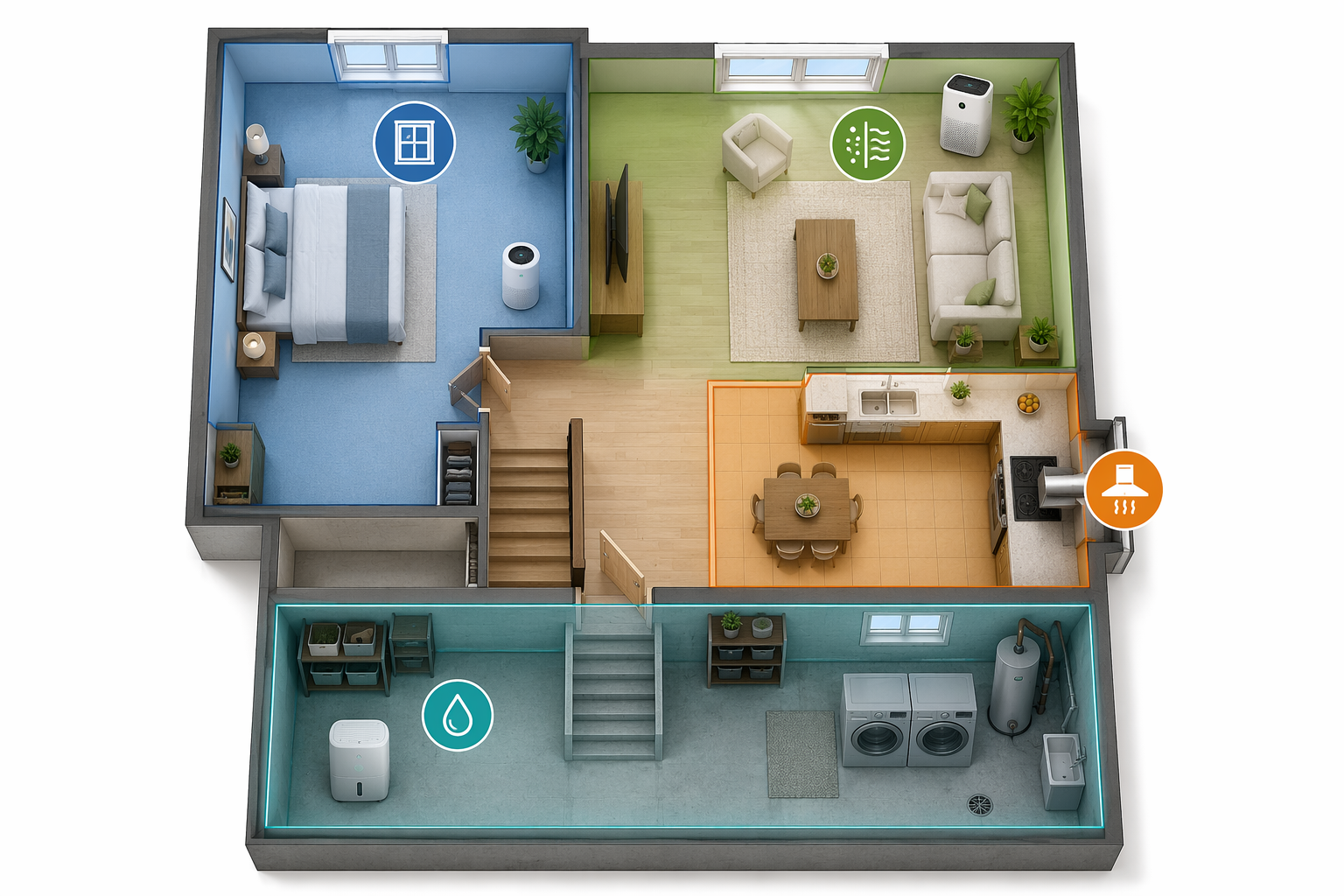
Start With A Room Plan, Not The Whole House
Trying to make every room equally clean during a smoke day is a fast way to spend money and still miss the room where your parent actually sleeps. A caregiver routine works better when it gives each part of the home a job.
| Area | Main job during an advisory | What to check first |
|---|---|---|
| Bedroom or sleeping area | Create the cleanest breathing zone for the longest rest period | Portable HEPA purifier sizing, closed windows, door position, bedding dust, medication access |
| Living area | Maintain filtration where the older adult spends waking hours | HVAC fan setting, filter type, purifier placement, open doors, return vents |
| Kitchen | Avoid adding indoor pollution while outdoor air is poor | Gas stove use, frying, range hood operation, candles, ventilation choices |
| Basement or lower level | Keep damp air and mold risk from spreading upstairs | Humidity, leaks, dehumidifier, stored items, musty odors |
This is also where crisis actions and routine maintenance need to separate. During an active advisory, close windows, reduce strenuous activity, run the clean-air room, and avoid indoor pollution sources. Between advisories, replace filters, check humidity, confirm HVAC limits, and make the air-quality routine part of the broader aging-in-place home care plan. The same home can need both a smoke-day protocol and ordinary weekly habits; mixing the two is how caregivers end up vacuuming at the worst possible time or postponing the one filter change that would have helped.
Make The Bedroom The Clean-Air Priority
The bedroom usually deserves the first purifier, the best seal against outdoor air, and the least clutter around vents. Sleep is a long exposure period, and many older adults spend extra daytime hours in bed during illness, fatigue, heat, or smoke. If one room can be made reliably cleaner, make it the sleeping space.
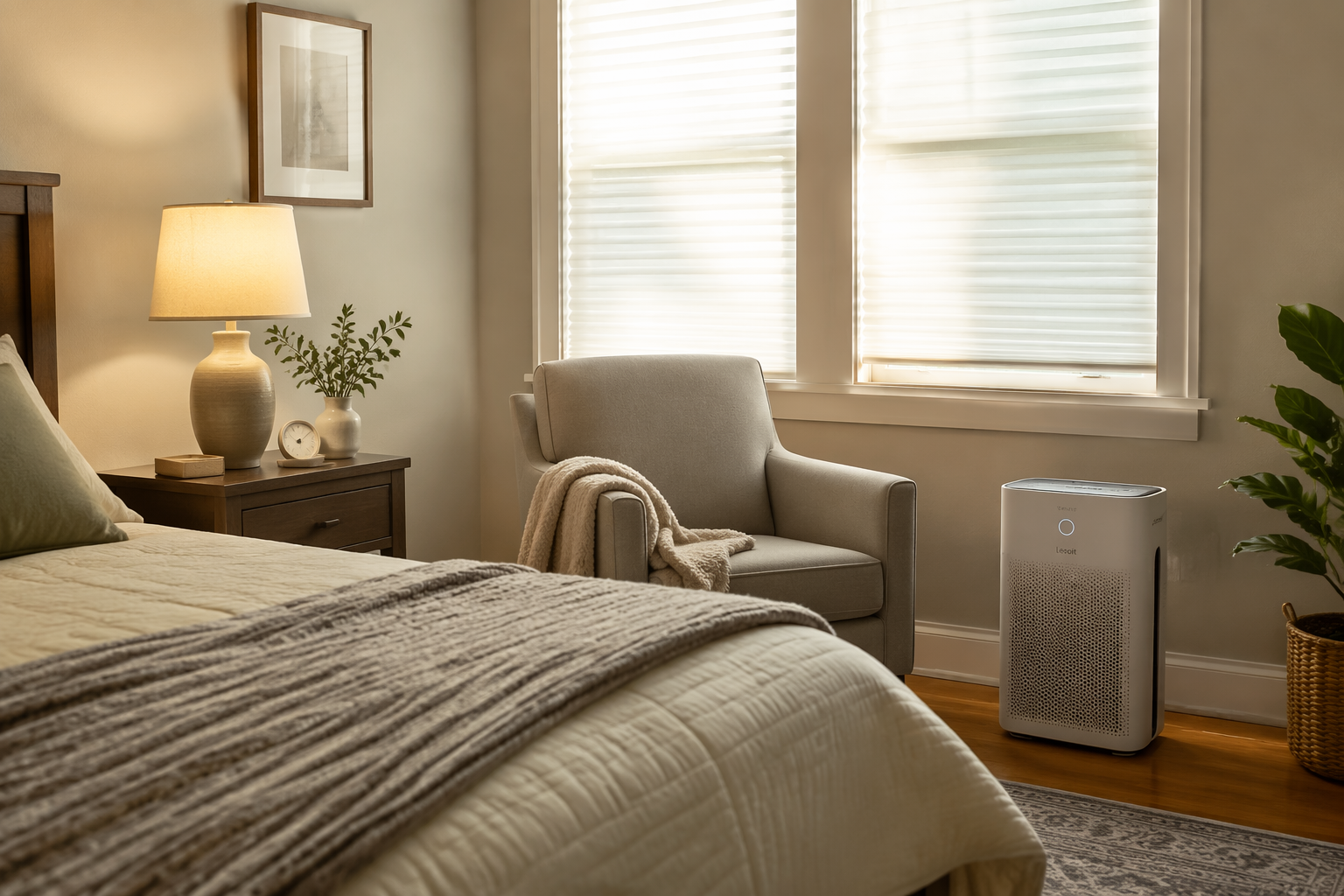
A portable air purifier should use true HEPA filtration for particles and activated carbon when odors or gases are also a concern. The important label is not the largest-room claim on the box; it is the CADR rating matched to the actual room size. The American Lung Association notes that portable HEPA air purifiers with activated carbon can reduce indoor PM2.5 by up to 85% in a single room when correctly sized to the space.[3] An undersized unit may run loudly all day and still fail to clean the room fast enough. An oversized unit may be useful, but it can add cost, noise, and energy use that make a parent less willing to keep it on.
For the bedroom, measure the room or estimate square footage before buying anything. Then look for a purifier with a CADR appropriate for that size. Place it where air can move freely through the intake and outlet, not wedged behind a nightstand, under curtains, or against a wall if the manufacturer requires clearance. During an advisory, run it continuously on the highest tolerable setting before bedtime, then lower it only if noise interferes with sleep.
The room also needs a few low-tech choices. Keep windows closed during the advisory. If the hallway or rest of the home is smokier, keep the bedroom door mostly closed and reduce unnecessary traffic in and out. Put inhalers, oxygen supplies if prescribed, water, phone, glasses, and a written symptom plan within reach so the parent is not walking through the house repeatedly during the worst hours. For condition-specific medication and symptom planning during smoke events, pair this room setup with a caregiver wildfire smoke preparedness checklist for chronic conditions.
Do not add scents to make the room feel fresher. Air fresheners, incense, candles, and essential-oil diffusers can make a room smell cared for while adding particles or volatile compounds. On advisory days, clean air should smell like almost nothing.
Use Living Areas For Steady Filtration, Not Occasional Rescue
The living room, den, or kitchen-adjacent sitting area is where an older adult may spend most waking hours. If the bedroom is the clean-air anchor, the main living area is the maintenance zone: filtration has to keep running, doors and windows have to stay consistent, and the household has to stop reintroducing particles faster than the equipment can remove them.
If the home has central HVAC, the system can help circulate filtered air, but only within its design limits. CDC wildfire smoke guidance says high-efficiency HVAC filters rated MERV 13 or higher can capture fine particles, including PM2.5 from wildfire smoke, when the system can safely use that filter density; filters should be changed every 90 days.[4] That last condition is not a footnote. A denser filter can restrict airflow in a system not built for it, which can strain equipment or reduce performance.
Before installing a MERV 13 or higher filter, check the furnace or air-handler manual, the manufacturer’s specifications, or an HVAC professional’s guidance. If the system is not rated for MERV 13, do not force the upgrade because the air outside looks frightening. A lower-rated filter that the system can actually move air through may be safer for the equipment than a high-rated filter that chokes airflow. If the system is compatible, write the replacement date on the filter frame and put the next change on the caregiver calendar.
During an advisory, many systems can be set to recirculate indoor air rather than pull in outdoor air, but settings vary. Look for fresh-air intake controls, energy-recovery ventilator settings, or smart thermostat ventilation options. If you are not sure what the system is doing, this is worth asking an HVAC technician before the next smoke season, not while your parent is coughing in July.
For homes without central air, or for rooms the HVAC does not serve well, a second portable purifier in the living area may be more useful than trying to buy one large unit for the whole house. Evaluate it as a safety product: room size, CADR, filter availability, noise at realistic speeds, controls your parent can use, and replacement-filter cost. A general home safety product evaluation process is more helpful here than brand loyalty.
What To Do In The Living Area During The Advisory
- Run the purifier continuously in the room where the older adult is actually sitting.
- Keep exterior windows and doors closed except for necessary entry and exit.
- Use central HVAC fan or recirculation settings only if you understand the system’s ventilation behavior.
- Postpone vacuuming unless the vacuum has a HEPA filter and cleaning cannot wait.
- Avoid aerosol sprays, scented products, and indoor smoke from candles or fireplaces.
The reason for this steadiness is not theoretical. A 2025 JAMA Network Open study by Vega and colleagues found that respiratory hospitalizations increased significantly when smoke PM2.5 exceeded 25 micrograms per cubic meter among older adults, though the study data run only through 2016 and do not include more recent high-fire years.[5] NBER research estimated about 10,070 premature deaths and 191,541 excess emergency department visits annually among Americans over 65 from wildfire smoke exposure.[6] Those numbers do not tell a caregiver which purifier to buy, but they do justify treating the living room setup as health protection rather than housekeeping.
Treat The Kitchen As A Pollution-Source Control Zone
The kitchen is where good caregiving habits can accidentally make the air worse. A hot meal may feel like the right response to being stuck inside, but frying, broiling, and high-heat cooking can add particles. Gas stoves can add combustion byproducts, especially without ventilation. CDC guidance for wildfire smoke events recommends avoiding activities that worsen indoor air quality, including frying food, vacuuming, burning candles, and using gas stoves without ventilation.[4]
On poor-air days, simplify meals. Use a microwave, electric pressure cooker, slow cooker, toaster oven used carefully, or no-cook foods if those fit the parent’s diet. If the parent needs a specific meal pattern for diabetes, heart disease, or medication timing, plan a few low-emission options before the alert season starts. This is not the day to test a smoky cast-iron sear or run the self-cleaning oven.
Ventilation is tricky during outdoor smoke or high ozone. A range hood that exhausts outdoors can remove cooking pollutants, but it may also pull replacement air into the home through leaks. A recirculating hood may capture grease but may not remove fine particles or gases well, depending on its filter. The practical answer is to reduce the pollution source first, use the best available kitchen ventilation when cooking cannot be avoided, and keep the older adult out of the kitchen during and shortly after cooking.
- Choose lower-heat cooking methods during the advisory.
- Skip frying, charring, and long oven cycles when outdoor air is already hazardous.
- Do not use candles, incense, fireplaces, or scented products to make the house feel fresher.
- If a gas stove must be used, use available ventilation and move the older adult away from the kitchen.
- Clean after the air improves rather than stirring up dust during the worst hours.
Check The Basement Before Damp Air Becomes A Second Problem
Basements and lower-level rooms often get ignored during smoke events because the visible problem is outside. But damp air, musty storage, and mold risk can keep irritating the airways after the smoke clears. EPA indoor-air guidance places ideal indoor humidity around 30% to 50%; higher humidity can promote mold and dust mites, while very dry air can irritate mucous membranes that help defend the respiratory tract.[1]
Use a simple hygrometer rather than guessing from how the room feels. If humidity is above range, run a dehumidifier sized for the space, empty it reliably or set up safe drainage, and keep basement doors managed so damp air is not feeding the rest of the home. If humidity is too low, especially during heating season, avoid overcorrecting with a humidifier that is hard to clean; dirty humidifiers can create their own air-quality problem.
A basement check should include leaks, wet cardboard, musty fabric, blocked vents, and stored items pressed against exterior walls. If the older adult sleeps in a lower-level bedroom, treat it like the main clean-air room: purifier sizing, humidity, bedding, and door management all matter. If there is visible mold, persistent dampness, or a sewage or flood history, bring in qualified help rather than asking a family caregiver to solve a building problem with a plug-in device.
Build A Maintenance Routine That Survives The Next Alert
The most useful indoor-air plan is boring enough to repeat. It should live with the medication list, emergency contacts, thermostat instructions, and seasonal home tasks. If more than one person helps, write down which room is the clean-air room, which purifier belongs there, what filter it uses, and who orders replacements.
| Task | During an advisory | Between advisories |
|---|---|---|
| Bedroom purifier | Run continuously in the sleeping area | Vacuum exterior only if needed, replace filters on schedule, confirm CADR still matches room use |
| HVAC filter | Use only filters the system can handle; keep windows closed | Check manufacturer limits, replace at least every 90 days when using high-efficiency filters |
| Kitchen habits | Avoid frying, candles, gas-stove use without ventilation, and smoky cooking | Stock low-emission meal options that fit medical diets |
| Humidity | Keep damp rooms from spreading musty air | Track humidity and maintain 30% to 50% when possible |
| Care coordination | Watch symptoms and follow the clinician’s action plan | Add air-quality tasks to the shared care calendar |
Budget belongs in the routine too. Portable purifiers, replacement HEPA filters, activated-carbon filters, HVAC service, MERV-rated filters, hygrometers, and dehumidifiers can add up. If the home also needs larger aging-in-place changes, compare the indoor-air expenses with other safety priorities using a practical home modification cost and savings framework. The cheapest plan is not always the safest, but the most expensive equipment is not automatically the most usable in a real parent’s home.
A simple monthly check can prevent most scramble purchases: inspect purifier filters, confirm HVAC filter dates, look at humidity readings, make sure windows still close well, and ask whether the parent is actually willing to run the purifier at the chosen setting. If the answer is no because of noise, lights, controls, or air blowing across a chair, fix that before the next alert.
When To Bring In Clinical Or Home Professionals
Call the parent’s clinician or follow the existing action plan if breathing symptoms worsen, rescue medications are needed more often than directed, chest pain appears, confusion increases, oxygen levels fall below the clinician’s threshold, or the caregiver’s instinct says the situation has moved beyond home management. This is especially important for older adults with COPD, asthma, heart disease, or diabetes.
Bring in an HVAC professional before installing denser filters if the system rating is unclear, airflow already feels weak, rooms are unevenly heated or cooled, or the home uses added ventilation equipment you do not understand. Bring in building or remediation help for persistent moisture, visible mold, repeated basement leaks, or odors that return after cleaning.
During an advisory, the goal is not to purify an entire house equally. The workable standard is cleaner breathing zones, fewer indoor pollution sources, humidity kept in range, filters that fit the equipment, and a routine the household will still follow when the sky looks normal again.
References
- Indoor Air Quality, EPA.
- Older Adults and Air Quality, AirNow.gov.
- Air Quality Index, American Lung Association.
- Wildfire Smoke Safety, CDC.
- Health impacts of wildfire-related air pollution in a warming climate: Time-series analysis of respiratory hospitalizations during California wildfires from 2006 to 2016, JAMA Network Open, 2025.
- Health Consequences of Wildfire Smoke, NBER.
Questions to bring to a clinician or OT
This is not medical, legal, or a family's final decision — only a framework. Bring these questions to a clinician, occupational therapist, or your local Area Agency on Aging.
Find Local HelpRelated reading
Noticed something outdated or inaccurate on this page? Flag a correction. We review every report against CDC, NIA, and AARP HomeFit guidance before updating a page.