
Caregiver decision guide
Caregiver Burnout Signs and Symptoms: A Self-Assessment Checklist to Know When You Need a Break
A scannable, three-domain checklist (physical, emotional, behavioral) and a 15-question scored self-assessment to help family caregivers recognize burnout before it becomes a health crisis — with tiered action steps for each risk level.

Why Caregivers Miss Their Own Warning Signs
You tell yourself you are fine. The fatigue is just part of the routine. The irritability is because you did not sleep well. The dread you feel before walking through the door each morning is just stress — everyone has stress. This internal monologue is so common among family caregivers that researchers and clinicians have given it a name: the normalization of caregiver distress.
The numbers bear this out. A 2025 survey of 1,029 caregivers conducted by A Place for Mom found that 78% of caregivers report experiencing feelings of burnout, with many describing it as a weekly or even daily occurrence. The same survey found that 87% experience stress or anxiety, 84% experience overwhelm, and half report trouble sleeping at least once per week. Yet despite these staggering figures, only about 1 in 4 caregivers felt completely prepared when their caregiving role began.
Why do caregivers miss the signs? Three forces work together to keep burnout hidden. The first is guilt: admitting you need a break can feel like admitting you do not love the person you are caring for. The second is the gradual slope of decline — burnout does not hit like a fever; it creeps in over months, making each new symptom feel like the new normal. The third is the sheer lack of time for self-reflection. When you spend an average of 22.8 hours per week on caregiving — and nearly 30% of caregivers spend more than 30 hours — there is simply no space to check in with yourself.
This is why a structured self-assessment matters more than a general awareness of symptoms. A checklist forces you to stop, look at specific behaviors and feelings, and compare them against a standard — not against what you have learned to tolerate. The sections below walk through the three domains where burnout shows up, followed by a 15-question scored assessment that gives you a concrete answer to the question: Is this serious enough to take a break?
If you are new to caregiving and still building your understanding of the role, you may also find the Getting Started as a Family Caregiver guide helpful for establishing a sustainable foundation from the beginning.
Physical Warning Signs: What Your Body Is Telling You
The body is often the first domain to signal that something is wrong, but caregivers are skilled at overriding physical cues. You push through the headache, skip the annual physical, and tell yourself the exhaustion is just part of the job. These physical symptoms, however, are not random — they are the direct result of prolonged activation of your stress response system without adequate recovery time.
Use the following checklist to assess your physical state. Place a check next to any symptom you have experienced regularly (at least once per week) over the past month.
- Chronic fatigue that does not improve after a full night of sleep or a weekend of rest
- Getting sick more often than usual — colds, infections, or flare-ups of chronic conditions that take longer to resolve
- Significant changes in appetite, either eating much less than usual or stress-eating more than usual
- Skipping your own medical appointments — annual physicals, dental cleanings, prescription refills, or follow-up visits
- Frequent headaches, back pain, or muscle tension that has no clear physical cause
- Sleep disruption — difficulty falling asleep, waking frequently during the night, or waking up feeling unrefreshed
If you checked two or more of these items, your body is signaling that the demands of caregiving are outpacing your physical recovery capacity. This is not a sign of weakness — it is a physiological response to sustained stress. The CDC's Morbidity and Mortality Weekly Report (MMWR) found that nearly two-thirds of unpaid caregivers reported adverse mental or behavioral health symptoms, compared with roughly one-third of adults who were not caregivers. Physical symptoms are often the first visible layer of this broader health impact.
Emotional Warning Signs: When the Weight Becomes Too Heavy
Emotional symptoms of burnout are harder to catch because they feel like character flaws rather than stress responses. You might think you have become a less patient person, or that you no longer have the emotional capacity to care. In reality, these feelings are predictable consequences of emotional depletion — your empathy reserves have been drawn down without being replenished.
Check any of the following emotional experiences that have become more frequent or intense over the past month:
- Irritability or short temper with the person you are caring for, followed by guilt
- A persistent sense of hopelessness — feeling like nothing you do makes a difference
- Dread about caregiving tasks that used to feel manageable or even meaningful
- Resentment toward the care recipient, other family members, or friends who do not help enough
- Loss of meaning or purpose in the caregiving role — going through the motions without emotional connection
- Crying more easily than usual, or conversely, feeling emotionally flat and unable to cry at all
The emotional toll of caregiving is reflected in national data. According to Guardian Life data cited by the Caregiver Action Network, only 23% of caregivers report having good mental health, and 41% report low overall well-being — a rate 32% higher than non-caregivers. These figures suggest that emotional distress is not an individual failing but a systemic consequence of a role that society expects caregivers to handle alone.
Behavioral Warning Signs: Changes You Might Not Notice
Behavioral changes are often the last signs caregivers notice in themselves. Physical symptoms demand attention. Emotional symptoms create internal discomfort. But behavioral changes — the things you actually do differently — tend to happen gradually and feel like reasonable adaptations in the moment. You skip one social event, then another. You have an extra glass of wine to unwind. You start making small mistakes at work that you never used to make.
Review the following behavioral patterns and check any that apply to your recent experience:
- Withdrawing from friends, family, or activities you used to enjoy — canceling plans or not returning calls
- Calling in sick to work more often, or using personal leave days just to keep up with caregiving demands
- Using alcohol, food, social media, or screen time as a primary way to decompress after caregiving tasks
- Making unusual mistakes — forgetting appointments, misplacing important items, missing medication doses
- Having thoughts about leaving the caregiving role entirely, even if you have no plan to act on them
Behavioral changes are particularly important to catch because they are the domain where burnout starts to affect the quality of care you provide. A caregiver who is making unusual mistakes or using substances to cope is not failing — they are running on empty. The behavioral domain is also where the Setting Caregiving Boundaries Without the Guilt guide can be particularly helpful, as boundary erosion is often the root cause of behavioral burnout signs.

The 15-Question Caregiver Burnout Self-Assessment
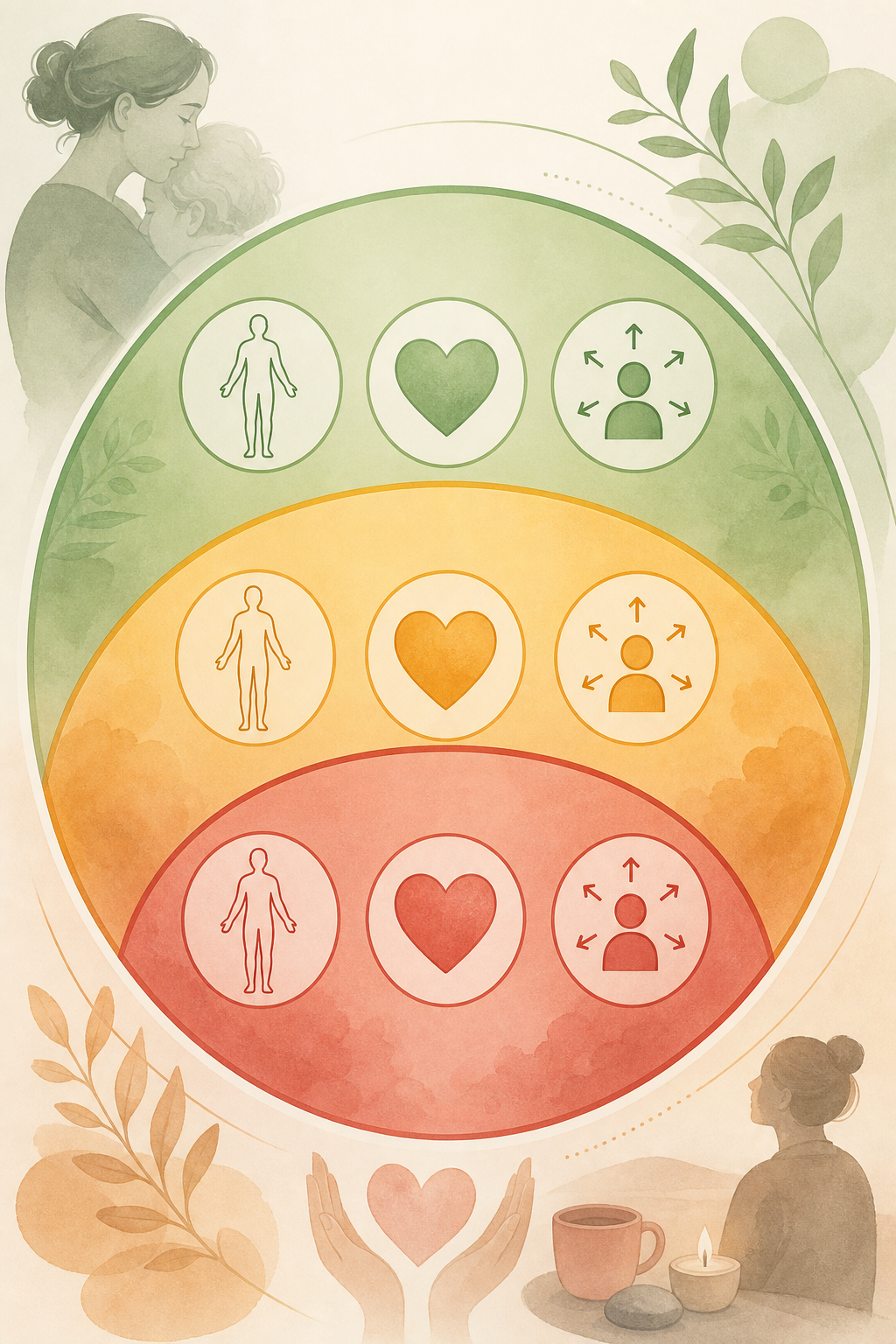
The checklists above help you identify individual symptoms. The following self-assessment gives you a single, actionable score. Answer each question based on how you have felt or behaved over the past two weeks. For each item, give yourself 1 point if the statement is true for you most of the time or frequently.
| Domain | # | Question | Score (0 or 1) |
|---|---|---|---|
| Physical | 1 | I feel exhausted even after sleeping 7–8 hours. | |
| Physical | 2 | I have been getting sick more often than usual. | |
| Physical | 3 | My appetite has changed significantly (eating too much or too little). | |
| Physical | 4 | I have skipped my own medical appointments in the past 3 months. | |
| Physical | 5 | I have frequent headaches, body aches, or tension with no clear cause. | |
| Emotional | 6 | I feel irritable or short-tempered with the person I care for. | |
| Emotional | 7 | I feel hopeless about the future of my caregiving situation. | |
| Emotional | 8 | I feel dread before starting caregiving tasks. | |
| Emotional | 9 | I feel resentful toward the person I care for or toward family members who do not help. | |
| Emotional | 10 | I feel emotionally numb or disconnected from the caregiving role. | |
| Behavioral | 11 | I have withdrawn from friends, hobbies, or social activities. | |
| Behavioral | 12 | I have used sick leave or personal days to keep up with caregiving. | |
| Behavioral | 13 | I use alcohol, food, or screens to cope with caregiving stress most days. | |
| Behavioral | 14 | I have made mistakes at work or at home that are unusual for me. | |
| Behavioral | 15 | I have thought about leaving the caregiving role entirely. |
Scoring Guide
| Total Score | Risk Level | What It Means |
|---|---|---|
| 0–5 | Early Warning | You are showing early signs of caregiver stress. Your coping resources are being taxed, but you have not yet reached burnout. This is the best time to make preventive changes. |
| 6–10 | Moderate Risk | You are experiencing significant burnout symptoms across multiple domains. Your health and well-being are being affected. Action is needed now to prevent escalation. |
| 11–15 | Take Action Now | You are in the burnout zone. Your physical health, emotional health, or quality of care may be compromised. Immediate steps — including professional support — are warranted. |
What to Do at Each Tier: Immediate Action Steps
Your score tells you where you are. The steps below tell you what to do next. These are not long-term recovery plans — they are immediate actions you can take this week to stop the downward spiral.
Early Warning (Score 0–5): Preventive Maintenance
At this level, your goal is to build protective habits before stress accumulates into burnout. The most effective preventive step is establishing clear boundaries around your time and energy. The Setting Caregiving Boundaries Without the Guilt guide provides specific scripts and strategies for saying no without the emotional fallout.
- Identify one caregiving task this week that you can delegate or reduce. Start small — a single grocery delivery or a 30-minute respite shift.
- Schedule one non-negotiable personal activity per week that is not related to caregiving or work.
- Re-establish a basic sleep routine: same bedtime, no screens 30 minutes before sleep, no caffeine after 2 PM.
- Reschedule any of your own medical appointments you have skipped.
Moderate Risk (Score 6–10): Active Intervention
At this level, preventive habits are no longer enough. You need to actively reduce your caregiving load and build external support. The most important step is exploring respite care options — even a few hours per week of reliable relief can interrupt the burnout cycle.
- Read the Respite Care Options for Family Caregivers guide to understand the types of respite available — in-home, adult day centers, short-term facility stays — and how to access them.
- Join a caregiver support group, either in person or online. Peer support has been shown to reduce isolation and provide practical strategies that individual research cannot.
- Have an honest conversation with your employer about your caregiving responsibilities. You may be eligible for unpaid leave under the Family and Medical Leave Act (FMLA) or flexible work arrangements.
- Schedule a check-in with your primary care provider to discuss your physical and emotional symptoms.
Take Action Now (Score 11–15): Immediate Support
A score in this range means you are in the burnout zone. Your health and the quality of care you provide are at risk. Do not try to handle this alone. The Caregiver Burnout: Warning Signs and How to Recover guide provides a broader recovery roadmap that goes beyond this checklist.
- Contact your primary care provider or a mental health professional this week. Be specific about your caregiving situation and your burnout symptoms.
- Arrange immediate respite care — even if it is only for a single day. You need a break now, not next month.
- Identify one family member, friend, or community organization that can take over a specific caregiving task within the next 48 hours.
- If you have had thoughts of harming yourself or the person you care for, call 988 (the Suicide and Crisis Lifeline) or go to your nearest emergency room.
Burnout vs. Depression: When to Seek Clinical Evaluation
One of the most important distinctions a caregiver can make is between burnout and clinical depression. They share many symptoms — fatigue, hopelessness, loss of interest in activities — but they are fundamentally different conditions that require different approaches.
Burnout is situational. It is directly tied to the demands of caregiving. When a burned-out caregiver gets a break — a week of respite, a reduction in care hours — the symptoms typically begin to lift. The emotional exhaustion is specific to the caregiving role; you may still find joy in other parts of your life.
Depression, by contrast, is not situational. It affects all areas of life — work, relationships, hobbies, self-care — regardless of what is happening with caregiving. A person with depression may not feel better even after a significant break. Depression also tends to include symptoms that are less common in burnout, such as persistent feelings of worthlessness, a complete loss of pleasure in activities you used to love (anhedonia), and thoughts of death or suicide.
| Feature | Caregiver Burnout | Clinical Depression |
|---|---|---|
| Primary cause | Situational — tied to caregiving demands | Not situational — affects all areas of life |
| Response to breaks | Symptoms improve with time away from caregiving | Symptoms persist even during breaks |
| Key emotions | Exhaustion, frustration, resentment | Pervasive sadness, worthlessness, emptiness |
| Loss of pleasure | Limited to caregiving tasks | Extends to hobbies, relationships, and activities once enjoyed |
| Thoughts of death | Rare; may include wishing for relief | More common; may include suicidal ideation |
If you are unsure which category fits your experience, err on the side of seeking professional evaluation. A primary care provider can administer a brief screening tool — such as the PHQ-9 — that helps distinguish between burnout and depression. This is especially important because the treatments differ: burnout responds to rest, boundary-setting, and reduced caregiving load, while depression may require therapy, medication, or both.
Questions to bring to a clinician or OT
This is not medical, legal, or a family's final decision — only a framework. Bring these questions to a clinician, occupational therapist, or your local Area Agency on Aging.
Find Local HelpRelated reading
Noticed something outdated or inaccurate on this page? Flag a correction. We review every report against CDC, NIA, and AARP HomeFit guidance before updating a page.