
Home Fall Prevention Checklist for Older Adults: A Room-by-Room Guide for Family Caregivers
A prioritized, room-by-room home safety checklist aligned with CDC STEADI, designed for adult children and family caregivers responding to a parent's fall or increasing fall risk — covering both environmental hazards and the personal risk factors (medications, vision, footwear, balance) that most checklists miss, organized into a three-tier action model so you can act immediately on the highest-impact items.
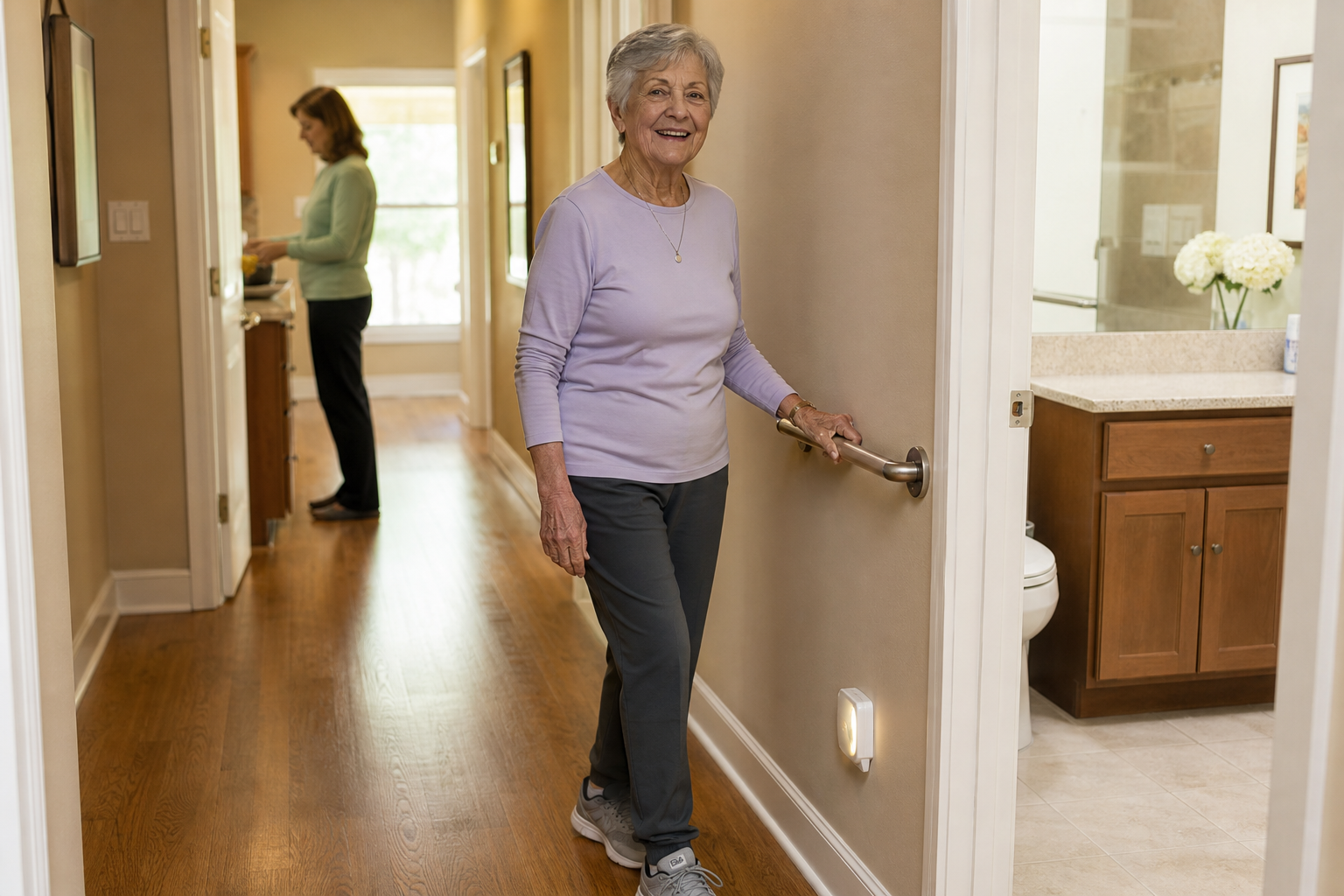
Why Home Falls Happen — and Why the Stakes Are High
If your parent recently fell — or you've watched them grab the counter to steady themselves — you're not overreacting by treating this as urgent. Falls are the leading cause of injury among older adults, and the numbers behind that fact are worth understanding before you pick up a single grab bar.
- 1 in 4 adults 65 and older falls each year, but fewer than half tell their doctor.
- Falling once doubles the risk of falling again — making the period immediately after a first fall the most critical window for intervention.
- Each year, falls send approximately 3 million older adults to emergency departments and cause around 41,000 deaths, according to CDC STEADI data — that's roughly 112 older adults every day.
- More than half of all falls happen at home, during ordinary activities like walking to the bathroom at night or reaching for something in the kitchen.
The bathroom is the highest-injury room in the house. The path from the bedroom to the bathroom — traveled at night, often in dim light, sometimes urgently — is the single highest-risk route in most homes. These aren't abstract statistics. They point directly to where your time and attention will have the most effect.
Falls are also rarely caused by a single factor. CDC research consistently shows that the more risk factors present — a loose rug, a medication that causes dizziness, poor lighting, worn-out footwear — the greater the chance of a fall. Removing even one or two of those factors meaningfully lowers risk. That's the purpose of this checklist.
How to Use This Checklist: The Three-Tier Action Model
Most home fall checklists are long, undifferentiated lists that treat every hazard as equally urgent. The result is paralysis: you read through 40 items, feel overwhelmed, and don't act on any of them. This checklist is built differently.
Every item in the room-by-room and personal risk sections is assigned to one of three tiers based on how quickly it can be addressed and what it requires. If you're reading this in the hours after a fall, go directly to Tier 1. If you're doing a systematic safety review, work through all three tiers in order.

| Tier | Timeframe | Cost | What it covers |
|---|---|---|---|
| Tier 1 | Fix today | No cost | The six highest-impact free actions — clutter removal, lighting, path clearing |
| Tier 2 | Fix this week | $10–$200 | Low-cost equipment: grab bars, non-slip mats, nightlights, raised toilet seat |
| Tier 3 | Plan with a professional | Varies | Structural modifications, OT home assessment, mobility aid fitting, medication review |
Room-by-Room Environmental Checklist
Work through each area of the home systematically. The bathroom and bedroom sections are the most detailed because they carry the highest fall risk. Use the tier labels to prioritize your actions as you go.
Entry and Exterior
- Tier 1 — Clear the path from the car or street to the front door of any objects, garden hoses, or seasonal items.
- Tier 1 — Ensure the entry is well lit; replace burned-out bulbs with bright, non-glare bulbs.
- Tier 2 — Install a handrail on any exterior steps if one is absent or unstable.
- Tier 2 — Add a non-slip mat at the entry threshold, especially if the surface gets wet in rain or snow.
- Tier 3 — If there are multiple exterior steps and your parent uses a walker or has significant mobility limitations, evaluate whether a ramp is warranted.
Floors, Hallways, and Living Areas
- Tier 1 — Remove or permanently secure all loose throw rugs throughout the home. Unsecured rugs are a consistent fall trigger; this is a free fix that takes minutes.
- Tier 1 — Clear all walking paths of electrical cords, furniture edges, and clutter.
- Tier 1 — Move frequently used items (medications, phone, remote, glasses) to waist-to-shoulder height so your parent doesn't need to bend or reach overhead.
- Tier 2 — Ensure all hallways are adequately lit; consider motion-activated lights for hallways used at night.
- Tier 2 — Secure any area rugs that remain with non-slip backing or double-sided carpet tape, or replace them with low-pile, firmly anchored carpet.
Kitchen
- Tier 1 — Relocate everyday items (plates, glasses, medications) from high cabinets to shelves between waist and shoulder height to eliminate the need to climb or overreach.
- Tier 1 — Remove any floor mats in front of the sink or stove that are not firmly non-slip; replace with mats that have suction-backed grips.
- Tier 2 — Ensure adequate task lighting over the stove, counter, and sink.
- Tier 2 — If your parent uses a step stool to reach upper cabinets, replace it with a sturdy step stool that has a grab handle — and discuss whether the items stored up high can simply be moved down.
- Tier 3 — If your parent's kitchen requires significant reaching or bending due to layout, an occupational therapist can recommend specific reorganization strategies during a home safety evaluation.
Bathroom — Highest-Risk Zone
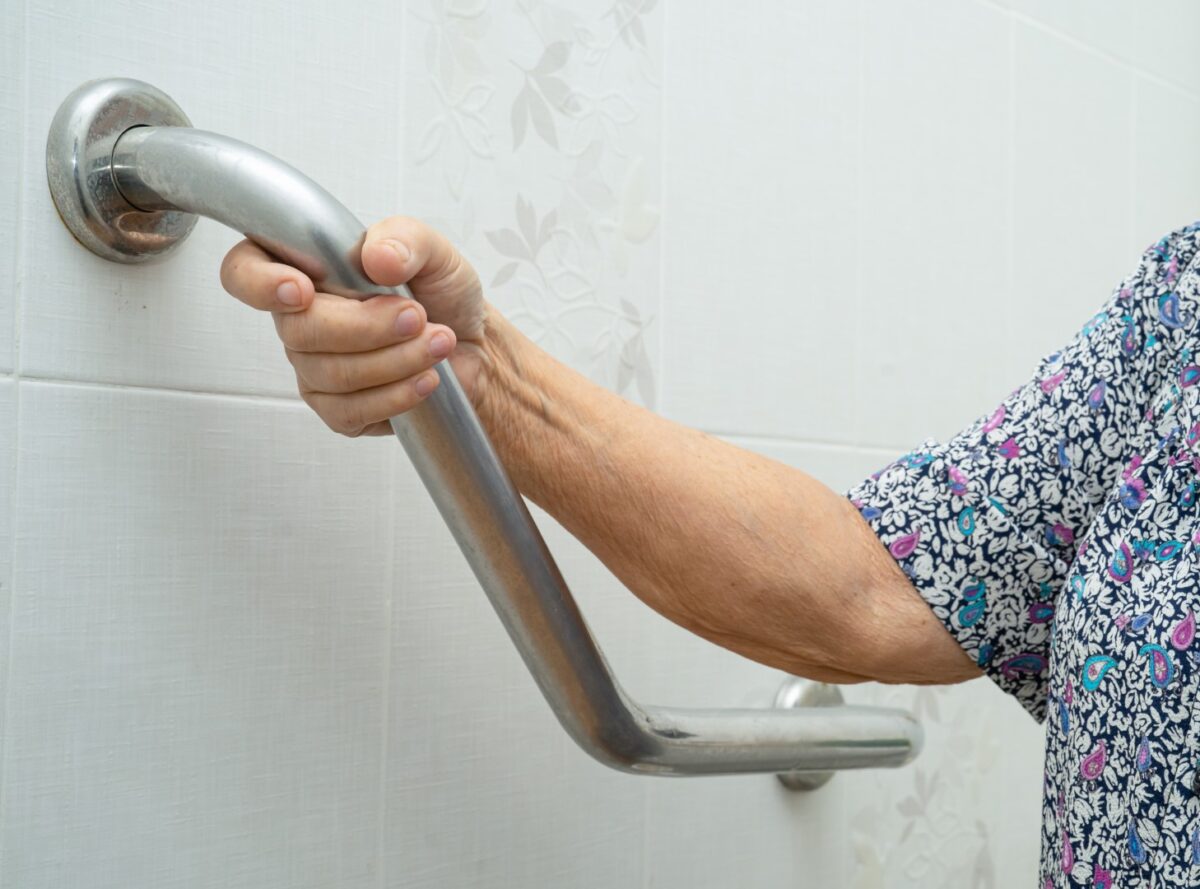
The bathroom deserves the most attention on this checklist. Wet surfaces, the physical demands of getting in and out of a tub or shower, and the awkward postures required for toileting all concentrate fall risk in a small space. The NIA recommends grab bars near the toilet and on both the inside and outside of the tub and shower as the most effective structural intervention in this room.
- Tier 1 — Remove any loose bath mats not secured with suction backing. Clear all items from the floor of the shower and tub.
- Tier 1 — Ensure the bathroom light switch is reachable from the doorway so your parent never enters a dark bathroom.
- Tier 2 — Install anchored grab bars next to the toilet and inside the shower or tub. This is the single most effective structural modification in the bathroom. Professional installation is strongly recommended to ensure bars are anchored into studs at the correct height and angle.
- Tier 2 — Place a non-slip mat with suction backing on the floor of the shower or tub and on the bathroom floor just outside it.
- Tier 2 — Add a raised toilet seat ($25–$50) if your parent has difficulty lowering to or rising from the toilet. This reduces the range of motion required and decreases fall risk during transfers.
- Tier 2 — Consider a shower chair or bench if your parent has balance limitations or fatigue during showering. Sitting while showering eliminates the balance demands of standing on a wet surface.
- Tier 3 — If the current tub-shower requires stepping over a high threshold, evaluate a walk-in shower conversion or roll-in shower as a longer-term modification. This is a significant structural change that requires a contractor familiar with aging-in-place design.
Bedroom and Nighttime Path — Second-Highest-Risk Zone
The trip from the bedroom to the bathroom is the highest-risk route in most homes. It happens at night, in dim light, often under time pressure, and frequently when your parent is disoriented from sleep. A $10 motion-sensor nightlight and five minutes of decluttering can make this path dramatically safer.
- Tier 1 — Walk the bedroom-to-bathroom path right now and remove every obstacle: shoes, cords, laundry, furniture edges that protrude into the path.
- Tier 1 — Ensure a lamp or light switch is reachable from the bed without getting up.
- Tier 2 — Place a motion-sensor nightlight at the baseboard along the bedroom-to-bathroom path. These cost $8–$15 and activate automatically when your parent gets up at night.
- Tier 2 — Check bed height: both feet should be flat on the floor when your parent sits on the edge before standing. If the bed is too high or too low, a bed rail or adjustable bed frame may help.
- Tier 2 — Place a sturdy chair or bedside table within arm's reach for support while dressing or standing.
- Tier 3 — If your parent uses a urinal or commode at night to avoid the bedroom-to-bathroom trip, an OT can advise on safe placement and technique.
Stairs
- Tier 1 — Clear all items off every step. Stairs should never be used as storage.
- Tier 1 — Ensure stair lighting is bright enough to clearly see each step edge; consider motion-activated stair lighting.
- Tier 2 — Confirm that handrails are present on both sides of the staircase and are firmly anchored. Handrails should extend the full length of the stairs.
- Tier 2 — Apply non-slip strips to the edge of each step if the surface is smooth or worn.
- Tier 3 — If your parent has significant difficulty with stairs or has fallen on them, evaluate a stair lift. This is a major equipment decision that warrants professional assessment of the staircase and your parent's specific mobility needs.
Beyond the Environment: Personal Risk Factors Checklist
Environmental hazards get most of the attention in fall prevention guides, but the person walking through the environment matters just as much. A person with good balance, appropriate footwear, and no fall-risk medications can navigate a moderately hazardous environment safely. The same environment becomes dangerous for someone with dizziness from a medication, poor vision, or significant lower-body weakness. These personal risk factors are where most room-by-room checklists fall short.
Medications
Medications are one of the most significant and most overlooked fall risk factors. Certain drug classes cause dizziness, sedation, orthostatic hypotension (blood pressure dropping when standing), or impaired balance — all of which substantially increase fall risk. The American Geriatrics Society's Beers Criteria identifies the highest-risk drug classes for older adults.
| Drug Class | Examples | Fall Risk Mechanism |
|---|---|---|
| Benzodiazepines | Lorazepam, alprazolam, diazepam | Sedation, impaired balance and coordination |
| Sleep medications | Zolpidem, eszopiclone | Sedation, next-day grogginess, impaired gait |
| Opioids | Oxycodone, hydrocodone, tramadol | Sedation, dizziness, orthostatic hypotension |
| Anticholinergics | Diphenhydramine (Benadryl), some bladder medications | Confusion, dizziness, blurred vision |
| Antihypertensives (over-treated) | Various blood pressure medications | Blood pressure drops too low when standing (postural hypotension) |
- Ask your parent's physician: 'Are any of these medications associated with fall risk, and is the current dose still appropriate?'
- Ask about postural hypotension specifically if your parent feels dizzy or lightheaded when standing up from a chair or bed.
- Note that over-the-counter sleep aids and antihistamines (including diphenhydramine, sold as Benadryl and in many PM pain relievers) are on the Beers Criteria high-risk list for older adults.
Footwear
What your parent wears on their feet inside the house matters as much as what's on the floor. Mayo Clinic recommends properly fitting, sturdy, flat shoes with nonskid soles — and explicitly notes that high heels, floppy slippers, and shoes with slick soles are fall risks.
- Supportive, closed-toe shoes with non-slip soles and a firm heel counter are the safest choice for indoor use.
- Backless slippers and socks on hard floors are among the most common footwear-related fall triggers — both should be avoided.
- If your parent's shoes are worn, stretched, or no longer fit well, replacing them is a Tier 1 priority — it costs nothing if they already own better shoes.
Vision
- People with vision loss have nearly twice the fall risk of those without vision impairment, according to NCOA data. Annual eye exams are a meaningful fall prevention intervention.
- Bifocals and progressive lenses can distort depth perception on stairs — the lower lens portion used for close vision may make it harder to judge step edges accurately. Single-vision glasses are recommended for navigating stairs if your parent wears bifocals or progressives.
- Ensure glasses are clean, the current prescription is up to date, and your parent is actually wearing them during activities that require good vision.
Hearing
Hearing loss is an underappreciated fall risk factor. People with hearing loss are significantly more likely to fall than those with normal hearing — but wearing a hearing aid is associated with approximately a 50% reduction in fall risk, according to NCOA. If your parent has diagnosed hearing loss and isn't consistently wearing their hearing aids, this is worth addressing directly.
Balance and Lower-Body Strength
- Ask your parent's physician about a referral to physical therapy for a balance and gait assessment if they have had a fall, near-miss, or report feeling unsteady.
- Evidence-based exercise programs focused on strength and balance — such as Tai Chi and the Otago Exercise Programme — have demonstrated effectiveness in reducing fall rates in community-dwelling older adults. Ask about programs available through local senior centers or physical therapy practices.
- The CDC STEADI Stay Independent brochure includes a 12-question self-screening tool that helps identify fall risk; a score of 4 or higher indicates increased risk and warrants a physician conversation.
Tier 1 — Fix Today, No Cost: The Highest-Impact Free Actions
These six actions address the most common fall triggers and can be completed in under an hour. None of them require spending money. If you do nothing else today, do these.
- Clear the bedroom-to-bathroom path completely. Walk the route your parent takes at night and remove every obstacle — shoes, cords, furniture edges, anything on the floor. This is the single highest-risk path in the home.
- Remove all loose throw rugs. Pick them up and put them away. If a rug cannot be permanently secured with non-slip backing, it is a hazard. This takes two minutes per rug.
- Improve lighting in high-traffic areas. Replace burned-out bulbs, especially in hallways, the bathroom, and the bedroom. Bright, non-glare bulbs make a measurable difference in fall risk at night.
- Move daily-use items to waist-to-shoulder height. Medications, glasses, the phone, kitchen items used every day — if your parent has to reach overhead or bend low to get them, move them now. This eliminates a class of balance challenges entirely.
- Declutter all walking paths and stairs. Anything sitting on the floor in a hallway or on a stair is a trip hazard. Clear surfaces create clear paths.
- Check footwear. If your parent owns supportive, non-slip shoes, make sure they're the ones being worn inside the house — not backless slippers or socks on hard floors. This costs nothing if the right shoes are already in the closet.
Tier 2 — Fix This Week, Low Cost: Equipment and Simple Modifications ($10–$200)
These items provide substantial protection and are available at hardware stores, pharmacies, and home improvement retailers. Most can be installed without professional help, with one important exception: grab bars must be anchored into studs, and unless you or someone in your household is comfortable locating studs and drilling into tile, professional installation is worth the cost.
| Item | Approximate Cost | Key Note |
|---|---|---|
| Motion-sensor nightlights (2–3) | $8–$25 total | Place along the bedroom-to-bathroom path at baseboard height |
| Non-slip bath mat with suction backing | $15–$35 | Place inside shower/tub and on bathroom floor outside it |
| Raised toilet seat | $25–$50 | Reduces range of motion needed for sitting and rising; fits most standard toilets |
| Anchored grab bar (shower) | $30–$80 + installation | Must be screwed into wall studs — not suction-only |
| Anchored grab bar (toilet) | $30–$80 + installation | Position so your parent can push up and lower down safely |
| Sturdy bedroom chair | $40–$150 | Placed near the bed for dressing and as a steadying point when standing |
Tier 3 — Plan With a Professional: Structural Modifications and Clinical Assessment
Some modifications require professional involvement — either because they involve structural changes to the home, require clinical expertise to match the intervention to the person, or both. These are not optional add-ons for high-risk situations; they are the right standard of care when simpler interventions aren't sufficient.
- OT-led home safety evaluation. An occupational therapist conducts a systematic assessment of the full home environment, identifies hazards a family walkthrough may miss, recommends specific equipment and modifications, and trains both your parent and your family on safe movement techniques. This is the most comprehensive fall prevention intervention available in the home setting.
- Mobility aid fitting by a PT or OT. If your parent uses or needs a walker, cane, or rollator, proper fitting by a physical or occupational therapist significantly affects safety and effectiveness. An ill-fitted walker can increase fall risk.
- Structural modifications: ramps, stair lifts, widened doorways, walk-in shower or tub conversion. These are planned renovation projects that require a contractor with experience in aging-in-place design. A Certified Aging in Place Specialist (CAPS) has training in accessibility modifications and universal design principles, though CAPS certification does not guarantee outcomes — it indicates specialized training.
- Medication review by the primary care physician or pharmacist. A systematic review of all medications for fall-risk interactions is a clinical task, not something a family caregiver can do from a checklist. Schedule a dedicated appointment for this conversation.
When to Request an OT Home Safety Evaluation — and Whether Medicare Covers It
A professional occupational therapist home safety evaluation goes well beyond what a family caregiver can do with a checklist. The OT assesses the full home environment with clinical training, identifies hazards that are easy to miss, recommends specific equipment and modifications calibrated to your parent's particular functional limitations, and provides hands-on training for both the patient and family members on safe movement techniques.
The evidence base for multifactorial fall prevention is strong. A Cochrane systematic review of more than 100 trials found that multifactorial interventions — combining home safety modifications with medication review and exercise — reduce fall rates by approximately 24% in community-dwelling older adults. No single-item fix comes close to that effect size.
- Request a referral from your parent's primary care physician to an occupational therapist for a home safety evaluation.
- Ask whether your parent meets the Medicare homebound criteria for home health coverage.
- If Medicare home health coverage does not apply, ask about outpatient OT or community-based fall prevention programs, which may have different coverage pathways.
- If your parent is a veteran, contact the VA to ask about the Home Improvements and Structural Alterations (HISA) grant program, which can cover accessibility modifications.
After a Fall: What to Do Next
If your parent has already fallen, the most important thing to understand is this: a prior fall is the single strongest predictor of the next fall. Falling once doubles the risk of falling again. The period immediately following a fall is the highest-leverage window for intervention — not a time to wait and see.
- Schedule a physician visit specifically to address the fall. Bring a complete medication list. Ask directly about fall-risk medications and whether any can be adjusted or discontinued. Ask for a referral to physical therapy for a gait and balance assessment and to occupational therapy for a home safety evaluation.
- Use the CDC STEADI Stay Independent screening tool. This 12-question self-assessment, available through CDC STEADI patient resources, helps identify fall risk factors and is designed to prompt a physician conversation. A score of 4 or higher indicates increased risk.
- Consider a personal emergency response system (PERS). A PERS device — typically a wearable pendant, wristband, or watch — allows your parent to call for help if they fall and cannot get up or reach a phone. When evaluating options, look for: automatic fall detection (not just manual button press), two-way voice communication, 24/7 monitoring center, and whether the device works outside the home if your parent is active. Some devices are wearable; others use home base stations. This is a device category, not a specific product — evaluate options based on your parent's specific living situation and activity level.
- Complete the Tier 1 and Tier 2 actions in this checklist if you haven't already. The environmental changes can be made today and this week, while the clinical and structural interventions are being arranged.
Related Resources and Next Steps
The following authoritative resources provide additional guidance and tools aligned with the evidence base used in this checklist.
- CDC STEADI Patient and Caregiver Resources — includes the Stay Independent self-screening brochure, the Check for Safety home checklist, and footwear guidance.
- NIA: Preventing Falls at Home, Room by Room — the National Institute on Aging's room-by-room guidance, with practical installation and lighting recommendations.
- NCOA: Get the Facts on Falls Prevention — current statistics and an overview of evidence-based fall prevention programs.
- NCOA: How to Prevent Falls with Home Safety Modifications — a concise overview of the five most effective home modifications.
This checklist is a starting point, not a substitute for professional assessment. For structural modifications — ramps, stair lifts, walk-in shower conversions, widened doorways — a contractor with aging-in-place experience can help you evaluate options and costs. For clinical risk factors — medications, balance, gait — your parent's physician, a physical therapist, and an occupational therapist are the right partners. The goal of this checklist is to help you act on what you can do right now, and to know clearly when to bring in a professional.
Related reading
Noticed something outdated or inaccurate on this page? Flag a correction. We review every report against CDC, NIA, and AARP HomeFit guidance before updating a page.
Part of the Fall Prevention section.