
Glossary entry
CAPS Contractor vs General Contractor: Which Do You Need for Aging-in-Place Home Modifications?
Why the CAPS vs. General Contractor Decision Matters
When you decide to modify a home for aging in place, one of the first forks in the road is whether to hire a certified aging-in-place specialist (CAPS) or a general contractor. The choice affects not only the immediate cost and timeline, but also whether the modifications will actually support safe, comfortable living as needs change over time. With 88% of adults aged 50 and older preferring to stay in their homes — and fewer than 4% of existing homes being ready for aging in place — getting the right professional on the job is critical. This article breaks down what each type of contractor brings, where they differ, and how to decide which one (or combination) is best for your project.
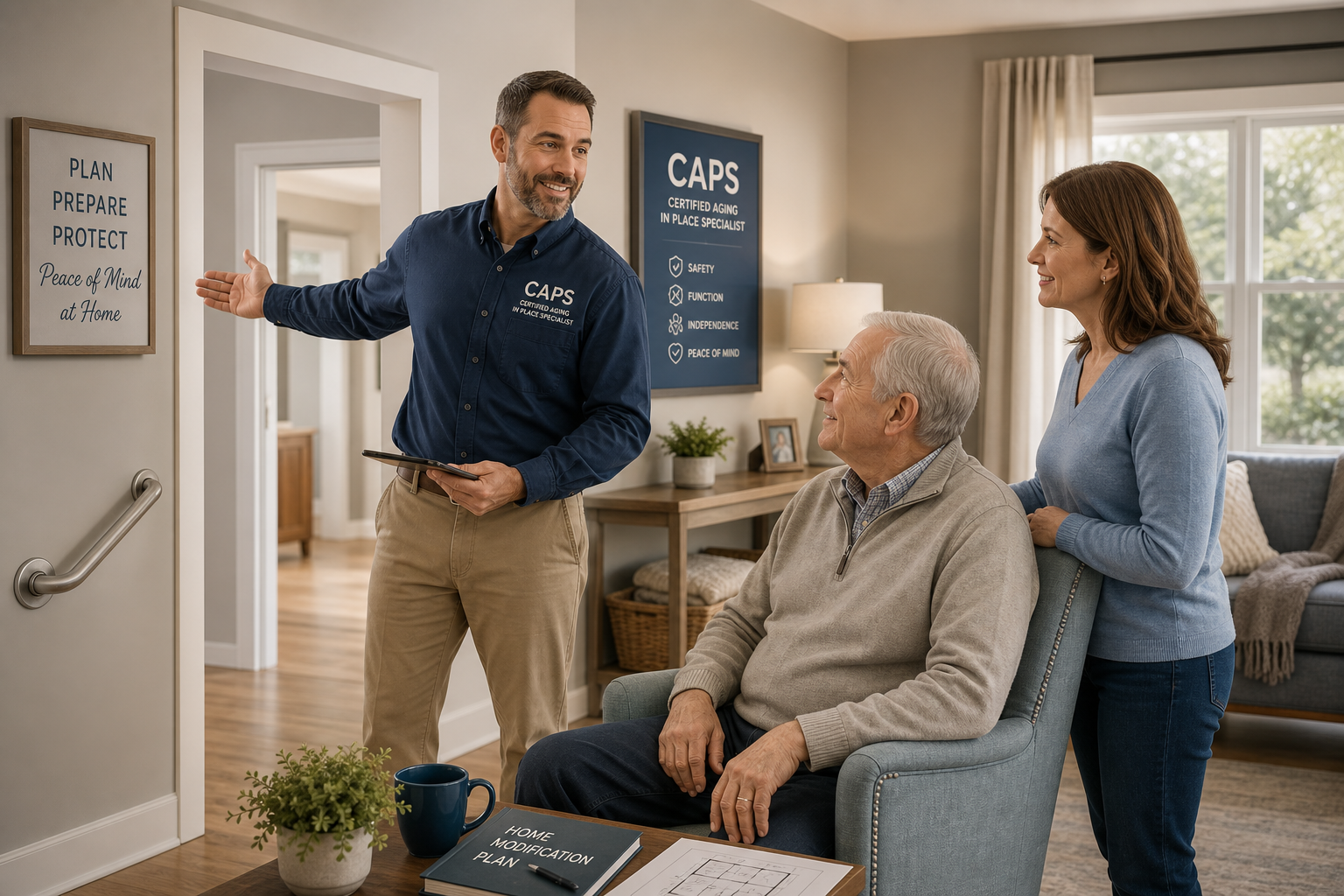
What a CAPS-Certified Contractor Brings
A CAPS certification is a specialized designation offered jointly by the National Association of Home Builders (NAHB) and AARP since 2002. To earn it, contractors complete three courses — CAPS I, II, and III — covering universal design principles, home safety assessments, and client communication. Unlike standard contractor licensing, these courses focus specifically on how to make homes accessible and safe for older adults and people with disabilities.
A CAPS-certified professional typically offers services that go beyond basic construction, including:
- Comprehensive home safety evaluations (usually costing $300 to $1,000) that identify fall hazards and accessibility barriers a general contractor might overlook.
- Design recommendations based on universal design — features like zero-step entries, wider doorways, lever handles, and blocking for future grab bars.
- Project management that coordinates with other trades (plumbers, electricians) while keeping accessibility as the priority.
- Follow-up visits to ensure modifications remain effective as the resident’s needs evolve.
What a General Contractor Brings
A licensed general contractor (GC) possesses broad construction expertise: structural framing, building code compliance, electrical and plumbing systems, and project management. For many home renovations — including kitchen remodels, room additions, and roof repairs — a qualified GC is exactly what you need.
Where a GC may fall short, however, is in understanding the specific accessibility and safety needs of an older adult. Most GCs have no formal training in universal design or fall prevention. They know how to build a code-compliant bathroom, but they may not know to add reinforced blocking in the walls for future grab bars, or to install a curbless shower to eliminate a trip hazard. A general contractor’s primary lens is structural integrity and aesthetics, not long-term functional needs.
That said, a skilled GC can still deliver excellent results if you provide clear specifications — such as requiring blocking at certain heights, specifying zero-threshold entries, or hiring an occupational therapist to review the plans first. But it places the responsibility on you (or your agent) to verify that the design meets aging-in-place principles.
Side-by-Side Comparison: CAPS vs. General Contractor
The table below summarizes the key differences to help you evaluate which professional fits your project.
| Aspect | CAPS Contractor | General Contractor |
|---|---|---|
| Training | Specialized courses in universal design, safety assessment, and client communication (NAHB CAPS I–III); annual renewal with 4 CE hours. | State-licensed; training typically focuses on construction methods, codes, and business practices; no required aging-in-place curriculum. |
| Primary Focus | Accessibility, safety, and future-proofing for progressive mobility changes. | Structural integrity, code compliance, aesthetics, and functionality. |
| Typical Projects | Grab bar installations, curbless showers, ramp design, widening doorways, whole‑home safety upgrades. | Kitchen remodels, roof repairs, additions, flooring, any structural renovation. |
| Cost Approach | Upfront home evaluation ($300–$1,000) to identify all needs; then phased modifications to match budget. | Usually quotes per project scope; may miss future needs unless explicitly specified, leading to costly retrofits later. |
| Collaboration Style | Often coordinates with occupational therapists, caregivers, and other specialists; designs for the whole household. | Typically works with architects and subcontractors; less likely to involve healthcare or accessibility experts. |
When to Hire a CAPS Contractor vs. a General Contractor
Use the following guide to decide which path to take based on your project’s scope and your family’s situation.
- Hire a CAPS contractor when: The project is specifically about accessibility and safety — e.g., bathroom modifications to prevent falls, installing a ramp, or creating a first-floor bedroom suite. CAPS professionals will design with progressive needs in mind, potentially saving thousands in future modifications.
- Hire a general contractor when: You are doing a standard renovation (e.g., new kitchen countertops, flooring, exterior work) and you already have an accessibility plan from an occupational therapist or a CAPS assessment. A GC can execute the plan if you provide detailed specifications.
- Consider hiring both when: The project involves major structural changes (like adding a room or moving walls) that also require accessibility expertise. A CAPS contractor can consult on the design, while a GC manages the construction.
The Ideal Hybrid: A General Contractor with CAPS Certification
Many family caregivers and aging-in-place experts agree that the best of both worlds comes from a general contractor who also holds CAPS certification, or from a close collaboration between a CAPS specialist and a GC on the same project. As the Aging in Place Directory notes, “if the general contractor has undergone training for aging in place remodeling, then that would be an ideal contractor to hire.”
This hybrid approach combines the structural expertise and project management of a licensed GC with the specialized knowledge of universal design, safety assessment, and future-proofing that CAPS training provides. When you hire a GC with CAPS credentials, you get someone who can manage a full-scale renovation while automatically incorporating accessibility best practices.
Cost Implications of Each Choice
Cost is often the deciding factor. Here is how the expenses typically compare for common modifications. Note that these are national averages; local prices can vary.
| Modification | Typical Cost Range | Who Usually Handles It |
|---|---|---|
| Grab bars (installed) | $100–$300 | CAPS contractor or any GC with blocking experience |
| Wheelchair ramp (modular or built) | $1,500–$5,000 | CAPS contractor (to ensure slope and landing compliance) |
| Walk-in shower conversion | $6,000–$12,000 | CAPS contractor (for curbless design and slip-resistant flooring) |
| Stair lift | $2,500–$8,000 | Often a dedicated stairlift company; GC does prep work |
| Full accessible bathroom remodel | $10,000–$50,000+ | CAPS contractor or GC with CAPS consultation |
Hiring a CAPS contractor for the initial evaluation ($300–$1,000) can lead to significant savings by identifying all necessary modifications at once, allowing you to bundle projects and avoid the cost of retrofitting later. A general contractor may charge a similar consultation fee for a traditional estimate, but that estimate will not necessarily include accessibility considerations.
Additionally, a new federal tax deduction — created by the One Big Beautiful Bill Act of July 2025 — provides a $6,000 deduction for taxpayers aged 65 and older for tax years 2025 through 2028. It phases out above adjusted gross income of $75,000 (single) or $150,000 (joint) and can be claimed regardless of whether you itemize. While not specifically tied to home modifications, it can offset some of the costs for eligible older adults.
Next Steps: How to Find the Right Professional for Your Project
Once you have decided which path — CAPS, general contractor, or hybrid — best suits your project, the next step is to find and vet qualified candidates. For a detailed walkthrough of the vetting process, including specific questions to ask and red flags to watch for, see our companion article: CAPS Contractor: How to Find and Vet a Certified Aging-in-Place Specialist for Home Modifications. That guide covers how to use the NAHB directory, verify credentials, and compare bids — all topics this article intentionally leaves aside so it can focus on the ”which one” decision.
To get started right now:
- Visit the NAHB directory to find CAPS-certified professionals in your area.
- Ask general contractors you are considering whether they hold CAPS certification or have aging-in-place experience.
- If you are leaning toward a GC without CAPS, consider getting a standalone CAPS home evaluation first (costing $300–$1,000) to create an accessibility blueprint before you start construction.
- For complex projects that involve both structural work and safety modifications, look for a GC who is willing to collaborate with a CAPS specialist or an occupational therapist.
By making an informed choice between a CAPS contractor, a general contractor, or a combined approach, you can ensure that the modifications you invest in will truly support your family member’s safety, independence, and comfort for years to come.
Browse more in the Glossary.