
Glossary entry
Home Care vs. Assisted Living vs. Nursing Home: When Each Makes Sense
Why the Decision Isn't Just About Cost
When an older parent can no longer manage alone, families often assume the cheapest path is to keep them at home. That assumption is worth questioning. The 2025 national median cost of home care at 44 hours per week is $80,080 per year — actually higher than the $74,400 median for assisted living, according to CareScout's Cost of Care Survey. And that's before factoring in home modifications, increased utility bills, or the cost of inconsistent staffing.
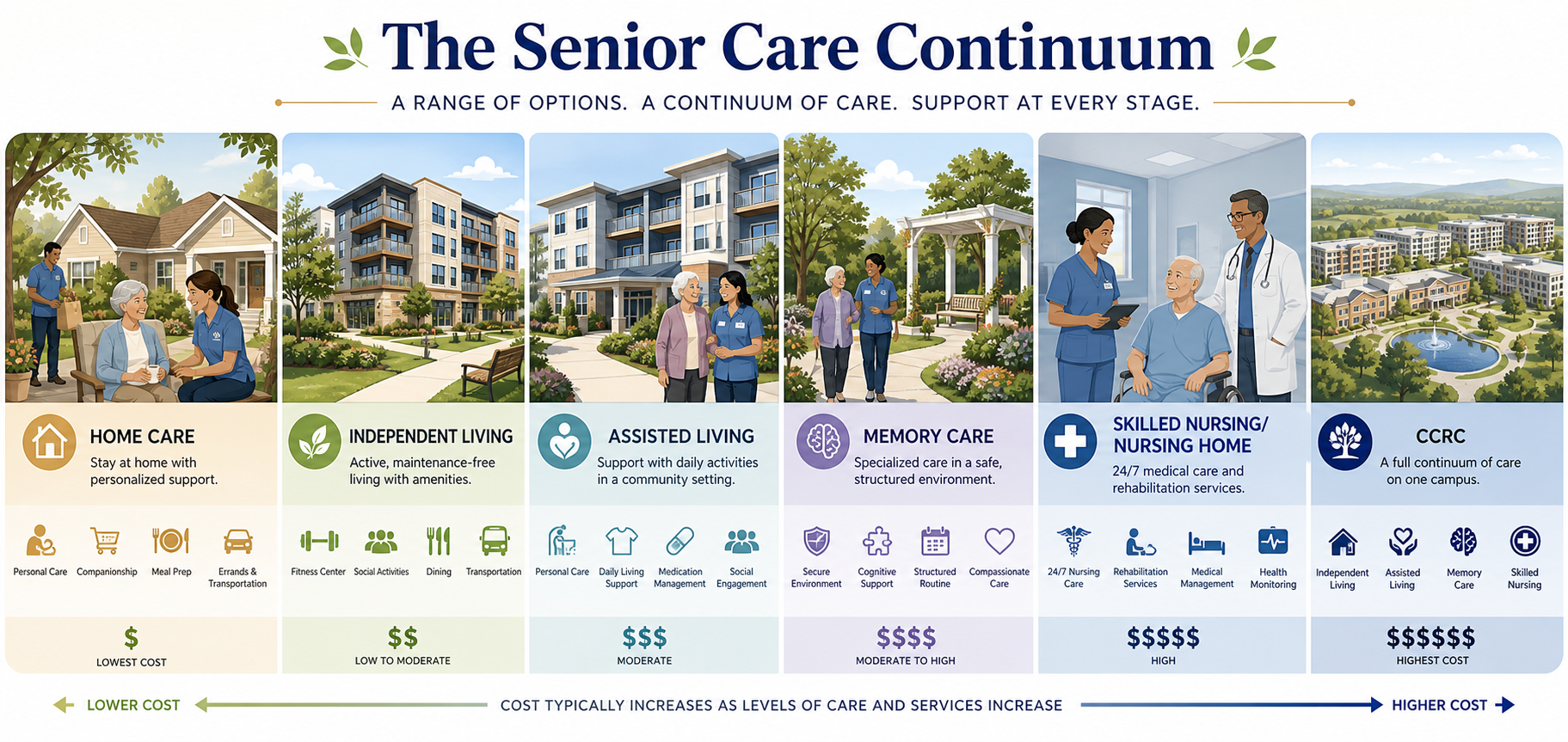
But cost is only one dimension. The right choice between home care, assisted living, and a nursing home depends on care intensity, social needs, caregiver availability, safety, and the older adult's own preferences. This guide walks through each of those dimensions side by side, so you can match your parent's actual situation to the option that fits — not the one that sounds cheapest on paper.
What Each Option Actually Provides
Before comparing costs, it helps to be precise about what each care type includes — and what it does not. The National Institute on Aging (NIA) draws clear boundaries between these settings.
Home care in this context means non-medical personal care and companionship provided by a home health aide or caregiver on an hourly basis. It covers help with bathing, dressing, meal preparation, light housekeeping, and transportation. It does not include licensed nursing care, physical therapy, or 24-hour supervision unless you pay for round-the-clock shifts, which dramatically increases the cost.
Assisted living provides a private apartment or room with up to three meals daily, personal care assistance, medication management, 24-hour staff, and social activities. It is designed for people who need help with daily activities but do not require the level of skilled nursing care a nursing home provides. As the NIA notes, assisted living costs more than independent living but less than a nursing home.
Nursing homes (also called skilled nursing facilities) offer 24-hour supervised care with licensed nurses on staff, three meals daily, rehabilitation services (physical, occupational, and speech therapy), and full assistance with activities of daily living. They are the only option on this list that provides round-the-clock skilled nursing care.
| Feature | Home Care | Assisted Living | Nursing Home |
|---|---|---|---|
| Living arrangement | Own home | Private apartment or room | Shared or private room |
| Staff type | Non-medical caregiver (hourly) | 24-hour staff, no licensed nursing | 24/7 licensed nurses on site |
| Meals | Self-prepared or delivered | 3 meals daily included | 3 meals daily + therapeutic diets |
| Medication help | Reminders only (varies by state) | Medication management | Full medication administration |
| Rehabilitation | Not included | Not included | PT, OT, speech therapy on site |
| Social activities | None built in | Scheduled activities, outings | Limited activities, therapy-focused |
Cost Comparison: National Medians and Hidden Expenses
The 2025 national median costs from CareScout tell a story that surprises many families:
| Care Option | Monthly Median Cost (2025) | Annual Median Cost | Year-over-Year Change |
|---|---|---|---|
| Home care (44 hrs/week) | $6,673 | $80,080 | Not specified |
| Assisted living | $6,200 | $74,400 | +5% from 2024 |
| Nursing home (semi-private room) | $9,581 | $114,975 | +3% from 2024 |
| Nursing home (private room) | $10,798 | $129,575 | +1% from 2024 |
Browse more in the Glossary.