
Search CareWise Guide
Search across caregiver guides, fall prevention resources, memory care content, home modifications, monitoring technology explainers, mobility guides, glossary entries, and FAQs.
Browse by Section
Not sure what to search for? Browse a section to explore the full content collection.
- Caregiver Guides
Comprehensive how-to guides for family caregivers across all caregiving roles and situations — adult…
- Fall Prevention
Educational content on preventing falls among older adults at home, organized around the CDC STEADI …
- Memory Care
Stage-aware, behavior-specific educational content for caregivers supporting someone with Alzheimer'…
- Aging-in-Place Home Modifications
Educational content on structural and design changes that enable older adults to remain safely at ho…
- Senior Monitoring Technology
Product-neutral educational content explaining categories of remote monitoring and safety technology…
- Mobility & Daily Independence
Educational content on assistive devices and strategies that support physical mobility and the abili…
- Caregiver Wellbeing
Content dedicated to the caregiver's own health, emotional resilience, and sustainability — a parall…
- Eldercare & Caregiving Glossary
A structured, alphabetically organized reference of eldercare and caregiving terminology — covering …
- Frequently Asked Questions
Structured FAQ clusters organized by topic area — technology (Does Medicare cover medical alert syst…
Featured Guides
A selection of guides from across the site if you're not sure where to start.

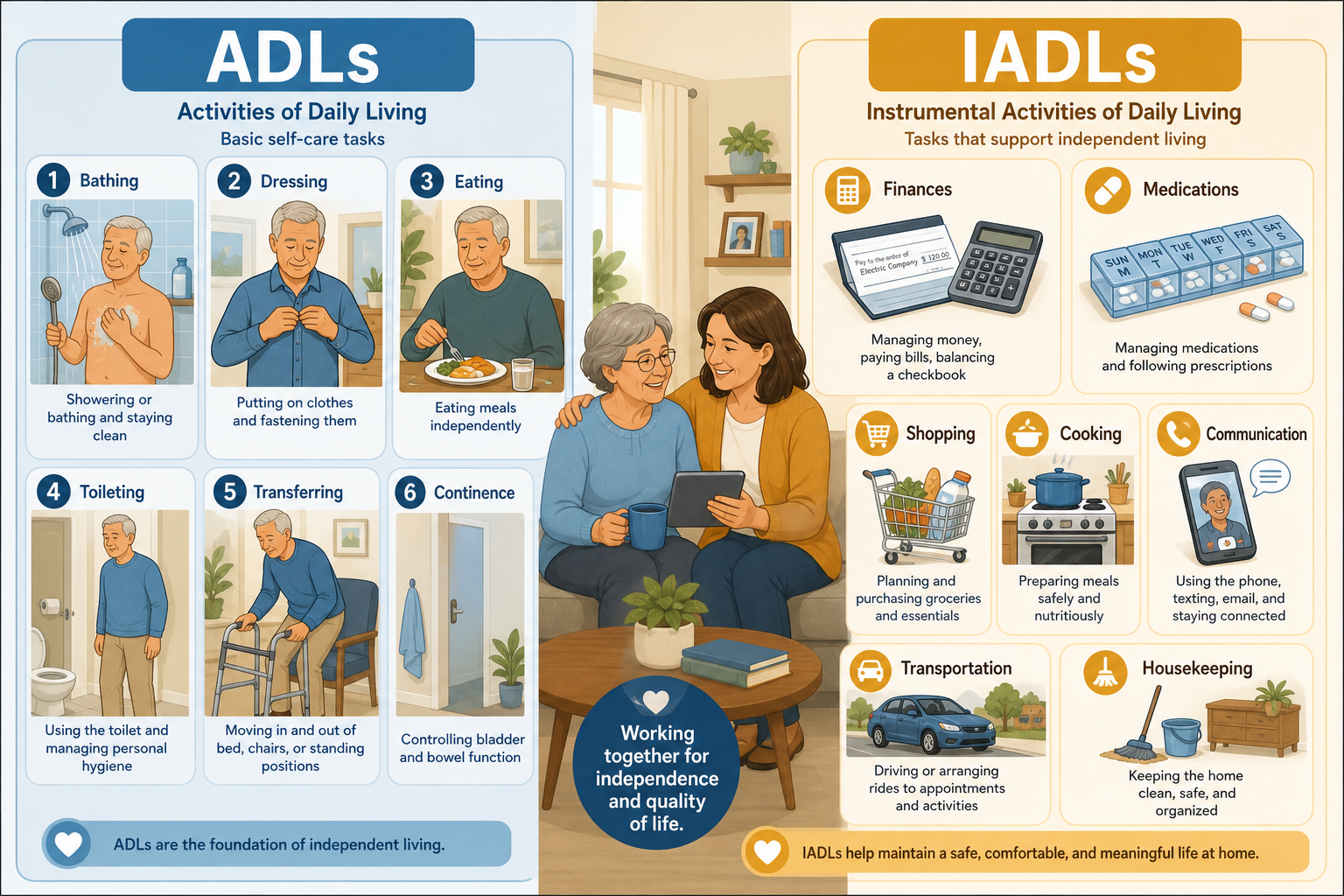
ADL (Activities of Daily Living): What the Assessment Means for Older Adults and Family Caregivers
A plain-language reference explaining what activities of daily living (ADLs) and instrumental activities of daily living (IADLs) are, how they are formally assessed using tools like the Katz Index and Lawton Scale, and what assessment results mean for care planning, benefit eligibility, and recognizing early functional decline.
ADL and IADL Decline Timeline: What Family Caregivers Should Expect
Understand how functional decline typically progresses in dementia and frailty — from early loss of IADLs to gradual ADL dependency — and learn stage-appropriate care strategies to plan ahead instead of reacting to crises.
Agitation in Dementia: A BPSD Behavior Reference for Caregivers
A returnable reference guide for family caregivers managing agitation in a person with Alzheimer's or another dementia — covering behavior types, trigger identification, the delirium distinction, in-the-moment response steps, non-pharmacological strategies, and the current medication landscape including the April 2026 FDA approval of the first non-antipsychotic treatment for Alzheimer's-related agitation.
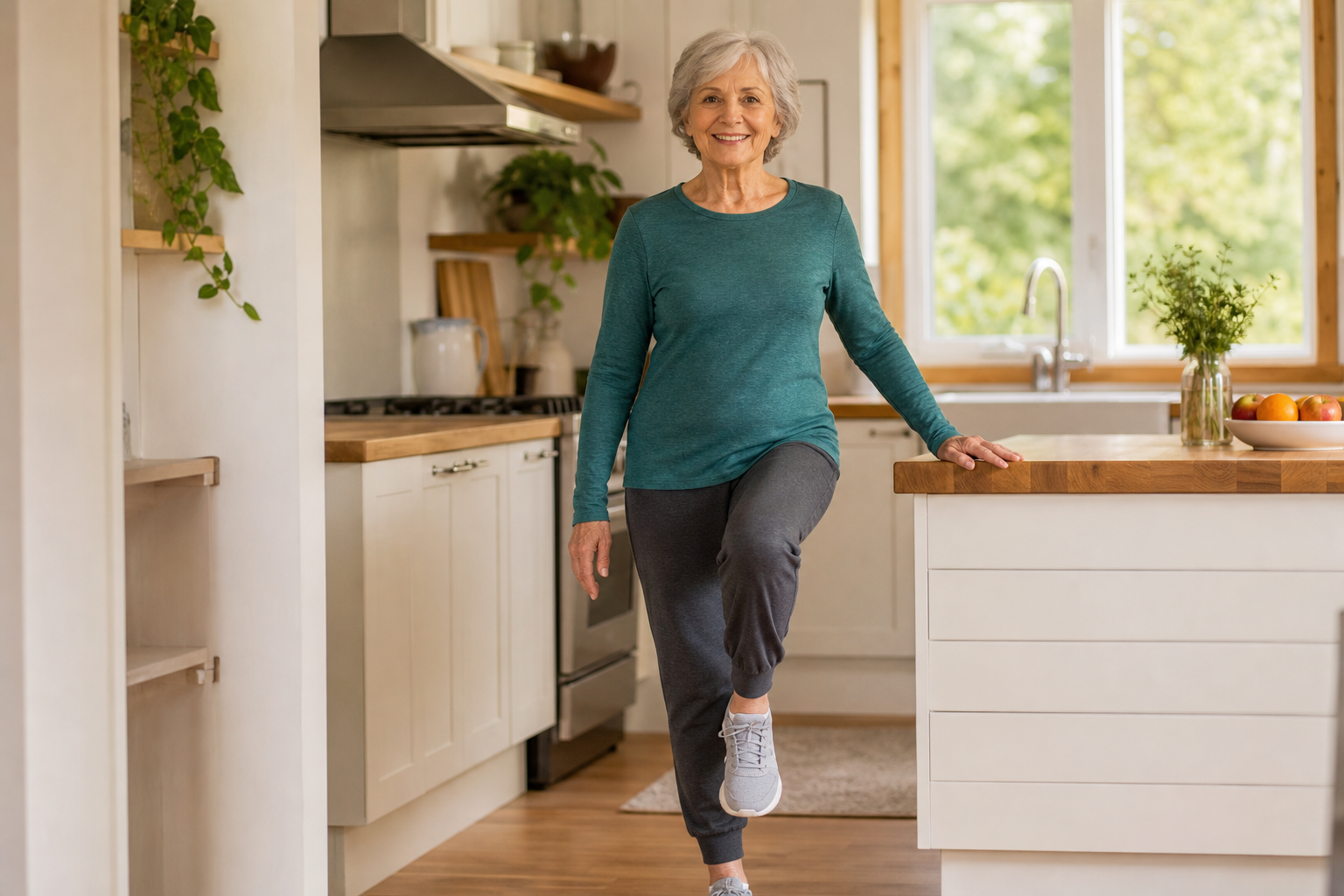
Are Balance Exercises Effective at Reducing Fall Risk for Older Adults?
Yes — balance exercises are backed by a 2024 USPSTF Grade B recommendation and multiple large meta-analyses showing meaningful reductions in falls and fall-related injuries. This FAQ explains what the evidence shows, which exercise types work best, how much is enough, and when to consult a physical therapist.
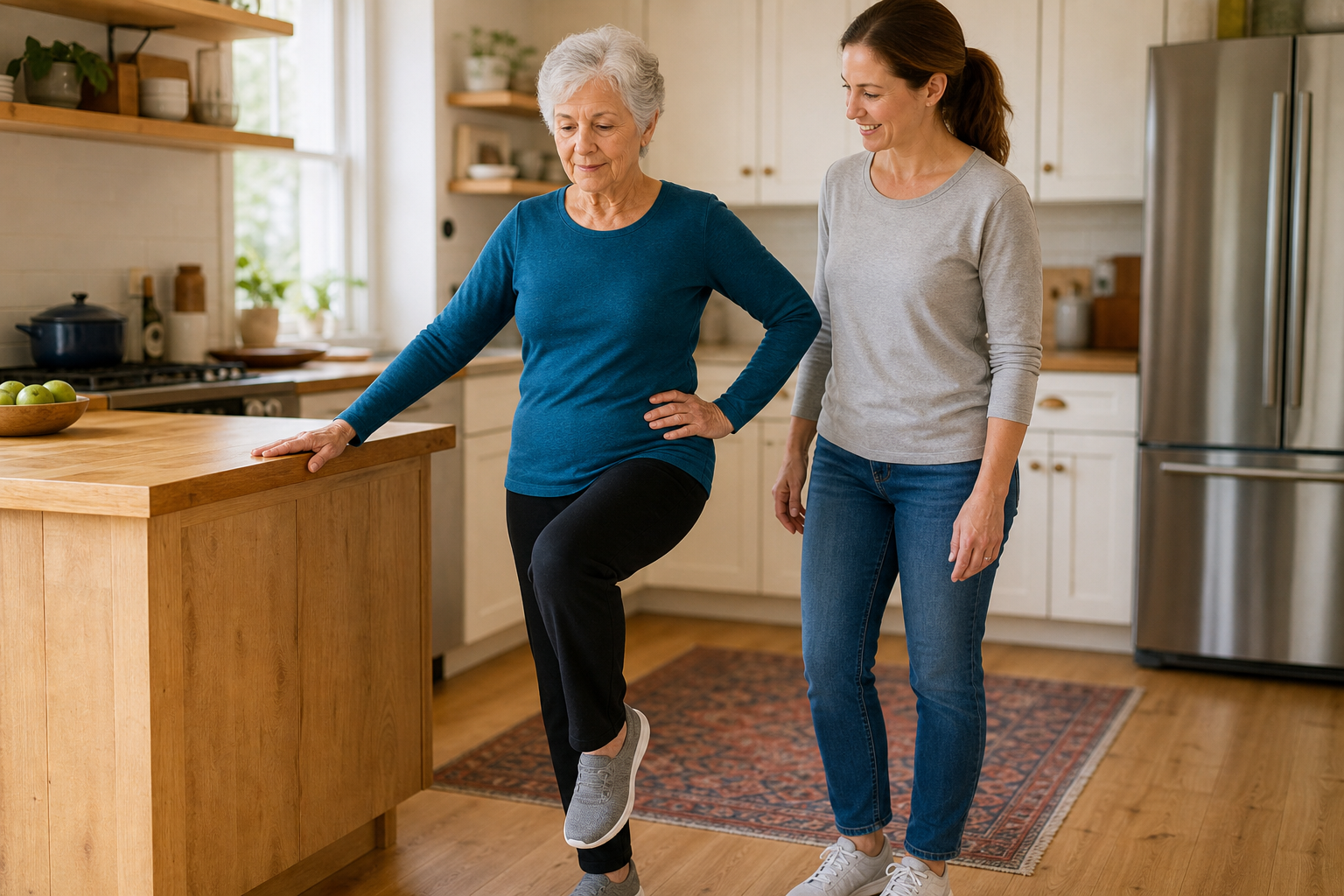
Balance Exercises to Prevent Falls in Older Adults: An Evidence-Based Guide for Seniors and Family Caregivers
Structured balance and strength exercises are the most evidence-supported way to reduce fall risk in older adults — cutting falls by 15–58% depending on the program — yet most caregivers and seniors lack a safe, practical starting point. This guide explains what the research shows, how to begin at home, how to progress safely, and when to involve a physical therapist.
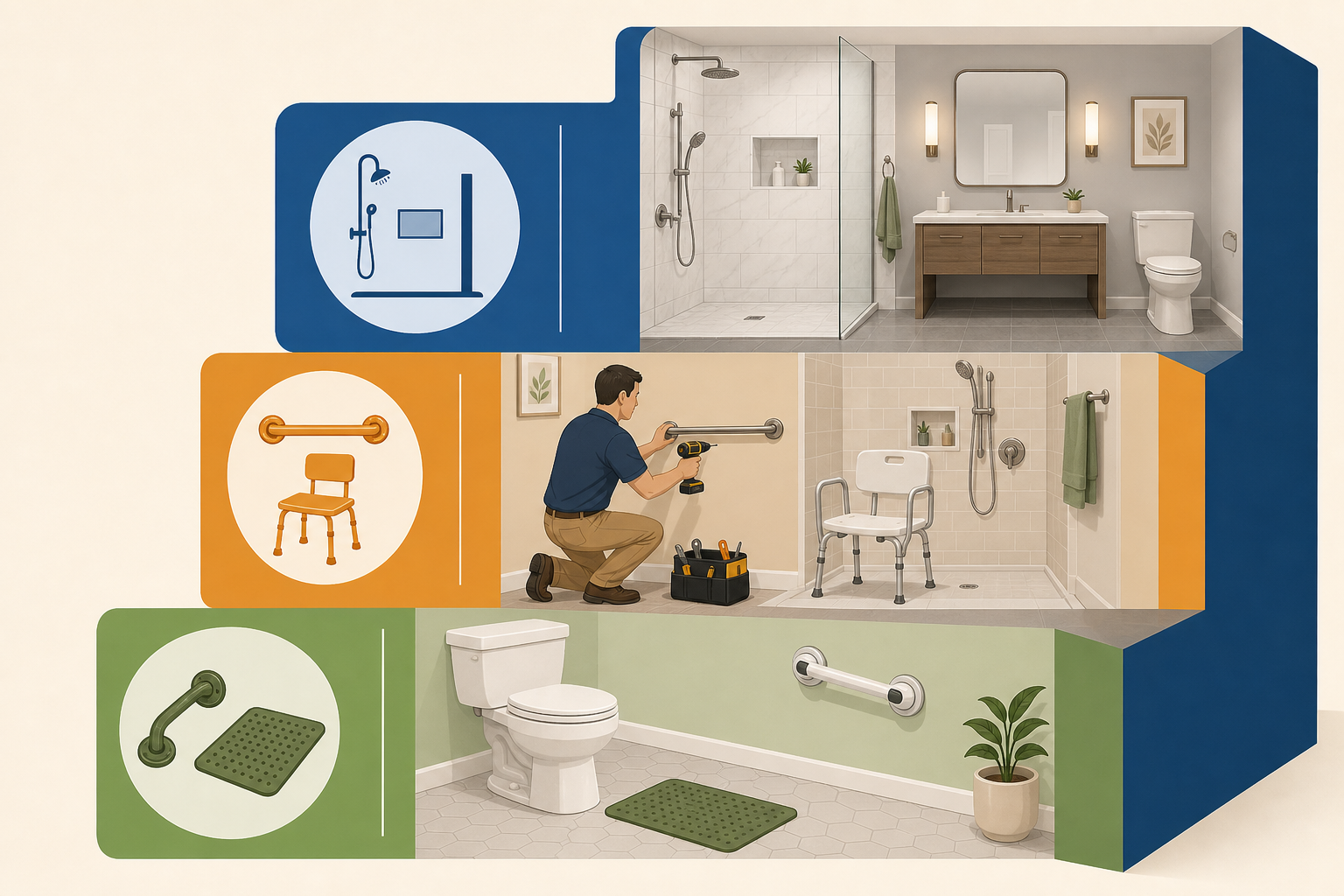
Bathroom Modifications to Prevent Falls for Aging in Place
The bathroom is the most injury-prone room in the home for older adults, but a structured, zone-by-zone approach to modifications — from low-cost grab bars to curbless shower conversions — can dramatically reduce fall risk. This guide covers the four key risk zones, tiered modifications by cost and complexity, realistic 2026 cost estimates, and the full range of funding sources available to families and veterans.