
Home Help for the Elderly: A Complete Guide to Services, Costs, and Fall Prevention
Last reviewed: — Review date is particularly important for Medicare coverage, device specifications, and clinical guidance, which change frequently.
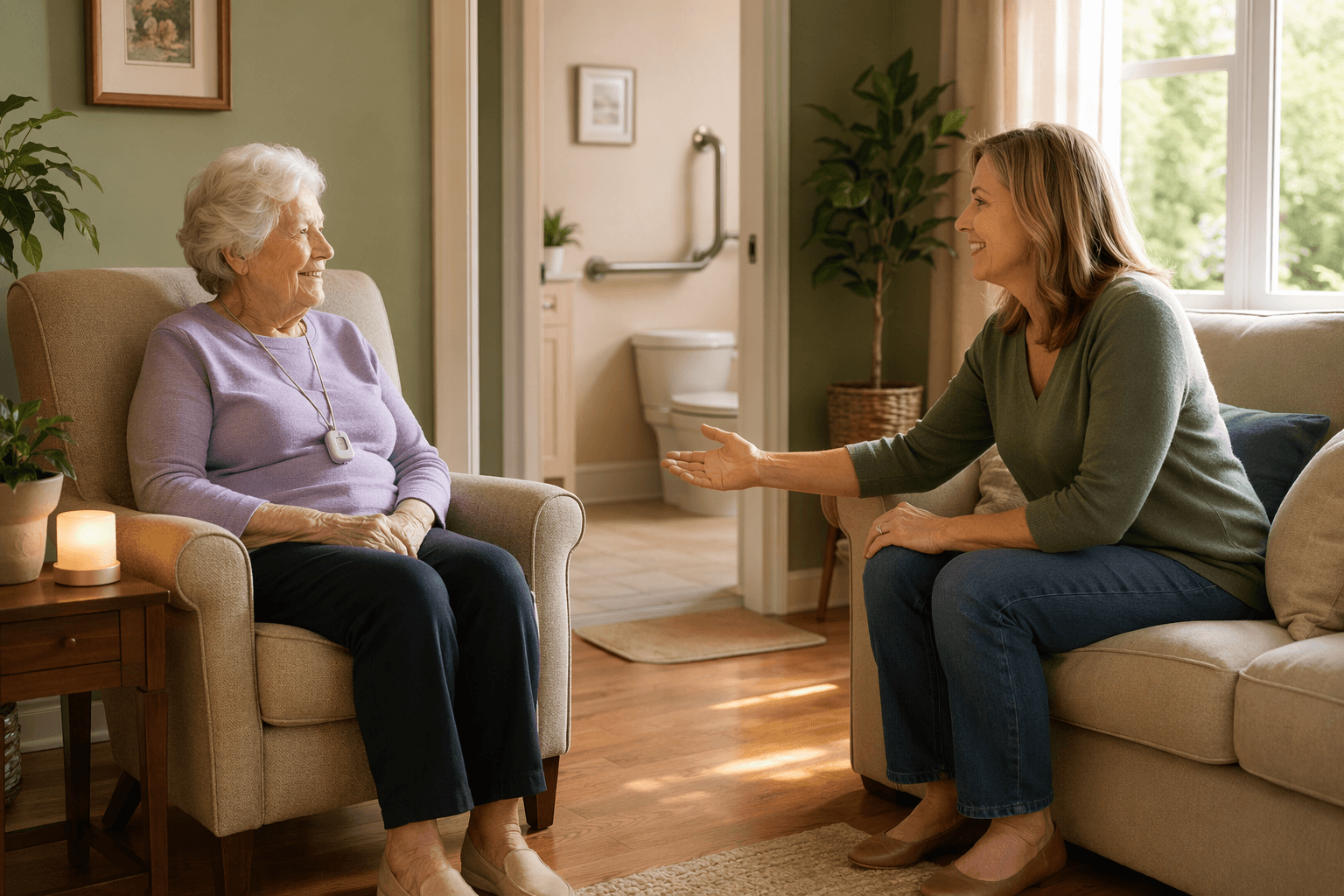
Why Home Help Matters Now: The Fall Prevention Imperative
Every 11 seconds, an older adult is treated in an emergency room for a fall. That rhythm — steady, relentless, and largely preventable — is the single most urgent reason to arrange home help early, not after a crisis. According to the CDC's STEADI initiative, more than 1 in 4 older adults report falling each year, and more than 95% of hip fractures are caused by falls. Each year, 3 million older adults are treated for fall injuries, and approximately 41,000 die from them — 112 people every day.
These numbers are not abstract statistics. For the adult child in their 40s or 50s who has just watched a parent fall, they are the sound of a door closing on the assumption that Mom or Dad can manage alone. The instinct that follows — "we need to get help in the house" — is correct. But the question of what kind of help, how much it costs, who pays for it, and how to keep it from happening again can feel paralyzing.
This guide treats home help not as a single service you order like a pizza, but as a layered system. Personal care aides, home health services, meal programs, transportation, safety modifications, and monitoring technology each address a different part of the puzzle. And fall prevention — the CDC's three-step STEADI model of Screen, Assess, Intervene — is the framework that ties them all together. When you understand how each layer reduces fall risk, you stop making decisions in isolation and start building a safety net that actually holds.
The Full Spectrum of Home Help Services: What Each Layer Does
Families often use the phrase "home care" to mean everything from a nurse changing a wound dressing to a companion playing cards. These are not the same service, and they are not paid for by the same sources. Understanding the distinction between each layer is the first step toward building a realistic plan.
| Service Type | What It Covers | Who Provides It | Typical Cost (2026) |
|---|---|---|---|
| Personal Care Aide (PCA) | Bathing, dressing, toileting, grooming, mobility assistance, eating | Home care agency or independent aide | $34–$35/hr (national median) |
| Home Health Aide (HHA) | Skilled tasks under nurse supervision: vital signs, medication, wound care | Certified home health agency (Medicare-certified) | $35/hr (national median); often covered by Medicare/Medicaid if prescribed |
| Homemaker / Companion | Light housekeeping, laundry, meal prep, errands, companionship, driving | Home care agency or independent worker | $25–$35/hr depending on region |
| Meal Delivery Programs | Prepared meals delivered to home (e.g., Meals on Wheels) | Nonprofit organizations, local senior services | Often subsidized or sliding scale; ~$8–$12/meal commercially |
| Transportation Services | Rides to medical appointments, grocery stores, social activities | Volunteer driver programs, ride-share senior services, Medicaid non-emergency transport | Free to low-cost through Area Agencies on Aging; varies by program |
| Emergency Alert Systems (PERS) | Push-button or automatic fall detection that alerts a response center or 911 | Medical alert companies (product-neutral category) | Startup fee + $20–$50/month; not typically covered by Medicare |
Read the Full Guide
FAQs provide a concise answer. For comprehensive coverage, see these related guides.
- Kitchen Fall Prevention Checklist for Older Adults: A Zone-by-Zone Safety Guide for Caregivers
Nearly 1 in 5 in-home falls among older adults happens in the kitchen. This evidence-based checklist helps adult children and spousal caregivers identify and fix kitchen-specific hazards using a simple zone-by-zone approach with tiered priorities.
- Home Fall Prevention Checklist for Older Adults: A Room-by-Room Guide for Family Caregivers
A prioritized, room-by-room home safety checklist aligned with CDC STEADI, designed for adult children and family caregivers responding to a parent's fall or increasing fall risk — covering both environmental hazards and the personal risk factors (medications, vision, footwear, balance) that most checklists miss, organized into a three-tier action model so you can act immediately on the highest-impact items.
- Nighttime Fall Prevention: How to Make the Bed-to-Bathroom Route Safe for Older Adults
The most dangerous moment for an older adult is the nighttime trip from bed to bathroom — when grogginess, poor lighting, and urgency collide. This guide provides a focused strategy for family caregivers to reduce fall risk along that critical path.
Comments
Join the discussion with an anonymous comment.