
Glossary entry
What the 2027 Social Security COLA increase can buy at home
Last verified 2026-08-25
This is not financial or legal advice. Medicare/Medicaid and benefits rules vary by state and change over time — verify current rules with your state Medicaid office or Area Agency on Aging.
Last verified Aug. 25, 2026: the 2027 Social Security COLA is still a projection, not an official number. The current practical estimate is roughly 3.5% to 3.6%. The Senior Citizens League projected 3.6% on Aug. 12, 2026, while AARP’s updated estimate was 3.5%.[1][2]
For the average retired worker, that points to about $73 to $75 more per month, depending on which benefit baseline is used. Using Social Security’s January 2026 average retired-worker benefit of $2,071, a 3.6% COLA would add about $75 a month, or about $900 over a year.[1][3] AARP’s 3.5% estimate works out to about $73 a month on its own average-worker baseline, while Kiplinger’s June 2026 snapshot calculation lands at $75.03.[2][4]
The official COLA announcement is expected Oct. 14, 2026, after the September inflation report. New Social Security amounts are expected to show up in January 2027 payments on the usual payment schedule, with dates listed as Jan. 3, 13, 20, and 27, 2027; SSI is scheduled for Dec. 31, 2026.[5]
The calculation itself is mechanical: Social Security compares the average CPI-W for the third quarter of 2026 with the third-quarter 2025 baseline average of 317.265, then rounds the increase to the nearest one-tenth of 1%.[6] That matters for accuracy, but it is not the household decision. The household decision is what one predictable new monthly amount can safely be assigned to before it disappears into everything else.
The monthly number is small enough to need a job
$73 to $75 a month is not a renovation budget. It will not make a bathroom universally accessible, replace a tub with a walk-in shower, or solve the ordinary squeeze from groceries, utilities, prescriptions, and premiums. It is useful precisely because it is traceable: one month can start the fund, two or three months can pay for a modest fix, and the first year can cover one prioritized safety upgrade without pretending that Medicare will automatically reimburse it.
| Source baseline | Projected COLA math | Monthly increase | Annualized planning amount |
|---|---|---|---|
| SSA January 2026 average retired-worker benefit: $2,071 | 3.6% projection | About $75 | About $900 |
| AARP average-worker baseline of about $2,086 | 3.5% estimate | About $73 | About $876 |
| Kiplinger June 2026 snapshot: $2,084.40 | Kiplinger snapshot calculation | $75.03 | About $900 |
That distinction matters. A percentage headline can sound larger than the deposited change feels, especially if Medicare premiums rise or if the household is already behind. Kiplinger cites a 2026 standard Part B premium of $202.90 and a projected 2027 premium of $209.50, a projection that would usually be deducted before many beneficiaries see their Social Security deposit.[4] The Senior Citizens League also reports that Social Security benefits have lost about 13.7% of buying power since 2010.[1]
So the fairest way to treat the projected COLA is not as a windfall. It is a narrow, recurring planning tool. For an older adult trying to stay steady at home, that can still be enough.
What $876 to $900 can realistically buy at home
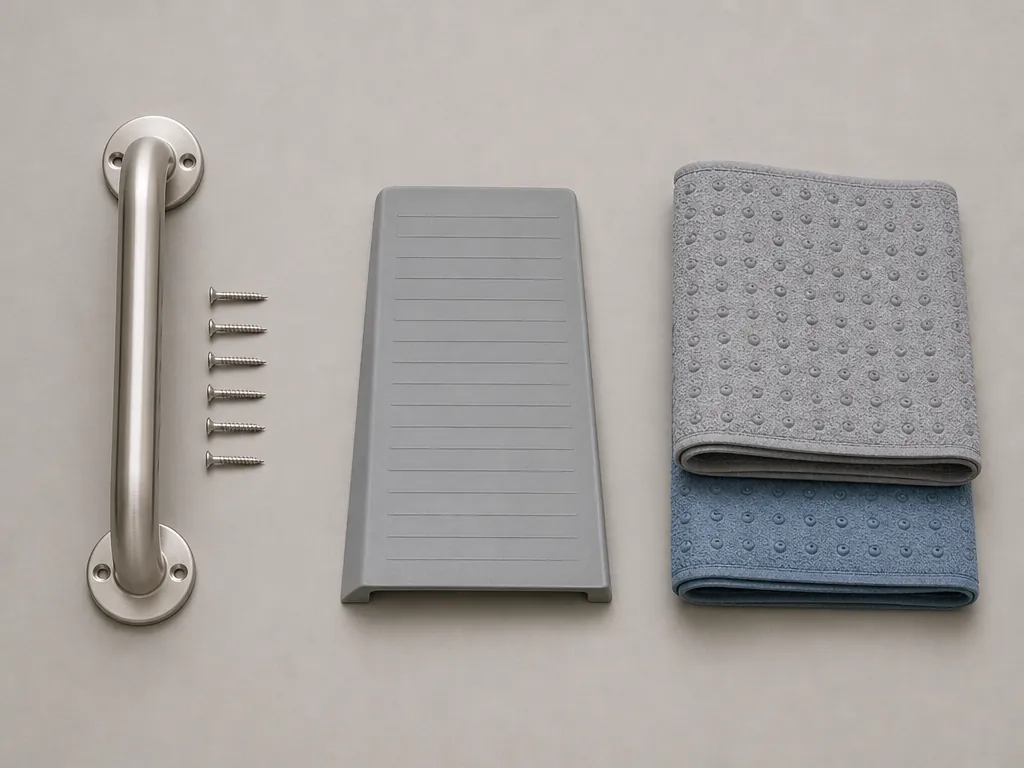
The best use of the projected increase is usually not a basket of small products. It is one completed fix at the place where a fall is most likely to become serious: getting into a tub, standing from the toilet, crossing a raised threshold, or stepping onto a slick bathroom floor.
| Home safety purchase | U.S. planning range | How the projected COLA could cover it | When it should move up the list |
|---|---|---|---|
| Professionally installed grab bar | $100 to $350[7] | Two to five months of a $73–$75 increase, or well within the first-year increase | A person reaches for a towel bar, wall edge, shower door, sink, or caregiver during transfers |
| Threshold ramp | $30 to $150[8] | Often one to two months of the increase | A cane, walker, wheelchair, or shuffling gait catches at a doorway or small step |
| Non-slip bath mats | $15 to $50[9] | Often less than one month of the increase | The tub or bathroom floor is slick, but the person still has stable hand support |
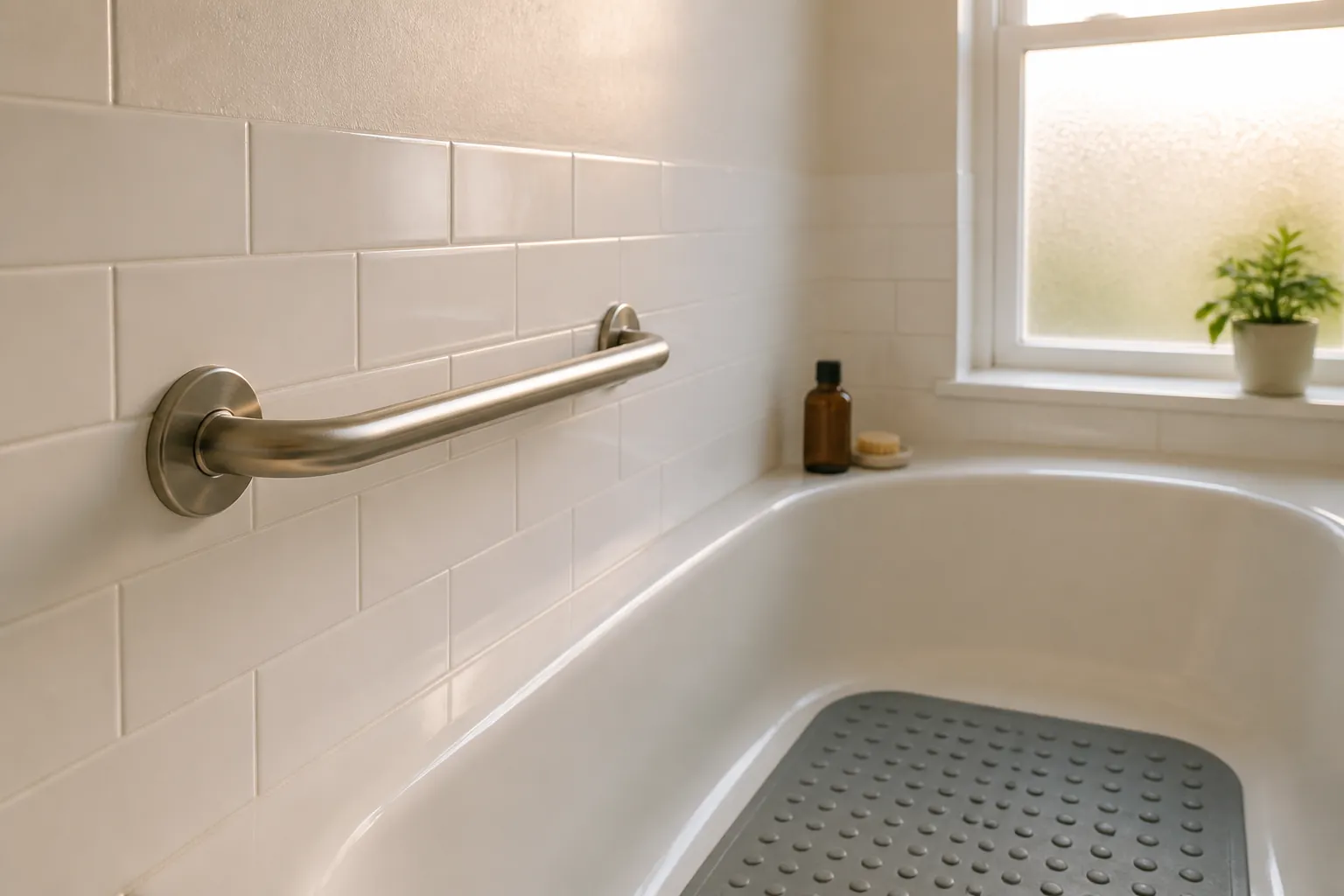
The grab bar deserves special attention because it changes what the person can hold when balance fails. A non-slip mat helps underfoot; a grab bar gives the hand somewhere reliable to go. That reliability depends on installation. A bar screwed into weak material or placed where the person cannot naturally reach it may create a false sense of safety. If the transfer point is wet, narrow, or already frightening, the first year of the COLA increase is a reasonable way to pay for professional installation rather than leaving the job half done.
A threshold ramp is a different kind of fix. It is less about bathroom transfers and more about interrupting a repeated trip point. If an older adult hesitates at the same doorway, lifts a walker over the same lip, or needs someone to steady them at a small entry step, a ramp may do more good than a bathroom purchase that only looks more serious.
Bath mats are the cheapest item in the group, and they are worth buying when the problem is a slick surface. But they should not be treated as a substitute for hand support. If the person is already grabbing the shower curtain, towel rack, or faucet, the mat is the secondary fix, not the main one.
National fall costs are large enough to sound abstract: the CDC has projected annual fall-related medical costs of $100 billion by 2030.[10] The household version is smaller and more useful. Which one place in the home makes someone pause, brace, or call for help? That is where the COLA dollars should go first.
A simple priority order
- Fix the transfer where a fall would be hardest to recover from: tub, shower, toilet, bed, or entry step.
- Choose the modification that removes the actual hazard, not the one that is easiest to buy online.
- If the fix must hold body weight, budget for proper installation instead of only the product.
- Use smaller purchases, such as non-slip mats or lighting, to support the main fix rather than scatter the money.
For a fuller product-neutral comparison, use a home safety product prioritization guide after the hazard is identified. If the concern is whether a parent’s home has crossed from ordinary clutter into fall-risk territory, start with a red-flag fall checklist before buying anything.
Medicare is usually not the funding plan for grab bars
This is where many families lose time. Original Medicare generally does not cover grab bars because they are treated as convenience items rather than durable medical equipment.[11] That same practical boundary often applies to ordinary home modifications: the fact that an item prevents a fall does not automatically make it a covered Medicare benefit.
Medicare Advantage is more variable. Some plans offer limited supplemental benefits for bathroom safety devices or home supports, but the benefit is plan-specific, may require approved vendors, and may have annual limits. AARP, cited by The Press Democrat, reported that only about 10% of Medicare Advantage plans cover some bathroom safety devices.[10]
The practical rule is plain: assume the retiree may need to self-fund the grab bar, ramp, or mats unless their own plan documents say otherwise. If a Medicare Advantage plan might help, check the Evidence of Coverage or call the plan before scheduling installation. Ask whether the item is covered, whether prior authorization is required, whether a specific contractor must be used, and whether the benefit is a reimbursement or an up-front allowance.
This article is general benefits-literacy and home-safety information, not financial, medical, or insurance advice. A local installer, clinician, benefits counselor, or plan representative may be needed for a specific household decision.
A defensible earmark for the first 2027 increase
When the January 2027 amount is confirmed, give the first increase a specific assignment before it is absorbed into the month. If the highest-risk spot is the bathtub or toilet, earmark the first several months for a professionally installed grab bar. If the repeated danger is a doorway or entry lip, use the increase for a threshold ramp and any needed smaller support. If the only immediate problem is a slick surface, buy the mat now and keep saving the rest for the next higher-risk fix.
The projected 2027 COLA will not make aging at home inexpensive. But at roughly $73 to $75 a month for the average retired worker, it is large enough to pay for one visible, finished fall-prevention upgrade—the kind that is already in the wall before the next unsteady step.
References
- COLA Projection Falls to 3.6% With 2 Months Remaining to 2027 Announcement, The Senior Citizens League, Aug. 12, 2026, link
- Social Security COLA 2027 Increase Estimate, AARP, updated Aug. 12, 2026, link
- 2026 Social Security Changes, Social Security Administration, link
- Social Security COLA 2027, Kiplinger, link
- Social Security COLA 2027, CNBC Select, link
- Latest Cost-of-Living Adjustment, Social Security Administration, link
- Grab Bar Installation Cost, HomeGuide, link
- Wheelchair Ramps and Threshold Ramps for the Home, Family CareWise, link
- Bathroom Safety Modifications Guide, Everhome Mobility, link
- Grab bars can help older adults avoid falls. Why won’t Medicare cover them?, The Press Democrat, July 13, 2026, link
- Does Medicare Cover Grab Bars?, MedicareAdvantage.com, link
Browse more in the Glossary.