
STEADI: Intervene
Red Flag Safety Checklist for Elderly Parents
A two-tier red-flag checklist for assessing an elderly parent's home: it separates signs that need action today — a recent fall, missed medications, confusion, burn marks — from hazards like loose rugs, poor lighting, and missing grab bars, with a concrete next step for each. Families can fix what is dangerous now and work the rest systematically, without panicking or missing a real risk.
You walk in for a normal visit and notice three things before lunch: the potholder has a new scorch mark, the Wednesday pills are still sitting in the organizer, and your father has a bruise he waves away as “nothing.” In the hallway, there is also a curled throw rug and a dim bulb. All of it matters, but it does not all matter in the same way.
A useful red flag warning safety checklist for elderly parents does not treat every flaw in the house as an emergency. It separates what needs action today from what should be repaired, scheduled, or watched soon. That distinction keeps the visit from becoming either a family fight or a harmless scavenger hunt.
The two-tier checklist: act today or schedule soon
| What you see or hear | Urgency tier | Next step before you leave |
|---|---|---|
| A recent fall, near-fall, unexplained bruise, new limp, head bump, or suddenly “furniture walking” through the house | Act now | Ask when, where, and how it happened; check for pain, head injury, dizziness, or new weakness; call the clinician, nurse line, or urgent care for guidance. Do not file a first fall under “wait and see,” because falling once doubles the chance of falling again, and fewer than half of older adults who fall tell their doctor. [1][2] |
| Pill organizer still full, expired prescriptions, duplicate bottles, missed refills, or confusion about what was taken | Act now | Do not throw bottles away yet. Photograph labels, note what appears missed, and call the prescriber or pharmacist. Set up a medication-management change before the next dose window if missed or double doses are possible. |
| New confusion about time or place, wandering, getting lost, doors found open, or unsafe decisions that are out of character | Act now | Stay until another responsible person is present if immediate safety is uncertain. Call the clinician for same-day advice, and use emergency help if the person may wander into traffic, extreme heat or cold, or another immediate danger. |
| Burn marks, scorched towels or potholders, melted containers, gas smell, smoke alarm activation, or the stove left on | Act now | Turn off the appliance if it is safe to do so. For gas smell, leave and call the gas utility or emergency services. Until reviewed, change the cooking setup: supervised cooking, prepared meals, stove knob covers, automatic shutoff, or disconnecting an unsafe appliance. |
| Trouble stepping into the tub, gripping a towel bar for balance, sliding on a wet floor, or struggling to rise from the toilet | Act now if the transfer is unsafe today; otherwise schedule soon | Do not ask your parent to “show you” a risky transfer alone. Pause bathing if needed, arrange help, and schedule grab bars, non-slip surfaces, and a safer bath routine. |
| Loose throw rugs, cluttered walking paths, cords across traffic areas, or furniture that forces narrow turns | Schedule soon | Remove or secure rugs, clear the walking route, and move cords along walls. CDC STEADI’s Check for Safety approach pairs room hazards with specific fixes rather than vague warnings. [3] |
| Poor lighting, no nightlights, dark stairs, or no easy switch near the bed | Schedule soon | Replace bulbs, add motion nightlights, and make the bed-to-bathroom route visible at night. |
| Missing, loose, or one-sided stair handrails; uneven steps; no contrast at stair edges | Act now if stairs are the only unsafe route; otherwise schedule soon | Avoid unnecessary stair use until repaired. Install secure handrails and improve stair lighting. |
| Daily-use items stored overhead or low to the floor; use of a step stool for routine items | Schedule soon | Move frequently used items to waist-to-shoulder height. The fix is usually faster than the argument about whether the step stool is “fine.” |
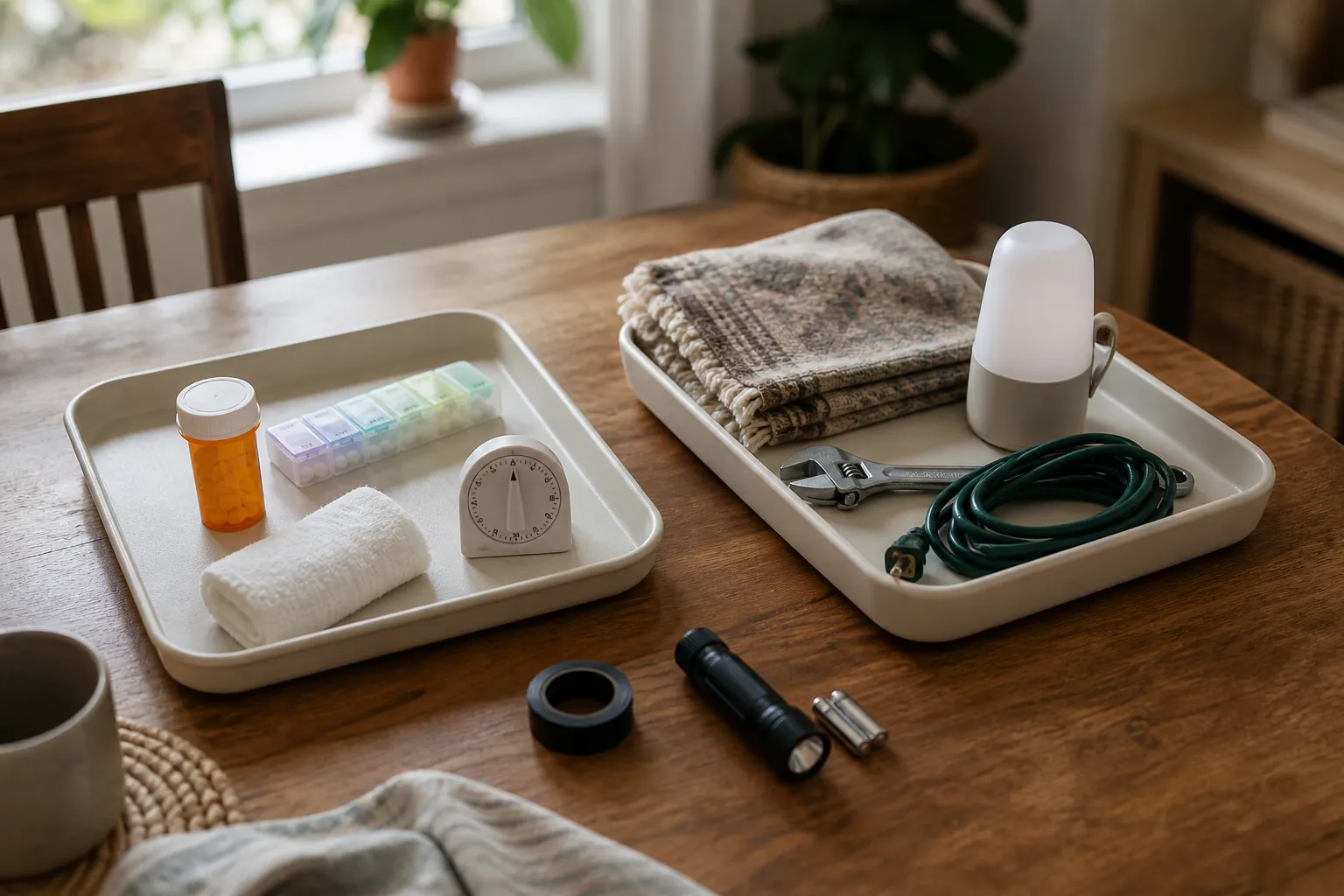
This checklist is not a diagnosis, and it is not a verdict on whether someone can live alone. It is a sorting tool. The act-now side means someone needs to intervene, call, supervise, or make a temporary change today. The schedule-soon side means the home is giving you work to do, but not every item requires the same level of alarm.
Why a first fall belongs in the act-now tier
The easy family compromise after a fall is to say, “Let’s monitor it.” That sounds respectful. Sometimes it is also a way of leaving the person who fell to manage the next fall alone.
CDC data put the first fall in a different category: one in four older adults falls each year, about 14 million older adults fall annually, and roughly 37% of falls cause an injury that requires treatment or restricts activity. The most important checklist fact is the recurrence risk: falling once doubles the chance of falling again. [1][2]
There is another reason not to rely only on what your parent reports. Fewer than half of older adults who fall tell their doctor. [2] That means a bruise, a new limp, a bent lamp, a towel bar pulled loose, or a sudden reluctance to shower may be the real report.
A fall does not automatically mean the house has become impossible. It does mean the family should stop treating the home walkthrough as a general tidying project. Write down the location, time of day, footwear, lighting, symptoms, and what the person was trying to do. Then contact the clinician and ask specifically about fall-risk review: medications, blood pressure, dizziness, vision, gait, strength, pain, and whether physical therapy or an occupational therapy home assessment is appropriate.
The place of the fall matters too. In the SAFE study of high-risk older adults, two-thirds of falls occurred inside the home, and bathroom falls were 2.4 times more likely to cause injury than living-room falls. [4] So if the fall happened during toileting, showering, getting out of bed, or moving from one surface to another, do not bury that detail under “he tripped.” Transfers deserve their own plan.
Walk the house as evidence, not accusation
The best walkthrough is quiet and specific. You are not building a case that your parent is failing. You are finding the places where the house now asks for more balance, memory, reach, vision, or reaction time than it used to.
Start where the day actually happens: kitchen, medication area, bathroom, bedroom, stairs, main walking paths, and entry. If you are long-distance, ask for a slow video call through the same route. Do not ask for a polished tour. Ask to see the pill area, the stove, the bathroom floor, the bed-to-bathroom path, and the entry steps.
Kitchen: burn marks, gas, and cooking that has become unsafe
A scorched potholder is not the same as a loose rug. Burn evidence means heat was already uncontrolled at least once. Look for blackened towels, melted plastic, pans left on burners, a kettle boiled dry, food burned repeatedly, smoke alarm complaints, or a parent who says the gas smell is “always like that.”
For a gas smell, do not troubleshoot like a handyman. Leave, keep switches and flames alone, and call the gas utility or emergency services. For repeated stove-left-on incidents, the temporary fix has to reduce access to the hazard: prepared meals, supervised cooking, an induction cooktop with automatic shutoff, stove knob covers, or disconnecting the appliance until the family and clinician understand what is happening.
This is one of the places where dignity and safety can live together. The conversation does not have to begin with “You can’t cook anymore.” It can begin with “This burner was left on, so we need a safer dinner plan while we sort out why.”
Medication area: missed pills are a safety signal, not housekeeping
A full Wednesday compartment on Thursday morning is not just clutter. It may mean a dose was missed, taken from another bottle, taken twice later, intentionally skipped because of side effects, or misunderstood because the regimen changed. Each possibility points to a different fix, so guessing is not helpful.
- Photograph each prescription and over-the-counter bottle, including the label and date.
- Write down what the pill organizer shows today, without dumping it out.
- Ask, neutrally, “How are you taking this one now?” rather than “Why didn’t you take it?”
- Call the prescriber or pharmacist if there are missed doses, duplicates, expired bottles, dizziness, sedation, confusion, or uncertainty about what was taken.
- Before leaving, decide who owns the next medication step: refill pickup, pill setup, pharmacy packaging, reminders, or a nurse/clinician review.
Medication problems also connect back to falls. If your parent is newly dizzy, sleepy, confused, rushing to the bathroom, or unsteady after a medication change, put that in the act-now notes for the clinician. Do not just fix the rug and miss the reason they are falling toward it.
Bathroom: treat transfers as high priority
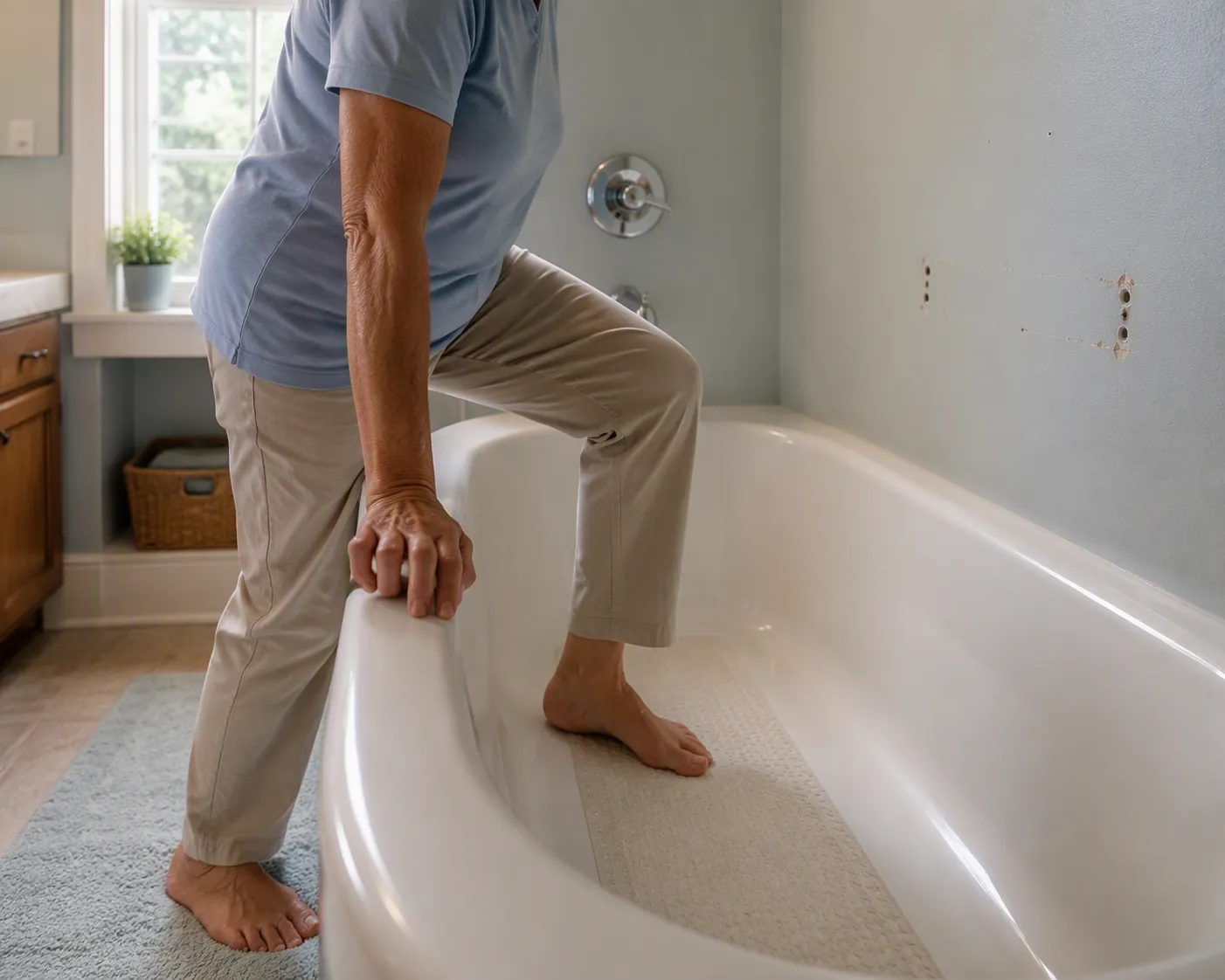
The bathroom deserves more attention than most families give it. It combines wet surfaces, urgency, small spaces, turning, lowering, standing, and stepping over edges. If someone is grabbing a towel bar, sink edge, sliding glass door, or shower curtain rod for balance, the house is already using the wrong equipment.
The immediate question is whether bathing and toileting are safe today. If the answer is no, do not wait for a full remodel estimate. Change the routine first: sponge bathing temporarily, supervised bathing, a shower chair if appropriate, a bedside commode for nighttime urgency, or help from a trained caregiver. For the permanent work, prioritize anchored grab bars, non-slip tub or shower surfaces, safer toilet transfers, and lighting that works at night.
Room-by-room guidance from CDC STEADI and CICOA points to practical fixes families can recognize: grab bars near the toilet and inside and outside the tub, non-slip bath mats or strips, nightlights, cords kept near walls, secure handrails, and daily-use items placed at waist level. [3][5] If the bathroom is the first major project, a more detailed planning guide can help you sort grab bars, flooring, shower entry, and layout; see this bathroom remodel guide for elderly safety.
Paths, stairs, lighting, and reach
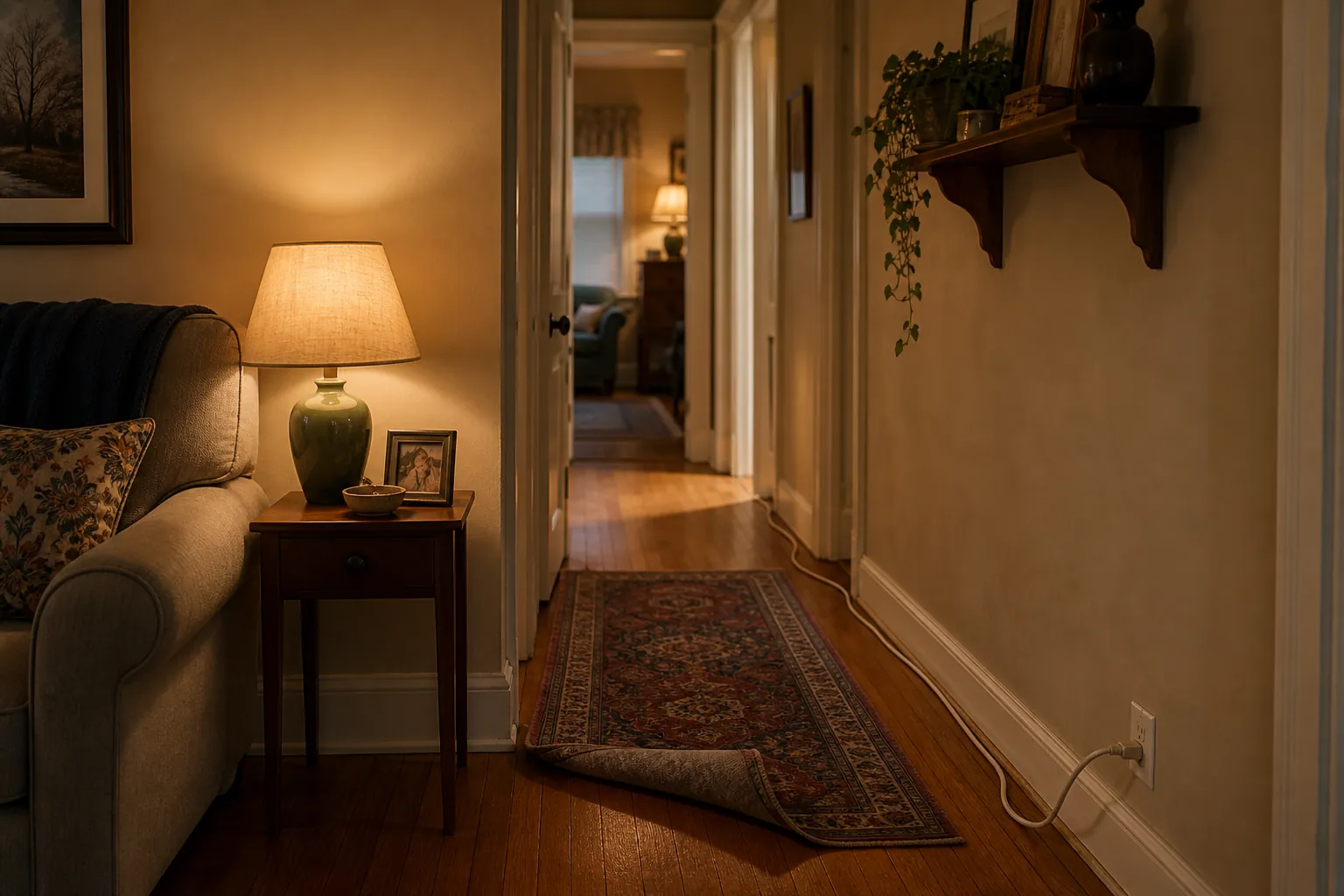
The plan-ahead tier is where you can move briskly. Curled rugs, poor lighting, cords, clutter, missing handrails, and high storage are real hazards, but most do not require a family summit. Fix what can be fixed during the visit and write down what requires a handyman, landlord, contractor, or occupational therapist.
| Area | What to look for | Practical fix |
|---|---|---|
| Main walking paths | Rugs that curl or slide, cords crossing traffic areas, furniture that narrows turns, stacks of papers or boxes | Remove or secure rugs, move cords along walls, clear a wide path, and reduce furniture that forces sideways walking. |
| Bedroom to bathroom route | Dark path at night, no reachable lamp or switch, shoes or laundry on the floor | Add motion nightlights, place a lamp within reach, clear the floor, and keep supportive footwear where it is actually used. |
| Stairs and entry | Loose steps, missing rail, one-sided rail, poor lighting, no place to set packages | Repair steps, install secure handrails, improve lighting, and create a landing spot so both hands are not occupied on stairs. |
| Living room | Low chairs that are hard to rise from, unstable side tables, cords near favorite chair | Use a chair with arms and a firm seat height, remove unstable tables from transfer zones, and route cords away from feet. |
| Kitchen and storage | Daily items stored high, heavy pans overhead, routine use of step stools | Move everyday items to waist-to-shoulder height and reserve high storage for rarely used light items. |
If your parent has untreated or changing hearing or vision problems, the same house can become riskier. NCOA reports that hearing loss nearly triples fall risk, consistent hearing aid use cuts that risk by about half, and vision loss nearly doubles fall risk. [6] That does not mean every missed word is a fall emergency. It means glasses, lighting, hearing aids, and appointment follow-through belong in the same safety conversation as rugs and rails.
What to do after the walkthrough
After the walkthrough, do not leave with a long, equal-weight list. A list with 27 items often produces the same result as no list: everyone agrees it is important, then nothing happens first.
Make a ranked fix list before you leave or before the video call ends. Keep it short enough that one person can own each next step.
- Act-now contacts: clinician, pharmacist, nurse line, gas utility, emergency services, or a nearby person who can stay. These are not home-improvement tasks; they are safety interruptions.
- Temporary supervision or routine changes: no unsupervised bathing, no stove use, no stair use, no driving after a confused episode, or medication help until reviewed.
- First repair cluster: bathroom transfers, stairs and handrails, night lighting, and the main walking path. Start where injury consequences are high and daily exposure is frequent.
- Second repair cluster: storage height, furniture layout, cords, thresholds, entry organization, and less-used rooms.
- Professional assessment: request an occupational therapist, Certified Aging-in-Place Specialist, qualified contractor, or clinician review when the hazard involves transfers, repeated falls, mobility changes, cognitive change, or modifications you are not sure how to specify.
There is good reason to keep the process manageable. A review on home safety assessment and modification reported that home safety modification programs reduce falls by about 39% among at-risk older adults, and a 74-item home checklist took participants about 10 minutes on average to complete. [7] The inspection itself does not have to consume the visit. The harder part is deciding which findings change today’s plan.
If the fix list is moving from quick repairs into paid modifications, it helps to separate clinical advice, design advice, and construction work. This comparison of CAPS specialists, occupational therapists, and general contractors can help you decide who should be in the house first. For larger prioritizing decisions, use a caregiver decision framework for aging-in-place home modifications rather than trying to price everything in one anxious afternoon.
When several red flags show up at once
One loose rug is a repair. A loose rug plus a recent fall plus missed blood pressure pills plus new confusion is a pattern. The checklist should get more serious when signs cluster across different parts of life: mobility, medication, memory, cooking, hygiene, and home condition.
Clusters are not a medical diagnosis. They are a reason to stop assigning each warning sign to a different excuse. If three or more act-now or near-act-now signs appear during the same visit, set up a family call with assignments, contact the clinician, and arrange local eyes in the home until the riskiest items are addressed.
For siblings who live far away, “monitoring” has to mean more than asking, “How are things?” Useful monitoring sounds like this: “Show me the pill organizer,” “Walk me from the bed to the bathroom with the camera pointed at the floor,” “Open the cabinet where you keep the pans,” or “Who is checking the grab bar installation date?” It is less elegant than offering opinions and much more useful.
When to bring in help instead of adding more checklist items
Bring in a clinician promptly for a recent fall, repeated near-falls, unexplained bruising, sudden confusion, dizziness, fainting, medication uncertainty, new weakness, or a change that seems abrupt. Use emergency help for suspected stroke symptoms, serious injury, chest pain, uncontrolled bleeding, gas danger, fire danger, or wandering into immediate harm.
Bring in an occupational therapist or other home-safety professional when the problem is functional: getting in and out of the tub, rising from the toilet, using stairs, transferring from bed to chair, moving with a walker, or figuring out whether a grab bar, raised toilet seat, shower chair, ramp, rail, or layout change is actually right for the person. If transfers are the issue, this guide to transfer aids and techniques for senior caregivers can help you talk about the problem more clearly before the appointment.
Bring in a contractor or CAPS professional when the work is structural or installation-heavy: grab bars anchored into the right backing, stair rails, ramps, threshold changes, shower-entry changes, lighting, flooring, or doorway adjustments. If cost is the barrier, look for local aging-in-place repair programs, county aging services, nonprofit programs, or volunteer modification help; this overview of Habitat for Humanity aging-in-place programs is one place to start.
The final step is not to pronounce the house safe forever. Fix today’s red flags, schedule the plan-ahead hazards, and reassess after the changes. A parent’s home should not be judged by one loose rug, and it should not be excused after one fall. The point is to keep sorting: what needs action now, what needs repair soon, and what has changed since the last visit.
References
- Older Adult Falls Data — CDC
- Facts About Falls — CDC
- Patient Resources — CDC STEADI
- Circumstances and Outcomes of Falls Among High Risk Community-Dwelling Older Adults — PMC
- In-Home Safety Checklist — CICOA
- Get the Facts on Falls Prevention — NCOA
- Home Safety Assessment and Modification to Reduce Fall Risk in Older Adults — PMC
Related reading
Noticed something outdated or inaccurate on this page? Flag a correction. We review every report against CDC, NIA, and AARP HomeFit guidance before updating a page.
Part of the Fall Prevention section.