
Clinical term
Why Cyclosporiasis Prevention Belongs in Your Fall Prevention Plan
Last verified 2026-07-14
A fall-prevention plan usually starts with the obvious things: better lighting, fewer throw rugs, safer shoes, grab bars, medication review. That is all necessary. But for an older adult, a stomach infection can undo that work in one bad night.
The chain is not complicated: prolonged watery diarrhea drains fluid, dehydration can make blood pressure drop when someone stands, that drop can cause dizziness or faintness, and the next step may be the bathroom floor. That is why preventing cyclosporiasis in older adults belongs in the same conversation as walkers, night-lights, and shower chairs.
Cyclospora is the parasite behind cyclosporiasis, a foodborne intestinal illness often linked to contaminated fresh produce. In 2026, this is not just a theoretical concern: as of July 14, the CDC had reported 1,645 confirmed cyclosporiasis cases across 34 states, a 6.6-fold increase over the same period in 2025, with 9% of confirmed patients hospitalized. The reported age range was 2 to 95, with a median age of 44, so the outbreak is not limited to older adults - but older adults have less room for error when dehydration starts. [1]
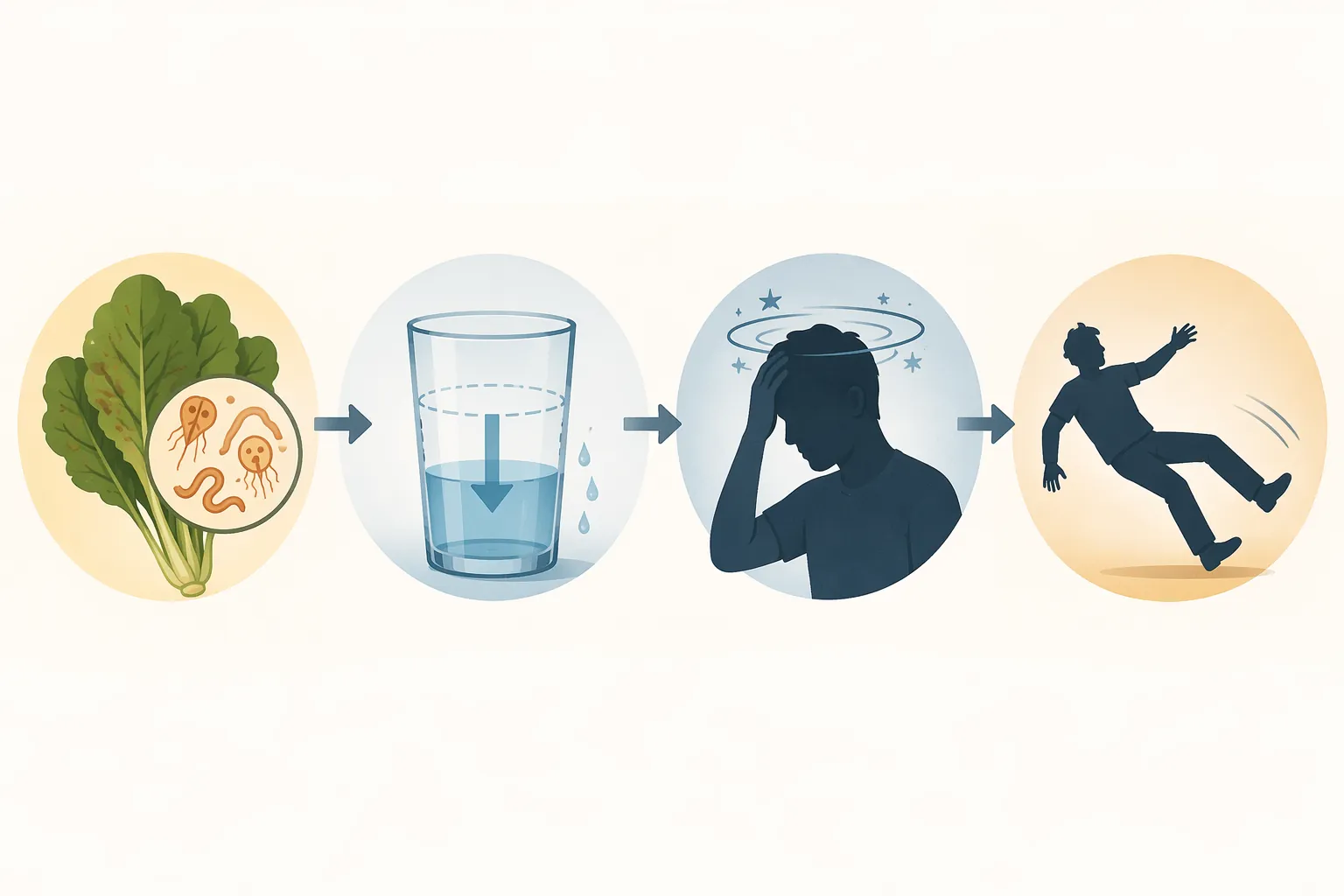
Why a Gut Infection Becomes a Fall Risk
Cyclosporiasis is often described as a diarrheal illness, which can make it sound temporary and contained. For a healthy younger adult, it may be miserable but manageable. For an older adult who already gets lightheaded after standing, takes a diuretic, uses a cane, or needs the bathroom at night, the same illness can change the whole risk picture.
The problem is the duration and fluid loss. Cyclospora infection can cause watery diarrhea, and symptoms may last for days to weeks without treatment. Cleveland Clinic notes that cyclosporiasis symptoms can include diarrhea, fatigue, loss of appetite, stomach cramps, bloating, nausea, and weight loss. [2]
A caregiver does not need to diagnose the parasite to understand the danger. If an older person has repeated watery stools, eats less, drinks less, sleeps poorly, and then tries to stand quickly from a recliner or toilet, the body may not keep blood pressure steady. That moment - standing up while depleted - is where a foodborne illness can become a fall event.
This is a practical connection, not a claim that a CDC fall-prevention document has singled out Cyclospora by name. The CDC's cyclosporiasis materials describe the infection and prevention steps; fall-prevention practice separately treats dizziness, weakness, medication effects, and dehydration-related instability as things caregivers cannot ignore. The point is to connect those facts before someone is already weak and rushing to the bathroom.
Older Adults Start Closer to the Danger Line
The reason this matters more after 65 is not that every older adult is fragile. It is that many older adults have less reserve when fluid loss begins. Cohort research cited in the medical literature has found that more than one-third of older adults were dehydrated at baseline, and dehydration was strongly associated with falls. [3]
That baseline matters. If someone is already mildly dehydrated on an ordinary day, diarrhea does not begin at zero. It starts on top of a body that may already be balancing blood pressure, kidney function, constipation concerns, bladder urgency, and medications that affect fluid or electrolytes.
The CDC's food-safety risk guidance gives the broader warning sign: adults 65 and older are more likely to get very sick from foodborne illness, and nearly half of adults 65 and older with a lab-confirmed foodborne illness are hospitalized. [4]
Hospitalization is not the only outcome caregivers are trying to avoid. A fall at home can mean an ambulance ride, a hip fracture evaluation, a rehab stay, or weeks of new dependence. The infection may be temporary; the fall can rearrange the calendar for months.
The Part Ordinary Produce Advice Misses
The usual food-safety advice is to wash produce. That is still useful for removing dirt and reducing some germs, but it is not enough for Cyclospora. This is the detail that should change behavior in a household with an older adult at high fall risk.
The CDC states that washing produce well is recommended, but it may not eliminate the risk of Cyclospora. The CDC also states that cooking food to at least 158°F/70°C kills Cyclospora. [5]
During the 2026 investigation, the CDC also warned that routine chemical disinfection methods, including chlorine-based sanitizers, are not effective against Cyclospora oocysts in food. [1]
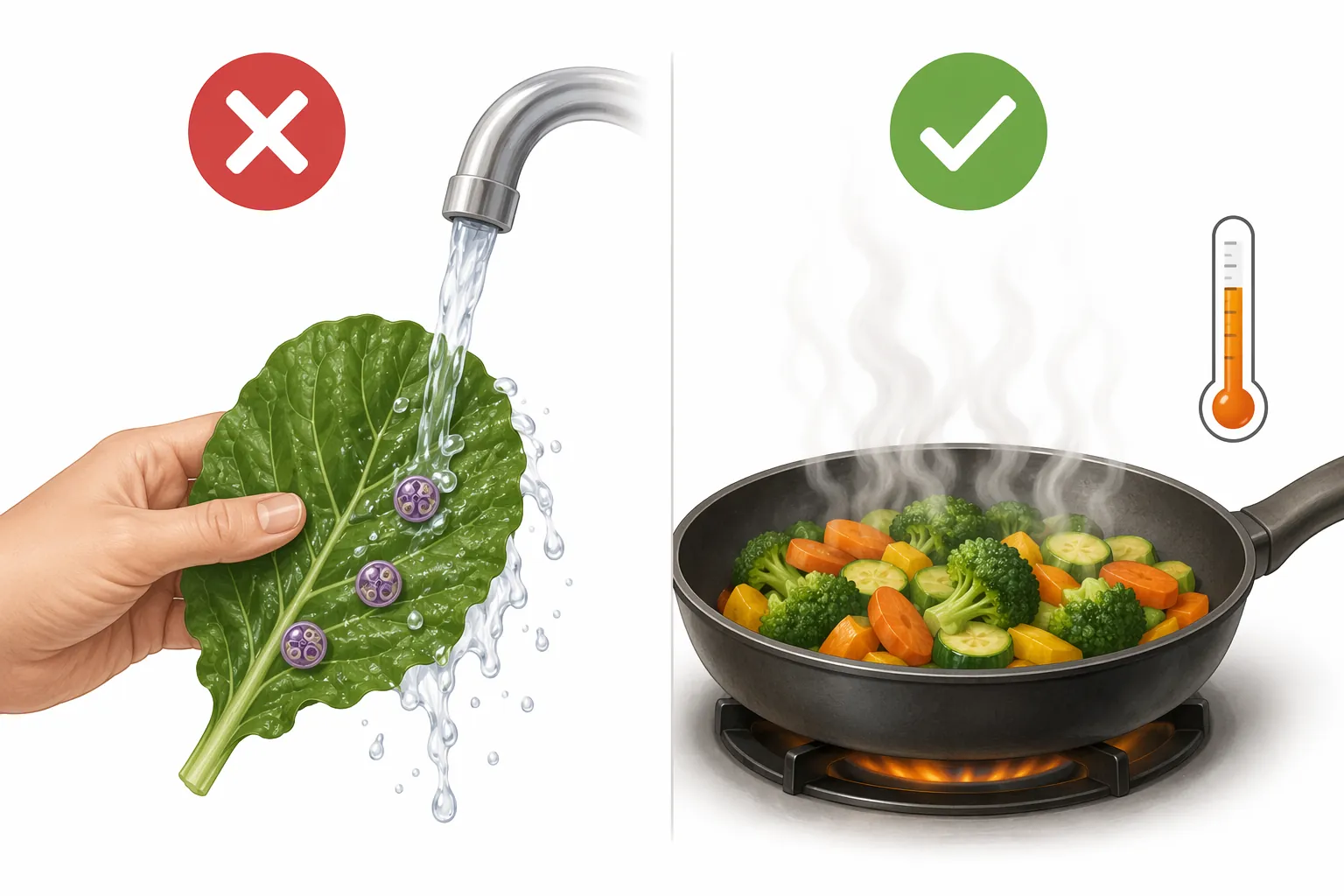
That makes prevention more specific than "rinse the lettuce." For a younger household, serving raw produce during an outbreak may feel like a small gamble. For an older adult who is already unsteady, the same choice can be part of the fall-risk environment.
Prevention Choices That Fit a Fall-Prevention Plan
The goal is not to make produce frightening. The goal is to stop treating all produce handling as if a rinse solves the problem. When Cyclospora is a concern, the safer choices are the ones that reduce exposure before diarrhea ever starts.
- Cook higher-risk produce when that fits the meal. Heating food to at least 158°F/70°C is the reliable kill step identified by the CDC for Cyclospora. [5]
- Do not rely on washing as a complete safeguard. Rinsing produce remains a reasonable habit, but CDC guidance is clear that washing may not eliminate Cyclospora risk. [5]
- Discard outer leaves of lettuce and cabbage. The CDC includes this in its produce-handling advice, along with rinsing produce under running water before eating, cutting, or cooking. [5]
- Wash hands, cutting boards, utensils, and counters with soap and water after handling fresh produce. This does not replace cooking when cooking is appropriate, but it prevents a contaminated surface from becoming the next problem. [5]
- Follow current CDC outbreak and recall information when cases are rising. The July 2026 case count is date-stamped because outbreak numbers can change quickly. [1]
This is where the fall-prevention lens helps. A caregiver may already remove a loose rug because it creates a predictable hazard. Raw produce linked to an active Cyclospora concern is different in form, but not in logic: it is a modifiable exposure that can set up weakness, dizziness, and a fall.
If Symptoms Start, Treat Dehydration as Urgent
Prevention is the cleanest fall-risk control. Once watery diarrhea begins, the plan changes from food handling to monitoring, hydration, and medical judgment. Older adults should contact a clinician promptly for persistent diarrhea, signs of dehydration, dizziness, confusion, fainting, reduced urination, worsening weakness, or inability to keep fluids down.
Cleveland Clinic describes trimethoprim-sulfamethoxazole, often shortened to TMP-SMX, as the usual treatment for cyclosporiasis. [2] That does not mean an older adult should self-treat or wait out symptoms at home. TMP-SMX can interact with medicines commonly used by older adults, including warfarin, sulfonylureas, ACE inhibitors, ARBs, diuretics, and methotrexate. Diarrhea itself can also affect blood pressure, kidney function, and electrolyte balance.
Oral rehydration can be helpful for many people with fluid loss, but older adults with heart failure, kidney disease, fluid restrictions, or complex medication regimens should ask a clinician what is safe for them. Drinking too little can be dangerous; drinking the wrong amount or type of fluid can also be a problem for some patients.
At home, the practical fall-prevention response is simple: do not let a weak, dizzy person make repeated unassisted trips through a dark hallway. Increase supervision, improve bathroom lighting, keep a clear path, consider a bedside commode if already recommended by a clinician or therapist, and get medical advice early rather than waiting for the first fall.
The same foodborne-illness-to-fall pathway comes up with other outbreaks too; for example, egg recalls can create a similar dehydration and weakness problem in older adults. The difference with Cyclospora is that ordinary confidence in washed raw produce may be misplaced. For a related example, see why egg recalls deserve a spot in your fall prevention plan.
What to Change in the Home Routine
| Usual fall-prevention focus | Cyclospora-related addition |
|---|---|
| Night-lights and clear bathroom paths | Assume diarrhea can create urgent, repeated nighttime trips |
| Medication review for dizziness | Call a clinician early if diarrhea, weakness, or dehydration appears |
| Hydration reminders | Treat fluid loss from watery diarrhea as a fall-risk trigger |
| Safer meal preparation | Cook higher-risk produce when appropriate instead of relying only on washing |
| Watching public safety alerts | Check CDC outbreak and recall updates during active Cyclospora activity |
A complete fall-prevention plan does not stop at the floor. It also asks what could make an older adult weak, dehydrated, dizzy, rushed, or confused enough to fall despite a tidy hallway. Cyclosporiasis prevention belongs there because it targets one preventable trigger before the 2 a.m. cascade begins.
References
- Health Alert Network (HAN) - 00531: Increase in Reported Cyclospora Infections, United States, 2026. CDC. July 14, 2026.
- Cyclosporiasis: Cyclosporiasis. Cleveland Clinic.
- Dehydration and falls cohort data: NIH/PMC dehydration and falls cohort data. NIH/PMC.
- People at Increased Risk for Food Poisoning: People at Increased Risk for Food Poisoning. CDC.
- Preventing Cyclosporiasis: Preventing Cyclosporiasis. CDC.
Browse more in the Glossary.