Why Egg Recalls Deserve a Spot in Your Fall Prevention Plan
An egg recall isn't just a food safety alert—for an older adult, Salmonella infection can cause rapid dehydration that significantly raises fall risk. This guide explains why proper recall response belongs in every senior fall prevention plan and provides a step-by-step action checklist tailored to aging adults.
The egg carton is not what most families look for during a fall-prevention walk-through. They check the throw rug, the bathroom light, the stair rail, the shoes by the door. Then someone opens the refrigerator and sees a carton that looks ordinary enough to keep.
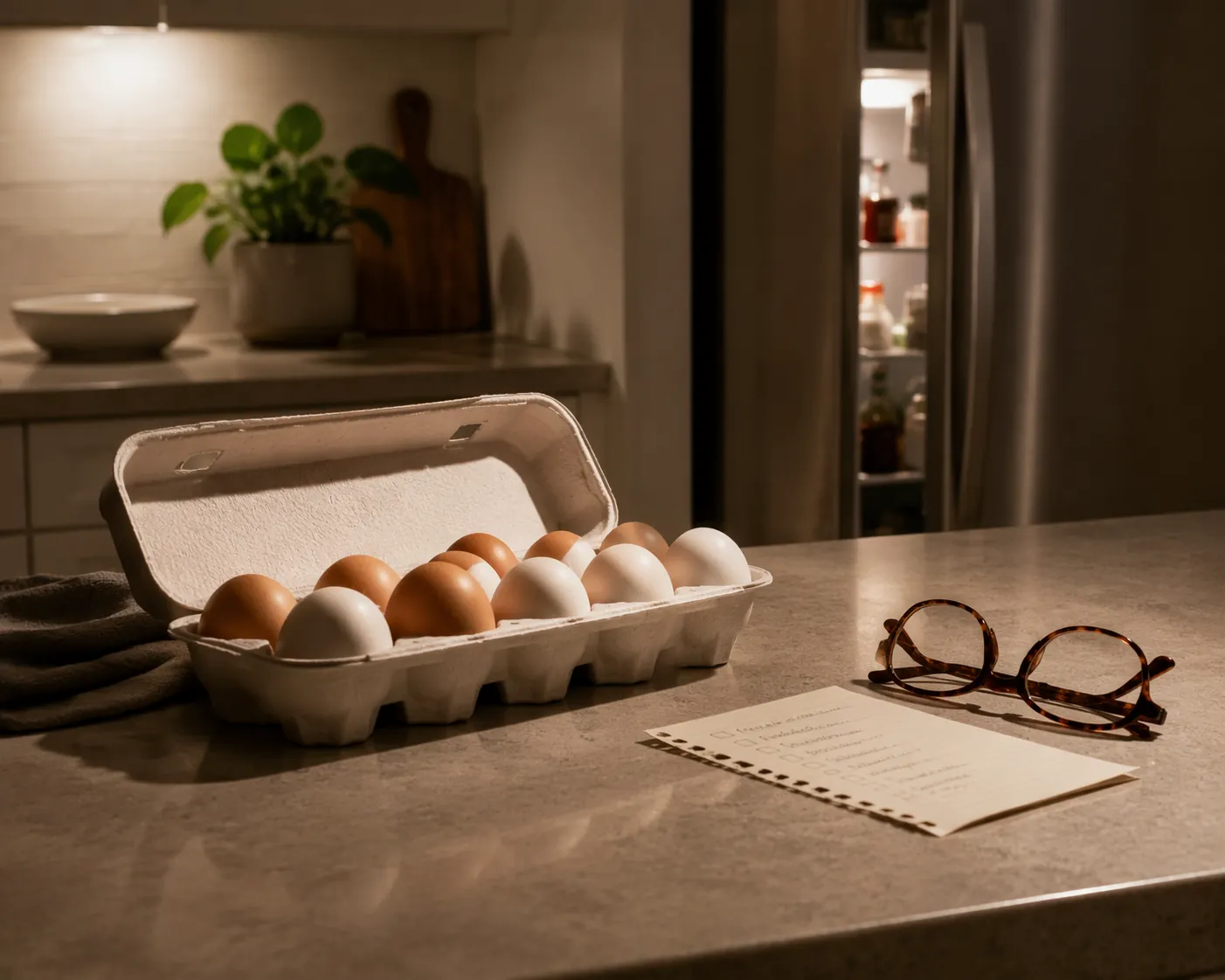
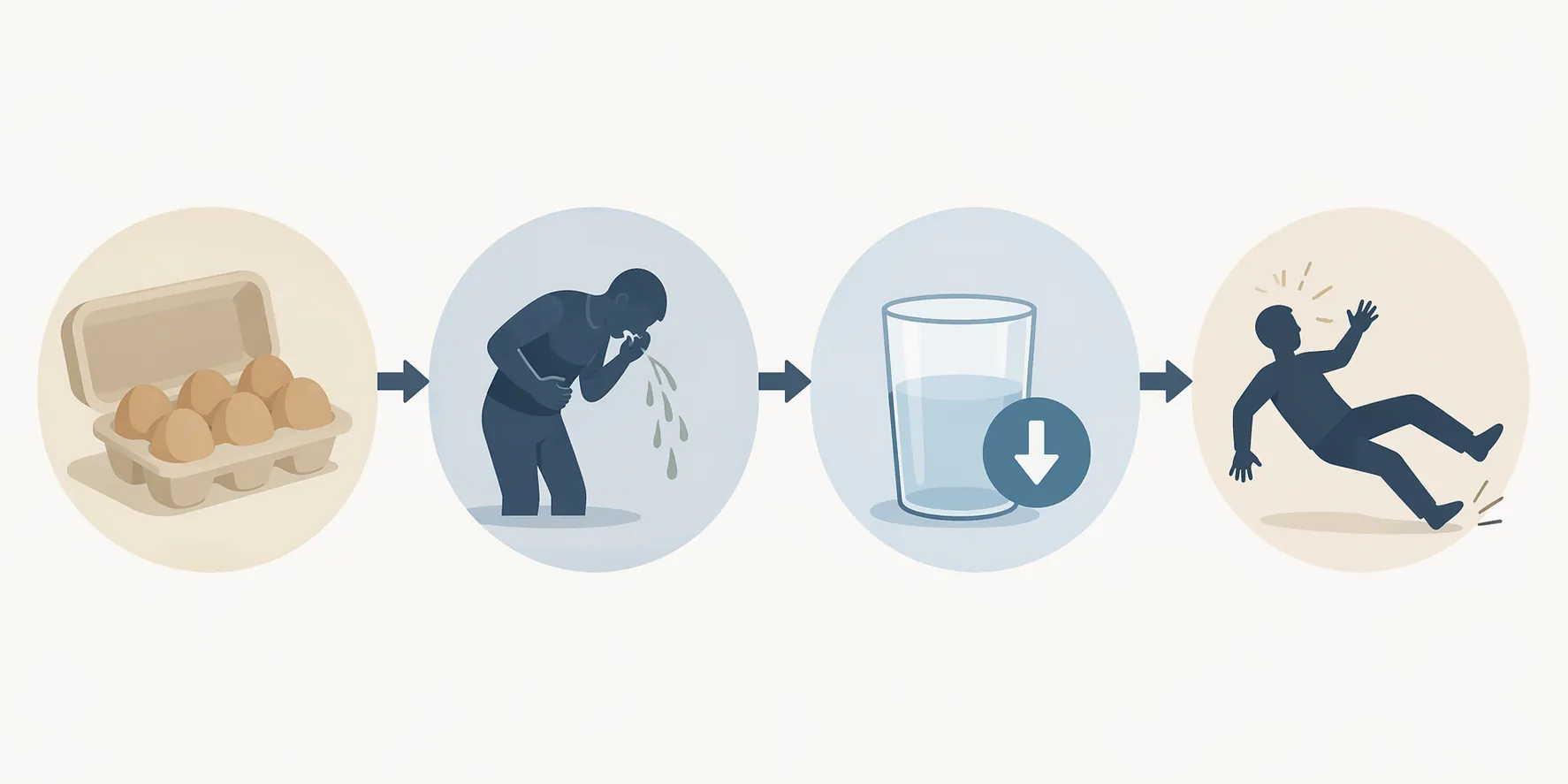
For an older adult, that carton can belong in the same safety conversation as the loose rug. Not because every egg is dangerous, and not because a recall notice should turn the kitchen into a crisis scene. The issue is the chain reaction: a recalled egg, a Salmonella infection, vomiting or diarrhea, dehydration, a quick stand from the toilet or bed, and then a fall that later gets described as sudden.
That is why egg recall food safety tips for seniors should not sit off to the side as a separate household chore. Identifying recalled eggs, throwing them away, cleaning the places they touched, and watching hydration afterward are fall-prevention actions when the person at risk is older.
A Recall Is Not Just a News Item Once It Reaches the Refrigerator
The June 2025 August Egg Company recall shows why this cannot be treated as a theoretical concern. The company recalled 1.7 million dozen shell eggs distributed across 10 states; the FDA notice connected the outbreak to 134 illnesses, 38 hospitalizations, and 1 death. [1]
Those numbers matter for one practical reason: a recalled carton may look exactly like breakfast. It may already be on the refrigerator shelf, mixed in with safe groceries, handled by someone who paid for it and dislikes waste. The hard part is rarely understanding the word “recall.” The hard part is getting someone to read the carton, believe the notice applies to them, and discard food that still looks fine.
Older adults also do not enter foodborne illness with the same margin of safety as younger adults. CDC reports that nearly half of adults 65 and older with a lab-confirmed Salmonella, Campylobacter, Listeria, or E. coli infection are hospitalized. [2]
That statistic does not mean every recalled egg will make someone sick. It means that if the illness does happen, the consequences are more likely to become medically serious in this age group. FoodSafety.gov also classifies older adults as a higher-risk population for foodborne illness, which is the category that should change how quickly a household responds. [3]
The Missing Bridge: Dehydration Changes Standing Safety
The fall connection becomes clearer when the focus moves from the bacteria to the body state it can create. Vomiting and diarrhea remove fluid quickly. An older adult who already tends to drink less may not feel thirsty enough to correct the loss. Then the next ordinary movement—standing from a chair, walking to the bathroom, stepping into the kitchen—requires a body that may no longer be compensating well.
Hamrick and colleagues provide the strongest fall-prevention bridge here. In a Mayo Clinic Proceedings study of 30,634 older adults, 37.9% were dehydrated by laboratory criteria. Dehydration was associated with a 13% increased odds of falling, and the combined rate of fall or death was 24.3% among dehydrated older adults compared with 19.1% among those who were not dehydrated. [4]
That study should be used carefully. It measured baseline dehydration using lab values, not dehydration that appeared suddenly after a Salmonella infection. It does not prove, by itself, that one recalled egg caused one particular fall. What it does support is the part families often underestimate: dehydration is not a minor discomfort in older adults. It is associated with measurable fall risk.
The age-related thirst problem makes the chain more concerning. Hamrick and colleagues discuss reduced thirst sensation in older adults, citing prior work on hypothalamic changes with aging. [4] In plain household terms, waiting for an older parent to say “I’m thirsty” is not a reliable safety plan.
This is a synthesis across food-safety and fall-prevention evidence, not a single neat experiment. CDC and FoodSafety.gov establish that older adults face higher foodborne-illness risk. The FDA recall shows that contaminated egg events can be large and consequential. Hamrick et al. show that dehydration in older adults is common and associated with higher odds of falling. Put together, they justify treating egg recall response as part of the same safety routine that already includes lighting, footwear, and bathroom supports. [1][2][3][4]
What To Do When an Egg Recall May Affect an Older Adult
The useful response is not dramatic. It is slow, literal, and a little inconvenient. Someone has to stand at the counter, compare codes, throw food away, wipe shelves, and notice whether the person who was fine yesterday is now weak, dizzy, or rushing to the bathroom.
| Action | What It Prevents |
|---|---|
| Check the carton against the recall notice | Keeps recalled eggs from being cooked, shared, or forgotten in the refrigerator |
| Discard recalled eggs instead of returning them to the shelf | Removes the exposure source from the home |
| Clean surfaces the eggs touched | Reduces the chance that residue or leakage contaminates hands, shelves, or containers |
| Support fluids during and after illness | Helps address the dehydration pathway that can affect standing and balance |
| Watch for symptom and mobility changes | Catches the moment when foodborne illness becomes a fall-risk problem |
1. Read the Recall Notice Like a Matching Exercise
Do not rely on brand memory alone. FDA egg recall notices can include practical identifiers such as plant codes, Julian dates, sell-by dates, package sizes, and distribution areas. [1] The job is to match the notice to the carton in front of you.
- Take the carton out of the refrigerator and place it under good light.
- Check every printed code on the carton, especially plant codes and date codes listed in the recall notice.
- Do not assume a different store location makes the eggs safe if the brand, codes, and dates match.
- If an older adult has already separated eggs from the carton, treat any unlabeled eggs as suspect if you cannot verify their source.
This is where a caregiver may need to be tactful but firm. “We paid for them” is a real objection, especially for someone on a fixed income. The answer is not a lecture about bacteria. The answer is that the carton cannot stay in a refrigerator used by a person who is more likely to be hospitalized if foodborne illness occurs. [2]
2. Discard the Eggs Without Reusing the Carton
If the eggs match the recall, remove them from the home food supply. Do not cook them “extra well” as a compromise for a high-risk older adult. The point of a recall is to stop use, not to negotiate with the risk after the product has been identified.
Put the eggs in a sealed bag before placing them in the trash if leakage is possible. Wash hands afterward. If the older adult is upset about waste, keep the explanation narrow: this is not about whether the eggs look spoiled; recalled eggs may look normal.
3. Clean the Refrigerator Spots the Carton Touched
The refrigerator step is the one families are most tempted to skip. It is also the step that keeps a recalled carton from becoming a lingering kitchen problem. Wipe the shelf, drawer edge, door bin, countertop, and any reusable container that touched the carton or leaked egg.
For households already adapting a kitchen for safer aging, this belongs with the practical work of keeping frequently used items visible, reachable, and easy to clean. A safer kitchen is not only about preventing burns or cuts; it is also about making cleanup realistic enough that people actually do it. Caregivers who are reworking the kitchen setup can pair this with safer senior cooking adaptations rather than treating recall cleanup as a one-off emergency.
4. Use Refrigeration and Cooking Rules Before There Is a Recall
Recall response matters most when a recalled product is already in the house, but daily egg handling still reduces ordinary risk. CDC advises refrigerating eggs at 40°F or colder and cooking egg dishes to 160°F. [2]
For an older adult who cooks independently, the practical version is simple: eggs go back into the refrigerator promptly, questionable cartons do not get moved to a “maybe” shelf, and runny or undercooked egg dishes are not the safest default when illness would be harder to absorb.
5. Treat Diarrhea, Vomiting, and Weakness as Mobility Warnings
Once symptoms start, the fall-prevention task changes. The question is no longer only “Is this food poisoning?” It is also “Is this person safe to stand, walk to the bathroom, shower, or cook?”
- Encourage small, regular fluid intake if the person can drink safely and has no medical fluid restriction.
- Make bathroom trips slower and supervised if dizziness, weakness, urgency, or confusion appears.
- Have the older adult sit at the edge of the bed or chair before standing.
- Move a phone, water, tissues, and light source within reach so rushing is less likely.
- Contact a clinician promptly when symptoms are severe, persistent, bloody, accompanied by fever, or paired with signs of dehydration or altered alertness.
This is where reduced thirst sensation matters. An older adult may sincerely say they are not thirsty while still losing fluid. They may also avoid drinking because getting to the bathroom has become exhausting or embarrassing. That creates exactly the kind of hidden home safety hazard standard checklists can miss; for more of those less visible risks, see hidden home safety hazards that standard checklists overlook.
Where This Fits in a Fall-Prevention Plan
CDC’s STEADI initiative frames fall prevention as a structured clinical and practical process: screen for fall risk, assess contributing factors, and intervene on what can be changed. [5] A food recall is not a substitute for medication review, vision care, strength work, or home modification. It is one more modifiable condition that can suddenly change balance safety.
That is the useful category shift. A refrigerator check after an egg recall is not just “kitchen cleanliness.” It is a body-state check. Has the person been exposed? Are they ill? Are they drinking? Are they weaker than usual? Are they standing up safely? A STEADI-aligned fall prevention system has room for that kind of question because fall risk is not only in the floor plan.
For families who like a written protocol, the egg recall line can be added to a broader aging-in-place triage checklist: check active recalls, compare carton codes, discard recalled food, clean contact surfaces, increase hydration attention, and temporarily raise supervision if illness affects standing or bathroom trips.
If a parent has already had falls, repeated near-falls, confusion during illness, or a refrigerator full of hard-to-identify food, it may be time for a broader professional home safety assessment. The professional may not be there to inspect eggs, but they can help identify the routines and room setups that make illness more dangerous: long bathroom routes, poor night lighting, cluttered counters, unstable seating, or no easy place to sit while preparing food.
The Refrigerator Belongs in the Safety Walk-Through
A fall-prevention plan that stops at grab bars and rugs is incomplete. Those things matter, but they do not cover the morning after a stomach illness, when an older adult is dehydrated, weak, and trying to get to the bathroom without help.
The practical change is small: when an egg recall is announced, the family safety routine moves to the refrigerator. Someone checks the carton. Someone discards what matches. Someone cleans the shelf. Someone pays attention to fluids and standing safety for the person most likely to be harmed if illness starts. Preventing the fall can begin before anyone loses balance.
References
- August Egg Company Recalls Shell Eggs Because of Possible Health Risk, FDA, June 2025.
- People at Increased Risk for Food Poisoning, CDC.
- Older Adults, FoodSafety.gov.
- Association Between Dehydration and Falls, Mayo Clinic Proceedings, 2020.
- STEADI - Older Adult Fall Prevention, CDC.
Continue from here
Suggest a correction
We keep this content strictly product-neutral and reviewed against CDC STEADI, NIA, and AARP HomeFit guidance. If something here looks outdated, unclear, or inaccurate, tell us — this page does not carry open public comments, because it touches medical urgency, cost, or capacity-adjacent decisions where a discussion thread is a trust liability rather than a trust asset.
See the correction process on our editorial standards page →