
Glossary entry
Does Medicare Cover PERS? A Complete Breakdown of Original Medicare, Medicare Advantage, Medicaid, and Other Coverage Paths
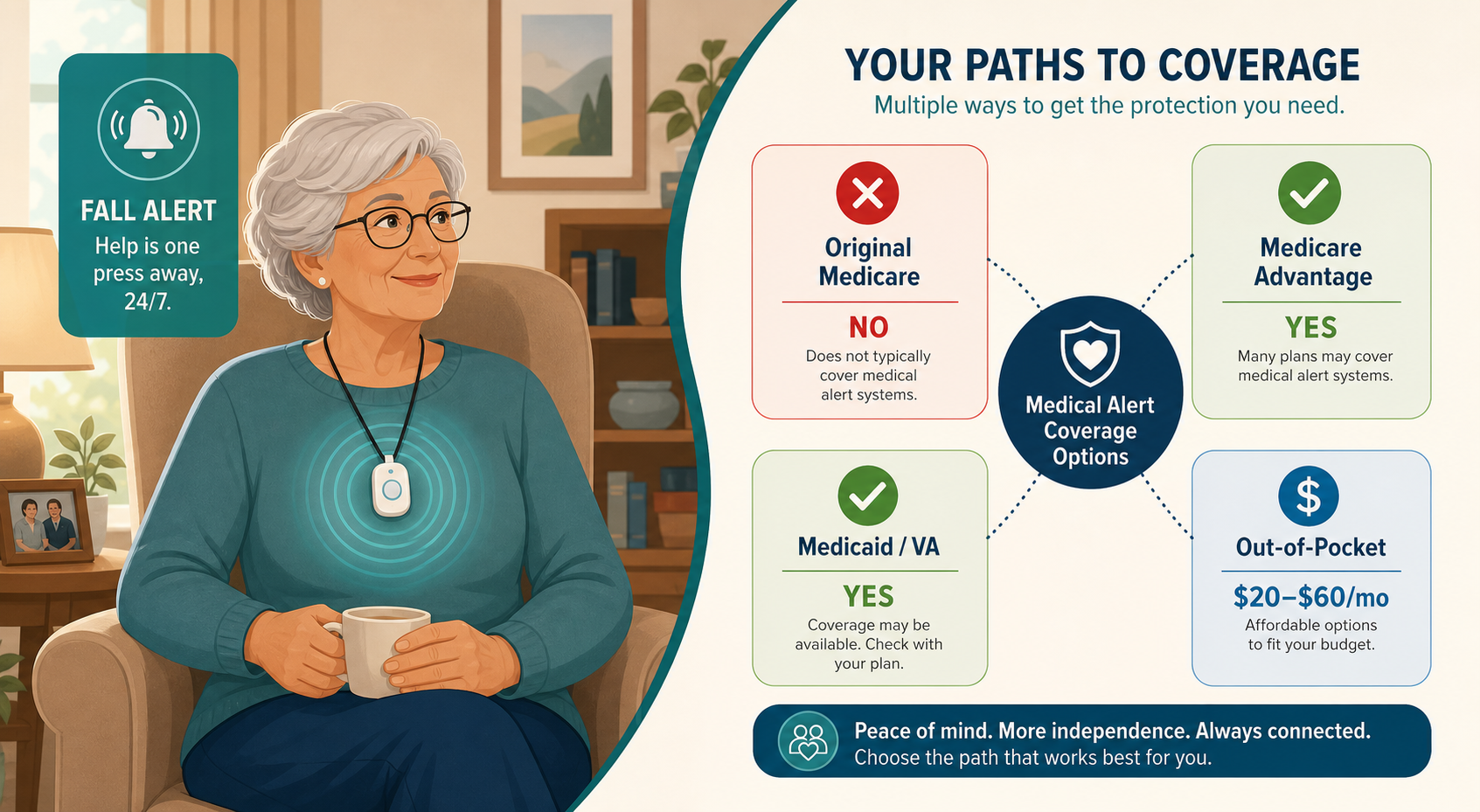
Quick Answer: Does Medicare Cover PERS?
The short answer is no — but that's only the beginning of the story. Original Medicare (Parts A and B) does not cover personal emergency response systems (PERS) because the Centers for Medicare & Medicaid Services (CMS) does not classify them as durable medical equipment (DME). If you are looking for a simple yes or no, our dedicated FAQ on Medicare and medical alert systems gives you that answer in one sentence. But if you are an adult child trying to figure out how to actually pay for a PERS device for a parent — without spending hundreds of dollars a year out of pocket — you need the full map.
That map exists. Medicare Advantage plans, Medicaid Home and Community-Based Services (HCBS) waivers, VA benefits, and PACE programs all offer coverage paths. The challenge is knowing which path applies to your parent's situation and how to navigate the paperwork. This guide covers every major funding source in one place, with specific dollar ranges, program names, and step-by-step verification steps so you can move from confusion to action.
Why Original Medicare Excludes PERS: The DME Classification Problem
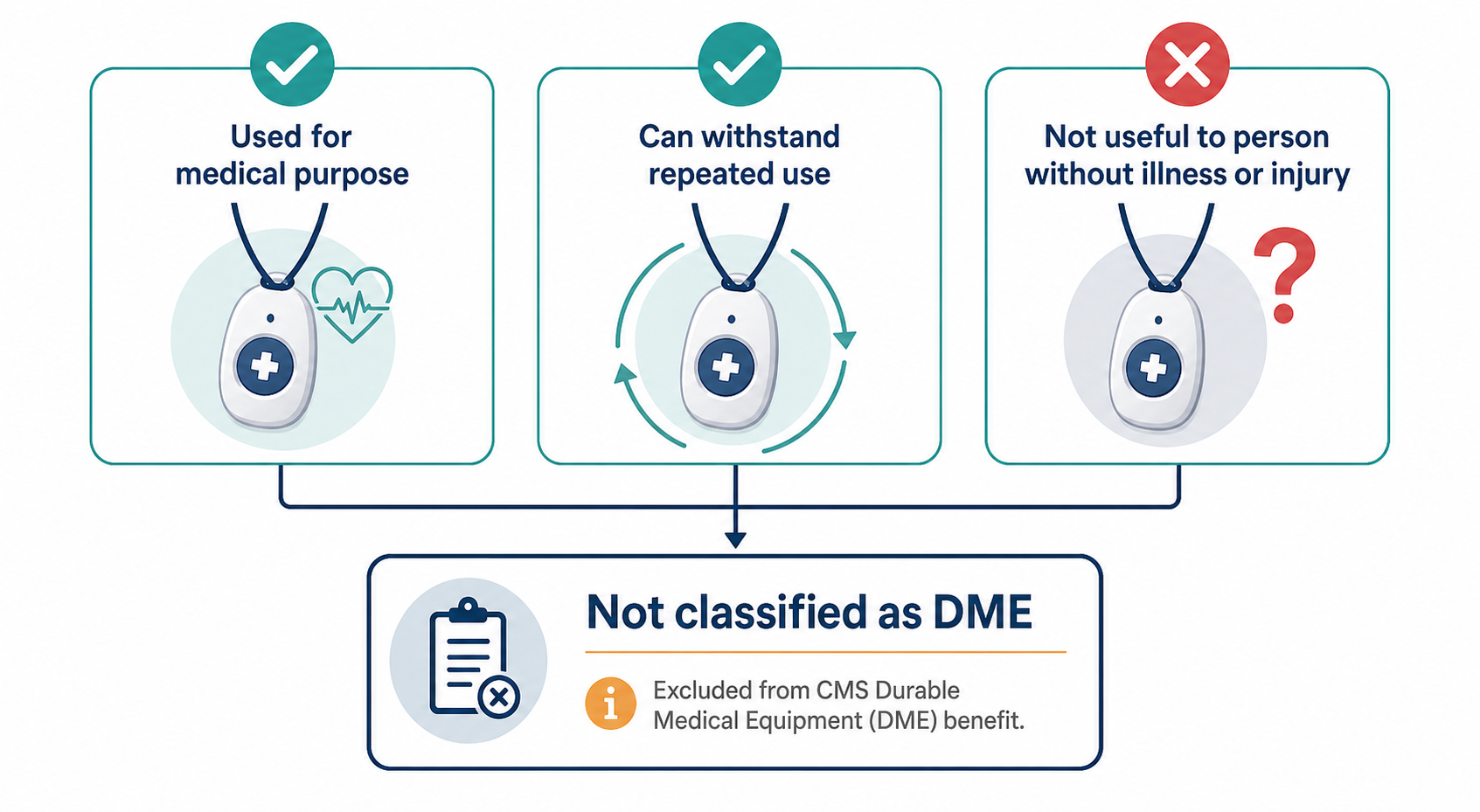
To understand why Original Medicare won't pay for a PERS device, you need to understand how CMS defines durable medical equipment (DME). Medicare Part B covers DME — items like wheelchairs, walkers, hospital beds, and oxygen equipment — but only if they meet three specific criteria:
- The item is primarily used for a medical purpose.
- The item can withstand repeated use (i.e., it is not disposable).
- The item is generally not useful to a person in the absence of an illness or injury.
PERS devices fail on the third criterion. A pendant or bracelet that lets someone call for help is useful to anyone who might experience a fall or medical emergency — not just someone who is currently ill or injured. CMS has consistently held that PERS is a convenience or safety device, not a piece of medical equipment that treats or manages a specific condition. As a result, it does not qualify for Part B DME coverage.
Browse more in the Glossary.