
Glossary entry
Why Medicare Part B Hold-Harmless Keeps Your COLA Check Flat
Last verified 2026-08-25
This is not financial or legal advice. Medicare/Medicaid and benefits rules vary by state and change over time — verify current rules with your state Medicaid office or Area Agency on Aging.
Last verified: August 25, 2026. This article is general benefits literacy, not medical, legal, tax, or financial advice. For a personal benefit question, compare the person’s own Social Security and Medicare notices or contact the relevant agency.
The frustrating 2026 question is simple: Social Security announced a 2.8% cost-of-living adjustment, so why did the bank deposit barely move—or not move at all? SSA’s 2026 COLA fact sheet lists the 2.8% increase and says the average retired-worker benefit rises from $2,015 to $2,071, but that is a gross benefit figure, not a promise that every person’s deposit will rise by the same amount. [1]
The other half of the kitchen-table math is Medicare Part B. CMS set the 2026 standard Part B premium at $202.90, an increase of $17.90 from 2025, and the 2026 Part B deductible at $283. [2] For many people, that Part B premium is taken out before Social Security reaches the bank account. If the monthly COLA is smaller than the Part B increase, the “raise” can disappear inside the deduction.
If you want the average-worker version of the 2026 math, start with What does a 2.8% Social Security COLA mean for your check?. This article is about the smaller-benefit situation: Medicare Part B’s impact on the Social Security COLA for seniors whose checks are low enough that the hold-harmless rule may keep the net payment flat.

Gross COLA and net Social Security are two different numbers
The COLA is applied to the Social Security benefit before deductions. The deposit is what remains after deductions, including Medicare premiums when they are withheld from Social Security. SSA explains that Medicare premiums may be deducted from monthly Social Security benefits. [3]
That distinction matters most for people on smaller checks. A person with a large enough benefit may see the Part B increase take a noticeable bite out of the COLA but still receive a higher deposit. A person with a very small benefit may have a COLA that is not large enough to cover the full $17.90 Part B premium increase. That is where the hold-harmless rule comes in.
What the Part B hold-harmless rule actually does
The Medicare Part B hold-harmless provision prevents certain beneficiaries’ net Social Security benefits from decreasing from one year to the next because of a Part B premium increase. CRS notes that the protection was made permanent by P.L. 110-360 and that it does not apply to Medicare Part D premiums. [4]
That last sentence is the part worth reading slowly. Hold-harmless is not an extra benefit. It is not a bonus check. It does not cancel all Medicare premium pressure. It is a narrow protection against one particular outcome: a higher Part B premium causing the person’s net Social Security payment to go down.
In 2026, the collision is easy to see. The Part B increase is $17.90. A 2.8% COLA produces less than $17.90 a month when the underlying Social Security benefit is below roughly $639, because $17.90 divided by 2.8% is about $639. That is an illustrative calculation using the CRS activation logic, not an official SSA threshold. [2][4]
Nolo describes the 2026 protected group in plainer terms, saying the rule typically protects recipients with benefits around $600 per month or less, and Nolo expects it to help about 2% of SSDI recipients in 2026. That SSDI estimate is Nolo’s estimate, not a government count. [5]
| Hypothetical 2026 situation | What the numbers show |
|---|---|
| Monthly Social Security benefit before deductions is $500 | A 2.8% COLA is $14. The $17.90 Part B increase is larger than the COLA, so hold-harmless may limit the Part B increase enough to keep the net Social Security check from falling. |
| Monthly Social Security benefit before deductions is about $640 | A 2.8% COLA is about $17.92, nearly the same as the $17.90 Part B increase. The check may rise only by pennies before any other deductions are considered. |
| Monthly Social Security benefit before deductions is well above that range | The COLA is larger than the $17.90 Part B increase, so the person may still see a net increase, assuming no other deductions offset it. |
Who is protected—and who is outside the umbrella

The protected-versus-excluded distinction is where many explanations get too loose. A person is generally in the hold-harmless lane only when the Medicare Part B premium is deducted from that person’s own Social Security benefit and the Part B increase would otherwise reduce the year-to-year net Social Security payment. [4]
If those conditions are not met, the person may face the full 2026 Part B premium increase even if their household income feels just as tight as someone else’s. The rule is mechanical. It does not ask whether the grocery bill went up, whether rent increased, or whether the person depends on an adult child to sort the mail.
New Medicare or Social Security enrollees
New enrollees are one of the main excluded groups. CRS lists new Medicare and Social Security enrollees among those not protected by hold-harmless. [4] In ordinary terms, if there is no protected prior-year net Social Security payment to compare against in the required way, the rule does not step in to preserve that older net amount.
Part B enrollees who are not receiving Social Security
Some people have Medicare Part B but are not yet receiving Social Security benefits. They may be delaying Social Security, receiving a different type of payment, or paying Medicare directly. Medicare.gov explains that people who do not have premiums deducted from Social Security, Railroad Retirement Board, or Civil Service Retirement payments get a bill from Medicare. [6]
That billing difference is not just paperwork. If Part B is not being deducted from the person’s own Social Security check, the hold-harmless protection does not operate on that check.
Higher-income beneficiaries who pay IRMAA
High-income beneficiaries who pay an income-related monthly adjustment amount, often called IRMAA, are also excluded from hold-harmless protection. [4] Their Medicare premium situation is not limited to the standard Part B premium, so a flat-check explanation that works for a low-benefit retiree may not apply to them.
People whose Part B premiums are paid by Medicaid or a Medicare Savings Program
Low-income beneficiaries whose premiums are paid by Medicaid through Medicare Savings Programs are another excluded group. [4] This can sound backwards at first: the person may have very little income, but because Medicaid or a Medicare Savings Program is paying the Part B premium, the hold-harmless rule is not protecting that person’s own Social Security check from a Part B deduction in the same way.
If you are trying to sort out whether a parent has this kind of help, the Medicare notice, state Medicaid notice, or Medicare Savings Program paperwork matters more than a rough guess based on income. For a broader document-gathering pass, see The 2026 Medicare Benefits Checklist for Seniors.
Part D premiums are never held harmless
Part D deserves a blunt rule of its own: the Medicare Part B hold-harmless provision does not apply to Part D premiums. [4] So if a prescription drug plan premium changed, that change can still affect what the household experiences, even when Part B hold-harmless explains why the Social Security check itself did not fall.
That distinction is especially important when a Medicare Advantage or Part D premium is also being withheld. A flat or smaller-than-expected deposit may involve more than one deduction. For the prescription-drug side of the ledger, see What Seniors Should Know About Part D Premium Changes.
A capped Part B increase is deferred, not erased
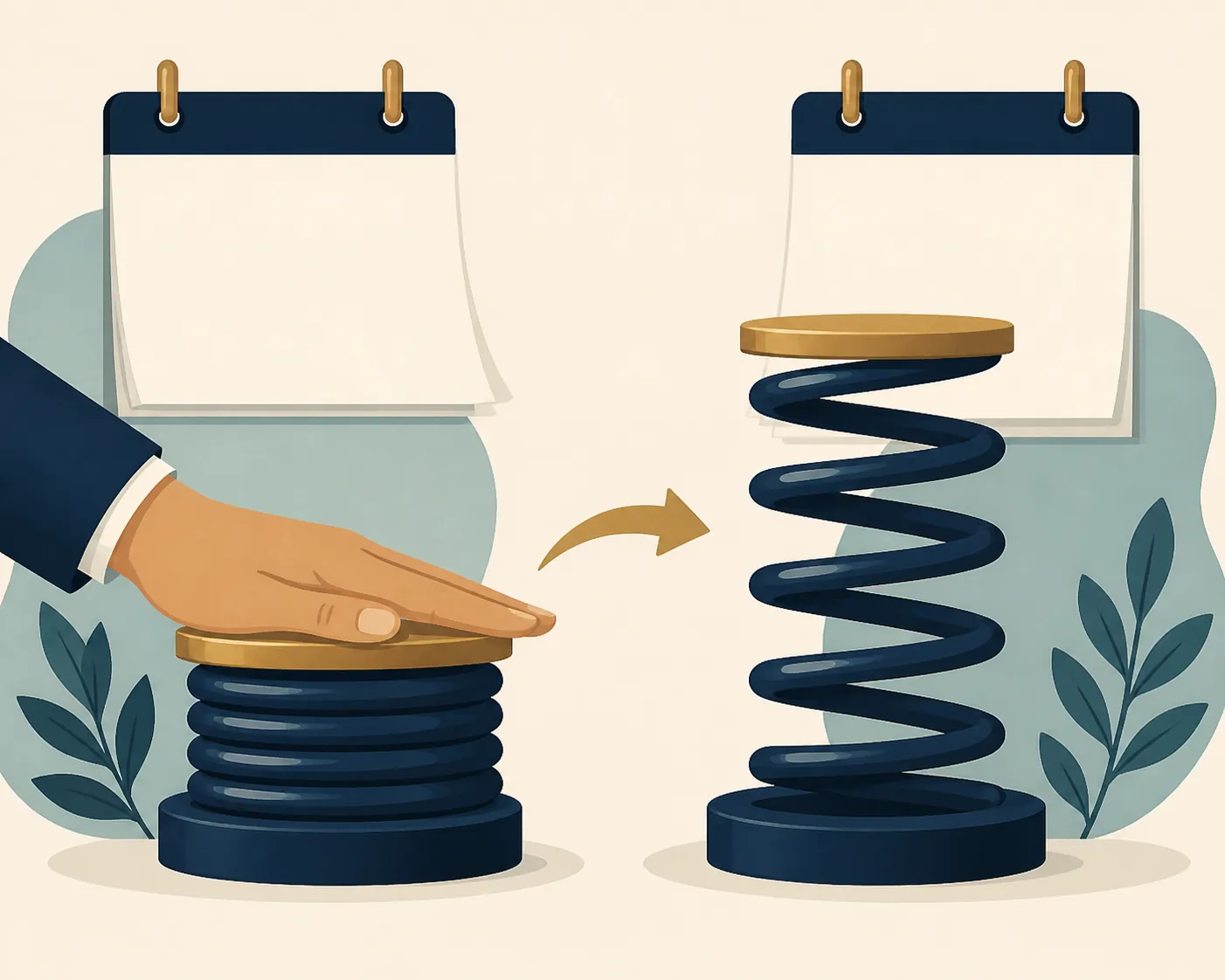
This is the piece that is easiest to miss. When hold-harmless limits a person’s Part B increase, the unpaid difference is not treated like a gift or permanent forgiveness. CRS’s worked example covering 2009 through 2018 shows the mechanism: a beneficiary can be held harmless in one year, then face a larger-than-standard premium increase later when the COLA is large enough to absorb more of the previously limited premium amount. [4]
So a flat 2026 check does not mean the Part B premium can never catch up. It means the rule may have stopped the 2026 Part B increase from reducing the net Social Security payment. If a later COLA is large enough, more of the applicable Part B premium can be collected then.
The later year is not something to guess at from today’s numbers. As of this article’s verification date, the 2027 Social Security COLA and the 2027 Part B premium have not been announced. Until those figures exist, the honest answer is that the catch-up effect is possible under the rule, not that a specific 2027 dollar amount is coming.
History also shows that hold-harmless can affect very different shares of people depending on the COLA year. CRS reports that about 70% of Part B enrollees were held harmless in 2016, a no-COLA year, compared with 28% in 2018, a year with a 2% COLA. [4] That does not tell you what will happen to one person’s 2026 deposit, but it does show why the rule sometimes feels obscure and sometimes suddenly explains a lot of checks.
How to sort your own notice without guessing
Do not start with the national average benefit. Start with the person’s own notices. The Social Security COLA notice and the Medicare premium notice should let you separate the gross Social Security increase from the Medicare deductions that happen before the deposit arrives.
- Check whether Medicare Part B is deducted from the person’s own Social Security payment. If it is not, hold-harmless is probably not the explanation.
- Check whether the person is new to Medicare or new to Social Security. New enrollees are one of the excluded groups.
- Look for IRMAA language. Higher-income beneficiaries who pay IRMAA are excluded from hold-harmless protection.
- Look for Medicaid or Medicare Savings Program help with the Part B premium. If another program pays the premium, the person may be excluded from hold-harmless even with a low income.
- Separate Part B from Part D. Part D premium changes are never held harmless under the Part B rule.
- Compare the net Social Security payment year to year. Hold-harmless is about preventing a Part B premium increase from making that net Social Security payment go down; it is not about making the COLA feel large.
For a low-benefit retiree or SSDI recipient, hold-harmless can be the missing explanation for a flat 2026 check. It protects against a net Social Security decrease caused by the Part B increase. It does not guarantee that the COLA will show up as spendable money, and it does not mean the limited Part B increase is gone forever.
References
- 2026 Social Security Changes — Social Security Administration
- 2026 Medicare Parts A & B Premiums and Deductibles — Centers for Medicare & Medicaid Services
- Medicare Premiums — Social Security Administration
- The Interaction Between Medicare Premiums and Social Security COLAs — Congressional Research Service
- What Is Social Security's Hold Harmless Rule? — Nolo
- How to Pay Part A & Part B Premiums — Medicare.gov
Browse more in the Glossary.