
Glossary entry
Michael J Fox Foundation Parkinson's Research Breakthroughs Explained
A Parkinson’s diagnosis changes the meaning of a hallway, a bathroom threshold, a late-night trip to the toilet, and a hand that hesitates on a walker. The most useful question about Michael J Fox Foundation Parkinson’s research breakthroughs is not whether the science sounds impressive. It is whether the work helps families recognize fall risk earlier, plan support sooner, and avoid waiting until the first serious fall forces every decision at once.
That is why this research belongs in a senior-care and home-safety conversation. Parkinson’s is usually introduced as a movement disorder, but at home it often behaves like a fall-risk diagnosis. People with Parkinson’s fall about twice as often as age-matched peers; 15.5% have fallen at diagnosis, and 69.2% have fallen after 14 years with the disease. Freezing of gait accounts for 61% of falls, and exercise reduced fall rates by about 35% in early-to-mid stage Parkinson’s in a Cochrane review cited in fall-prevention guidance.[1]
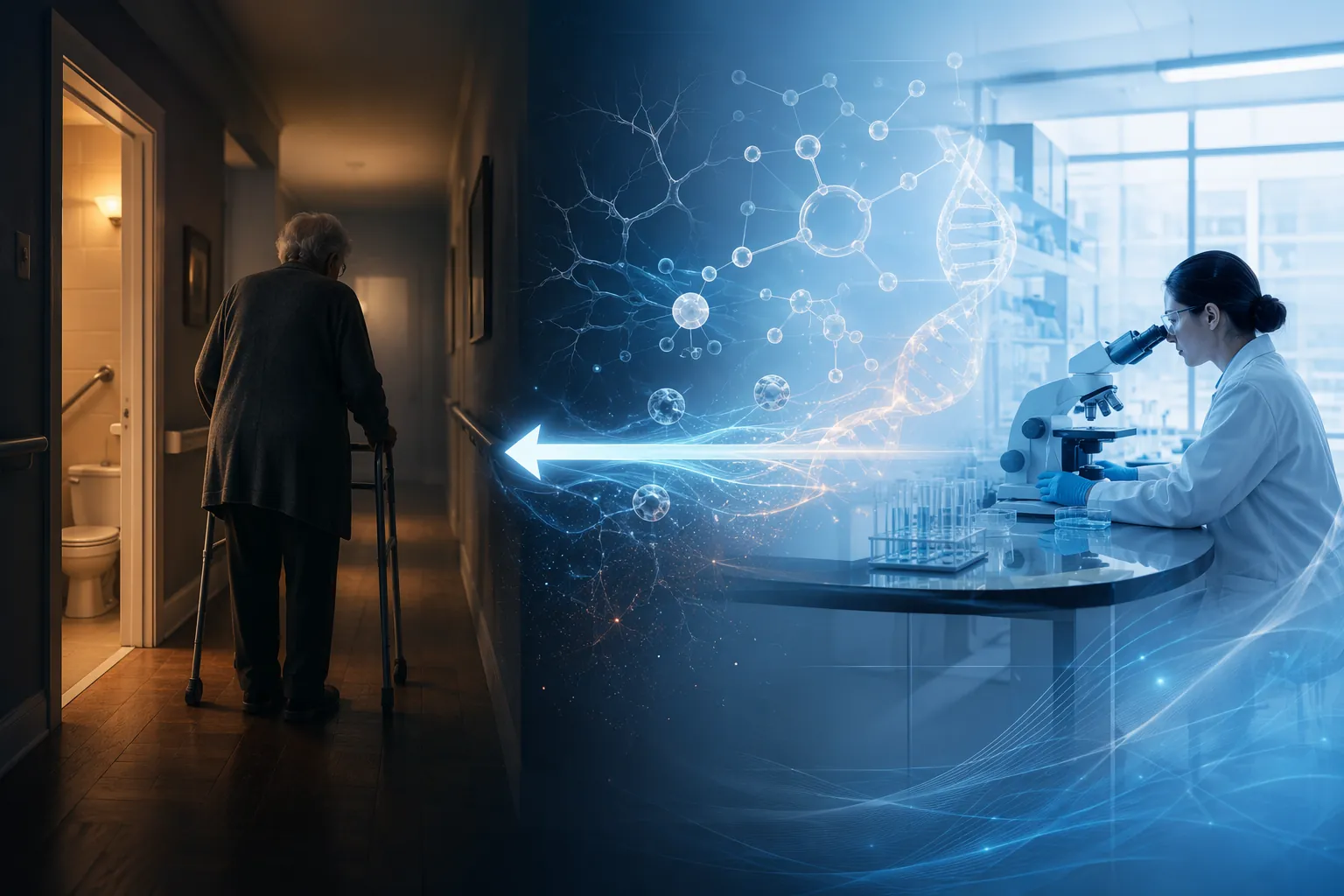
The Michael J. Fox Foundation’s most important contribution is not a single announcement. It is a chain of work that makes Parkinson’s more biologically visible, more trackable, and more targetable. Those are research words, but they have practical consequences. Earlier detection can move physical therapy, medication review, exercise planning, and home modification into the period before mobility has already narrowed.
| Breakthrough | What changed | Why caregivers should care |
|---|---|---|
| αSyn-SAA biomarker test | Detects misfolded alpha-synuclein in spinal fluid | Can reduce diagnostic uncertainty before mobility decline is obvious |
| PPMI / Precision Medicine Initiative | Builds a large international Parkinson’s research dataset | Helps researchers study progression patterns, biomarkers, and treatment targets |
| NSD-ISS biological staging system | Defines Parkinson’s by alpha-synuclein biology rather than symptom severity | Creates a framework for identifying and studying disease before visible gait decline |
| Disease-modifying therapy pipeline | Tracks therapies aimed at slowing or changing disease biology | Could eventually affect the mobility decline that raises fall risk, though many candidates remain in trials |
The Biomarker Test: A Clearer Answer Before the Walker Appears
For years, many families met Parkinson’s through symptoms first: a quieter voice, smaller handwriting, shuffling, stooped posture, a tremor, slower turns, or an unexplained fall. The αSyn-SAA test changed the diagnostic conversation because it looks for the disease biology itself: misfolded alpha-synuclein in spinal fluid.
In 2023, the Foundation announced results from what it described as the largest-ever Parkinson’s biomarker study, with more than 1,100 participants. The αSyn-SAA test showed 88% sensitivity and 96% specificity for detecting Parkinson’s disease biology in that study population.[2] Those numbers matter, but they need to be read carefully. Sensitivity describes how often the test correctly identifies people with the biology being tested. Specificity describes how often it correctly excludes people who do not have it.
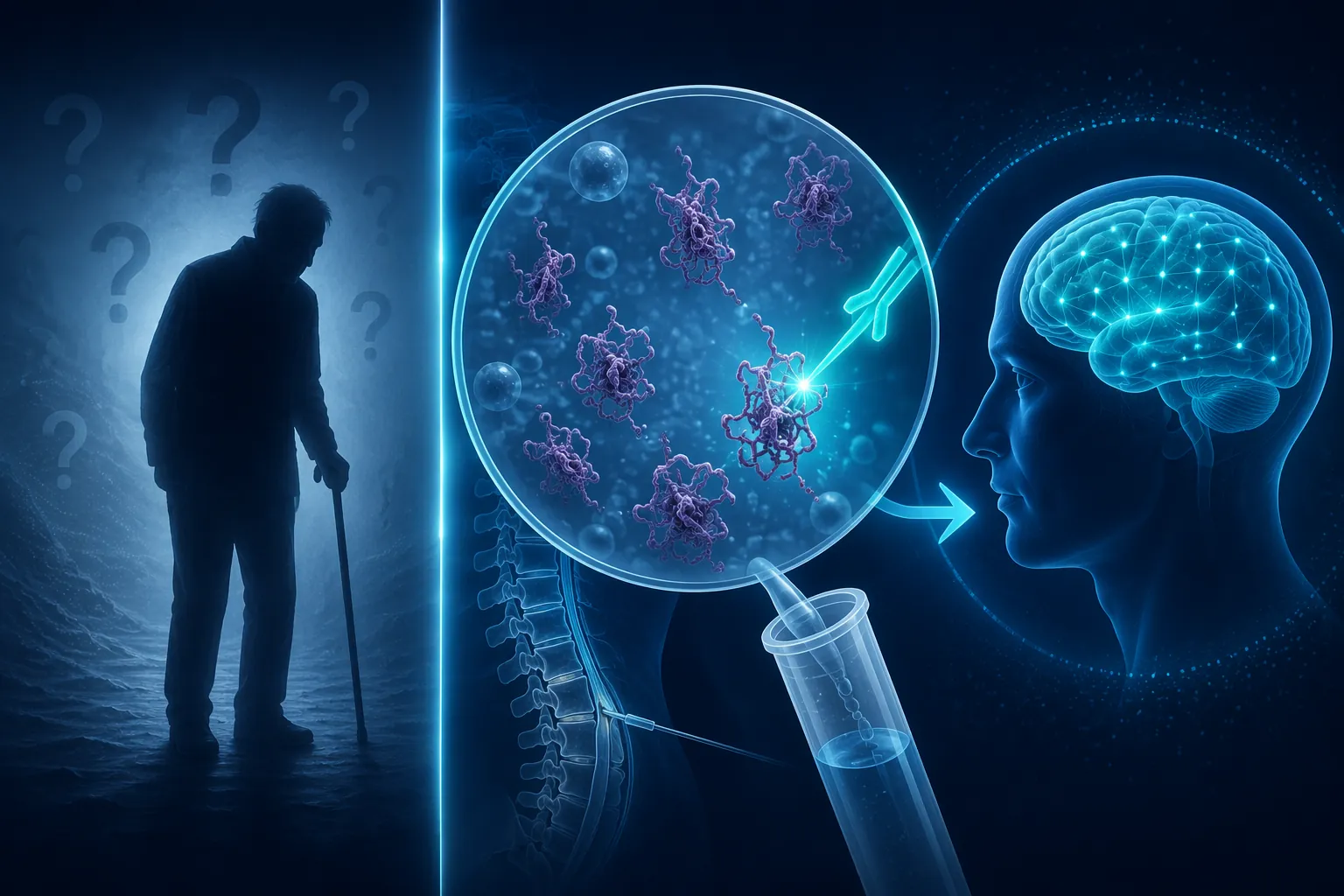
The accuracy figures are not all interchangeable. The Foundation’s biomarker materials also cite 93% accuracy overall and 99% accuracy in people with sporadic Parkinson’s who have smell loss.[3] That does not mean every person being evaluated for Parkinson’s should expect a 99% result. It means the test performed differently in different groups. For a caregiver trying to understand a new diagnosis, that distinction is not academic; it affects how much confidence to place in a test result and what questions to bring back to the neurologist.
The fall-prevention value is timing. If biological confirmation arrives before a pattern of falls, the family can treat gait and balance changes as foreseeable care issues rather than surprises. That can mean asking for a Parkinson’s-specific physical therapy referral earlier, reviewing medication timing around morning stiffness or evening wearing-off, removing threshold hazards before freezing episodes become routine, and watching bathroom transfers before the first injury makes the home feel suddenly unsafe.
A biomarker test does not install grab bars, prescribe exercise, or prevent freezing of gait on its own. Its value is that it can shorten the period when families know something is wrong but do not yet have enough clarity to act with urgency.
PPMI Became the Precision Medicine Initiative Because One Clinic Visit Is Not Enough
The Parkinson’s Progression Markers Initiative, now renamed the Precision Medicine Initiative, is not a home-safety tool. It is infrastructure. That may sound less dramatic than a diagnostic test, but infrastructure is what lets researchers compare symptoms, biology, genetics, imaging, and progression over time instead of treating every new finding as an isolated clue.
As of the May 2026 Foundation update, the initiative included more than 4,200 in-clinic participants, 50 sites across 12 countries, more than 47,000 online participants, and more than 50 million data downloads.[4] Those figures explain why the project has become a central reference point: it gives researchers a large, shared base for asking which biological signals appear before which symptoms, and which patterns predict faster decline.
For families, the benefit is indirect but real. Parkinson’s care often feels like a series of late discoveries. A person starts falling, then balance therapy is added. A person freezes in the bathroom doorway, then the hallway layout is reconsidered. A person misses doses or doses wear off unpredictably, then medication timing gets examined. A large longitudinal dataset gives researchers a better chance of finding earlier warning patterns, so clinical care can eventually move from reacting to visible decline toward anticipating it.
The Foundation’s scale is also worth noting without turning it into a fundraising story. By 2026, MJFF described more than $3 billion invested in Parkinson’s research.[4] The more useful point is what that investment has built: shared data, international participation, and research networks large enough to test whether a promising signal holds up beyond one lab or one clinic.
NSD-ISS Changes the Starting Line
The biological staging system is the breakthrough caregivers are least likely to hear about in ordinary clinical language, but it may be the one that best explains where Parkinson’s research is going. In January 2024, researchers published the first biological staging system for Parkinson’s disease, the Neuronal Synuclein Disease Integrated Staging System, or NSD-ISS, in The Lancet Neurology. The system defines disease by alpha-synuclein pathology rather than by symptom severity.[5]
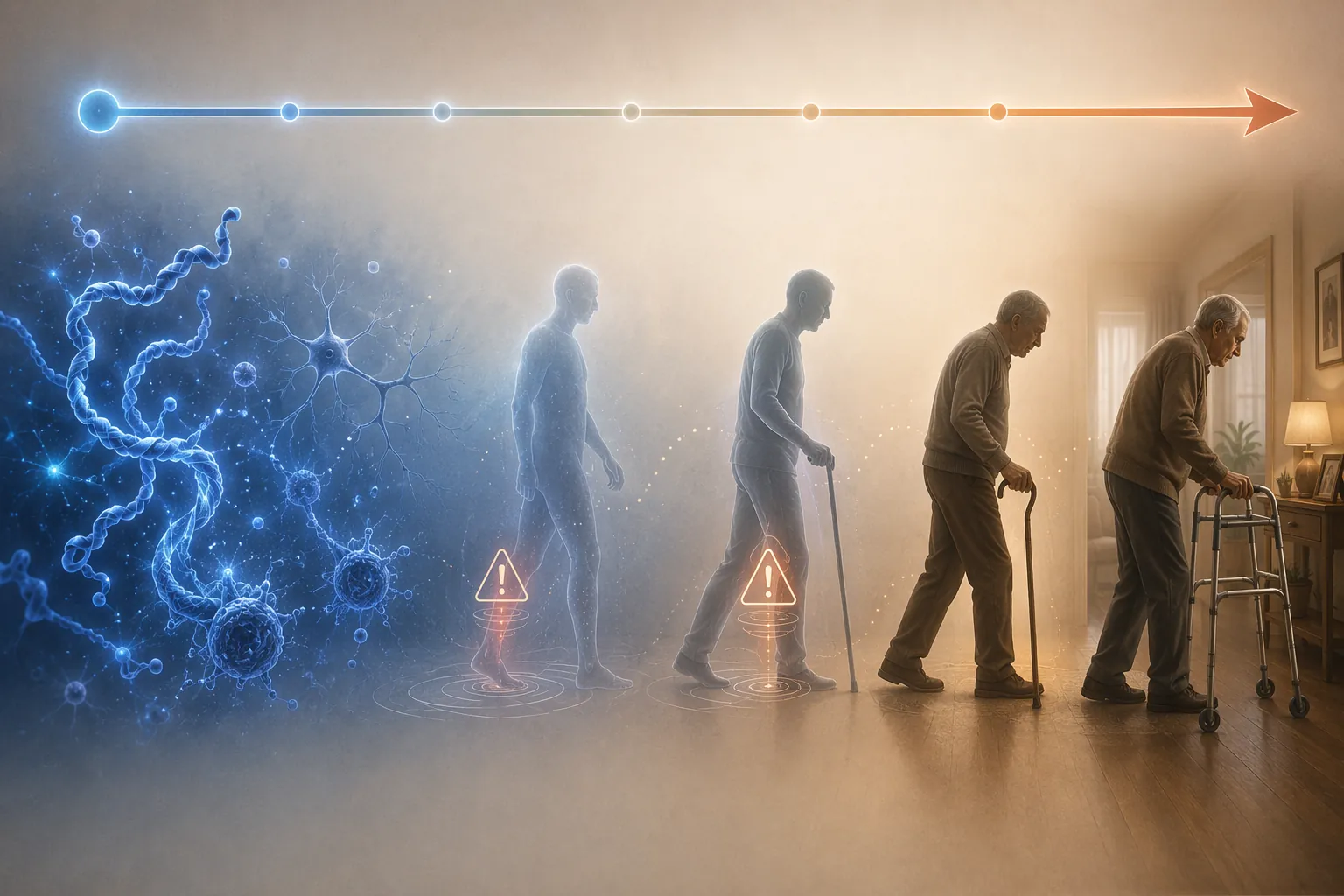
That shift is easy to underestimate. A symptom-based frame tends to begin when the person already has visible changes: slower walking, smaller steps, tremor, stiffness, freezing, falls, or difficulty rising from a chair. A biology-based frame can begin earlier, when alpha-synuclein pathology is detectable even if the person has not yet reached the stage where the family is measuring independence by whether the bathroom is still safe at night.
The staging system was modeled in spirit on the biological framework used in Alzheimer’s research, which helped organize trials for disease-slowing drugs. That comparison should not be stretched into a promise that Parkinson’s will follow the same timeline. The practical lesson is narrower: once a disease can be staged biologically, trials can be designed around earlier disease states, more precise groups of participants, and clearer biological targets.
For fall prevention, NSD-ISS matters because visible gait decline is a late and costly way to discover risk. If researchers can identify people with Parkinson’s biology before balance, turning, and freezing problems are obvious, future interventions may be tested before the home has already become a series of near-misses. That is not the same as saying the staging system currently prevents falls. It means the research calendar can start earlier than the clinical crisis calendar.
The Therapy Pipeline Is Large, but Not All at the Same Distance from the Clinic
The Foundation’s drug-development work is often described through the size of the pipeline: more than 75 disease-modifying therapies in clinical development.[6] That is encouraging, especially in a disease where much of day-to-day care still centers on managing symptoms and preserving function. But a pipeline is not the same thing as an approved treatment plan. Some candidates are in early safety testing, some are in Phase III trials, some have been submitted for regulatory review, and some technologies are already approved for selected patients.
| Therapy or technology | Status described in available materials | Caregiver interpretation |
|---|---|---|
| Prasinezumab | Phase III; anti-alpha-synuclein therapy from Roche | Promising disease-modifying strategy, but still trial-dependent |
| Tavapadon | New Drug Application submitted in September 2025 | Closer to regulatory decision-making than early-stage candidates |
| Bemdaneprocel | Stem cell therapy in Phase III | Advanced trial stage, not the same as routine clinical availability |
| Adaptive deep brain stimulation | FDA-approved in 2025 and available at more than 23 hospitals | A treatment technology available in selected settings, not a universal fall-prevention intervention |
The examples show why maturity matters. Prasinezumab is being studied as an anti-alpha-synuclein therapy in Phase III. Tavapadon had a New Drug Application submitted in September 2025. Bemdaneprocel, a stem cell therapy, is also described as being in Phase III. Adaptive deep brain stimulation received FDA approval in 2025 and was reported as available at more than 23 hospitals.[6][7][8]
For a person already falling, the pipeline should not delay ordinary care. A family should not wait for a disease-modifying therapy before arranging a physical therapy assessment, reviewing medication timing, adding night lighting, changing bathroom setup, or asking whether freezing of gait is contributing to falls. But the pipeline does matter for the longer arc of aging in place. If therapies can slow or alter the disease processes that lead to gait decline, they could eventually reduce the period when families are forced to choose between unsafe independence and sudden high-intensity care.
Where Fall Risk Research Meets the Front Door
The research advances are easiest to value when they are brought back to the first fall. In April 2026, Cleveland Clinic researchers described a first-fall prediction model using cognitive processing speed and walking speed from routine visits. The model reported an AUC of 0.81 in the full cohort and 0.70 among people who had not previously fallen. Nearly half of first falls required emergency department care, and 12% led to hospitalization.[9]
That model is promising, not settled practice. It came from a single-site study and still needs external validation.[9] Still, it points in the same direction as the Foundation’s larger body of work: Parkinson’s care becomes more useful when risk is recognized before the injury. A routine walking-speed change, a biomarker result, a biological stage, or a trial-defined subgroup all matter because they can move attention upstream.
At home, upstream attention is practical. It means noticing that a person turns in several small steps instead of one smooth pivot. It means treating a freeze at the bathroom door as a safety warning, not a personality change. It means asking whether a fall happened near the end of a medication dose, during a nighttime bathroom trip, or while rushing. It means making the home easier to move through before the family is choosing a walker under pressure.
What Families Can Do With This Information Now
Research breakthroughs do not replace care planning. They change how early families should start it. If Parkinson’s has been diagnosed, suspected, or biologically confirmed, fall prevention should begin before falls become frequent.
- Ask the neurology team whether freezing of gait, medication wearing-off, blood pressure changes, cognition, vision, or sleep disruption could be contributing to fall risk.
- Request a Parkinson’s-informed physical therapy evaluation early, especially if turning, transfers, stairs, or bathroom trips are becoming slower.
- Treat the bathroom, bedroom-to-bathroom path, kitchen thresholds, and entry steps as priority zones, not as cosmetic home projects.
- Track falls and near-falls with timing, location, medication schedule, activity, and whether freezing happened.
- Review care needs after any fall that causes injury, fear of walking, emergency care, or a sudden drop in confidence.
For room-by-room action steps, see our Parkinson’s Home Safety Checklist. If a fall has already happened, Your Parent Just Fell: A Caregiver’s Guide to the First 72 Hours can help organize the immediate response. When falls become repeated, injurious, or frightening enough that supervision is no longer optional, When Falls Signal the Need for 24/7 Home Care may be the more relevant guide.
The Michael J. Fox Foundation’s breakthroughs have not made Parkinson’s safe at home by themselves. They have made the disease more detectable before the old signs become impossible to ignore, more measurable across large groups of patients, and more targetable for therapies that may change progression. That matters because falls often arrive before families have built the right supports.
The usable decision is simple enough to act on: do not wait for research to become a home-safety plan, and do not ignore research because it has not yet solved every problem. Biomarkers, staging systems, data repositories, and therapy trials can move the whole system earlier. The home still needs lighting, grab bars, medication review, exercise, physical therapy, and post-fall triage. The difference is that families no longer have to treat the first bathroom fall as the first serious warning.
References
- Fall Prevention in Parkinson’s Disease: Guidelines and Gaps, PMC.
- The Michael J. Fox Foundation Announces Breakthrough in Search for Parkinson’s Biomarker, PRNewswire, 2023.
- Biomarkers, The Michael J. Fox Foundation.
- PPMI Becomes Precision Medicine Initiative, The Michael J. Fox Foundation, May 2026.
- A Biological Staging System for Parkinson’s Disease, The Michael J. Fox Foundation, January 2024.
- Parkinson’s Disease-Modifying Therapies in Clinical Development, APDA.
- Medical Minute: New Parkinson’s Treatments Offer Hope, Penn State Health, April 2026.
- Drug Pipeline Update, The Michael J. Fox Foundation.
- Can We Predict the First Fall in Parkinson’s Disease?, Cleveland Clinic Consult QD, April 2026.
Browse more in the Glossary.