
Glossary entry
Is your Walgreens closing in 2026? Keep prescriptions coming
Last verified 2026-08-04
This is not financial or legal advice. Medicare/Medicaid and benefits rules vary by state and change over time — verify current rules with your state Medicaid office or Area Agency on Aging.
Last verified: August 4, 2026
This guide is for prescription-access planning, especially for older adults and family caregivers affected by Walgreens store closures in 2026. It is not medical advice. Do not change, delay, stop, or stockpile medication without confirming the plan with the pharmacy, prescriber, and insurer when needed.
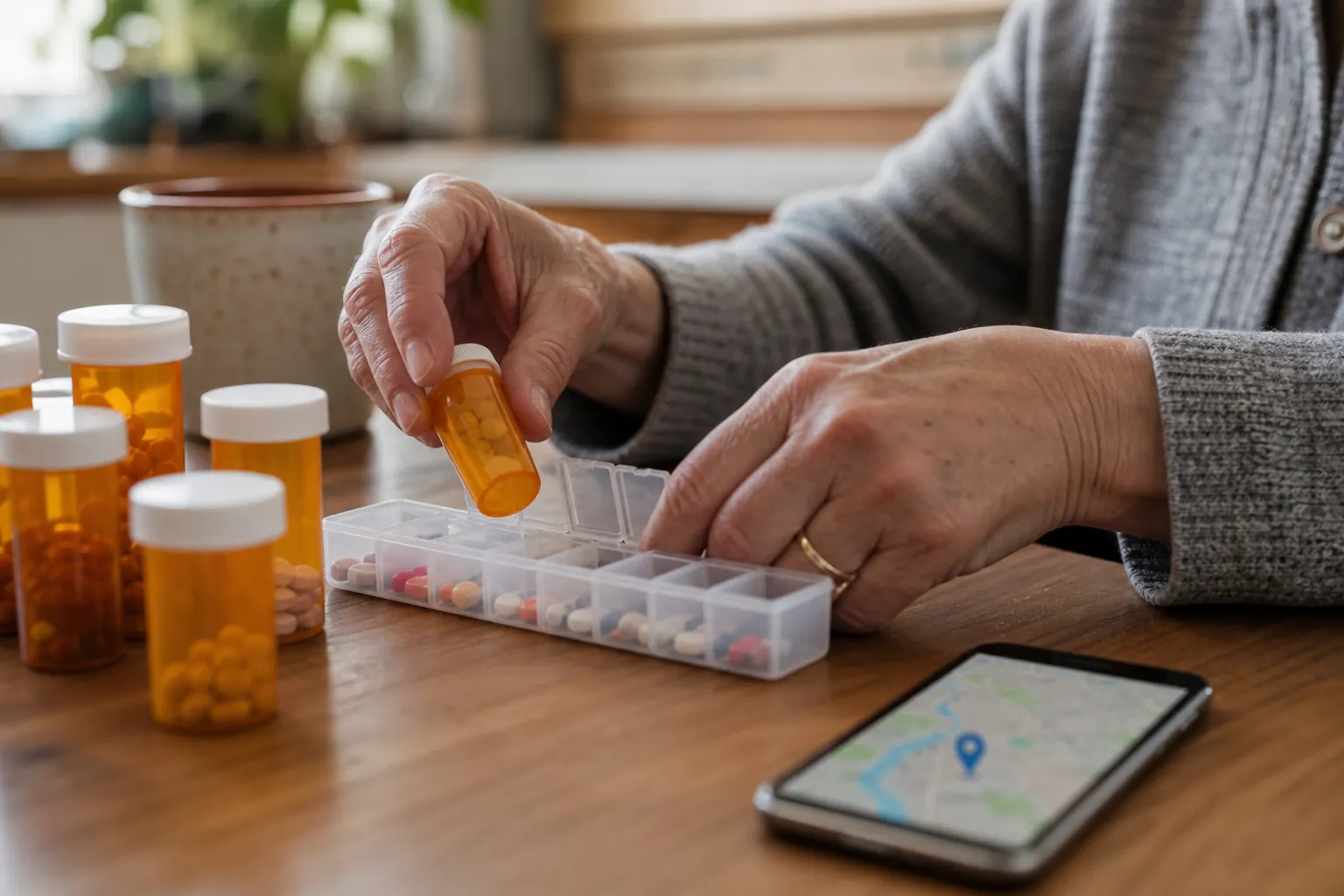
The short answer: yes, closures are still happening, but check your own store
Walgreens store closures remain a real 2026 issue for prescription access, but the current public picture is smaller than the earlier near-700-store projection. Recent reporting says Walgreens now expects fewer than 100 store closures in 2026, within a broader three-year plan to close 1,200 stores that was announced in 2024. That “fewer than 100” figure is dated reporting, not a promise that can be treated as final for every neighborhood. Store decisions can still change, and local notices matter more than a circulating list online. [1][2][3]
If your parent, spouse, or own prescriptions run through Walgreens, do not rely on a social-media closure list, a headline that names only some locations, or the official closure page alone. Confirm the specific store through Walgreens’ store locator and by calling the pharmacy counter directly. Walgreens’ own store-closing FAQ is the better starting point for what happens to prescriptions, but the practical question is still local: what is happening to this store, on what date, and where are this patient’s refills going? [4]
What Walgreens says happens by default
For many routine prescriptions, Walgreens has a default transfer path. If a closing store has prescriptions on Auto Refill and the patient has not selected a new Walgreens, Walgreens says those prescriptions will be automatically filled at a nearby Walgreens after the store closes. Save a Trip Refills are also reset to a nearby Walgreens location. Insurance information already on file can be accessed at all Walgreens locations, so the patient does not need to re-enroll with Walgreens just because the location changed. [4]
| Item | Walgreens default rule | What to confirm before the close date |
|---|---|---|
| Auto Refill prescriptions | Automatically filled at a nearby Walgreens if no new store is chosen. | Which nearby store, next fill date, and whether every active routine medication is included. |
| Save a Trip Refills | Reset to a nearby Walgreens. | Whether the synchronized refill date still works for the patient’s supply at home. |
| Insurance on file | Accessible at all Walgreens locations. | That the card on file is current, especially after a Medicare plan, Part D, or supplemental plan change. |
| Controlled substances | Not automatically transferred. | Speak with a Walgreens pharmacy team member about the required next step. |
| Specialty medications | Handled separately through Walgreens specialty support. | Call the specialty line and confirm shipment or pickup details. |
That default system is useful, but it is not the same as a completed handoff. The risk is the prescription that does not behave like the others: a controlled substance, a specialty drug, a medication with no refills left, a refrigerated shipment, a drug waiting on prior authorization, or a refill that was due during the same week the store closes.
Before the close date, do the boring confirmation work
This is the part to do before the final week, not after the voicemail says the store is closed. A 10-minute call is not always 10 minutes when the patient has eight prescriptions, one refill pending, and an adult child calling from another state.
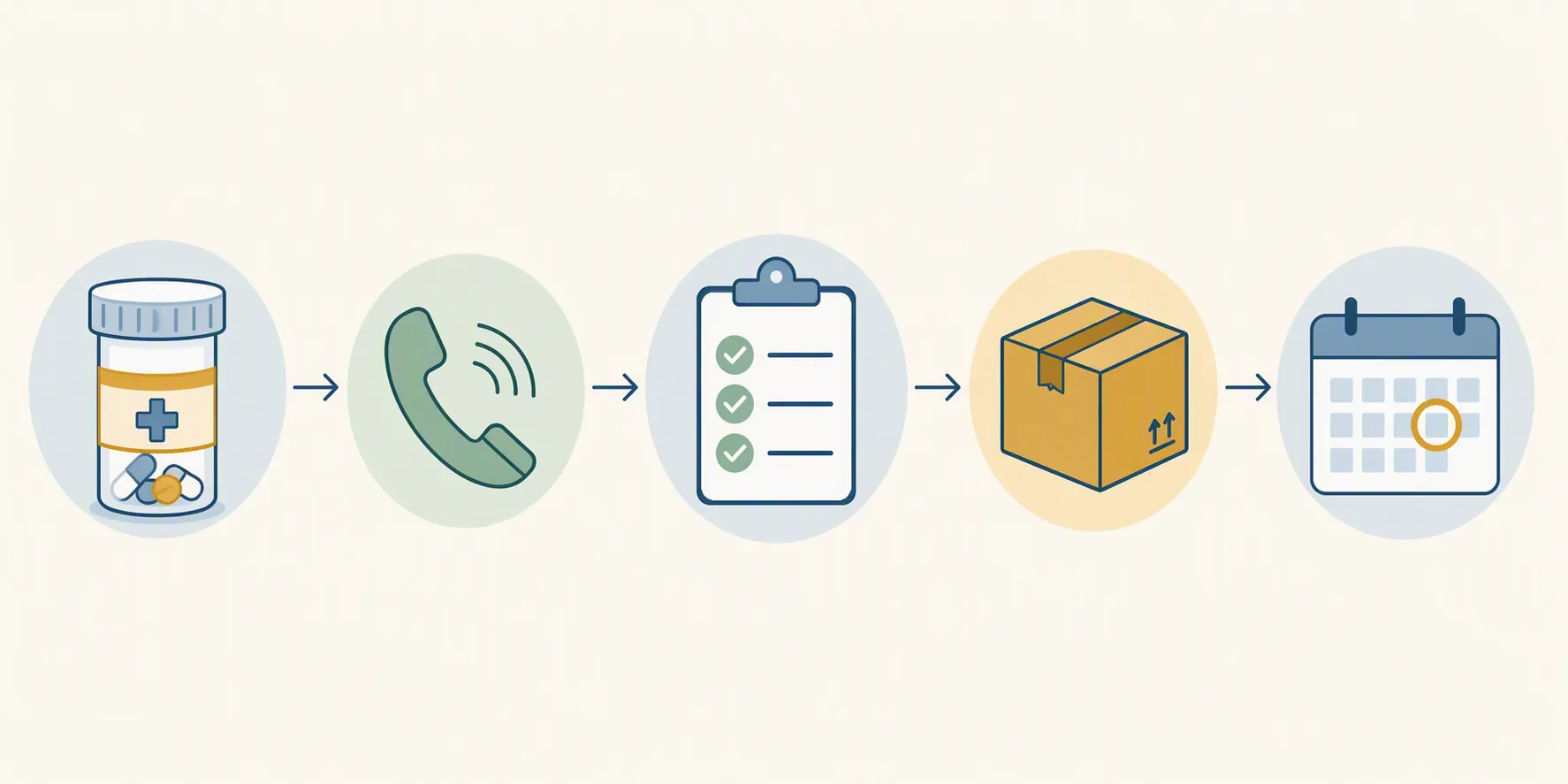
Start with the pill bottles, not the pharmacy app. Put every active prescription in front of you and write down the drug name, strength, prescription number if available, prescriber, remaining refills, next expected fill date, and whether the bottle says Auto Refill or Save a Trip. If the patient uses insulin, inhalers, eye drops, patches, refrigerated medication, or anything taken only as needed, include those too. The medication that sits in a drawer is still capable of becoming the medication everyone forgets to transfer.
Then call the closing Walgreens pharmacy and ask for the closing date, the default receiving Walgreens, and whether the patient may choose a different Walgreens that is easier to reach. If the senior no longer drives, “nearby” on the Walgreens side may not be nearby in real life. A store three miles farther away can mean a missed pickup if it requires a left turn across traffic, a second bus, or a ride from someone who works weekdays.
A plain phone script that usually gets better answers
- “My Walgreens is closing. What is the exact last pharmacy service date for this location?”
- “Which Walgreens will receive this patient’s routine Auto Refill prescriptions if we do nothing?”
- “Can we choose a different Walgreens now, and can you confirm the store address?”
- “Please review every active prescription and tell me which ones will transfer automatically and which ones will not.”
- “Are any of these controlled substances, specialty medications, refrigerated medications, out of refills, waiting on prior authorization, or due during the closing week?”
- “Is delivery available for these medications, and what delivery speed would actually arrive before the patient runs out?”
- “Would a 90-day supply be allowed for any routine medication, and who has to approve it — the prescriber, the insurer, or both?”
- “Can you give me the name of the person confirming this and the date of the confirmation?”
Write the answers in one place: notebook, shared caregiver document, or a photo of the completed checklist. The important details are the closing date, receiving store, medication exceptions, next fill dates, delivery decision, and the name of the pharmacy staff member who reviewed the account. If more than one family member helps, this avoids the familiar mess where one person assumes the app is current and another assumes the store called.
Controlled substances and specialty medications need special handling
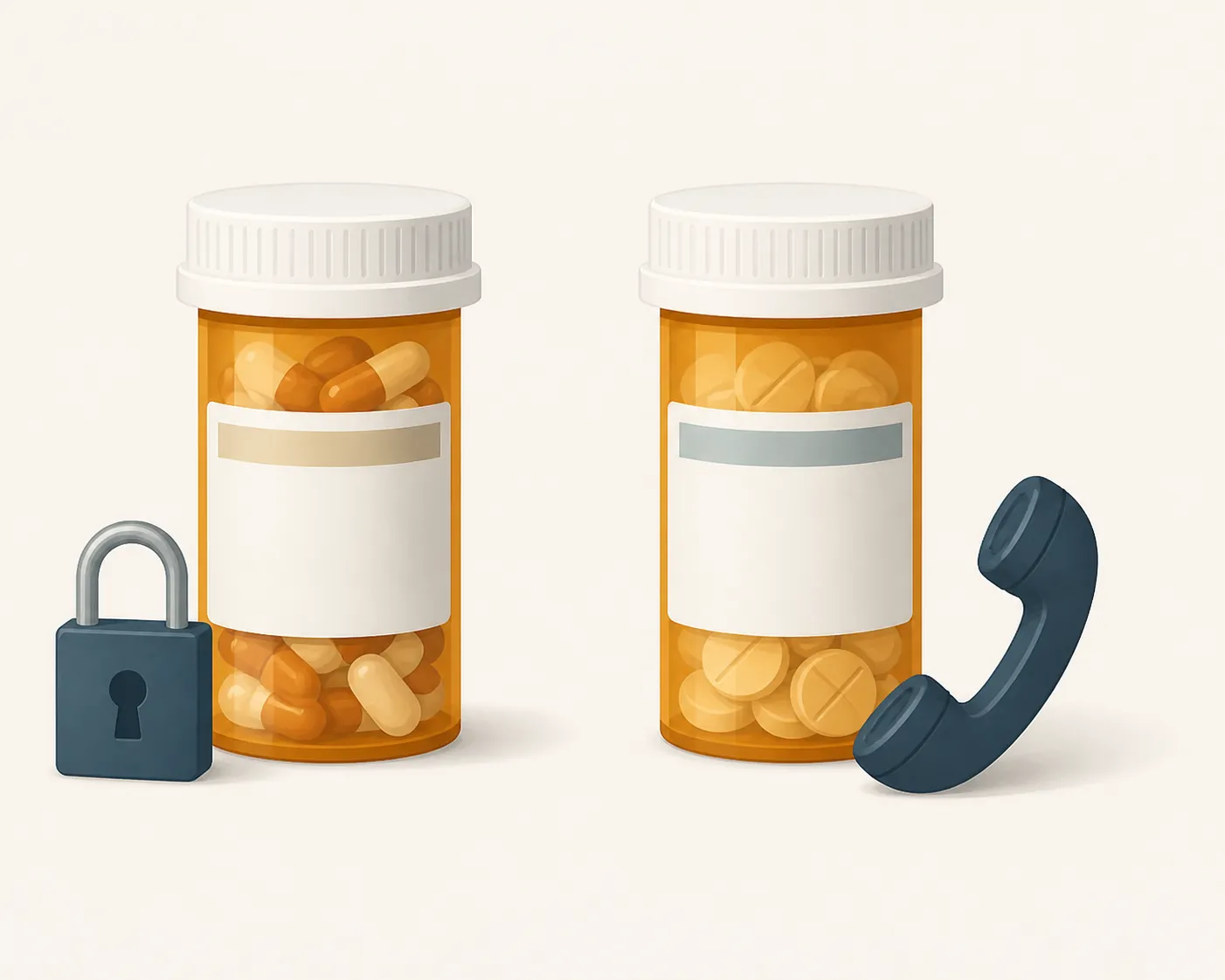
Controlled substances are the first exception to treat seriously. Walgreens says controlled substances cannot be automatically transferred because of legal restrictions, and patients should speak with a Walgreens pharmacy team member. [4]
That does not mean panic. It means do not assume the prescription will follow the others. Ask the pharmacist whether the current prescription can be filled before the closing date, whether the prescriber must send a new prescription to the selected pharmacy, and whether timing rules affect the next fill. If the medication is used for pain, sleep, anxiety, ADHD, or another condition where missed doses may matter, involve the prescriber early enough that nobody is trying to fix it on a Friday afternoon.
Specialty medications have their own route. Walgreens directs patients with specialty medication questions to call 888-782-8443. [4] Use that line to confirm where the medication is being managed, whether shipment timing changes, whether temperature handling matters, and what to do if the closing store had been the pickup point.
If the new Walgreens is too far, ask about delivery and 90-day fills
A farther pharmacy is not just an inconvenience for many seniors. It can turn one refill into a transportation problem, a fall-risk problem, or a caregiver scheduling problem. Walgreens offers several prescription delivery options: same-day delivery for $5.99 within a 20-mile radius, 1–2 day delivery for $3.99, and free 5–10 day ship-to-home delivery. [5]
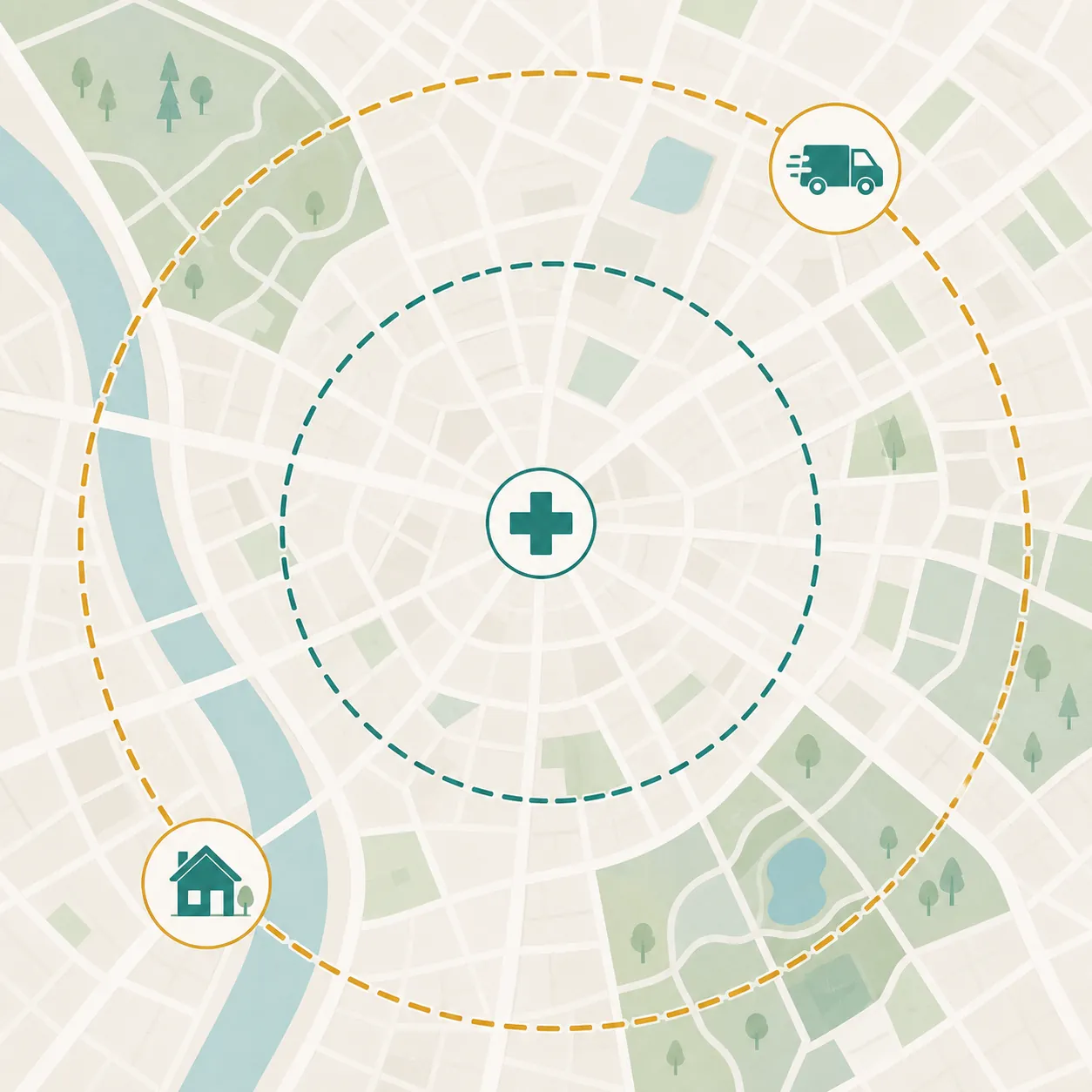
The delivery menu is not the whole answer. Ask which of the patient’s actual prescriptions are eligible for delivery, whether the address is inside the same-day radius, whether a signature is needed, whether the package can sit safely outside, and whether the selected delivery speed arrives before the current supply runs out. Free 5–10 day shipping is helpful only if there are enough pills left to cover that window.
Also ask whether a 90-day supply is available for stable routine medications. Walgreens’ closure FAQ tells patients they may ask the pharmacy team about getting a 90-day supply, which can reduce trips after the store transition. [4] Whether that works depends on the medication, prescriber, insurance plan, and refill timing, so this is a question to ask before the last local pickup disappears.
If the new route is physically harder — longer walk from the parking lot, unfamiliar bus stop, more standing in line — treat that as part of the care plan, not an afterthought. For broader home and mobility planning, it may help to pair the pharmacy transition with an aging-in-place checklist, a room-by-room home safety review, or a fresh look at whether a walker or rollator fits the person’s balance needs. The point is not to turn a prescription pickup into a major project. It is to avoid discovering, after the store closes, that the “nearby” option is not usable.
Why acting early matters for seniors
The evidence on pharmacy closures does not prove that every closing causes a missed refill. It does show why families should not wait for the system to sort itself out. A 2019 JAMA Network Open study using 2011–2016 IQVIA claims data found that older adults whose pharmacy closed had a statistically significant 5.90% drop in statin adherence in the first three months after closure, with the effect persisting over 12 months; about 24% of affected patients never refilled, compared with 12.8% whose pharmacy stayed open. [6]
That study predates the current Walgreens closure wave and should be read as an association, not a guarantee of what will happen to a particular patient. Still, it matches what caregivers see in real life: a pharmacy routine is a system. Change the store, the drive, the pickup reminder, or the pharmacist who recognizes the patient, and small frictions start to matter.
Pharmacy access has also been changing for years, not only at Walgreens. A USC Schaeffer and Health Affairs analysis found that 29.4% of U.S. retail pharmacies closed from 2010 to 2021. [7] For a senior who already has a working routine, one more closure is not an abstract market trend. It is a new task list.
Quick answers for a closing Walgreens
Will my prescriptions transfer automatically?
Many routine Walgreens prescriptions on Auto Refill or Save a Trip Refills have a default move to a nearby Walgreens, but do not treat that as a blanket answer for every medication. Controlled substances do not auto-transfer, and specialty medications need separate handling. [4]
Do I need to give Walgreens my insurance again?
Walgreens says insurance information already on file is accessible at all Walgreens locations. [4] It is still sensible to bring the current insurance card to the first pickup at the new location, especially if the patient recently changed Medicare drug plans or supplemental coverage.
Can a caregiver handle this call?
Often, yes, but privacy rules and account settings can affect what the pharmacy will discuss. The cleanest approach is to have the patient present for the call, use the pharmacy’s authorized-caregiver process if one exists, and ask what information the pharmacy needs before discussing medication details. If the store is closing soon and several relatives are involved, decide who owns the pharmacy call so the patient does not get five half-answers.
What if the app says everything is fine?
Use the app as a tool, not as the only confirmation. A store closure is exactly the moment when a human review is worth it. Ask the pharmacy team to walk through each active prescription and name the exceptions. The app may show a refill status; it may not answer whether a controlled prescription needs a new prescriber action or whether a specialty shipment is being handled somewhere else.
Before the close date, leave yourself with these answers
- The exact closing date and the last date the pharmacy will fill prescriptions at that store.
- The Walgreens location that will receive routine refills, or the alternate Walgreens the patient chose.
- A reviewed list of every active prescription, including next fill date and remaining refills.
- A separate plan for each controlled substance.
- A confirmed specialty-medication plan through 888-782-8443, if applicable.
- Delivery eligibility, delivery speed, delivery cost, and whether the timing fits the pills left at home.
- Whether any routine medication can move to a 90-day supply.
- The name of the pharmacy staff member who confirmed the plan and the date of that confirmation.
For most routine prescriptions, the Walgreens system can keep things moving. The gap usually appears where the assumption is too broad: one controlled prescription, one specialty medication, one refill with no refills left, one delivery window that starts after the pill bottle is empty. Handle those before the close date.
References
- Walgreens Closing Stores: List of Shuttered Locations 2026 — Inc.
- Walgreens 2026 closures: Which states — Rolling Out, August 3, 2026.
- Walgreens layoffs, store closures, and the locations on the doomed list — Fast Company.
- Store Closures — Walgreens.
- Walgreens Prescription Delivery: Your Questions Answered — Walgreens.
- Association of Pharmacy Closures With Adherence to Cardiovascular Medications Among Older US Adults — PubMed, 2019.
- Pharmacy Closures in the United States — USC Schaeffer, December 2024.
Browse more in the Glossary.