
Product term
Does Travel Insurance Cover Weather Delays for Seniors?
Last verified 2026-07-25
Yes, travel insurance can cover weather delays for seniors, but only when the delay meets the policy’s rules. The important words are not just “weather” or “covered delay.” The policy usually has to name weather as a covered reason, the delay must last long enough, and the traveler must pay for eligible expenses first and submit receipts afterward.
That matters because weather is not a rare travel problem. FAA OPSNET data for June 2017 through May 2023 found that weather caused 74.26% of U.S. flight delays lasting more than 15 minutes.[1] And when the delay is weather-related, U.S. airlines are not legally required to compensate passengers the way they may be expected to for delays within the airline’s control, such as crew or mechanical problems.[2]
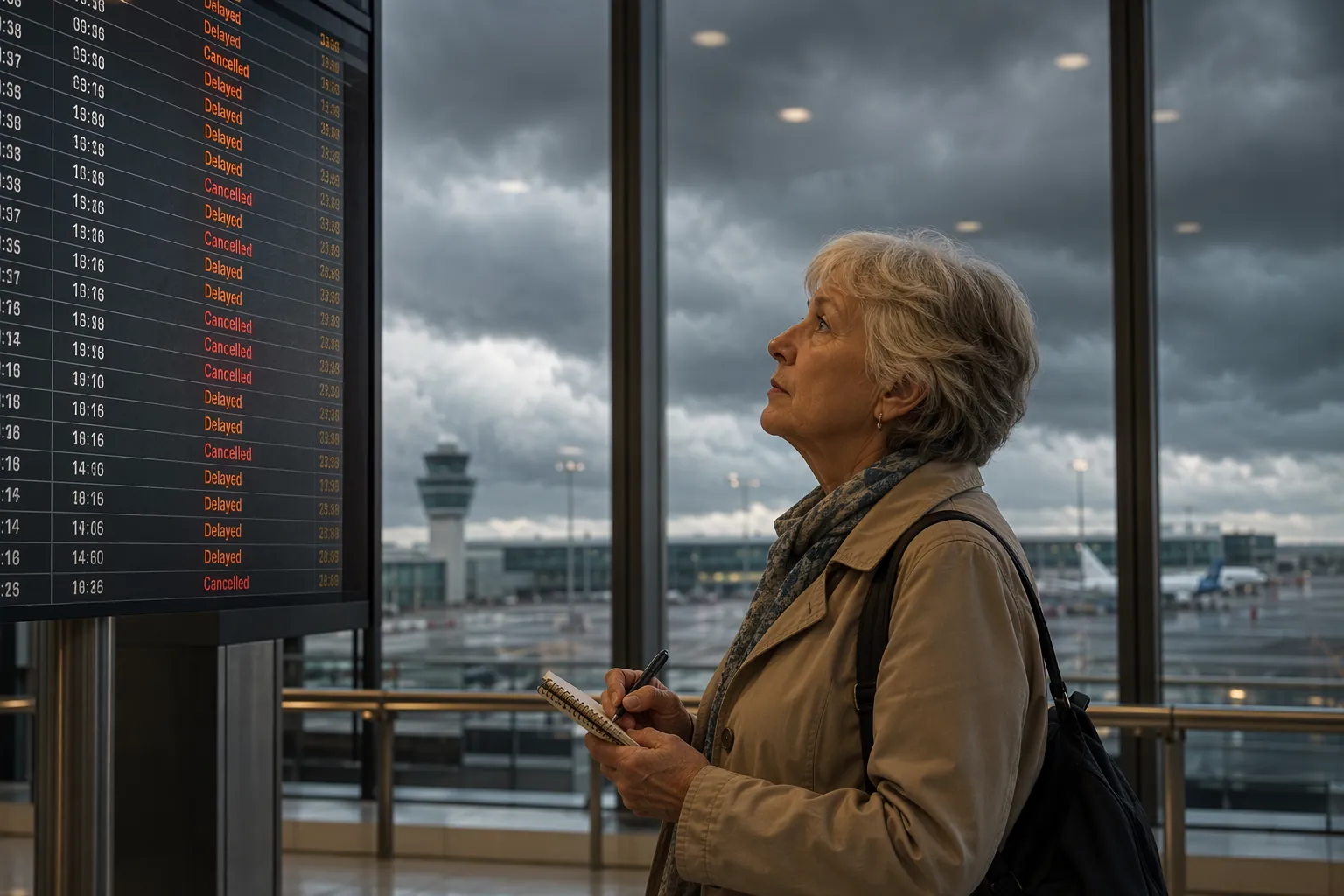
So the value of travel insurance for seniors covering weather delays is practical: it may reimburse the hotel room, meals, taxi, toiletries, medication, or phone calls that become necessary after a covered delay. It is not a promise that every rainy forecast will pay out.
What Weather Delay Coverage Usually Pays For
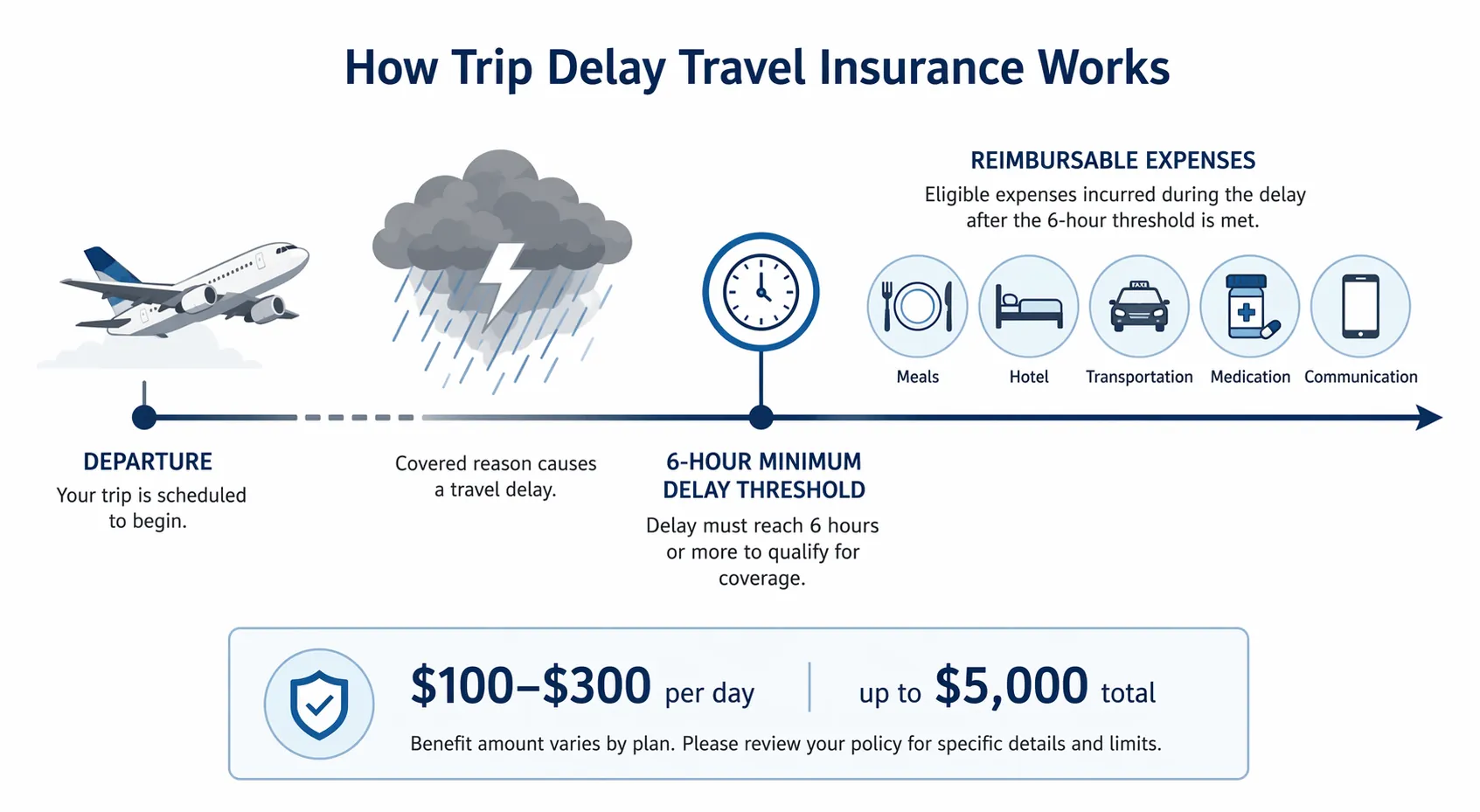
Trip delay coverage is usually part of a comprehensive travel insurance plan. It reimburses reasonable extra expenses when a covered delay interrupts a trip. Weather can be one of those covered reasons, often described in policy language as “inclement weather.” Squaremouth defines inclement weather as severe weather that prevents normal travel services from operating, and distinguishes it from a broader “natural disaster” category.[3]
The word “severe” is doing real work. A forecast calling for rain, ordinary winter conditions, or bad visibility may not be enough by itself. The weather usually has to cause a delay, cancellation, or cessation of travel services. If the airline keeps flying and the traveler simply decides the weather looks unpleasant, that is a different situation.
When the benefit does apply, common reimbursable expenses include:
- Meals during the covered delay
- A hotel room when an overnight stay becomes necessary
- Local transportation, such as a taxi, rideshare, or shuttle
- Toiletries and other necessary personal items
- Medication needed because the traveler is stuck longer than planned
- Phone calls or communication expenses tied to the delay
The traveler normally pays first. The insurer reviews the claim later. That is why itemized receipts matter. A credit card line that says “Airport Cafe” may not be as useful as a receipt showing the date, items purchased, and amount.
The Waiting Period: A Delay Must Last Long Enough
Most comprehensive plans do not start paying the minute a flight board changes from “On Time” to “Delayed.” Trip delay benefits commonly require a delay of 3 to 12 hours before coverage activates, and a 6-hour minimum is the most common threshold listed by Squaremouth.[4]
| Policy term to check | What it means for a senior traveler |
|---|---|
| Minimum delay period | How long the trip must be delayed before reimbursement can begin, often 3 to 12 hours |
| Covered reason | Whether weather, inclement weather, or carrier delay is included in the benefit |
| Daily limit | The most the policy will reimburse per person per day |
| Total limit | The maximum reimbursement for the entire delay claim |
| Documentation | Receipts and proof from the airline or travel supplier showing the delay and cause |
A delay that lasts 4 hours may feel long enough when someone is tired, managing medication timing, or waiting in a crowded terminal. But if the policy requires a 6-hour delay, that 4-hour disruption may not qualify for trip delay reimbursement. The claim may fail even though the weather was real and the inconvenience was real.
The Dollar Limits: Daily Caps and Total Caps
Trip delay coverage is not an open checkbook. Squaremouth lists trip delay limits from $100 to $5,000 per person total, with per-day limits commonly ranging from $100 to $300.[4] CNBC Select’s senior travel insurance review also notes that plan benefits and coverage levels vary by provider and policy.[5]
The daily cap is often the number families notice too late. Suppose a traveler has a covered overnight weather delay and spends more than the daily limit on an airport hotel, dinner, breakfast, and transportation. The policy may still reimburse only up to that day’s cap. The rest stays with the traveler.
This is especially important for older travelers who may reasonably choose the safer hotel attached to the airport instead of a cheaper motel requiring a late-night shuttle. A policy with a low daily cap may technically cover weather delays while still leaving a large gap.
Why Airline Rules Do Not Replace Insurance
When a flight is delayed because of weather, the airline may rebook passengers, but that is not the same as paying for meals, hotel rooms, or other out-of-pocket costs. Allianz explains the basic distinction plainly: airlines are generally responsible for problems within their control, while weather delays are treated differently because the airline did not cause the storm.[2]
That leaves a familiar airport scene. The counter agent can confirm the delay. The traveler may get a later flight. But if the storm closes the connection city and the next available seat is tomorrow, the hotel bill may be the traveler’s problem unless a travel insurance policy covers it.
For caregivers planning with an older adult, this is the same practical preparation bucket as medication lists, mobility help, and airport transfer plans. If those details are still being organized, the senior travel safety checklist at Senior Travel Safety Tips Every Caregiver Should Know is a useful next read.
The Named-Storm Rule Can Make a Late Purchase Useless
Weather coverage usually has to be bought before the storm becomes foreseeable. Allianz explains that once a storm is named, it is generally considered a known or foreseeable event for travel insurance purposes.[2] Buying a policy after that point may not cover losses caused by that storm.
This is the timing rule seniors and families should not leave for the fine print. If a hurricane is already named, or a severe weather event is already forecasted in a way the policy treats as foreseeable, a new policy may still offer other benefits for unrelated events. But it may not help with that specific storm.
The same idea can apply outside hurricanes, depending on the policy wording. If an event is already known before the policy is purchased, the insurer may treat it differently from an unexpected delay. The exact boundary belongs in the policy certificate, not in a brochure headline.
A cautious purchase date does not mean buying insurance for every cloud on the map. It means buying before the specific problem you are worried about has become a known event under the policy.
Pre-Existing Condition Waivers Are Important, But Separate
Pre-existing condition waivers matter a great deal for many seniors, but they are not the same thing as weather delay coverage. A waiver may help protect medical-related trip cancellation or interruption claims that would otherwise be excluded because of a traveler’s health history. It does not create weather delay coverage by itself.
Many plans require travelers to buy coverage within 14 to 21 days of the initial trip deposit to qualify for a pre-existing condition waiver.[6] That window is separate from the named-storm rule, but both rules point to the same practical lesson: waiting until trouble is obvious can close off benefits.
For a senior taking several medications or traveling with a recent diagnosis, the policy review should cover both tracks: weather delay language for storms and carrier disruptions, and medical waiver language for health-related exclusions.
What the Claim Usually Needs
A weather delay claim is a paperwork claim. NerdWallet notes that travelers should keep receipts and documentation when filing for trip delay reimbursement.[7] The insurer is trying to confirm three things: the trip was delayed for a covered reason, the delay lasted long enough, and the claimed expenses were eligible and reasonable.
- Proof of the delay, such as an airline notice, app alert, email, or written confirmation from the carrier
- Proof of the cause, especially if the policy requires weather to be the reason
- Itemized receipts for meals, lodging, transportation, medication, toiletries, or other claimed expenses
- Trip documents, including itinerary, ticket receipts, and proof of payment
- The policy number and claim form submitted within the required deadline
Claim filing windows commonly run from 20 to 90 days after the delay ends.[6] That is a wide range, and it is not worth guessing. If a traveler is recovering from a difficult return home, an adult child may need to help file before the deadline passes.
A simple habit helps: before leaving the airport, take screenshots of delay notices, ask the airline for written confirmation if available, and put every receipt in one envelope or phone folder. The claim is easier when the record is built while the delay is happening.
How Much Senior Travel Insurance May Cost
Cost is not a small side issue for seniors. Squaremouth’s 2026 senior travel insurance data puts the average comprehensive plan for travelers over 60 at about $371 per trip, and notes that 70-year-olds pay about 11% more than 60-year-olds.[6] Travel insurance is also commonly described as costing roughly 4% to 10% of the total trip cost.[5]
That price may be worthwhile when a storm strands someone overnight in a costly airport city. It may be less compelling for a short, inexpensive trip with flexible plans. The point is to compare the premium against the actual benefits: delay threshold, daily cap, total cap, medical coverage, evacuation coverage, and cancellation rules.
The average price is only a planning marker. Exact premiums and benefits can shift by age, destination, trip cost, state of residence, and plan design. The policy certificate is the document that controls.
What Is Not Usually Covered
The most common disappointment is assuming that “bad weather” and “covered weather delay” mean the same thing. They do not. A covered claim usually needs a delay caused by severe weather, inclement weather, or another covered event described in the policy.
- A traveler’s decision not to go because the forecast looks unpleasant, unless the policy has a separate benefit that applies
- Expenses above the policy’s daily or total reimbursement limits
- A delay shorter than the policy’s minimum waiting period
- Losses tied to a storm that was already named or foreseeable before the policy was purchased
- Claims filed without required receipts or after the claim deadline
International trips and active warnings add another layer of review. Families comparing insurance against destination risks may want to read Emergency Preparedness for Elderly Travelers During Warnings or use the Senior Travel Checklist When a State Department Warning Is Active before finalizing coverage.
Questions to Ask Before Buying
This article is for benefits literacy, not financial or legal advice. Before buying a policy, seniors and caregivers should read the certificate and ask the insurer or licensed agent direct questions in plain words:
- How many hours must the trip be delayed before trip delay coverage starts?
- Does the policy list weather, inclement weather, carrier delay, or natural disaster as a covered reason?
- What is the per-person daily cap, and what is the total trip delay limit?
- Does the named-storm or foreseeable-event rule affect the destination or travel dates?
- Which expenses are reimbursable, and are medication, toiletries, local transportation, and phone calls included?
- What receipts and delay proof are required, and how many days are allowed to file the claim?
References
- Frequently Asked Questions on Weather Delay, Federal Aviation Administration.
- Delays & Cancellations Due to Weather, Allianz Travel Insurance.
- Inclement Weather, Squaremouth.
- Trip Delay Insurance Coverage Details, Squaremouth.
- Best Travel Insurance for Seniors of 2026, CNBC Select, 2026.
- Best Travel Insurance for Seniors 2026, Squaremouth, 2026.
- Trip Delay Insurance Explained, NerdWallet.
Browse more in the Glossary.