
How to Manage Sundowning in Dementia: A Practical Guide for Family Caregivers
Sundowning — the late-afternoon and evening confusion, agitation, and restlessness that affects many people with Alzheimer's and dementia — is one of the most exhausting challenges family caregivers face at home. This guide explains why sundowning happens and walks through a layered, evidence-grounded management approach: environmental modifications, daily routine adjustments, in-the-moment response strategies, and clear criteria for when to call a doctor.
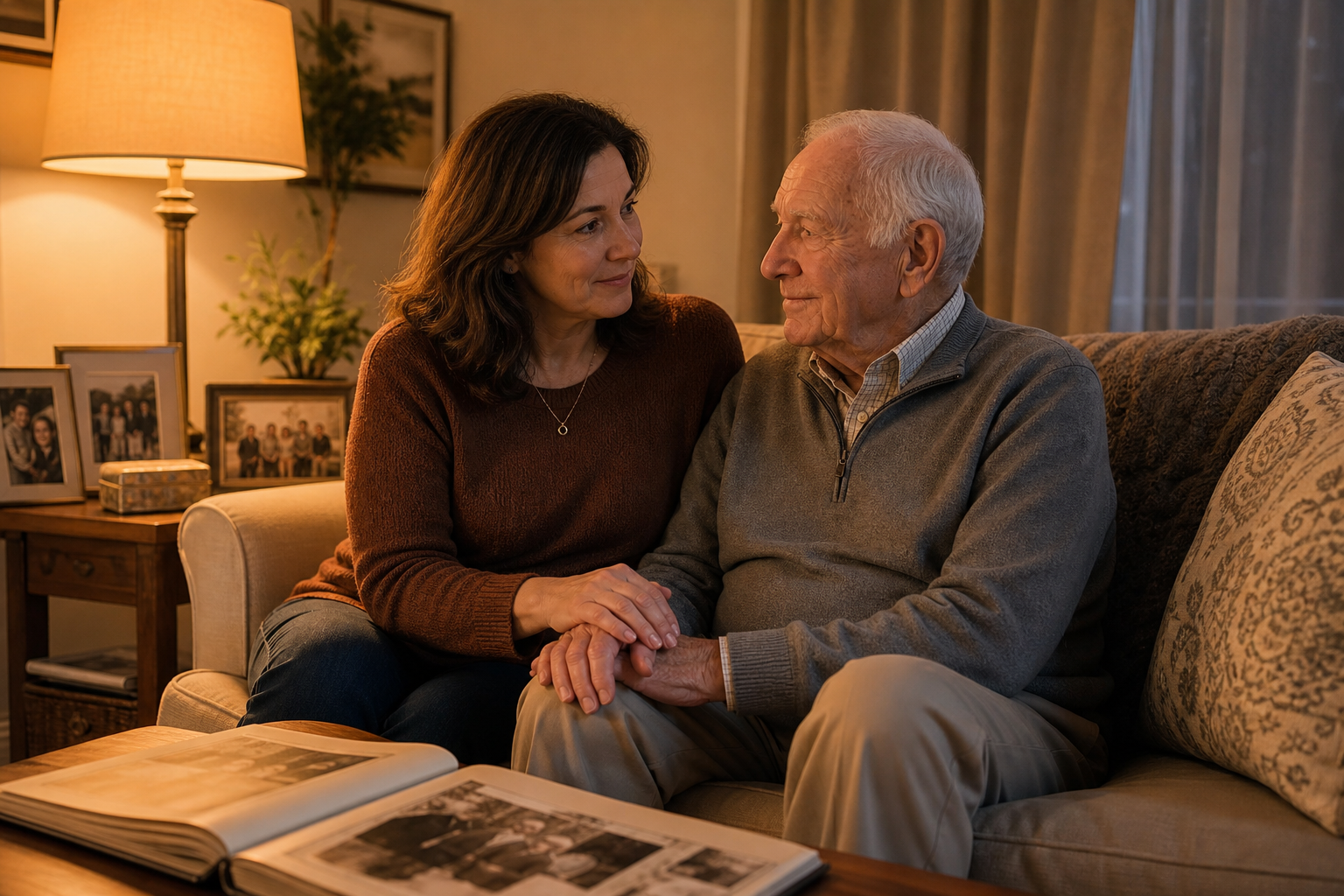
If your parent or spouse with Alzheimer's becomes increasingly confused, agitated, or distressed as the afternoon fades into evening, you are not imagining a pattern. What you are observing has a name — sundowning — and it has a neurological explanation. More importantly, it has a management approach that can meaningfully reduce both the frequency of episodes and the intensity of the ones that do occur.
This guide builds from the ground up: what sundowning is and why it happens, which stages of dementia it affects most, how to recognize its signs and triggers, and then a layered set of strategies — environmental modifications, daily routine adjustments, in-the-moment responses, and clear criteria for calling a doctor. The goal is to replace reactive crisis caregiving with an organized, evidence-grounded plan.
What Is Sundowning and Why Does It Happen?
Sundowning is not a disease in itself. It is a cluster of behavioral and psychological symptoms — confusion, agitation, pacing, restlessness, hallucinations, and disorientation — that emerge or worsen in the late afternoon and persist into the night. The Alzheimer's Association describes it as increased confusion that people living with Alzheimer's and dementia may experience from dusk through night. The timing is not coincidental — it is rooted in how dementia damages the brain's internal clock.
Autopsy studies of people with Alzheimer's disease show a disproportionate loss of neurons in the suprachiasmatic nucleus (SCN) — the small region in the hypothalamus that functions as the brain's master circadian clock. The SCN regulates melatonin release in response to light signals from the eyes. When SCN neurons are lost, the entire system for distinguishing day from night begins to fail. According to a peer-reviewed review published in the International Journal of Geriatric Psychiatry, the SCN also receives input from cholinergic neurons in the brain stem and forebrain — precisely the neurons that degenerate in Alzheimer's disease. This dual damage to the circadian system helps explain why simply supplementing melatonin does not reliably reset the clock in dementia patients.
A clinical review in Practical Neurology offers a useful framework called the Progressively Lowered Stress Threshold (PLST) model: sundowning occurs when the normal diurnal circadian dip in cognitive reserve temporally coincides with increases in pain, hunger, or fatigue that exceed the person's stress tolerance. In other words, by late afternoon, someone with Alzheimer's has already used most of their cognitive buffer for the day. Any additional demand — a shadow in the corner, a change in routine, a caregiver who appears tense — can tip them into distress.
Which Dementia Stage Does Sundowning Affect Most?
Sundowning does not affect everyone with dementia equally, and it does not persist unchanged across all disease stages. According to the Cleveland Clinic, approximately 20% of people diagnosed with Alzheimer's disease experience sundowning at some point, and it typically begins during the middle and later stages of the disease.
AARP notes that many families observe sundowning behaviors primarily in the middle stages, with symptoms often subsiding as the disease progresses into its later phases. In institutionalized settings, prevalence rates can exceed 80%, reflecting both the advanced stage of residents and the environmental factors common in care facilities.
This stage-specificity matters for caregivers in two ways. First, if your loved one is in the early stages of Alzheimer's and has not yet shown sundowning symptoms, this guide can help you prepare proactively. Second, if sundowning has been a significant challenge and appears to be diminishing, that may reflect late-stage disease progression — a development that warrants a conversation with the treating physician about evolving care priorities.
Recognizing Sundowning: Common Signs and Triggers
Before you can manage sundowning, you need to recognize it clearly — both the behavioral signs that indicate an episode is occurring and the triggers that make episodes more likely or more severe. Many triggers are modifiable, which is why identifying them is the first step toward prevention.
| Category | What to Look For |
|---|---|
| Behavioral signs | Pacing or restlessness; rocking; shadowing (following the caregiver from room to room); crying or calling out; increased confusion or disorientation; insomnia or resistance to going to bed; visual hallucinations; verbal or physical aggression |
| Environmental triggers | Low lighting, shadows, or glare from windows at dusk; sudden changes in the visual environment; unfamiliar surroundings; too many people or too much noise in the room |
| Physical triggers | Fatigue accumulated over the day; hunger or thirst; pain that the person cannot communicate; urinary tract infection or other acute illness; constipation; medication side effects or interactions |
| Routine triggers | Sudden changes to the daily schedule; missed nap or an overly long nap; disrupted mealtimes; caregiver shift changes or the arrival of unfamiliar people |
| Caregiver-related triggers | Visible stress, frustration, or anxiety in the caregiver — the person with dementia often mirrors the emotional state of those around them |
One trigger that consistently appears across clinical sources but is often underappreciated: shadows. As outdoor light shifts in the late afternoon, it enters windows at low angles and creates elongated, unfamiliar shadows on walls and floors. For someone whose visual processing is already compromised by dementia, these shadows can appear to be people, animals, or threats. Closing window coverings at dusk is one of the simplest and most effective environmental adjustments a caregiver can make.
Layer 1: Environmental Modifications
Environmental changes are the most scalable and durable first-line intervention for sundowning. Unlike medication, they carry no side-effect risk. Unlike behavioral strategies, they work even when the caregiver is exhausted. The central principle is to use light intentionally to reinforce the brain's circadian signals throughout the day — and to eliminate the environmental cues that trigger confusion in the evening.

The Biodynamic Lighting Protocol
Research from Arizona State University, published in 2025, tested a biodynamic lighting protocol in a memory care facility over seven weeks with ten residents in their 70s who had dementia. The protocol used blue-enriched, high-intensity light in the morning; neutral white light in the afternoon; and red-enriched, low-intensity warm light in the evening. Participants gained an average of 82 minutes of sleep per night, and both depression and agitation scores improved.
The ASU lead researcher noted an important calibration point: a 60-year-old person needs approximately three times more light than a 20-year-old to achieve the same circadian effect. For an 80-year-old, that figure rises to six times more. This means that what feels like adequate lighting to a caregiver in their 40s or 50s may be substantially insufficient for the person they are caring for. Interestingly, the research team had to reduce light intensity during the study because some participants found it uncomfortably bright — a reminder that individual sensitivity varies and that transitions should be gradual.
Practical Environmental Checklist
- Keep window coverings open during the day to maximize natural light exposure in living areas.
- Close window coverings at dusk — before the sun sets low enough to cast shadows — and turn on indoor lights at the same time to maintain visual continuity.
- Use warm-toned, low-intensity lighting in the evening. Avoid cool fluorescent or blue-spectrum overhead lighting after 4 PM.
- Place a night light in the bedroom, hallway, and bathroom so the person is never disoriented in darkness if they wake during the night.
- Reduce clutter in the main living areas — visual complexity increases cognitive load and can amplify confusion.
- Keep familiar objects visible: framed family photos, a favorite blanket, personally meaningful items. These provide orientation anchors.
- Limit the number of people in the room during the late afternoon and evening. Overstimulation is a documented trigger.
- Turn off loud television programs or news broadcasts in the early evening. Background noise that is unpredictable or emotionally charged increases agitation.
Layer 2: Daily Routine Strategies
A predictable 24-hour schedule reduces sundowning by removing unexpected cognitive demands during the circadian periods when the person with dementia is most vulnerable. The goal is not rigidity for its own sake — it is to preserve cognitive reserve for the end of the day by front-loading demands and keeping the evening as calm and familiar as possible.
| Time of Day | Recommended Approach |
|---|---|
| Morning (waking through noon) | Consistent wake time daily; morning is the best window for demanding activities — bathing, medical appointments, complex conversations; maximize bright light exposure, ideally outdoors or near a window |
| Early afternoon (noon–2 PM) | Physical activity or a walk outdoors; this is the optimal window for exercise and outdoor light exposure, which supports nighttime sleep quality |
| Mid-afternoon (2–4 PM) | If a nap is needed, keep it short (20–30 minutes) and no later than 3 PM; avoid caffeine and alcohol from this point forward; serve a larger lunch rather than a large dinner |
| Late afternoon (4–6 PM) | Begin playing soothing or personally familiar music approximately one hour before sundowning typically starts; reduce environmental complexity; close window coverings before shadows appear; transition lighting to warm tones |
| Evening (6 PM onward) | Keep activities calm, familiar, and low-demand; maintain consistent dinner and bedtime schedules; avoid stimulating television, loud conversations, or unexpected visitors |
| Bedtime | Consistent bedtime each night; same pre-sleep routine (e.g., warm drink, brief reading, dimming lights); ensure bedroom is comfortable and the night light is on |
The music recommendation deserves specific attention. The Practical Neurology clinical review specifically recommends beginning soothing or familiar music approximately one hour before sundowning typically starts — not after an episode has already begun. Music that the person knew and loved earlier in life tends to be more effective than unfamiliar or generic relaxation tracks, because it engages long-term memory systems that are often more preserved than short-term memory in Alzheimer's disease.
The National Institute on Aging also recommends arranging daily outdoor time or time near a window for natural light exposure — not just for vitamin D or exercise, but because consistent light exposure helps anchor the circadian system. Even 20 to 30 minutes of outdoor light in the early afternoon can meaningfully reinforce the day-night distinction that the damaged SCN can no longer reliably provide.
Layer 3: In-the-Moment Response Toolkit
When an episode is actively occurring, the goal is to reduce stimulation, validate the emotional experience, and redirect attention — not to restore accurate perception of reality. Here is a practical framework.
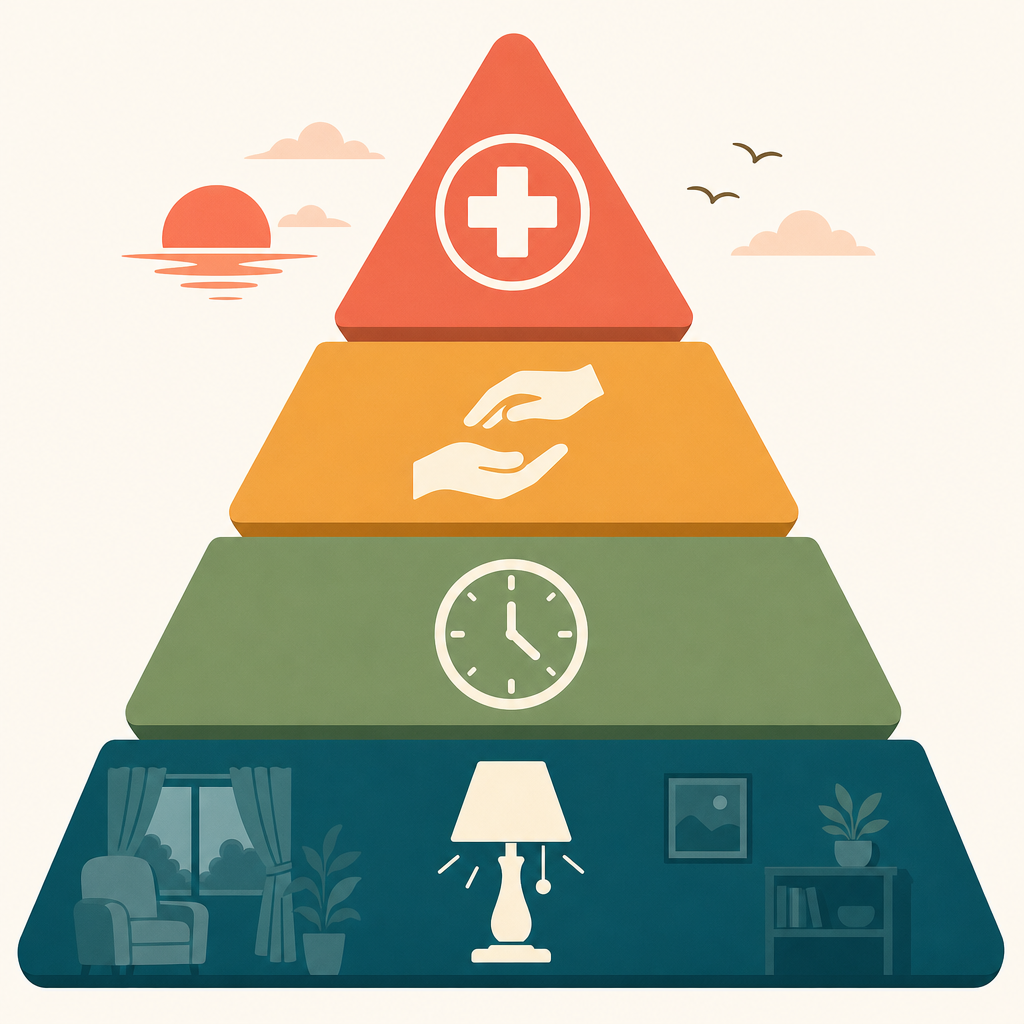
Approach and Communication
- Approach calmly and slowly — enter the person's line of sight before speaking, use a gentle tone, and keep your body language open and unhurried.
- Validate feelings without reinforcing confusion — if the person says they need to go home (even if they are home), respond to the emotion rather than the fact: 'You're feeling unsettled. I understand. Let's sit together for a moment.'
- Redirect to a personally meaningful activity — looking through a familiar photo album, watching a favorite show, folding laundry, holding a familiar object, or taking a short walk. The activity should be simple, familiar, and emotionally positive.
- Avoid introducing new information or corrections — do not say 'that person has been dead for 20 years' or 'you already ate dinner.' These corrections do not land and consistently escalate distress.
Sensory Calming Inputs
- Gentle physical touch — holding hands, a light back rub, or a foot rub can be grounding when the person is receptive to touch. Follow their cues; some people with dementia become more agitated with unexpected physical contact.
- Familiar music at a moderate volume — music from their young adulthood is often most effective. Keep the volume comfortable; loud music can increase agitation.
- Calming scents — lavender and similar calming fragrances are commonly used and generally well-tolerated, though individual responses vary. Use subtly, not as an overwhelming environmental presence.
- A warm, non-caffeinated drink — a cup of warm herbal tea or warm milk can serve both as a sensory comfort and as a hydration check, since dehydration is a documented trigger.
Your Own Emotional Regulation Matters
The Alzheimer's Association notes that people with dementia often notice and mirror stress or frustration in those around them. Your own calm is not just a personal resource — it is a clinical input into the episode. If you are feeling overwhelmed in the moment, take a breath, step back briefly if safe to do so, and re-enter with a slower pace and softer voice. Counting to ten before responding to an escalating episode is not a cliché; it is a practical technique that reduces the caregiver's visible emotional signal.
If Aggression Escalates: Safety First
Medical Red Flags: When to Call a Doctor
Most of this guide addresses the chronic management of sundowning — the ongoing pattern that develops as dementia progresses. But there is a clinically important scenario that is underrepresented in most caregiver-facing resources: sudden-onset or dramatically worsened sundowning can be a signal for an acute medical condition that requires urgent evaluation.
The most common culprit is a urinary tract infection. People with Alzheimer's often cannot communicate that they are in pain or that something feels wrong physically. A UTI that would cause discomfort and urgency in a cognitively intact person may instead manifest as sudden, severe behavioral deterioration in someone with dementia. The Cleveland Clinic notes explicitly that the person with sundown syndrome may not understand or be able to communicate that they are in pain — they need an advocate to prompt the healthcare provider for appropriate tests.
Delirium — an acute state of confusion with a specific medical cause — can look very similar to a severe sundowning episode but requires different management. The key distinguishing feature is the speed of onset: sundowning develops gradually as a pattern over days and weeks; delirium typically develops over hours and may fluctuate rapidly.
- Call a healthcare provider promptly if sundowning symptoms appear suddenly in someone who has not previously shown them, or if established sundowning dramatically worsens over one to two days.
- Note any accompanying physical symptoms: fever, changes in urination frequency or color, new pain behaviors, vomiting, or unusual drowsiness during the day.
- For a first or unusual episode, a targeted medical evaluation is clinically recommended. According to the Practical Neurology clinical review, this workup typically includes a urine culture, complete blood count (CBC), electrolytes, thyroid-stimulating hormone (TSH), and vitamin B12 levels.
- Review the medication list with the prescribing physician — certain medications, including those with high anticholinergic activity, are known to worsen sundowning and circadian disruption in people with dementia.
Medications: What the Evidence Says
Non-pharmacological approaches — the environmental, routine, and behavioral strategies described above — are the recommended first-line interventions for sundowning. Medications may be considered when behavioral symptoms are severe, persistent, and causing significant distress or safety risk despite consistent non-pharmacological management. Any medication decision requires individualized evaluation by a physician who knows the person's full medical history.
| Option | Current Evidence | Key Caution |
|---|---|---|
| Low-dose melatonin | Some patients may benefit; however, multiple randomized controlled trials failed to show improvement in sleep or agitation in Alzheimer's patients, and a Cochrane meta-analysis did not recommend melatonin for dementia sleep disturbances. Position as a low-risk option to discuss with a physician, not a proven solution. | Discuss dosing with a physician — published clinical doses vary widely and consumer-label doses may not reflect what was studied. The underlying circadian system damage in dementia may limit melatonin's effectiveness. |
| Brexpiprazole (Rexulti) | FDA-approved specifically for agitation associated with Alzheimer's dementia, as noted in a Harvard Health review published December 2024. It is an atypical antipsychotic that targets serotonin and dopamine pathways. | Verify current prescribing information and any updated safety labeling with a physician or pharmacist. As with all antipsychotics in older adults, risks and benefits require careful individual assessment. |
| Antipsychotics (general) | May reduce severe agitation in some patients when other approaches have failed. The Cleveland Clinic notes these carry long-term risks including increased stroke risk in older adults with dementia. | Antipsychotics should not be a default first step. Use only under close physician supervision when behavioral symptoms pose a significant safety risk and other approaches have been tried. |
Caregiver Self-Care: Why It Matters Clinically
Caregiver wellbeing is not a feel-good addendum to a sundowning management guide. It is a practical clinical concern with direct consequences for the person you are caring for.
The Practical Neurology clinical review identifies sundowning as one of the most common reasons for early institutionalization of people with dementia — and notes that caregiver stress from sundowning itself increases the person's risk for agitation. The two are linked in a reinforcing cycle: a burned-out caregiver who is visibly stressed during the vulnerable late-afternoon window contributes to the very episodes that are exhausting them.
This means that protecting your own capacity is not separate from managing sundowning — it is part of the management strategy.
- Build a respite rotation for the peak sundowning window — identify a trusted family member, friend, or professional caregiver who can cover the late-afternoon and early-evening hours on a scheduled basis. Even two evenings per week can substantially reduce cumulative caregiver stress.
- Name the hardest part specifically — when talking with family members or a physician, describe sundowning concretely: what time it starts, how long it lasts, what behaviors occur. This specificity helps others understand the actual burden and facilitates better support.
- Track your own warning signs — persistent sleep deprivation, increasing resentment, feeling unable to leave the house, or a sense that you are always bracing for the evening are signs that the current caregiving load is not sustainable.
- Ask for help before you reach the breaking point — contacting a social worker, the Alzheimer's Association helpline (available 24/7), or the person's physician about respite options is a proactive caregiving decision, not a sign of failure.
Managing sundowning over weeks and months is genuinely hard. The behavioral strategies in this guide work — but they work incrementally, and some evenings will be difficult despite your best preparation. That is not a reflection of your competence as a caregiver. It is the nature of a neurological condition that does not respond predictably to even the most thoughtful interventions. Seeking help, building coverage for the hardest hours, and acknowledging the toll are all part of good caregiving.
Related reading
Noticed something outdated or inaccurate on this page? Flag a correction. We review every report against CDC, NIA, and AARP HomeFit guidance before updating a page.
Part of the Fall Prevention section.