
Caregiver decision guide
Steps to Take When an Older Adult's Allergy Drug Is Recalled
When a senior's allergy medication is recalled, caregivers need a calm, senior-specific action plan. This guide covers confirming the recall, avoiding dangerous replacement drugs like Benadryl (flagged by the AGS Beers Criteria), and safely switching to geriatric-appropriate alternatives.
Last reviewed: July 23, 2026.
Start at the cabinet, not with a search spiral. Take the allergy medicine bottle out, keep it in front of you, and do not throw it away yet. Check the drug name, lot number, and expiration date against the recall notice. If it matches, separate it from the other medicines so no one takes another dose by habit. Then call the pharmacy before stopping it, replacing it, or handing over a familiar over-the-counter substitute.
This matters now because of the July 2026 cetirizine recall. The FDA enforcement report listed four affected lots, GY825029 through GY825032, with expiration dates of 10/2028, distributed nationwide and classified as Class I because of ranitidine cross-contamination.[1] That is serious enough to treat carefully. It is not a reason to decide that all cetirizine is unsafe for older adults. The problem described in the recall is contamination in specific lots, not the second-generation antihistamine class.

First, Confirm Exactly What Is in the Bottle
A recall notice usually sounds simple: check the lot number. At the kitchen table, it is rarely that clean. The bottle may be half empty. The older adult may have taken a dose that morning. There may be a generic label on the bottle, a brand name in the news, and three other allergy or sleep products nearby.
Before calling anyone, gather the facts a pharmacist will need:
- Drug name on the bottle, including whether it says cetirizine, Zyrtec, or another allergy medicine
- Strength, such as 5 mg or 10 mg, if listed
- Lot number and expiration date
- Where it was purchased or filled, including pharmacy name if available
- How many doses the older adult has taken since the bottle was opened
- Any symptoms since taking it, especially new confusion, dizziness, rash, stomach upset, or anything unusual for that person
If the lot number does not match the recall notice, do not assume the medicine is recalled because the name is the same. If the lot number does match, put the bottle in a separate bag or container and write “possible recall” on a note attached to it. Keep it available in case the pharmacist, prescriber, or recall instructions ask for details from the label.
This is also the moment to slow down duplicate dosing. If one family member has already given a replacement allergy pill, write that down too. A senior who gets one dose from a pill organizer, another from a spouse, and a third from a “just in case” over-the-counter bottle is no longer dealing with only a recall problem.
Do Not Stop or Substitute Before the Pharmacy Call
For an allergy pill, stopping for a short time may sound harmless. Sometimes it is. But the safer rule for an older adult is still: confirm first, then change. Cleveland Clinic pharmacist Chris Snyder warns that abruptly stopping a recalled medication can sometimes be more dangerous than continuing it briefly while getting professional guidance, especially for people taking multiple medications for chronic conditions.[2]
That guidance matters because many older adults do not take one isolated drug. They may be taking blood pressure medicine, diabetes medicine, anticoagulants, bladder medicines, sleep aids, pain relievers, and supplements. Even when the recalled product is an allergy medicine, the replacement can interact with the rest of the list or worsen an existing problem.
Call the dispensing pharmacy first if the product came from a pharmacy. If it was bought over the counter, call the pharmacy where the older adult usually fills prescriptions, because that pharmacist may still be able to review the full medication profile. If symptoms are severe or the recall notice says to seek urgent care, follow that instruction rather than waiting for a routine callback.
| What you have in hand | What to ask |
|---|---|
| Bottle matches the recalled lot | Should this be returned, replaced, or held for manufacturer instructions? |
| Bottle does not match the recalled lot | Is it safe to keep using this exact product for now? |
| Older adult already took a dose | What symptoms should we watch for, and for how long? |
| Allergy symptoms are active today | What is the safest temporary alternative for this person’s age and medication list? |
| Medication list is incomplete | Can you review what we know now and tell us what information you still need? |
Bring a Medication List, Even If It Is Messy
Medication management is not a side errand for many caregivers. One study reported that 78% of informal caregivers identified medication management as their most common medical task.[3] Yet only 1 in 3 families of older adults maintains an up-to-date medication list, according to the Caregiver Action Network’s cited adherence research.[4] That gap shows up fast during a recall.
The list does not have to be beautifully formatted before you make the call. It does need to be current enough to prevent a bad substitution. Include prescription drugs, over-the-counter medicines, vitamins, supplements, eye drops, nasal sprays, patches, and “PM” products used only occasionally. Add allergies, kidney disease, glaucoma, constipation problems, urinary retention, memory changes, fall history, and whether the older adult uses a cane or walker. Those details can change which allergy option is reasonable.
For broader medication monitoring habits, caregivers may want a similar checklist approach in What to watch for with GLP-1 weight loss in older adults. The drug category is different, but the household task is familiar: know what is being taken, who changed it, and what needs watching next.
The Benadryl Shortcut Is the Trap to Avoid
When the recalled bottle comes out of the cabinet, someone may say, “Just give Benadryl.” It is common, familiar, and often already in the house. For an adult over 65, that shortcut deserves a hard pause.
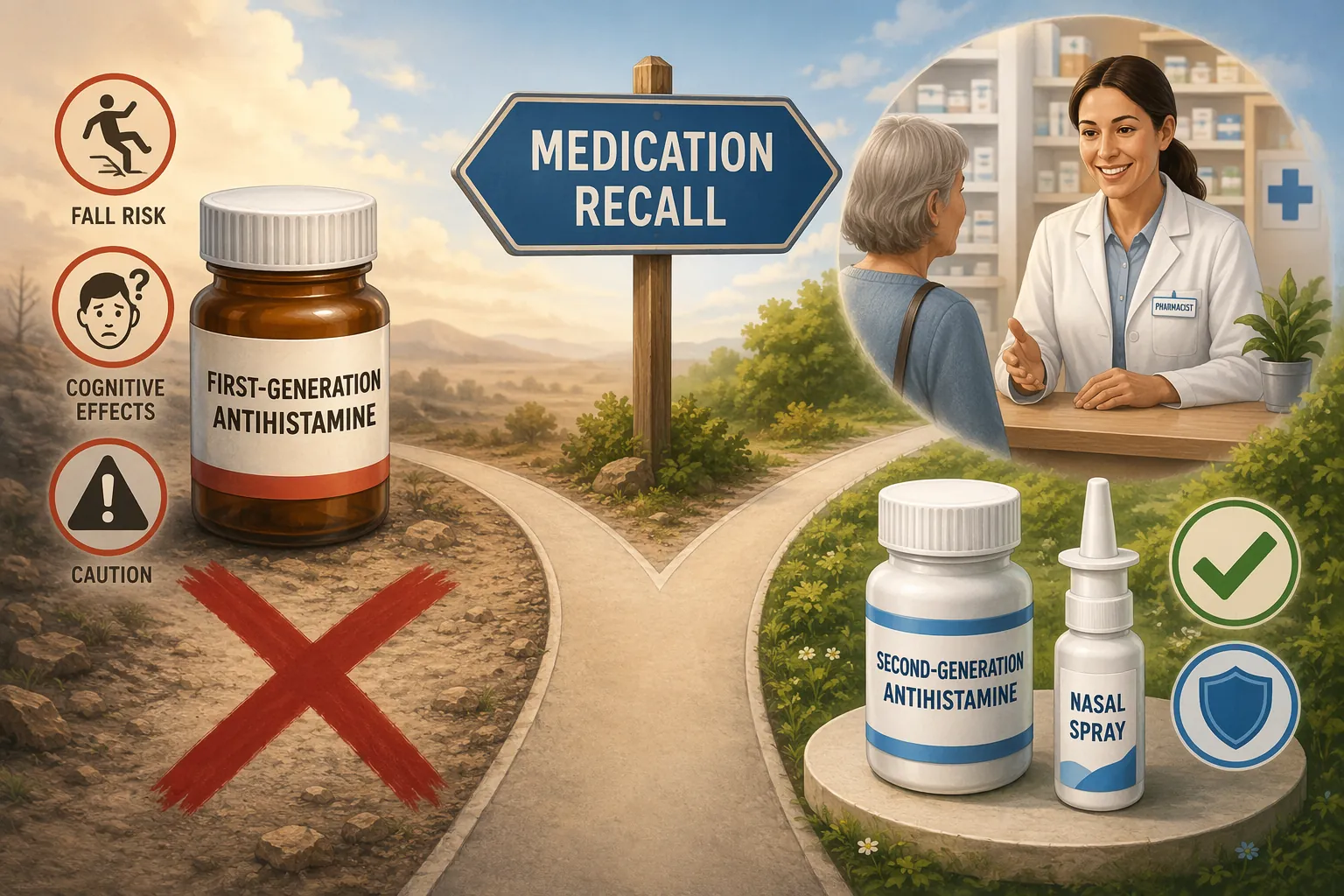
The 2023 American Geriatrics Society Beers Criteria lists first-generation antihistamines, including diphenhydramine and chlorpheniramine, as potentially inappropriate for adults 65 and older because of strong anticholinergic properties.[5] In plain terms, these medicines can affect the brain, bladder, bowels, balance, and alertness. The concern is not just sleepiness. The Beers Criteria flags risks including confusion, falls, constipation, and urinary retention.[5]
This is where family history can make the conversation harder. An older adult may say, “I’ve taken Benadryl for years and I’m fine.” That may be true from their point of view, and it still does not make it the best replacement during a recall. Age, kidney function, fall risk, memory changes, and the rest of the medication list can make an old standby less forgiving than it used to be.
The hidden version matters too. Diphenhydramine is not only sold as Benadryl. It can appear in products marketed for sleep or nighttime symptoms, including Tylenol PM, Advil PM, and ZzzQuil, according to geriatric pharmacy guidance summarized by A Place for Mom.[6] During a recall, a caregiver may be trying to solve allergies, sleep, or general discomfort and accidentally choose the same risky ingredient under a different label.
What to Discuss Instead
The pharmacy conversation should not be, “What is strongest?” It should be, “What is safest for this older adult, with this medication list, while this recall is being handled?”
Common options to ask about include non-recalled second-generation antihistamines, such as cetirizine from unaffected lots, loratadine, or fexofenadine. Allergy specialists note that second-generation antihistamines are generally less likely than first-generation antihistamines to enter the brain readily, which is one reason they are often preferred when sedation and cognitive effects are concerns.[7] That does not mean every option is right for every senior. Dose, kidney function, liver function, other medications, and symptom pattern still matter.
Steroid nasal sprays, such as fluticasone, may also be worth asking about, especially when symptoms are mainly nasal congestion, sneezing, or postnasal drip. Geriatric medication guidance from HealthInAging.org and geriatric pharmacist Judith Beizer describes nasal steroid sprays as an important allergy option for older adults when appropriate.[6][8] They are not a same-minute rescue for every symptom, and they require correct use, but they can avoid the anticholinergic burden of first-generation antihistamines.
| Replacement being considered | Caregiver question for the pharmacist |
|---|---|
| Cetirizine from a different bottle | Can you confirm this lot is not part of the recall? |
| Loratadine | Is this appropriate with the current medication list and health conditions? |
| Fexofenadine | Are there timing or interaction issues we should know about? |
| Fluticasone or another nasal steroid spray | Does the symptom pattern fit a nasal spray, and how should it be used? |
| Benadryl, chlorpheniramine, or a PM product | Is there a safer alternative for someone 65 or older? |
Anticholinergic medicines can also affect sweating and heat tolerance, which becomes more relevant during summer weather. Caregivers tracking medication risks in hot weather can use Heat Wave Safety Tips for Seniors Taking These Medications as a companion check, especially when an allergy recall happens during high temperatures.
After the Call, Document the Decision
Once the pharmacist or prescriber gives instructions, write down the decision in the same place where the pill organizer is filled. Do not rely on memory or a text thread that only one sibling can find.
- Recalled product name, lot number, and expiration date
- Date and time you spoke with the pharmacist or prescriber
- Name of the person who gave guidance
- Whether the medicine should be stopped, continued briefly, returned, replaced, or discarded
- Replacement medicine, dose, timing, and start date, if one is recommended
- Symptoms to watch for and when to seek urgent help
If another family member helps with medication, send the written decision to that person. If a home health aide or assisted living staff member administers medicines, make sure the recalled bottle is removed from active use and the updated instruction is communicated through the proper channel.
Dispose of the Recalled Bottle Only After You Know the Instructions
Disposal comes after confirmation, not before. Some recalls tell consumers to return the product. Some pharmacies can take it back. Some situations may require keeping the label information available for reporting or reimbursement. If the product is confirmed as recalled, follow the FDA notice, pharmacy instructions, or manufacturer instructions rather than guessing.
If the instruction is to discard it at home, remove it from the older adult’s active medication area first. Do not leave a recalled bottle beside the pill organizer “just until tomorrow.” That is how a corrected decision becomes an accidental dose.
Build the Next-Recall System Now
A recall response gets easier when the household has a small system before the next headline. Keep all routine medicines in known locations. Keep one current medication list in the kitchen, one on the caregiver’s phone, and one available for medical visits. Update it whenever a drug is started, stopped, changed, or moved from “daily” to “as needed.”
The FDA offers email alert subscriptions through its subscription management page, which can help caregivers hear about safety notices directly instead of waiting for a news story or a social media post.[9] Alerts are useful, but they do not replace the medication list. The alert tells you what changed in the market; the list tells you whether it matters in this house.
For families where an aging parent resists medication changes or downplays warnings, the problem is not always information. Sometimes it is pride, habit, fear, or not wanting another thing managed by an adult child. 7 reasons aging parents ignore medical advice and how to help may help with that part of the conversation.
For the next allergy medication recall, the working plan is simple enough to keep: locate the bottle, verify the lot, separate it if it matches, call the pharmacist with the medication list nearby, avoid first-generation antihistamine shortcuts in adults 65 and older, document the replacement decision, and then dispose of the recalled product according to instructions.
References
- Enforcement Report, FDA, July 20, 2026, link
- Medication Recalled? What You Should Do Next May Surprise You, Cleveland Clinic, link
- Medication Management and Caregiver Burden in Informal Caregivers, National Library of Medicine, link
- Medication Adherence, Caregiver Action Network, link
- American Geriatrics Society 2023 Updated AGS Beers Criteria for Potentially Inappropriate Medication Use in Older Adults, American Geriatrics Society, 2023, link
- Medications Older Adults Should Avoid or Use With Caution, A Place for Mom, link
- Antihistamines and Allergy Treatment Guidance, American Academy of Allergy, Asthma & Immunology, link
- Allergies, HealthInAging.org, American Geriatrics Society, updated September 2025, link
- FDA Email Subscriptions, FDA, link
Questions to bring to a clinician or OT
This is not medical, legal, or a family's final decision — only a framework. Bring these questions to a clinician, occupational therapist, or your local Area Agency on Aging.
Find Local HelpRelated reading
Noticed something outdated or inaccurate on this page? Flag a correction. We review every report against CDC, NIA, and AARP HomeFit guidance before updating a page.