
Caregiver decision guide
What the backdoor Roth IRA rule change means for seniors
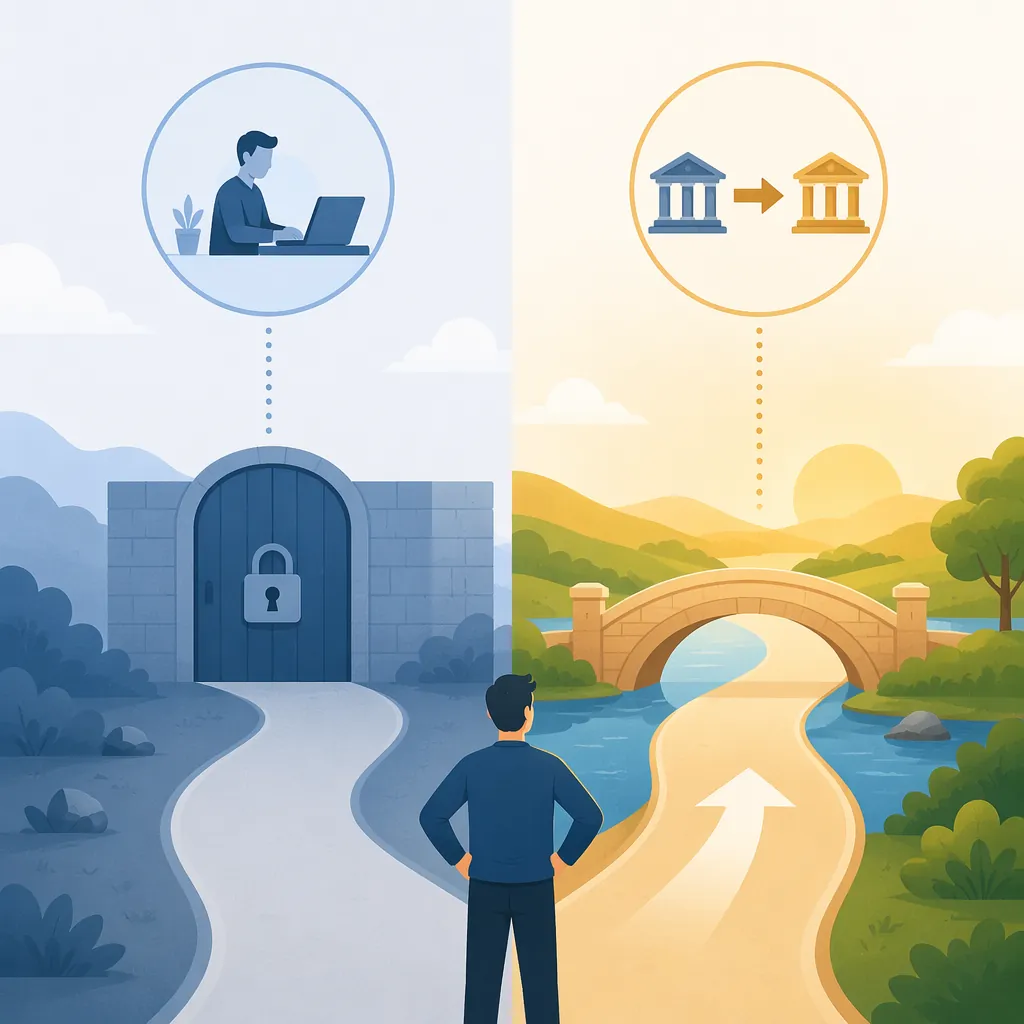
The One Big Beautiful Bill Act preserved the backdoor Roth IRA conversion mechanism, but most seniors still cannot use the classic two-step strategy because they lack earned income. This article explains the real opportunity in 2026: converting pre-tax IRA dollars during post-retirement, pre-RMD trough years.
Last reviewed: July 2026. The short answer is: the backdoor Roth IRA was not eliminated by the One Big Beautiful Bill Act, so the conversion mechanism still exists in 2026.[1] The harder answer, and the one that matters more at a kitchen table full of Medicare notices and IRA statements, is that many retired seniors cannot use the classic backdoor Roth contribution strategy because the first step still requires earned income.[2]
That distinction is where most confusion starts. A backdoor Roth IRA contribution is usually a two-step maneuver: make a nondeductible contribution to a traditional IRA, then convert that amount to a Roth IRA. A Roth conversion, by itself, is different. It moves money already sitting in a traditional IRA or other eligible pre-tax retirement account into a Roth IRA, creating taxable income in the year of conversion. The first strategy starts with a new IRA contribution. The second strategy can use money already in the account.
For 2026, the IRA contribution limit is $7,500, or $8,500 for people age 50 and older.[3] Roth IRA direct contribution eligibility phases out at $165,000 to $175,000 for single filers and $260,000 to $270,000 for married couples filing jointly.[4] Those numbers matter for high-income workers. For a fully retired household living on Social Security, pension income, interest, dividends, and IRA withdrawals, the more basic issue is compensation. Without wages, self-employment income, or other compensation the IRS treats as eligible for IRA contributions, there is no new traditional IRA contribution to put through the “backdoor.”[2]
| Question | Plain 2026 Answer |
|---|---|
| Did OBBBA kill the backdoor Roth? | No. The backdoor Roth conversion mechanism remains available.[1] |
| Can a retired senior with no earned income start the classic backdoor Roth contribution? | Usually no. IRA contributions still require eligible compensation.[2] |
| Can a senior convert existing traditional IRA money to Roth? | Generally yes. Roth conversions do not require earned income, but they can create taxable income. |
| What is the senior-specific planning window? | The years after retirement and before required minimum distributions, when taxable income may be lower.[5] |
The Rule That Stops Many Retirees Before They Start
It is easy to read that the backdoor Roth survived and assume the door is open to everyone. It is not. The backdoor contribution strategy still begins with an IRA contribution, and IRA contributions are tied to eligible compensation. Social Security benefits, pension payments, investment income, annuity payments, and required minimum distributions do not by themselves create contribution eligibility.[2]
That means a 68-year-old who retired completely and has no earned income may have substantial savings, a large traditional IRA, and a real interest in Roth planning, yet still be unable to make the new nondeductible traditional IRA contribution that starts the classic backdoor process. A 68-year-old spouse with part-time consulting income may be in a different position. A married couple may also need to look at whether one spouse has enough compensation to support contributions for both spouses under the spousal IRA rules, a detail worth confirming before moving money.
This is not a small technicality. It is the difference between a strategy that begins with a 2026 contribution limit of $8,500 for someone over 50 and a strategy that may involve converting part of an existing IRA balance already accumulated over decades.[3] The paperwork may look similar because both routes end with Roth dollars. The tax consequences and eligibility tests are not the same.
The More Relevant Opportunity: Converting Existing IRA Dollars
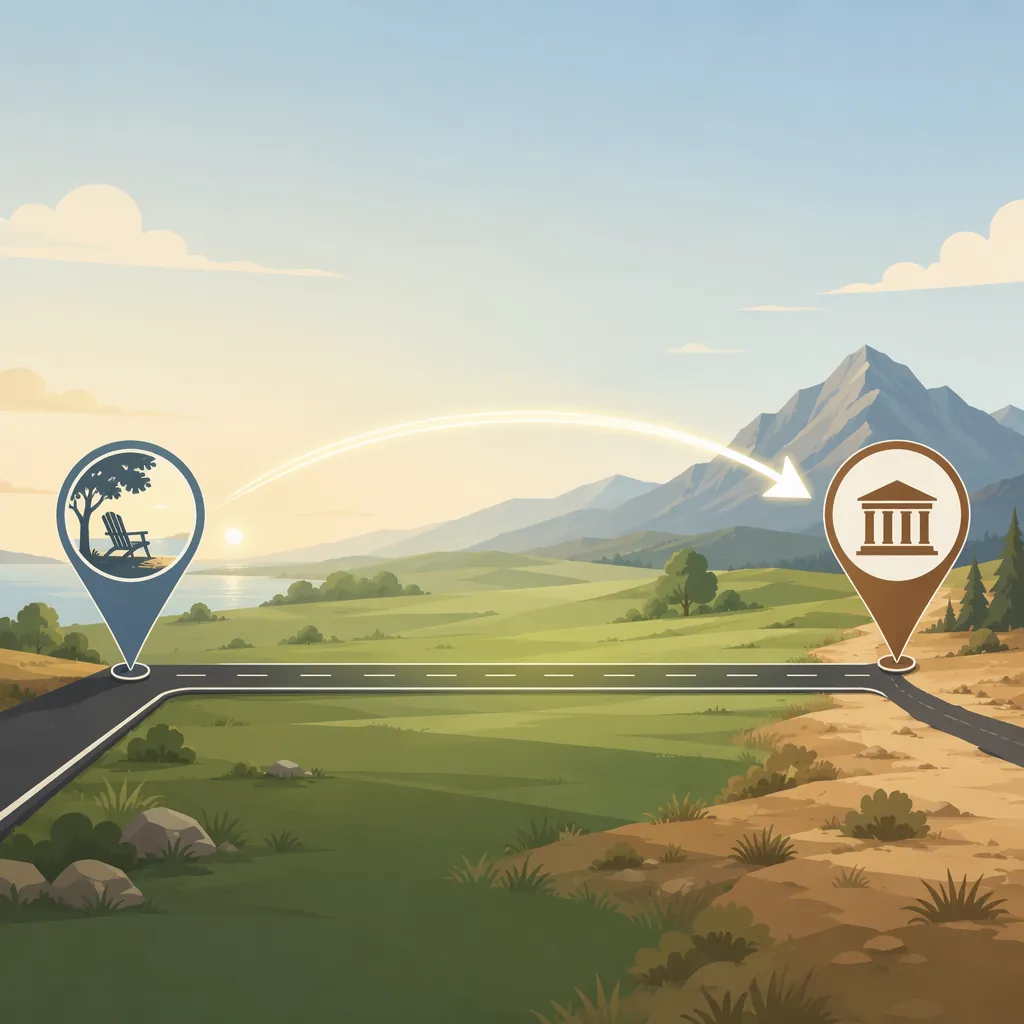
For many older households, the better question is not “Can I do a backdoor Roth contribution?” It is “Should I convert some of my existing pre-tax IRA before required minimum distributions begin?” A Roth conversion does not depend on earned income. It depends on whether paying tax now is likely to leave the household, or a surviving spouse, in a better position later.
The usual window opens after retirement income drops and before required minimum distributions start. Advisory sources commonly describe this as the trough period: paychecks have stopped, Social Security may or may not have begun, and RMDs have not yet forced taxable withdrawals. Current RMD start ages are 73 for people born from 1951 through 1959 and 75 for people born in 1960 or later.[5]
OBBBA makes that window more interesting in 2026 because it preserved lower tax brackets and added a senior deduction structure that may leave some older taxpayers with more room before their taxable income crosses into a higher bracket.[6] The enhanced senior deduction is described by advisory sources as an additional $6,000 for single filers age 65 and older or $12,000 for married couples filing jointly, layered on top of the 2026 base standard deduction.[6] Separate reporting lists the 2026 base standard deduction as $16,100 for single filers and $32,200 for married filing jointly.[7]
That does not make a conversion automatically good. It means the household has to measure the empty space carefully. If a couple can convert enough to use a lower bracket without pushing themselves into avoidable Medicare surcharges or unwanted Social Security taxation, the conversion may reduce the size of future RMDs and put more assets in an account that can later be withdrawn tax-free under Roth rules. If the conversion is too large, it can simply move a tax bill forward and add collateral costs.
What a Partial Conversion Is Trying to Accomplish
A partial conversion is not an all-or-nothing event. The account owner chooses an amount to move from a traditional IRA to a Roth IRA. The pre-tax portion converted is included in taxable income for the year. Some advisory examples model annual conversions in the $50,000 to $150,000 range while staying within the 22% to 24% federal bracket, but those figures are illustrations of a pattern, not recommended amounts for every household.[5]
The pattern is simple enough to understand and hard enough to execute well: fill a chosen tax bracket deliberately during lower-income years, rather than letting future RMDs, widowhood, or a market recovery decide the timing. The right amount may be zero in a high-expense year, modest in the year before Medicare surcharges would be affected, or larger in a year when deductions and low income create unusual room.
- A retiree who left work at 66 and does not face RMDs until 73 may have several years to consider partial conversions.
- A retiree already taking RMDs has less flexibility because the annual RMD must be handled first.
- A couple with one spouse in declining health may weigh the future single-filer tax brackets more heavily than a couple focused only on this year’s tax bill.
- A household near Medicare surcharge thresholds may decide that a smaller conversion is worth more than a larger one that creates two years of higher premiums.
The Guardrails Matter More Than the Roth Label
Roth money is attractive because qualified withdrawals are tax-free and Roth IRA owners are not subject to lifetime RMDs. But in senior households, the year of conversion is where most of the trouble hides. The decision should be tested against tax brackets, Medicare premiums, Social Security taxation, state rules, and the surviving spouse’s future filing status before anyone signs a transfer form.
Medicare IRMAA Can Turn a Clean Tax Plan Into a Premium Surprise
Medicare’s income-related monthly adjustment amount, or IRMAA, is one of the least forgiving pieces of Roth conversion planning. A conversion increases modified adjusted gross income for the year. Medicare then uses a two-year lookback to determine whether higher Part B and Part D premiums apply. Kiplinger describes 2026 surcharge thresholds beginning above roughly $109,000 of MAGI for single filers and $218,000 for married couples filing jointly, with the lookback tied to earlier tax returns.[8]
For a caregiver helping with bills, this is not an abstract optimization problem. The tax preparer may see the conversion in April. The Medicare premium change may show up later, in a separate notice, when nobody remembers that a December conversion caused it. A good conversion worksheet should show the expected federal tax, state tax, and potential Medicare premium effect in the same place.
The Pro-Rata Rule Can Spoil a “Nondeductible” Backdoor Plan
For seniors who do still have earned income and are considering a new nondeductible IRA contribution, the pro-rata rule deserves attention. If the taxpayer owns traditional, SEP, or SIMPLE IRA money with pre-tax balances, the IRS does not let the taxpayer convert only the after-tax contribution as though it were isolated. The conversion is treated as coming proportionally from pre-tax and after-tax IRA dollars.[9]
That is why the classic backdoor Roth is often cleanest for someone with no other pre-tax IRA money. Older households frequently have the opposite profile: rollover IRAs from prior employers, deductible IRA contributions from earlier years, and multiple accounts accumulated over a working life. In that setting, the backdoor contribution may create more Form 8606 tracking than benefit unless a tax professional has reviewed the full IRA picture.
RMDs Must Come Out Before Conversions
Once required minimum distributions have begun, the sequencing rule is blunt: the RMD for the year must be withdrawn before any remaining IRA dollars are converted to Roth. Advisory guidance warns that trying to convert an RMD itself can create an excess contribution problem, with a 6% penalty if not corrected.[10]
This is one reason the pre-RMD years are valuable. Before RMDs begin, the account owner can choose the conversion amount with fewer mandatory withdrawals crowding the tax return. After RMDs begin, the first dollars out are dictated by law, and only the excess can be considered for conversion.
Social Security and State Taxes Can Change the Answer
A Roth conversion can make more of a household’s Social Security taxable in the conversion year because it increases income on the tax return. Later, qualified Roth withdrawals do not count the same way taxable IRA withdrawals do, which can help manage taxable income in retirement. The trade-off is year-specific: paying more tax now may be worthwhile, but only if the future benefit is plausible for that household.
State tax treatment also has to be checked locally. Some states tax retirement income differently from the federal system, and a federal Roth conversion plan can look less attractive if the state tax bill is large. This is especially relevant for retirees who may move, split time between states, or sell a home during the same period they are considering conversions.
The Five-Year Rule Still Belongs on the Checklist
Converted Roth amounts have their own five-year rule for penalty-free access to converted principal, although the age 59½ rule also matters. For many seniors, the 10% early-distribution penalty is no longer the main concern because they are already past 59½. Still, the five-year timing can matter in later-life planning, beneficiary planning, and any situation where the converted money might be needed sooner than expected.
The Survivor-Spouse Problem Is Not Just an Estate Planning Footnote
Married couples often evaluate conversions using today’s joint return. That is understandable, but incomplete. When one spouse dies, the survivor may file as single after the transition period, often with lower household income but also much narrower tax brackets and a smaller standard deduction. The same IRA balance can become more tax-compressed in the survivor’s hands.
This is where partial conversions while both spouses are alive can be less about chasing a perfect tax rate and more about reducing future administrative pressure. A surviving spouse may be managing grief, home decisions, beneficiary paperwork, and medical bills. Asking that person to solve a larger IRA tax problem alone in a narrower bracket is not always the kindest version of efficiency.
The survivor issue does not mean every couple should convert aggressively. It does mean the tax projection should show both versions: the joint-filer result if both spouses live through the planning horizon, and the single-filer result if one spouse survives with the traditional IRA largely intact. If the conversion only looks good while both spouses are alive, the analysis may be missing the very person most likely to need simplicity later.

A Practical 2026 Decision Boundary
A senior household can sort the issue in two passes. First, ask whether there is eligible compensation for a new IRA contribution. If not, the classic backdoor Roth contribution is usually off the table, no matter how much cash or investment income the household has. Second, ask whether there are existing pre-tax IRA dollars that could be partially converted during a lower-income year.
| If This Is the Household | The More Relevant Roth Question |
|---|---|
| Fully retired, no wages or self-employment income | Do not start with the backdoor contribution. Review whether existing IRA dollars can be converted. |
| Still working part time or self-employed | Confirm IRA contribution eligibility, then check the pro-rata rule before attempting a backdoor contribution. |
| Recently retired and not yet subject to RMDs | Model partial conversions across the remaining pre-RMD years. |
| Already taking RMDs | Take the RMD first, then evaluate whether additional conversion makes sense. |
| Married with one spouse likely to manage finances alone later | Run both joint-filer and survivor single-filer projections. |
The modeling does not need to be fancy to be useful, but it needs to be complete. It should show taxable income before and after the conversion, the federal bracket being filled, estimated state tax, Medicare IRMAA exposure, Social Security taxation, the RMD outlook, and the survivor-spouse scenario. If any of those items are unknown, the answer is not ready.
OBBBA left the backdoor Roth mechanism alive, and 2026 may be a good year for some older households to consider Roth conversions. But “still allowed” is not the same as “available to you,” and “favorable window” is not the same as “convert now.” Seniors without earned income usually cannot begin the classic backdoor Roth contribution. Seniors with existing pre-tax IRA balances may still have a meaningful conversion opportunity, especially in the years after retirement and before RMDs, if the tax return, Medicare premiums, state treatment, and survivor implications are reviewed before the money moves.
References
- What Does the One Big Beautiful Bill Mean for Roth Conversions?, Custom Fit Financial
- Who Cannot Do a Backdoor Roth IRA, Oak Road Wealth
- 401(k) limit increases to $24,500 for 2026, IRA limit increases to $7,500, IRS
- Roth IRA contribution limits for 2025 and 2026, Fidelity
- 2026 Tax Strategies with Roth Conversions, Mercer Advisors
- One Big Beautiful Bill and Roth Conversions, Dan White & Associates
- One Big Beautiful Bill Act Changes in 2026, Attorney at Law Magazine
- Roth Conversions After 60, Kiplinger
- Backdoor Roth Guide, Oak Road Wealth
- Are Roth Conversions Right for People Over 70½?, Rodgers & Associates
Questions to bring to a clinician or OT
This is not medical, legal, or a family's final decision — only a framework. Bring these questions to a clinician, occupational therapist, or your local Area Agency on Aging.
Find Local HelpRelated reading
Noticed something outdated or inaccurate on this page? Flag a correction. We review every report against CDC, NIA, and AARP HomeFit guidance before updating a page.