
Caregiver decision guide
How climate change puts elderly health at risk from extreme heat
Discover why extreme heat is especially dangerous for older adults due to aging physiology, common medications, and dementia, and learn practical steps caregivers can take to prevent heat-related illness this summer.
Why heat becomes a caregiving problem fast
Heat is the part of climate change's impact on elderly health that is easiest to miss on a day when an older parent sounds alert, answers the phone, and says the upstairs bedroom is fine. Heat-related deaths among older people have risen by about 85% since the 1990s, and in Europe in 2022, 72% of heat deaths were among people 80 and older [1]. Those numbers do not mean every hot day becomes an emergency. They do mean that waiting for someone to complain is a bad strategy.
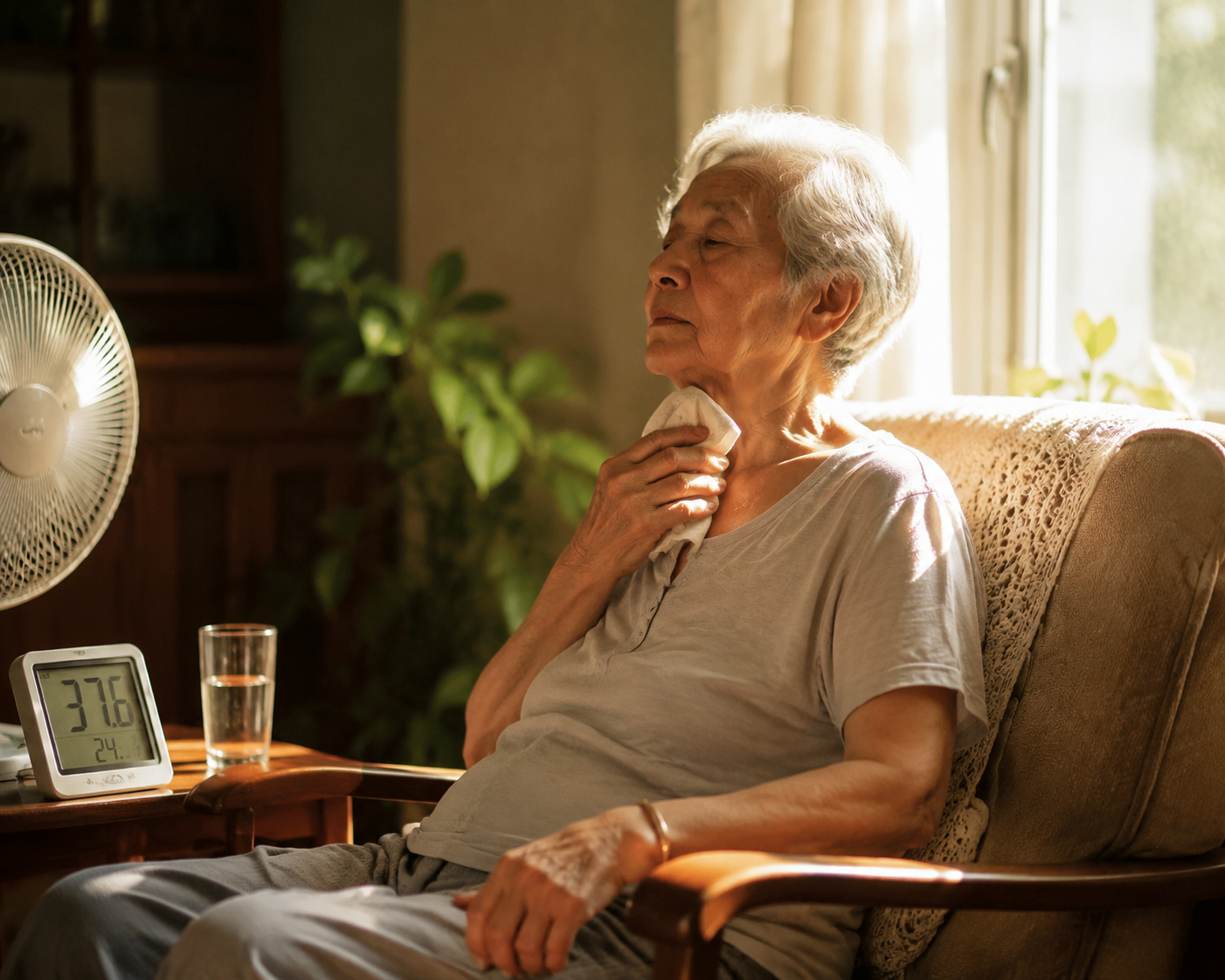
Age changes the way heat is handled. People 65 and older do not adjust as well to sudden temperature changes; sweating is less efficient, cardiovascular reserve is lower, and thirst and temperature perception are blunted [2]. That is why an older adult can seem okay while body temperature is still climbing. A fan can move air, but it is not a safe primary cooling tool during extreme heat; an air-conditioned space is the real line between discomfort and danger [2].
The medications that quietly raise the risk
This is where a pill organizer turns into a heat map. In a Medicare study of 9,721 older adults, several common medication classes were linked to a 21% to 33% higher risk of heat-related hospitalization during heatwaves, and a 16% to 37% higher risk even on ordinary summer days [3].
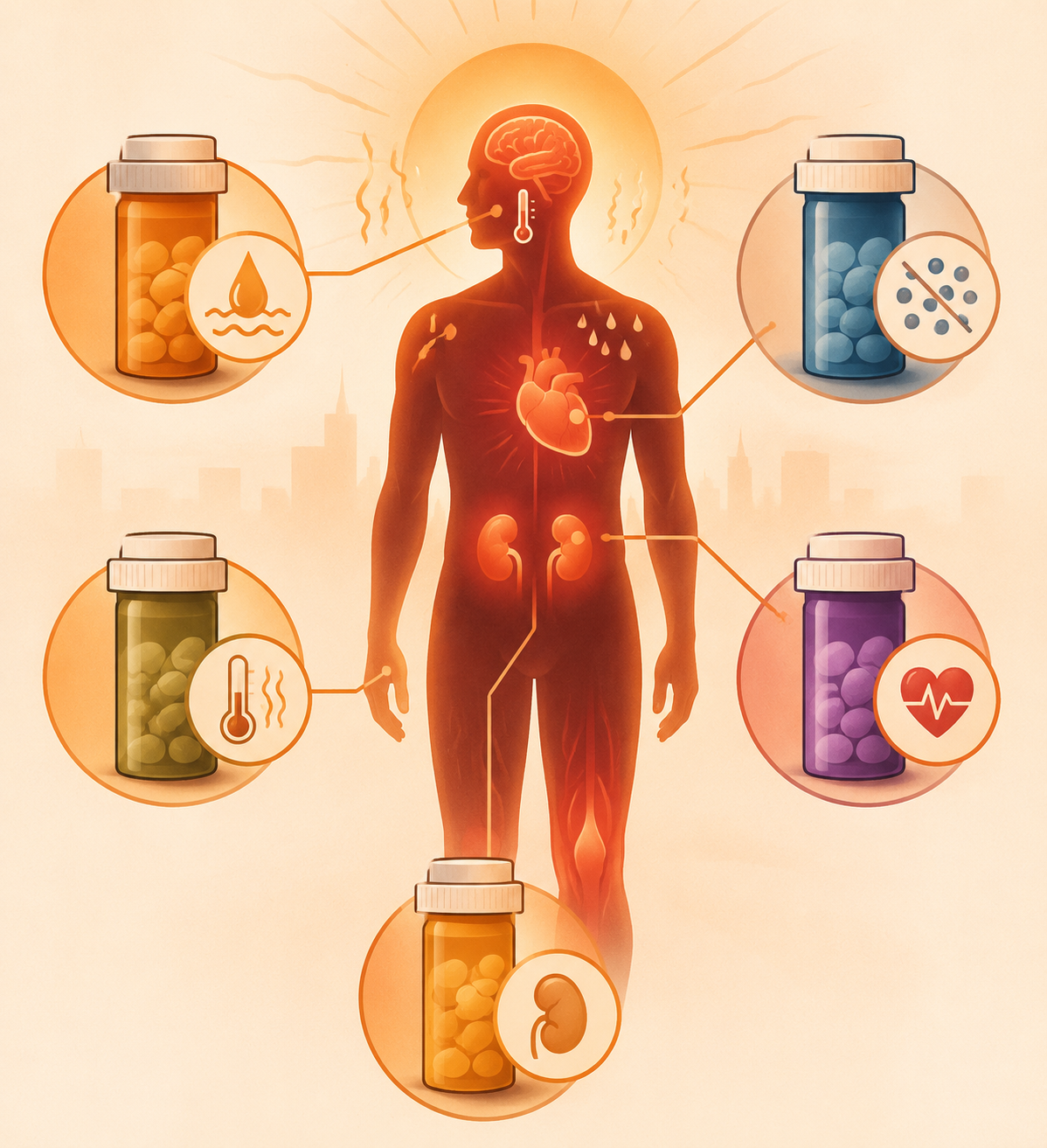
- Diuretics can worsen dehydration and electrolyte loss, which makes it harder to keep up with heat stress [3].
- Antipsychotics can interfere with central thermoregulation and sweating [3].
- Anticholinergics can reduce sweating, so the body loses one of its main cooling tools [3].
- Beta blockers can reduce cardiac output, which limits how well the body moves heat away [3].
- ACE inhibitors and ARBs are worth reviewing with a clinician or pharmacist because they can affect thirst and kidney strain during heat [3][4].
The important part for a caregiver is not to sort medication risk alone. It is to flag the list, including over-the-counter drugs, and ask the clinician or pharmacist what changes matter before the next heat advisory [4].
When memory and isolation make cooling fail
Dementia changes the picture again. Some people do not recognize thirst, notice overheating, or follow cooling instructions once the room gets too warm [1]. Social isolation raises risk from another angle. During the 1995 Chicago heat wave, people living alone had the highest death risk, and regular check-ins had a protective effect [1].
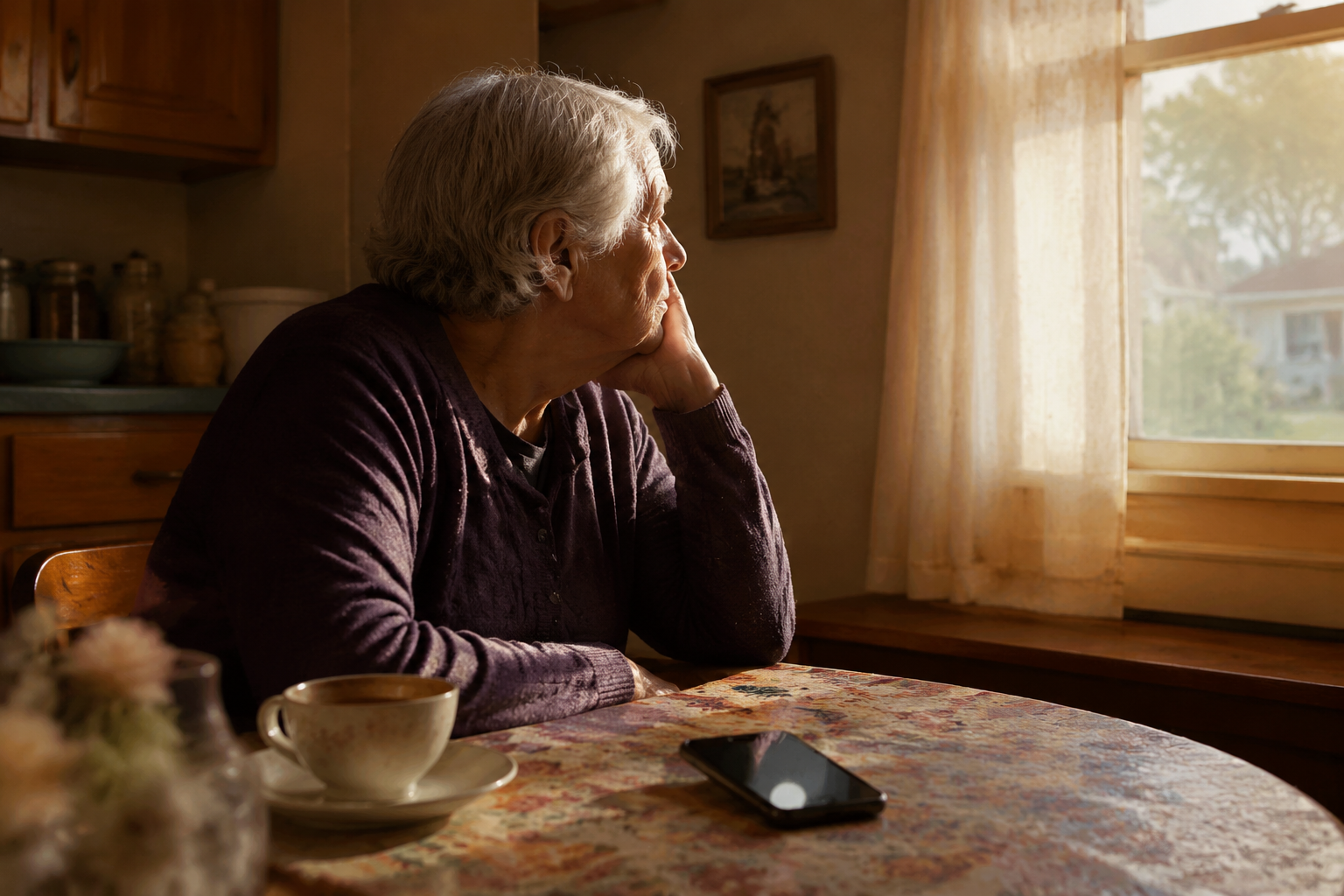
That is why a cool room without a check-in plan is often not enough. The person who insists they are fine may be fine only in the sense that they are still talking. If memory loss, living alone, or hearing and mobility problems make self-rescue unreliable, someone else has to verify the temperature, the water, the medication list, and the next contact time.
A plan worth using before the next heat advisory
- Confirm where the person can go if the home warms up: a room with working air conditioning, a relative’s house, or a cooling center.
- Put heat-risk medications on the next clinician or pharmacist review list, especially if the person takes several prescriptions.
- Schedule calls or visits for the hottest part of the day when a heat advisory is posted, not just once in the morning.
- Keep water visible and easy to reach, but do not use thirst as the only signal; older adults may not feel it soon enough [2].
- Do not rely on fans alone during extreme heat [2].
- Treat confusion, weakness, or signs of overheating as a reason to move fast, not to wait for the next scheduled check-in.
Climate change is making extreme heat more dangerous for older adults, but this part of the problem is still manageable when caregivers treat cooling as coordination: who checks, who transports, who reviews the medications, and where the person goes when the apartment stops being safe.
References
- Why older adults are especially vulnerable to climate change, AAMC, https://www.aamc.org/news/why-older-adults-are-especially-vulnerable-climate-change
- Heat and Older Adults Aged 65 and Older, CDC, https://www.cdc.gov/heat-health/risk-factors/heat-and-older-adults-aged-65.html
- Medication use and heat-related illness among older adults, PLOS ONE, 2020, https://pmc.ncbi.nlm.nih.gov/articles/PMC7728169/
- Hot Weather Tips, Family Caregiver Alliance, https://www.caregiver.org/resource/hot-weather-tips/
Questions to bring to a clinician or OT
This is not medical, legal, or a family's final decision — only a framework. Bring these questions to a clinician, occupational therapist, or your local Area Agency on Aging.
Find Local HelpRelated reading
Noticed something outdated or inaccurate on this page? Flag a correction. We review every report against CDC, NIA, and AARP HomeFit guidance before updating a page.