
Caregiver decision guide
CDC-Backed Steps to Protect Elderly Cruise Travelers from Norovirus
Learn how to prepare your elderly parent for a cruise with CDC-backed steps to reduce norovirus risk, from pre-boarding health checks to packing a disinfectant kit and choosing a safe cabin.
The cruise is booked, the suitcase is half-open, and everyone is trying to keep the mood light. That is usually the moment when an adult child starts doing the less glamorous math: age, medications, mobility, bathroom access, ship medical care, and the recent CDC cruise-ship norovirus outbreak headlines that nobody else wants to discuss over dinner.
For an older parent, norovirus is not just an unpleasant “stomach bug.” CDC estimates that norovirus causes approximately 900 deaths in the United States each year, with the majority occurring among adults age 65 and older.[1] Cruise travel also concentrates many older adults in the same dining rooms, elevators, theaters, shore-excursion buses, and medical-center waiting areas. CDC’s Yellow Book notes that about half of cruise passengers who seek medical care are 65 or older.[2]
That does not mean the answer is “cancel the cruise.” It means the family plan has to be more specific than “pack sanitizer.” CDC is blunt on this point: alcohol-based hand sanitizer does not work well against norovirus, and handwashing with soap and water for at least 20 seconds is the stronger prevention step.[3] Sanitizer can still have a place for other germs when a sink is not available, but it should not be treated as the norovirus plan.
Start With the Parent, Not the Ship
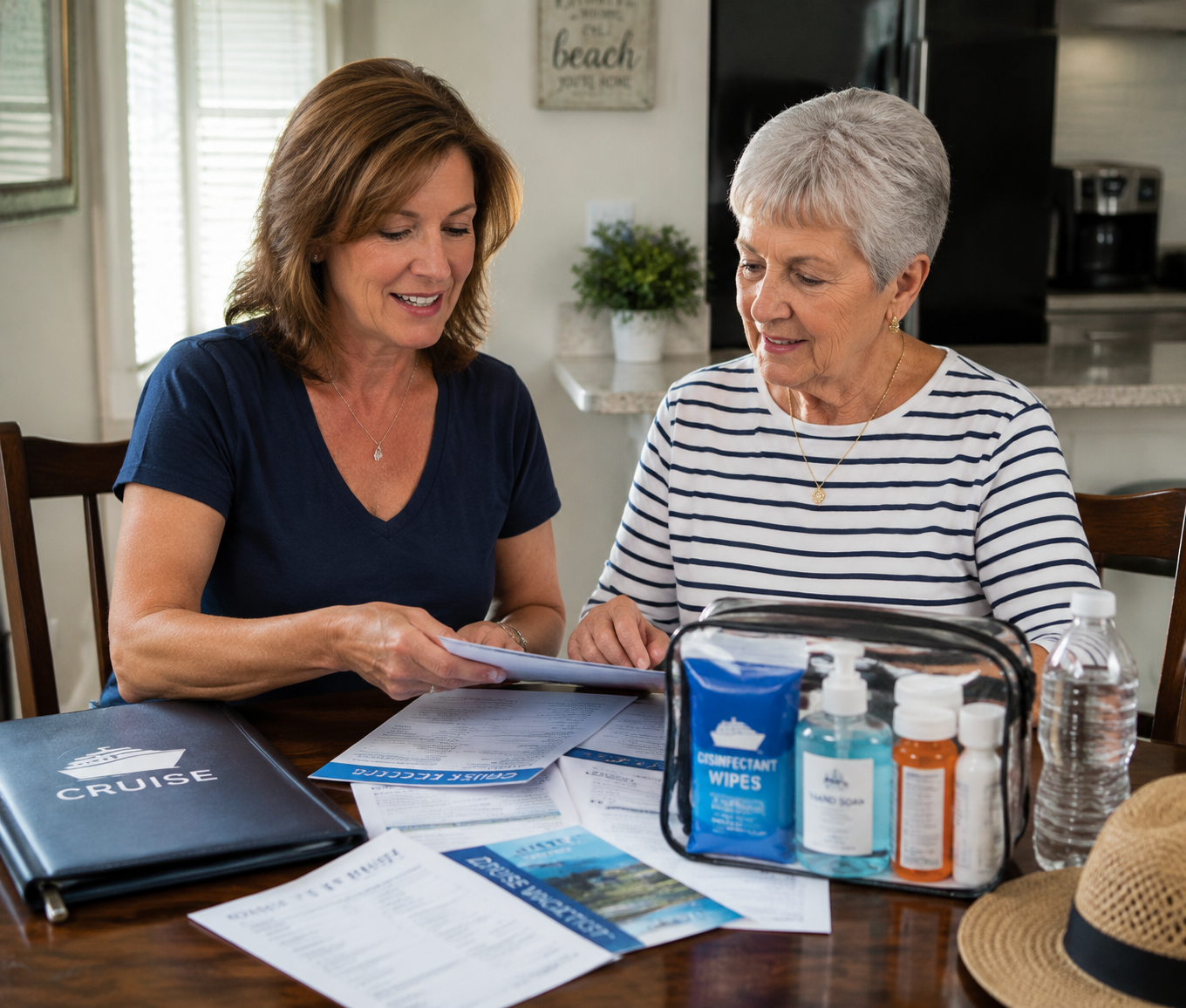
Before checking deck plans or outbreak pages, make the parent’s actual health status the first checkpoint. The useful question is not “Can Mom cruise?” in the abstract. It is whether this parent, on this itinerary, with this medication list and these mobility limits, can tolerate several days of vomiting or diarrhea without tipping into dehydration, falls, medication disruption, or hospitalization.
This is a pre-travel medical conversation, not a family debate at the dining table. Ask the clinician who already knows the parent’s conditions to review:
- Current diagnoses that could make dehydration, electrolyte changes, or missed medications more dangerous.
- Medications that require consistent intake or could become risky if the parent cannot keep fluids down.
- Whether the parent should carry an updated medication list, condition summary, allergy list, and emergency contacts.
- Whether the itinerary has enough medical access for this parent, especially on sea days or remote ports.
- What symptoms should trigger immediate reporting to the ship medical center rather than “waiting it out.”
The point is not to ask the doctor for a guarantee. There is no such thing. The point is to find out whether a vomiting-and-diarrhea illness would be a manageable inconvenience or a foreseeable medical problem for this specific traveler.
Use CDC Ship Records, but Read Them Carefully
The CDC Vessel Sanitation Program keeps a public list of gastrointestinal illness outbreaks on cruise ships. It is one of the first places a caregiver should check before final payment, again before online check-in, and once more in the final week before departure.[4]
A posted outbreak does not mean a ship is permanently unsafe. Nor does a blank recent history mean the upcoming sailing is risk-free. The CDC list is a record of reported outbreaks that meet posting criteria; it is not a weather forecast for germs. Still, it gives families something better than rumor: ship name, cruise line, voyage dates, number of passengers and crew reporting illness, and the causative agent when identified.[4]
As of July 18, 2026, CDC’s posted 2026 cruise outbreak records include recent norovirus examples. On Caribbean Princess, a May 2026 voyage reported 145 ill passengers.[5] On Star Princess, a March 2026 voyage reported 141 ill passengers.[6] Those cases are not a reason to panic about every sailing, but they are enough to retire the idea that cruise norovirus is an old problem from someone else’s vacation.
Be careful with annual outbreak counts, especially mid-year. The 2026 total is still changing, and reporting capacity may have changed after 2025 staffing cuts affecting CDC’s cruise sanitation work, as reported by AP News and Food Poison Journal.[7][8] Fewer posted outbreaks would not automatically prove that fewer people became ill. For caregiver purposes, the safer interpretation is narrower: use the CDC page to identify known recent problems, but do not treat the absence of a listing as a promise.
What to Check on the Vessel Sanitation Program Pages
| CDC record to check | What it tells you | How to use it |
|---|---|---|
| Current and archived outbreak reports | Whether the ship has had posted gastrointestinal illness outbreaks, including norovirus when confirmed | Look for recent patterns, voyage timing, passenger illness counts, and whether the same ship appears repeatedly |
| Inspection scores | How the ship performed during unannounced sanitation inspections | Treat a low or concerning score as a reason to ask harder questions or reconsider the sailing |
| Corrective-action details, when available | What the cruise line reported doing in response | Look for concrete sanitation, isolation, communication, and food-service measures rather than vague reassurance |
If the parent has significant medical vulnerability and the ship has a recent outbreak record that makes the family uneasy, that is a legitimate reason to pause. The decision does not have to be dramatic. It can be as practical as choosing a different sailing, calling the cruise line with specific questions, or asking the doctor whether the risk profile still looks acceptable.
Build the Pre-Boarding Checklist Around Controllable Steps
A good caregiver checklist should reduce decisions later, when someone is tired, embarrassed, or already sick. Put the essentials in writing before embarkation day.
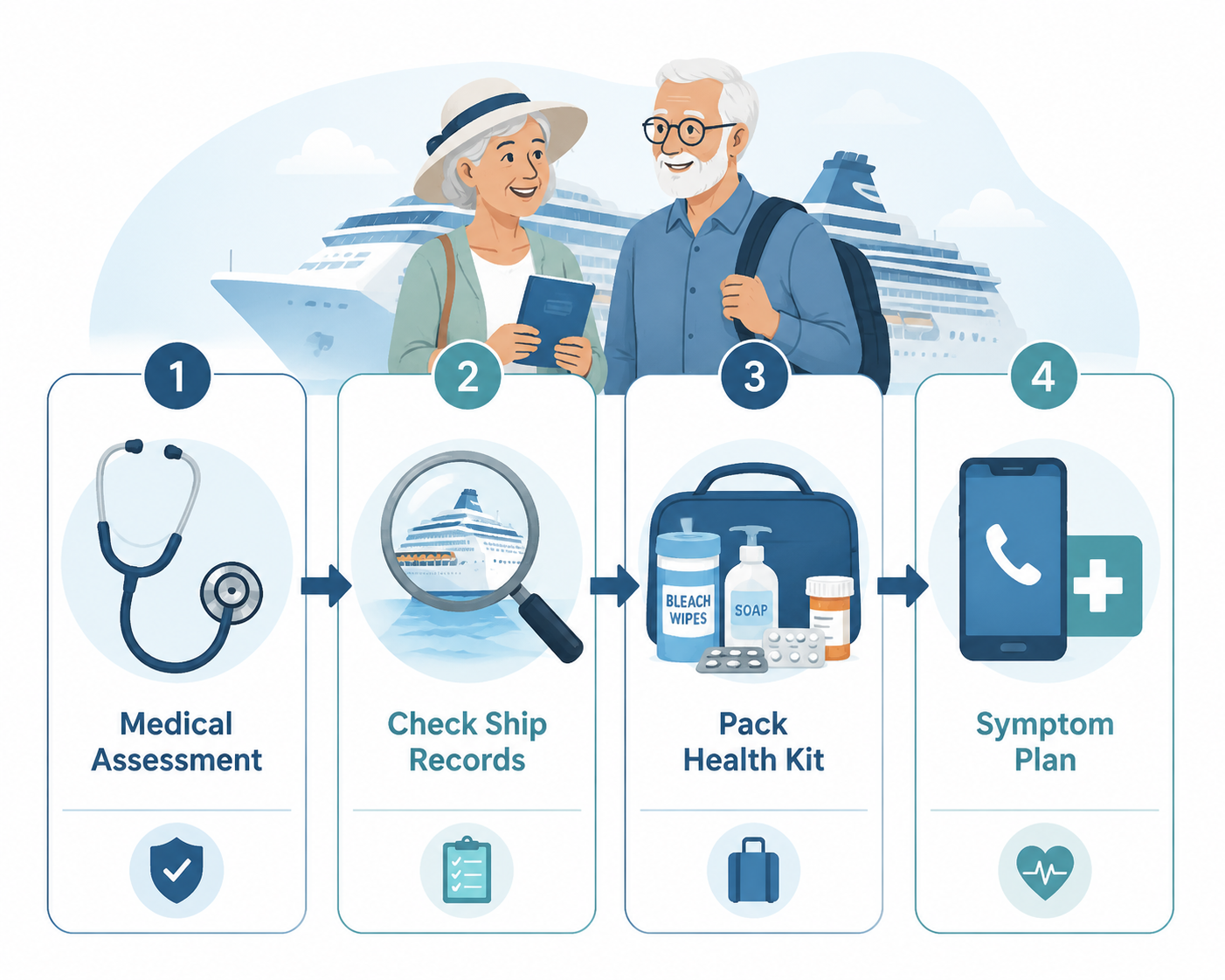
- Get medical clearance and travel-specific guidance from the parent’s clinician.
- Check CDC outbreak records and VSP inspection information for the ship.
- Choose a cabin that supports motion control, bathroom access, and quick help-seeking.
- Pack a health kit that prioritizes soap, hydration, and bleach-based disinfection.
- Agree in advance that vomiting or diarrhea gets reported immediately to the ship medical center.
- Confirm travel insurance, including medical evacuation coverage if appropriate for the itinerary.
CDC’s Yellow Book notes that most acute illnesses on cruise ships are managed onboard, but medical evacuation can still be challenging, especially for older adults with complications or complex conditions.[2] Insurance is not a norovirus prevention tool. It is the backup plan for the part nobody wants to need.
Choose a Cabin for the Body Your Parent Actually Has
There is no CDC “norovirus cabin” rule. A balcony, suite, or certain side of the ship does not make a passenger immune. Cabin choice is still worth attention because it affects motion sickness, fatigue, bathroom urgency, and how quickly an older adult can get help.
For passengers prone to motion sickness, CDC’s Yellow Book recommends cabins in the middle of the ship on a lower deck.[2] That guidance matters for norovirus planning indirectly: nausea, dizziness, and poor fluid intake can muddy the picture when you are trying to tell whether a parent is seasick, dehydrated, or developing gastrointestinal illness.
Then look at the deck plan with ordinary caregiving eyes. How far is the cabin from elevators? Is the route to the medical center manageable? Will the parent have to walk through crowded dining or entertainment areas every time they need help? Is the bathroom layout safe enough if they are weak or rushing? These are not luxury questions. They are access questions.
Pack for Soap, Bleach, Fluids, and Fast Reporting
Most cruise packing lists treat illness as an afterthought. For an older parent, the health kit deserves the same seriousness as passports and prescriptions.
- Liquid hand soap or travel soap sheets, because soap-and-water handwashing is the main norovirus hand-hygiene measure.
- Paper towels or disposable drying options for the cabin, if practical.
- EPA-registered disinfecting wipes or products labeled for norovirus, packed according to cruise line rules.
- A plan for bleach-based disinfection if illness occurs, using ship staff whenever the affected area is beyond what a passenger should handle.
- Oral rehydration supplies or clinician-approved hydration options appropriate for the parent’s medical conditions.
- Disposable gloves, sealable plastic bags, and a small written symptom log.
- Copies of medications, diagnoses, allergies, emergency contacts, insurance documents, and the ship medical center location.
CDC recommends a bleach solution of 1,000–5,000 ppm for norovirus disinfection on contaminated surfaces.[3] In caregiver terms, that means ordinary “fresh scent” cleaning wipes may not be enough unless they are specifically appropriate for norovirus. It also means the family should not improvise chemical mixtures in a small cabin. Check product labels before travel, follow the cruise line’s rules, and involve ship staff promptly for vomit, stool contamination, or larger cleanup.
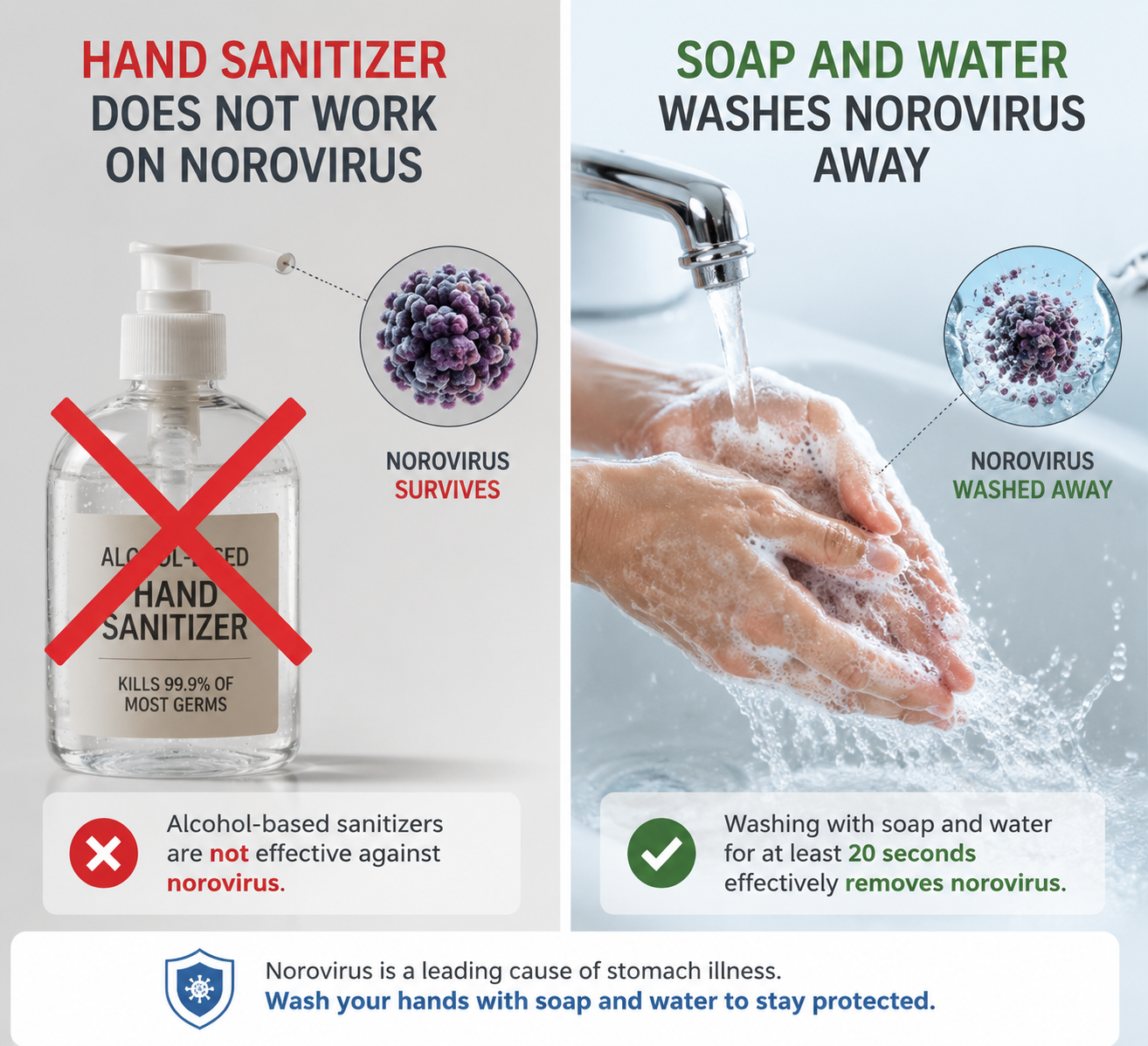
The handwashing plan needs to be concrete enough that the parent will actually follow it. Before boarding, agree on the non-negotiable times: after using the bathroom, before eating, before taking medications, after returning from shore, and after touching high-contact surfaces when a sink is available. CDC’s healthy cruising guidance also emphasizes washing hands often, avoiding contaminated food or water, and reporting illness to the ship medical center.[9]
Make the Symptom Plan Before Anyone Is Embarrassed
Norovirus plans often fail at the most human point: nobody wants to admit they are sick on vacation. An older parent may minimize symptoms because they do not want to be confined, miss an excursion, worry the family, or become “the problem.” That conversation is easier at the kitchen table than outside the buffet after the first episode of vomiting.
Agree on the rule before departure: vomiting or diarrhea gets reported to the ship medical center immediately. Not after dinner. Not after seeing whether it happens again. Not after a family vote. Cruise ships need early reporting because isolation, cleaning, and food-service precautions depend on knowing illness is present.
| If this happens | Caregiver action | Why it matters |
|---|---|---|
| Vomiting or diarrhea begins | Call or visit the ship medical center immediately, following ship instructions | Early reporting helps the ship respond and helps the parent avoid dehydration or delayed care |
| The parent wants to attend meals or events anyway | Keep them in the cabin until medical staff gives instructions | Norovirus spreads easily in shared spaces |
| Surfaces, clothing, or bedding are contaminated | Notify cabin staff or medical staff and use appropriate disinfecting steps only if safe | Norovirus requires stronger disinfection than many travelers expect |
| The parent cannot keep fluids down or seems weak, confused, dizzy, or unsteady | Treat it as urgent and contact medical staff again | Older adults can deteriorate faster when dehydrated |
| Symptoms improve | Follow the ship’s return-to-activity instructions rather than self-clearing | Feeling better does not automatically mean the transmission risk is over |
This is also where dignity matters. The parent is not a child, and the goal is not surveillance. A better script is simple: “If either of us gets vomiting or diarrhea, we report it right away so the medical team can help and so we don’t put other passengers at risk.” Make it a family rule, not a rule imposed only on the older person.
Do Not Let the Buffet Become the Whole Plan
Food choices matter, but norovirus protection on a cruise is broader than avoiding one salad bar. The virus can spread through contaminated food, contaminated surfaces, close contact with an infected person, and tiny lapses that happen when people are tired, crowded, or determined to enjoy what they paid for.
Practical food and shared-space rules are still worth setting. Wash hands with soap and water before meals. Avoid touching ready-to-eat foods with bare hands when utensils are available. Skip food that looks mishandled. Do not share cups, utensils, or bites from the same plate during an outbreak concern. If the ship announces enhanced sanitation measures, treat them as instructions, not inconveniences.
The harder part is pacing. Older travelers may get into trouble when they push through fatigue, skip fluids to avoid bathroom trips, or hide symptoms to protect the vacation. Build rest and hydration into the itinerary from the start, especially after embarkation, shore excursions, and long dining events.
The Final Go-or-Pause Decision
A CDC-backed plan does not make a cruise germ-proof. It does give the family a cleaner decision.
If the parent’s clinician clears travel, the ship’s recent CDC records are acceptable to the family, the cabin supports access and safety, the health kit is packed around soap and appropriate disinfection rather than sanitizer alone, and the parent agrees to report symptoms immediately, then the caregiver has replaced casual optimism with a working plan.
If one of those pieces is missing, fix that piece before boarding. That may mean a doctor call, a different cabin, a closer look at the ship’s VSP record, better supplies, or a more honest conversation with the parent. The cruise can still be a pleasure. It just should not depend on luck.
Last reviewed: July 18, 2026.
References
- Norovirus Facts and Stats, CDC, May 2024.
- Cruise Ship Travel, CDC Yellow Book 2026.
- How to Prevent Norovirus, CDC.
- Outbreaks on Cruise Ships, CDC Vessel Sanitation Program.
- Caribbean Princess May 2026, CDC Vessel Sanitation Program.
- Star Princess March 2026, CDC Vessel Sanitation Program.
- How cruise passengers can stay safe from latest norovirus, AP News.
- Cruise Ships in 2026: What the CDC's Outbreak List Does and Doesn't Tell You, Food Poison Journal.
- Tips for Healthy Cruising, CDC.
Questions to bring to a clinician or OT
This is not medical, legal, or a family's final decision — only a framework. Bring these questions to a clinician, occupational therapist, or your local Area Agency on Aging.
Find Local HelpRelated reading
Noticed something outdated or inaccurate on this page? Flag a correction. We review every report against CDC, NIA, and AARP HomeFit guidance before updating a page.