
Caregiver decision guide
Safe Energy Saving Tips for Seniors on a Fixed Income
A guide for family caregivers to reduce energy costs for seniors on fixed incomes while avoiding dangerous temperature drops and health risks. Covers safe thermostat settings, low-cost home upgrades, and financial assistance programs.
The usual advice to turn the heat down is not harmless once the home belongs to an older adult. National Institute on Aging guidance, repeated by Senior Services of America and UW Extension, puts 68 F as the floor for seniors, and warns that 60-65 F can trigger hypothermia. [1][2]
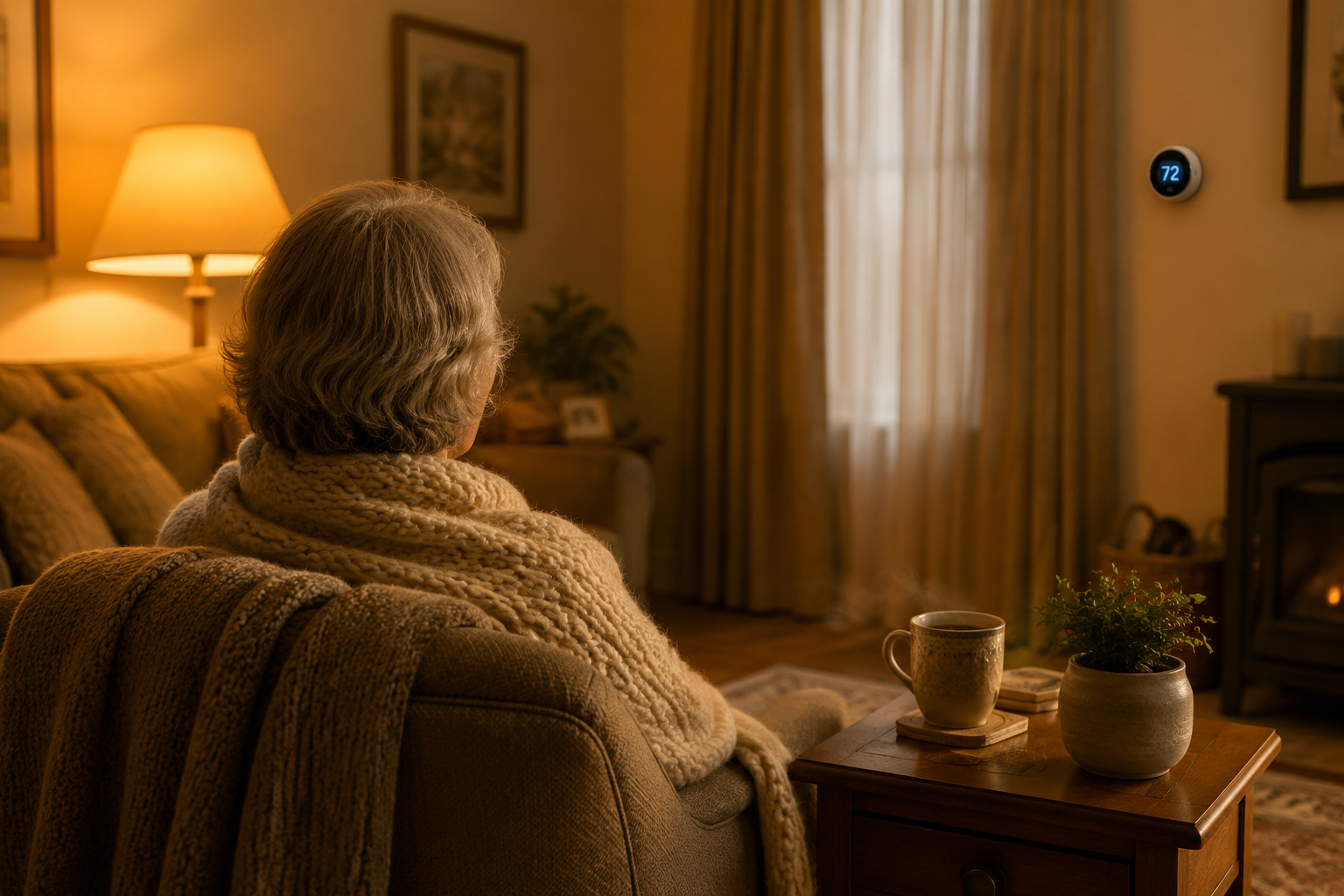
That is the first line to protect. The second line is cost pressure: a 2026 NEADA report says average monthly bills rose 29% since 2021, from $121 to $156, and 21.5 million U.S. households are behind on their bills. A 2024 University of Maryland study found that households headed by someone 60+ spent 12.7% of income on energy, rising to 16.9% for the lowest-income seniors. An AARP poll found 63% of adults 50+ saw bill increases and 83% were worried about costs. [3][4][5]
Keep the House Safely Warm First
Once that floor is clear, the job changes. The goal is not a colder house; it is less waste from leaks and a thermostat schedule that stays above the safe floor.
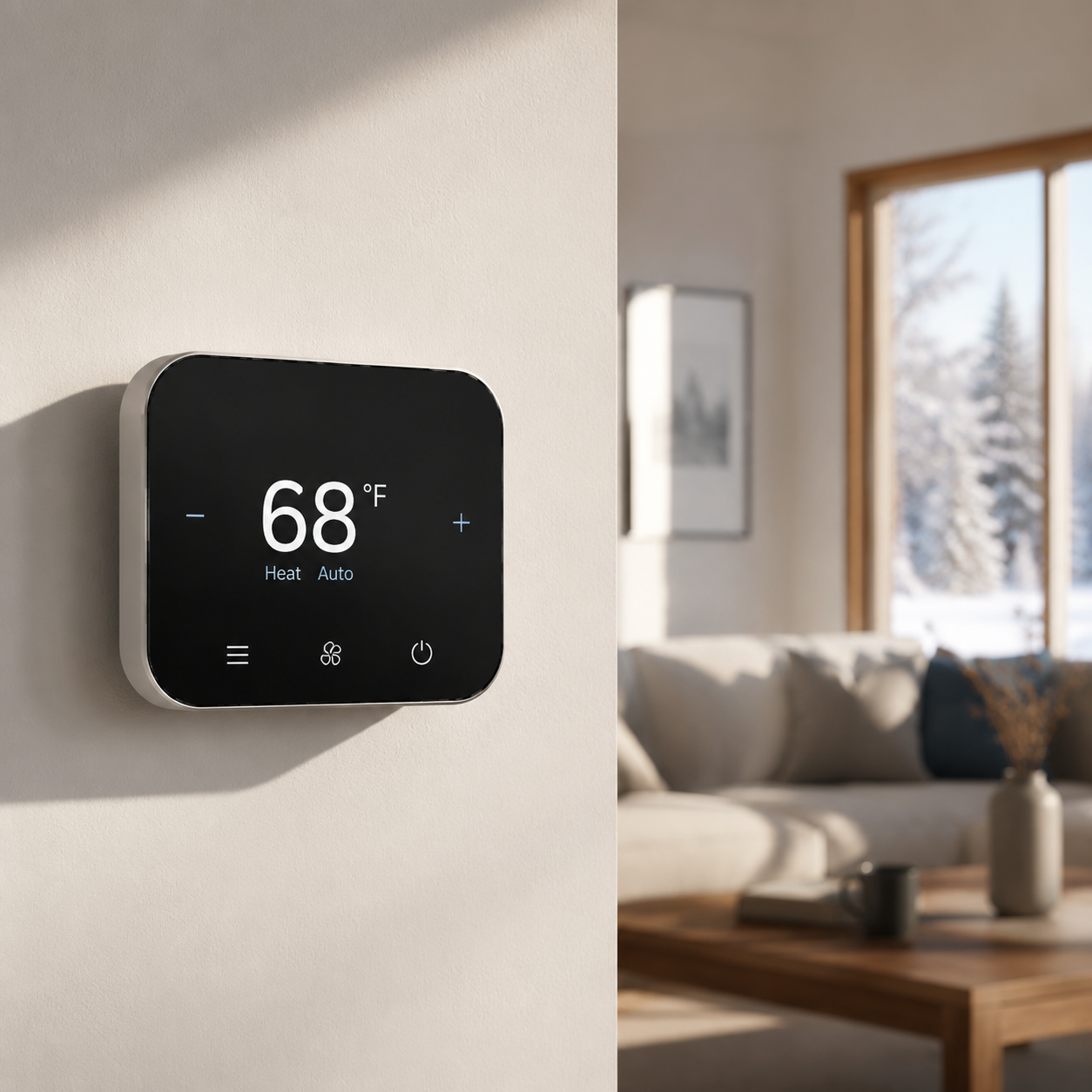
A programmable thermostat can still help, but only if it is used as a guardrail, not a shortcut. UW Extension cites DOE guidance that modest setbacks can save about $100 a year when they do not drag the home below a safe temperature. In practice, that means trimming the schedule around sleep or time away, while keeping the home above 68 F.
- Swap in LED bulbs as old bulbs burn out, especially in rooms that stay lit for long stretches.
- Seal the gaps that actually feel drafty: door edges, window frames, baseboards, and attic hatches.
- Use heavier curtains or other window coverings at night on cold windows, then open them in the day when sun helps warm the room.
- Use fans in warmer weather to make a higher AC setting feel comfortable, rather than forcing the thermostat down.
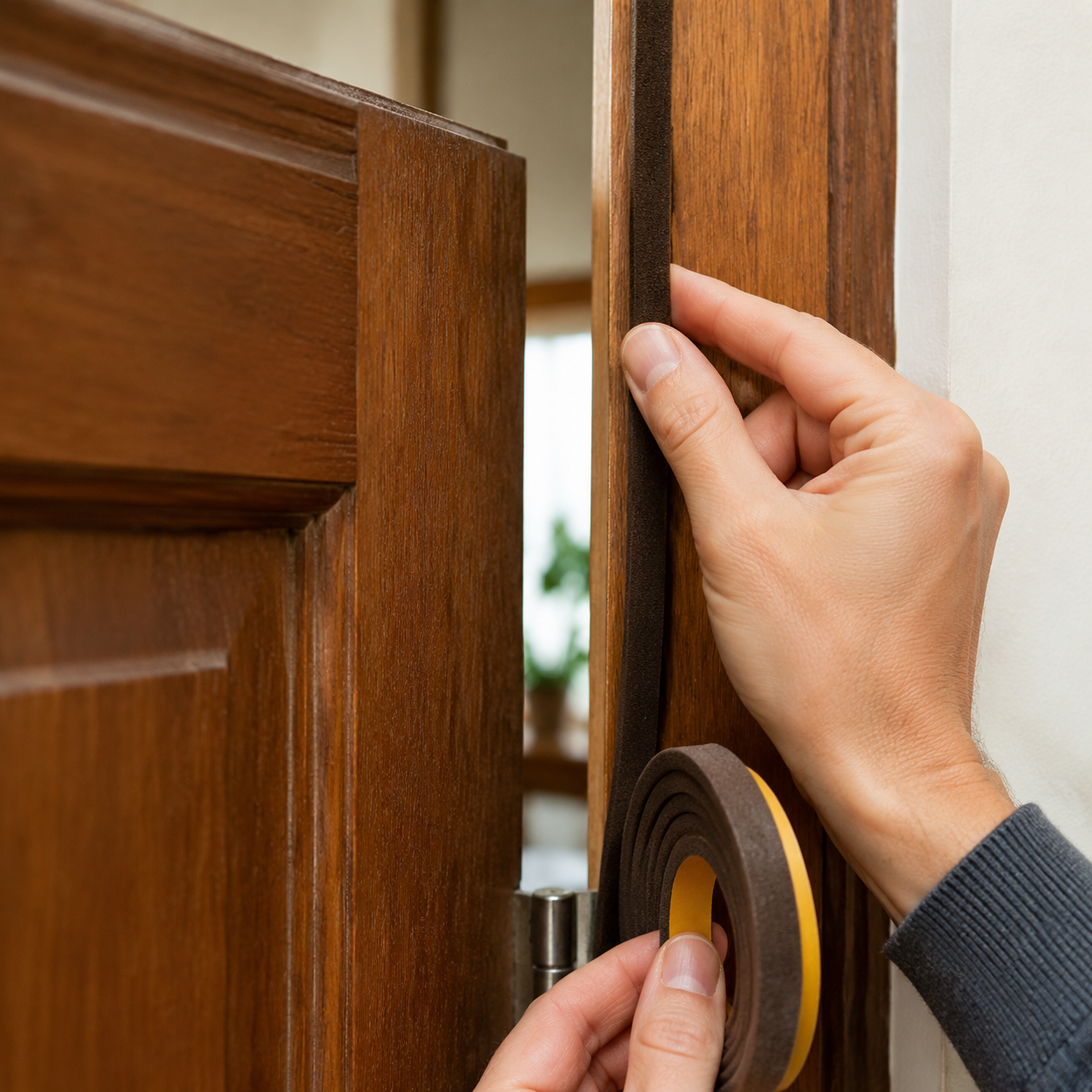
Those changes are worth doing because they reduce waste without asking the body to tolerate a colder room. If the older adult already feels chilled, shivers, or complains that the house never quite warms up, draft control is a safer first fix than turning the thermostat lower.
The warning signs matter too. Cold feet or hands, shivering, pale skin, puffy face, slurred speech, or confusion are not things to watch and wait on; they call for immediate medical attention. [2]
When the Bill Still Does Not Fit
Behavioral savings can help, but they rarely solve a serious burden on their own. Recent bill increases are large enough that even careful households may still fall behind, especially when the home is old, the insulation is thin, or the senior lives on a fixed income. At that point, the more useful next step is not more austerity. It is outside help.
- Ask the utility about budget billing, arrearage plans, and senior discounts.
- Check LIHEAP and local weatherization assistance for help with bills and home efficiency work.
- If the home needs bigger repairs, look for programs that help with insulation, air sealing, or HVAC replacement.
If the bill still does not fit after the low-risk fixes, the deeper savings come from assistance programs and professional upgrades, not from asking an older adult to live in the cold.
References
- What is the Ideal Temperature for the Elderly? — Senior Services of America — https://seniorservicesofamerica.com/what-is-the-ideal-temperature-for-the-elderly/
- Energy Saving Tips: Help Older Adults Save Money During Winter Months — University of Wisconsin-Madison Division of Extension — 2022-11-17 — https://finances.extension.wisc.edu/2022/11/17/energy-saving-tips-help-older-adults-save-money-during-winter-months/
- Energy Affordability Project — NEADA — February 2026 — https://neada.org/energy-affordability-project/
- Study: Seniors Have Big Energy Bills, Little Ability to Reduce Them — University of Maryland — 2024 — https://bsos.umd.edu/featured-content/study-seniors-have-big-energy-bills-little-ability-reduce-them
- Protection from Soaring Utility Bills — AARP — 2025 — https://www.aarp.org/advocacy/protection-from-soaring-utility-bills/
Questions to bring to a clinician or OT
This is not medical, legal, or a family's final decision — only a framework. Bring these questions to a clinician, occupational therapist, or your local Area Agency on Aging.
Find Local HelpRelated reading
Noticed something outdated or inaccurate on this page? Flag a correction. We review every report against CDC, NIA, and AARP HomeFit guidance before updating a page.