
Caregiver decision guide
Build a Fire Evacuation Plan That Fits Your Senior's Needs
Learn how to create a personalized fire evacuation plan for an older adult by first assessing their mobility, hearing, vision, and cognitive limitations, then choosing the right equipment and support network to ensure they can escape safely in under two minutes.
Adults 65+ have 2.5 times the risk of dying in a home fire as the general population, and that death rate rose 26% from 2014 to 2023; for adults 85+, the risk is 3.4 times higher.[1] Once a smoke alarm sounds, there may be less than 2 minutes to get out.[2]
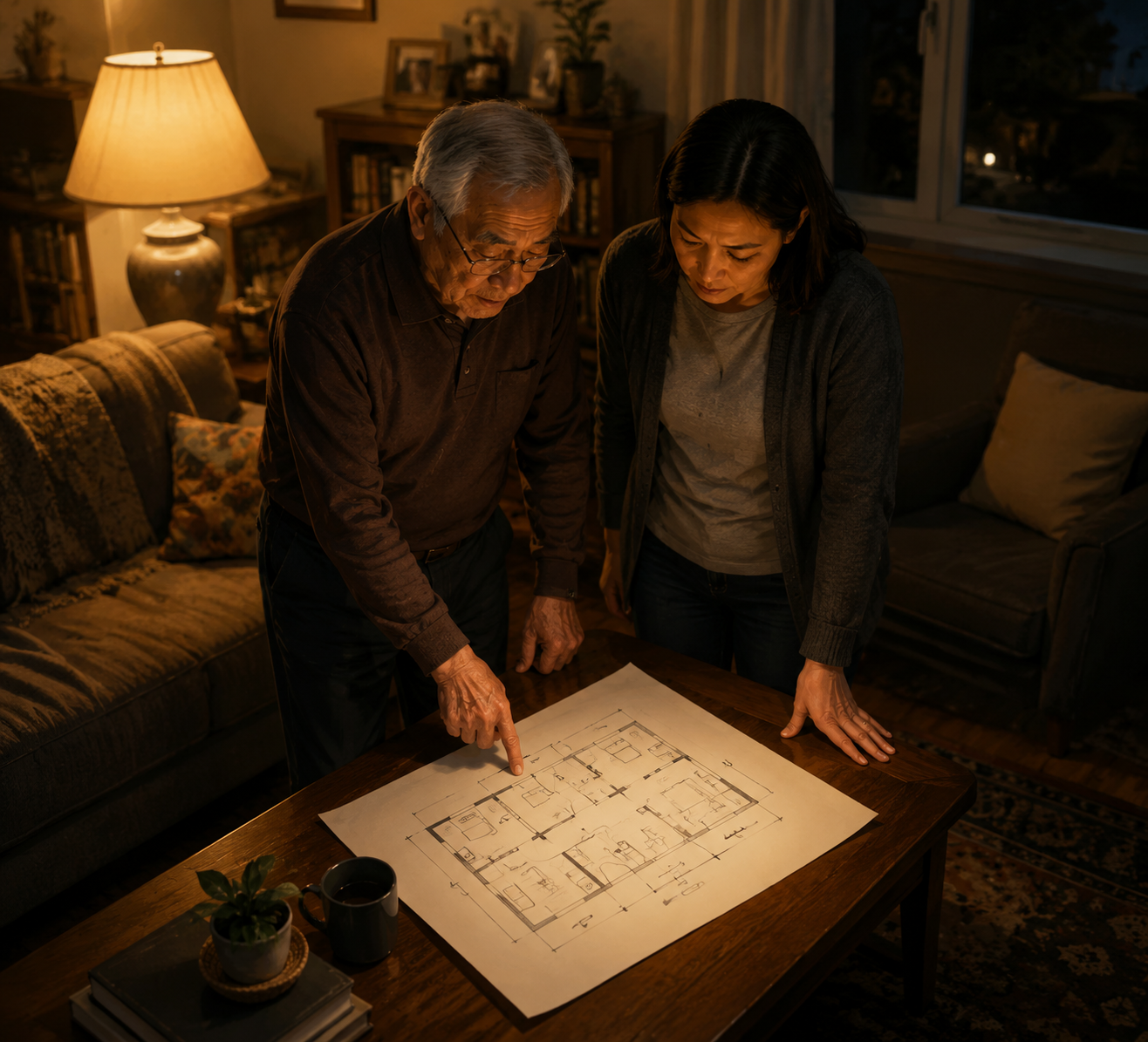
A generic escape plan assumes the person can hear the alarm, move fast, and handle stairs. A fire evacuation plan for seniors has to start with the limitation that breaks those assumptions. Yet one in 5 Americans still has no evacuation plan at all.[3]
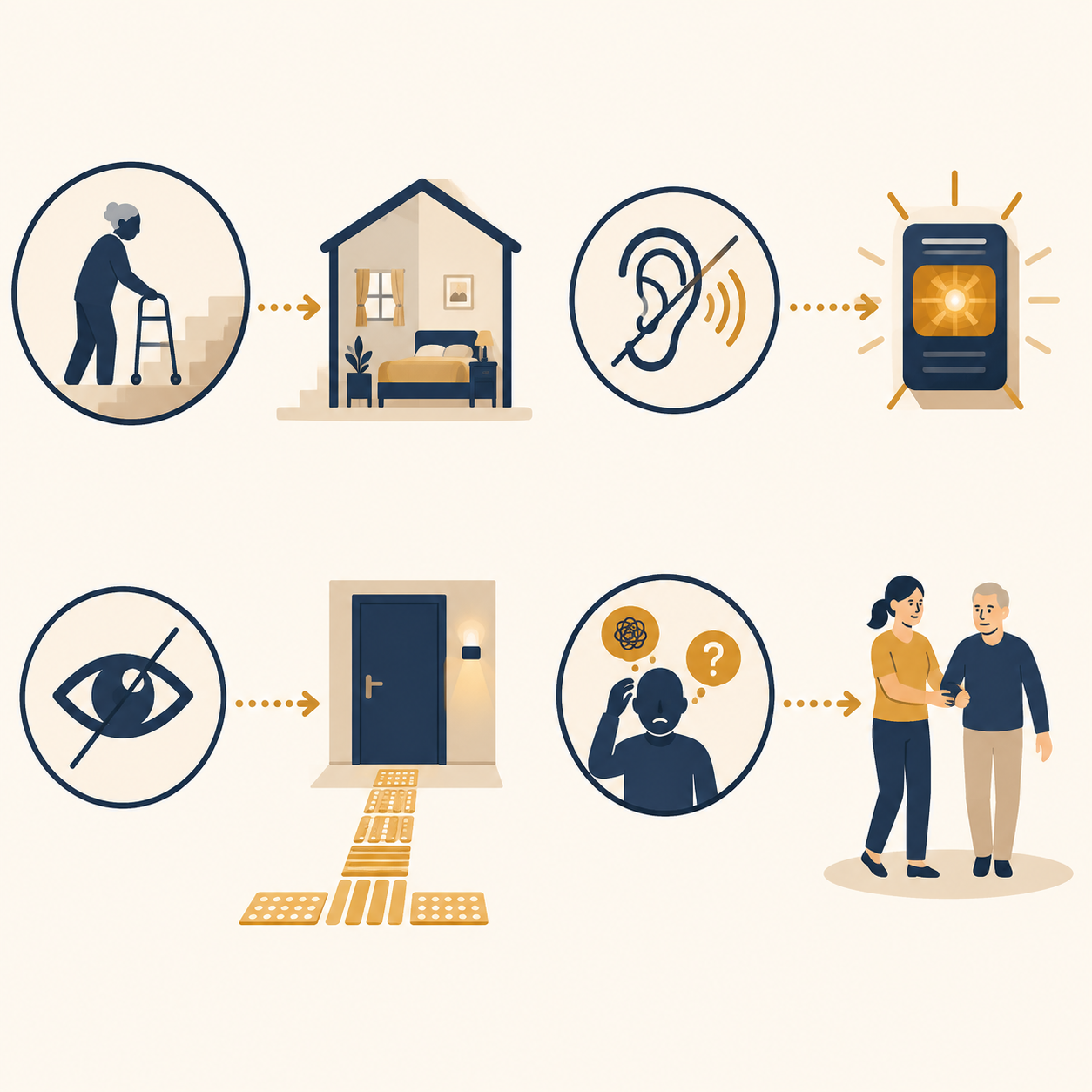
The Four Limitation Types
Before buying equipment or rehearsing a drill, sort the problem into the limitation that actually matters.
| Limitation | What changes first |
|---|---|
| Mobility | Bedroom placement, route width, stairs, and whether a helper or evacuation device is needed. |
| Hearing | Alarm type, backup alerts, and a bedside signal. |
| Vision | Route marking, lighting, and tactile cues. |
| Cognition | Practice method, redirection, and who stays with the person. |
The common ignition points matter, too. NFPA says smoking materials are the leading cause of fire fatalities for ages 55-84, cooking is the leading cause for age 85+ and for injuries across senior groups, and home sprinklers reduce death risk by 80% even though about 95% of U.S. homes still do not have them.[4]
When Mobility Is the Barrier
Mobility is where the house itself usually needs the most changes. If the bedroom is upstairs, move sleeping to the ground floor if possible. Clear the path from bed to exit, make doorways usable for the walker or chair, and decide whether an evacuation chair or escape ladder belongs in the plan before a real fire forces the issue.[4] If stairs are a real barrier, the plan also needs a named human helper, not just a device.
This is the point where a caregiver has to be specific. Who can physically get the parent out? Who knows the route? Who will be told if the parent is upstairs, asleep, or using a mobility aid when the alarm sounds? A plan that leaves those answers vague is not a plan.
Hearing and Vision Need Targeted Fixes
If the person does not reliably hear standard alarms, use a strobe or bed-shaker alarm so the alert does not depend on hearing alone, and keep a whistle by the bedside as a second signal.[4] NFPA cites age-related hearing loss in about 1 in 3 adults ages 65-74, which is why a loud alarm and an effective alarm are not the same thing.[4]
If vision is the barrier, add tactile markers to the route and keep the path simple enough to follow in low light without reading signs or hunting for a switch. A bedside whistle still helps, because the plan should not depend on finding the helper first.[4]
When Cognition Changes the Drill
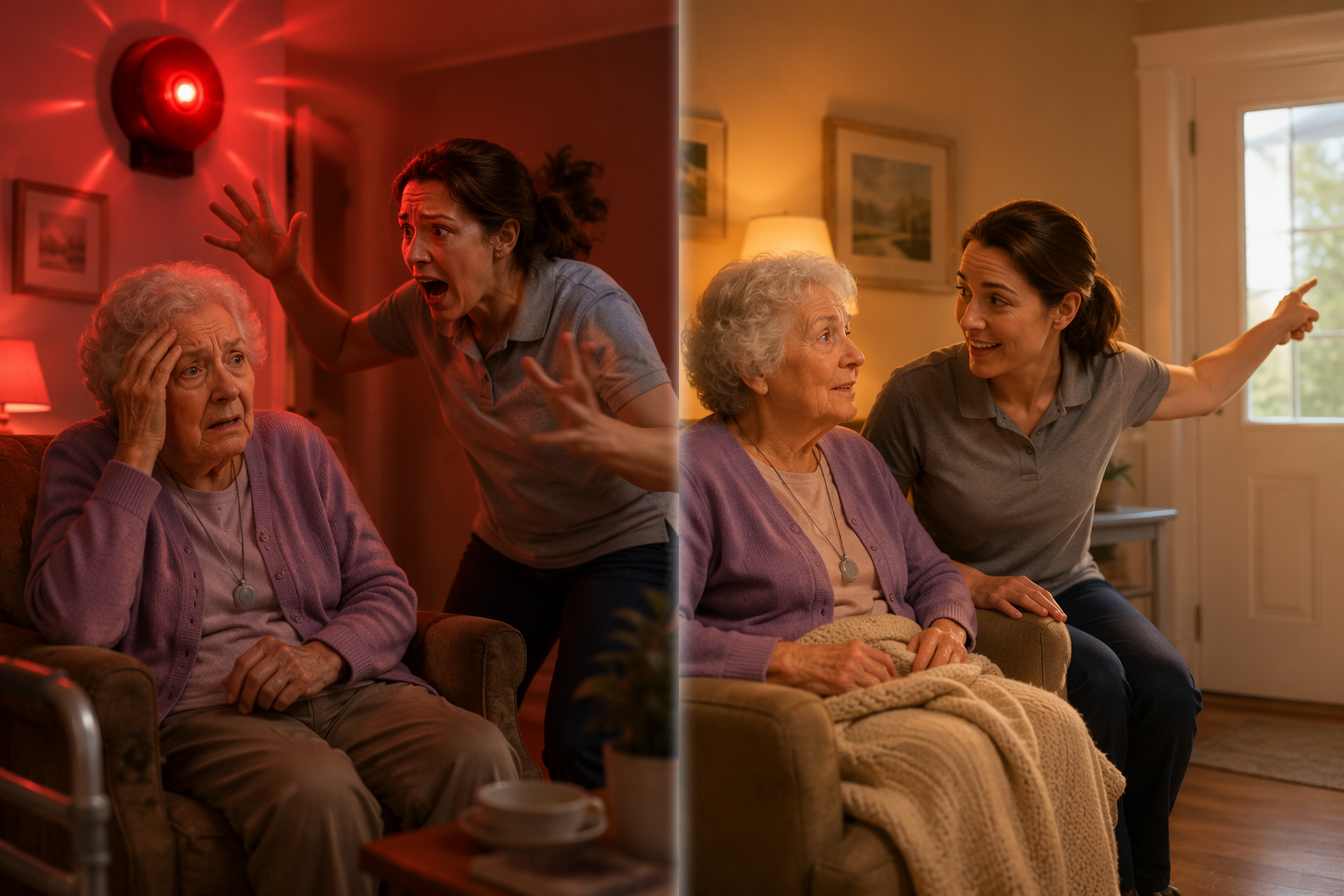
Cognition changes the practice method more than the route. A 2024 scoping review found that traditional fire drills can leave older adults with dementia disoriented, agitated, or psychologically distressed, so a calm verbal walk-through, repeated redirection, and comfort-oriented preparation are better than surprise alarms and frantic rehearsals.[5]
The review was based on Canadian private seniors' residences, not single-family homes, so the setting is not identical, but the warning still matters: if a drill makes the person panic, wander, or stop trusting the helper, that drill is not improving safety.[5]
Build the Support Network Last, but Build It
Once the route fits the person, write down who does what. Ready.gov and the Red Cross both frame older-adult planning around a support network: who wakes the parent, who can physically assist, who calls 911, who grabs the go-bag, and who meets firefighters at the door.[6][7]
Keep a small go-bag where it can be grabbed without thought. A practical version usually includes:
- Medications and a current medication list
- Glasses, hearing aids, and spare batteries
- Keys, ID, and emergency contact copies
- Phone, charger, and any small backup battery
- Cane, walker part, or other small mobility aid if practical
- Comfort item or familiar object for calm
AgingCare's emergency go-kit framework is simple: keep the bag small, visible, and filled with the things that would be hardest to replace after a midnight exit.[8]
A fire evacuation plan for seniors works when it is built from the person outward: change the route for mobility, change the alarm for hearing, mark the path for vision, change the rehearsal for cognition, and assign the helper before the next alarm has to prove the plan.
References
- Older Adults, U.S. Fire Administration
- Home Fire Escape Plans, U.S. Fire Administration
- House Fire Statistics, The Zebra, 2026
- Escape Planning, NFPA
- Fire evacuation and older adults with dementia: a scoping review, PubMed Central, 2024
- Older Adults, Ready.gov
- Older Adults, American Red Cross
- How to Prepare Elders for Emergencies, AgingCare
Questions to bring to a clinician or OT
This is not medical, legal, or a family's final decision — only a framework. Bring these questions to a clinician, occupational therapist, or your local Area Agency on Aging.
Find Local HelpRelated reading
Noticed something outdated or inaccurate on this page? Flag a correction. We review every report against CDC, NIA, and AARP HomeFit guidance before updating a page.