
Caregiver decision guide
New geriatric psychiatric hospitals are changing care for seniors
A major construction wave of new geriatric psychiatric hospitals is opening across the U.S. in 2025–2026, driven by a decades-long bed shortage and an aging population crisis. This article explains why these facilities are being built and what family caregivers need to know about accessing inpatient mental health care for an older adult.
If your parent has just spent the night in an emergency department after psychosis, suicidal thoughts, severe depression, or dementia-related aggression, a headline about a new psychiatric hospital for elderly care can feel both hopeful and maddening. Hopeful, because older adults do need places built for psychiatric crisis and physical frailty at the same time. Maddening, because a new building does not answer the question the family is asking at 2 a.m.: Can my parent actually be admitted, safely treated, and discharged with a plan we can live with?
The short answer is: in some regions, there are more options than there were a few years ago. The longer answer is that the United States is trying to build its way out of a psychiatric bed shortage that has been decades in the making, and geriatric care is only one part of that correction.
The Treatment Advocacy Center estimates that the U.S. has about 12 psychiatric beds per 100,000 people, far below its cited expert minimum of 30 and optimal level of 50 to 60 beds per 100,000 people.[1] A National Association of State Mental Health Program Directors Research Institute report found that more than 60% of the U.S. population lived in a region with an inpatient psychiatric bed shortage, using data through 2014.[2] That older data does not capture the 2025–2026 construction wave, but it does explain why families so often experience a psychiatric admission as a search, a wait, and a series of refusals rather than a clear medical handoff.
Why these hospitals are being built now
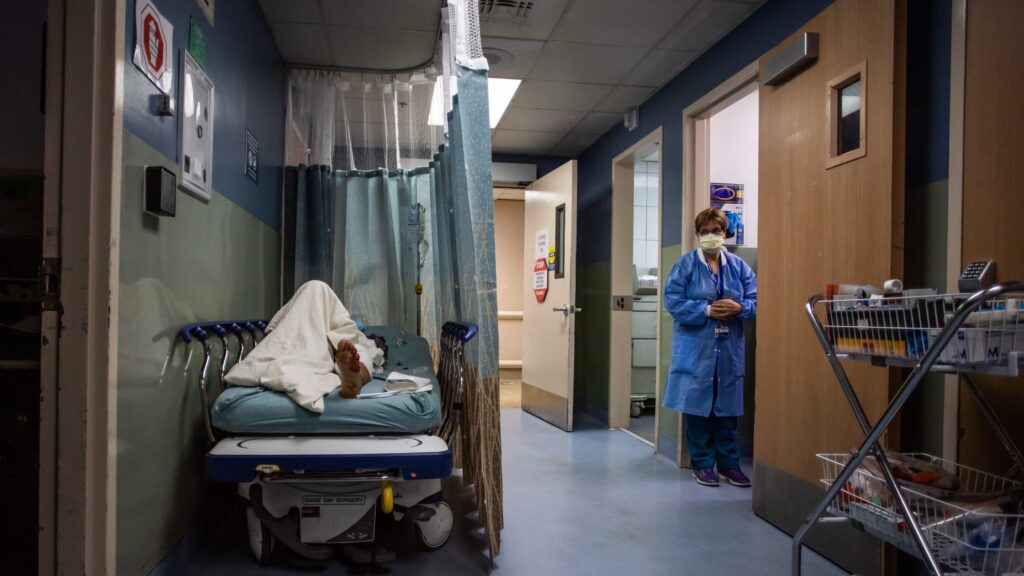
The construction news is not happening in a vacuum. Older adults are already a large part of emergency care, and when they cannot move quickly to an inpatient bed, the ER itself becomes part of the harm. KFF Health News reported that seniors account for nearly 20% of emergency room visits, and that 30% to 50% of boarded ER patients are older adults; boarding is associated with increased delirium, falls, longer hospital stays, and higher mortality.[3]
Those risks are not abstract when the patient is frail, confused, frightened, or already hallucinating. A busy emergency department is built to triage and stabilize. It is not designed for someone who needs low stimulation, careful medication review, fall prevention, help with toileting, and staff who understand how psychiatric symptoms and dementia symptoms can overlap.
The boarding times can be long enough to change the whole character of the crisis. At Massachusetts General Hospital, KFF Health News reported that ER boarding rose 32% from October 2022 to September 2023; admitted patients spent a median of 14 hours in the ER, and 26% spent more than 24 hours.[3] For an older adult, 14 hours on a gurney is not just an inconvenience. It can mean sleep disruption, missed routines, worsening confusion, and a family member trying to interpret fragmented updates from staff who are caring for many other emergencies at the same time.
That is the pressure behind the new building announcements. Becker's Behavioral Health reported more than $730 million in new behavioral health hospital projects in 2025–2026.[4] The number is important, but it should be read carefully: not every behavioral health project is a geriatric psychiatric hospital, and not every new bed is designed for an older adult with mobility problems, dementia symptoms, cardiac disease, diabetes, or complex medication needs.
The new facilities families are hearing about
Two large public projects show the scale of the current response.
In Dallas, the Texas Behavioral Health Center opened in June 2026 with 292 beds through a partnership between Texas Health and Human Services Commission and UT Southwestern Medical Center.[5] The opening matters because public psychiatric capacity has been strained for years, and large state-linked facilities can affect the referral options available to hospitals, courts, local mental health authorities, and families. It does not, by itself, mean that every older adult in crisis will qualify for a bed there or that a geriatric-specific placement will be immediately available.
In Michigan, Southeast Michigan Psychiatric Hospital is planned as a 264-bed facility, with completion expected in July 2026 and patients expected in the fall; MLive described it as the state's first new psychiatric hospital in decades.[6] For families in a region that has watched psychiatric options shrink or stay clogged, that kind of project is not cosmetic. It can change where an emergency department social worker looks next, which transfer calls are possible, and how long some patients wait.
| Project | What is clearly supported | Caregiver reading |
|---|---|---|
| Texas Behavioral Health Center, Dallas | 292-bed psychiatric hospital opened in June 2026 through HHSC and UT Southwestern. | A major capacity addition, but families still need to ask whether a specific unit is appropriate for an older adult's medical and cognitive needs. |
| Southeast Michigan Psychiatric Hospital | 264-bed hospital expected to be completed in July 2026, described as Michigan's first new psychiatric hospital in decades. | A meaningful regional development, especially where transfers have been difficult, but admission criteria still matter. |
| Watertown Regional Medical Center senior behavioral health expansion | Facility announced an expansion of its senior behavioral health unit in Wisconsin. | This is more directly relevant to older adults, though facility claims about size or scope should be treated as self-reported unless independently confirmed. |
| Other 2025–2026 behavioral health projects | Reported projects include Orlando Health, Ochsner Lafayette, and Independence Health, among others. | Some projects add general behavioral health capacity without clearly stating geriatric-dedicated beds. |
Some smaller or regional announcements are more explicitly connected to older adults. Watertown Regional Medical Center announced an expansion of its senior behavioral health unit in Wisconsin.[7] That kind of project is the one caregivers should examine most closely, because the words “senior behavioral health” usually point toward a population with different safety and medical needs than a general adult psychiatric unit. Still, families should verify what the unit actually treats, what it excludes, and how it handles dementia-related behaviors.
Other projects in the 2025–2026 wave, including facilities reported by Becker's in Florida, Louisiana, and Pennsylvania, show broader behavioral health momentum.[4] They may help relieve pressure in a local system. But unless a project specifically identifies geriatric psychiatric beds, senior behavioral health services, or older-adult programming, families should not assume it is built for an 82-year-old with psychosis and a fall risk.
What makes a geriatric psychiatric unit different
A good geriatric psychiatric unit is not simply an adult psychiatric unit with older patients in the rooms. The physical space matters. So does the training of the staff, the pace of the day, the way medications are reviewed, and the way medical problems are watched while psychiatric symptoms are treated.
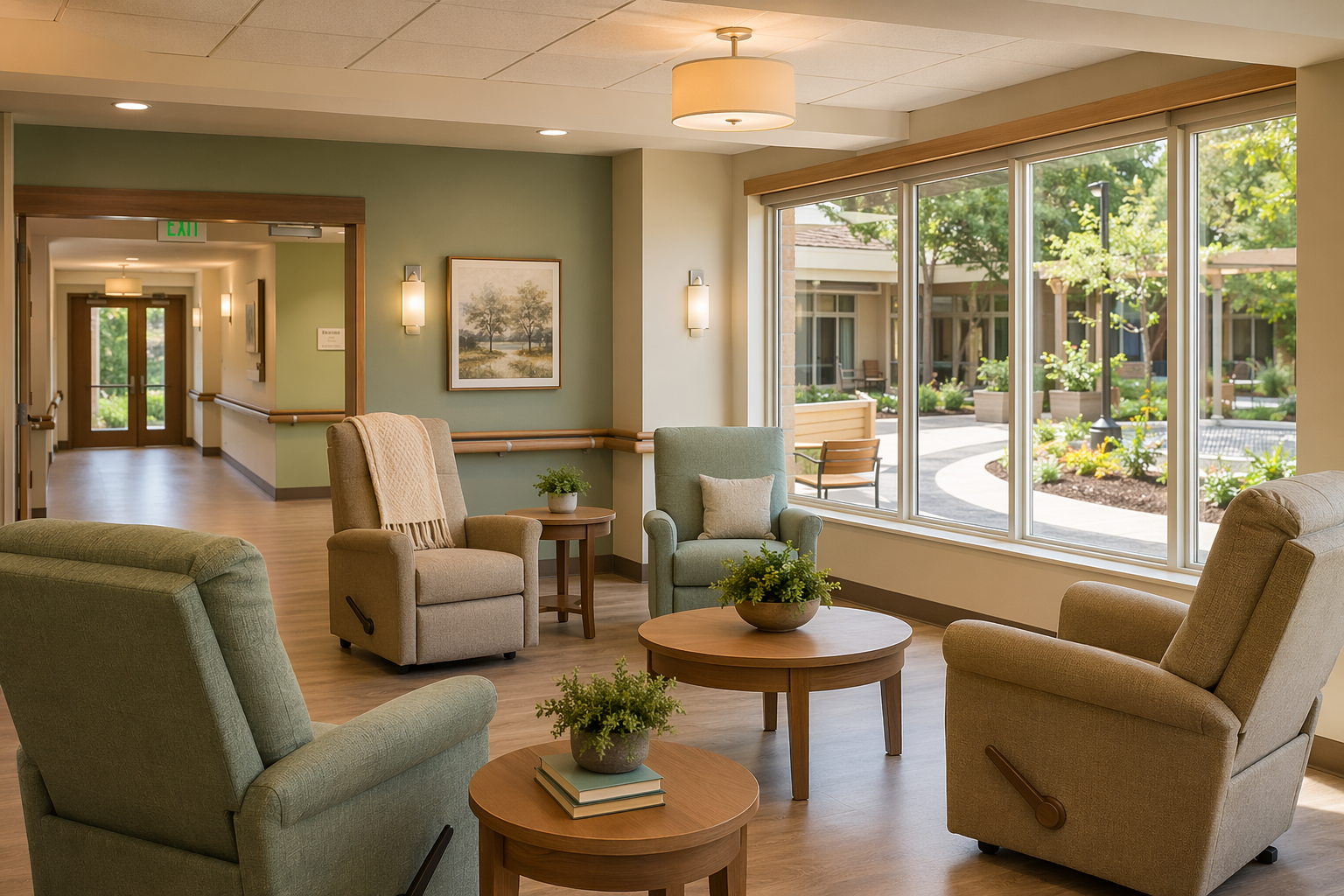
NYC Health + Hospitals/Elmhurst offers a useful design example, though it is not a 2026 opening. In 2019, the hospital described an inpatient behavioral health unit designed for elderly and frail patients with features including fall-prevention flooring, handrails, lift chairs, bed alarms, night lighting, and secure outdoor space.[8] Those details can sound minor until a family has watched a parent become more confused at night, try to climb out of bed, or refuse to walk because the hallway feels unfamiliar.
The clinical distinction is just as important. An older adult may arrive after a psychiatric crisis, but the treatment team may also need to sort through infection, medication side effects, pain, dehydration, sleep disruption, grief, substance use, cognitive decline, or delirium. A unit that regularly treats older adults should be used to asking whether the psychiatric symptom is the whole problem or the loudest part of a larger medical picture.
More beds do not erase the access barriers
For many families, the hardest sentence to hear is some version of: “They need inpatient psychiatric care, but we are still looking for a bed.” New hospitals may shorten that search in some places. They do not remove the coverage rules, workforce shortages, and admission criteria that shape who gets in.
Medicare is one of the clearest examples. Medicare Part A covers inpatient psychiatric hospital care, but it has a 190-day lifetime limit for care in a psychiatric hospital. Becker's, citing MedPAC data, reported that more than 15,000 Medicare beneficiaries are at or within 15 days of that cap.[9] A family may not know whether a parent used psychiatric hospital days decades ago, during a past episode of severe depression or psychosis, until placement is being discussed.
There is a policy effort to change that. Senator Bill Cassidy introduced S.4076, a bill to eliminate Medicare's 190-day lifetime limit for inpatient psychiatric care.[10] As of Q3 2026, families should treat the cap as a live coverage issue, not as a problem that has already been solved.
The outpatient side is thin, too, and that affects inpatient care because discharge depends on follow-up. A 2024 Office of Inspector General report found that only 29% of listed behavioral health providers under traditional Medicare were actually seeing patients.[11] If an inpatient team is ready to discharge your parent but cannot find timely psychiatric follow-up, therapy, medication management, or community support, the family may feel as if the hospital stay ended before the crisis was truly over.
Then there is the specialist shortage. ASA Generations reported only 2.6 geriatric psychiatrists per 100,000 older adults, with the shortage projected to worsen.[12] A new unit can have fresh rooms and better flooring, but it still needs clinicians who understand late-life depression, psychosis, dementia-related behavioral symptoms, suicide risk, polypharmacy, and the realities of family caregiving.
How to read “appropriate for this unit”
Families often hear that a parent is “not appropriate” for a certain psychiatric unit without getting a satisfying explanation. Sometimes that phrase reflects a real safety issue. A unit may not be able to manage a patient who needs continuous medical monitoring, oxygen support, complex wound care, dialysis coordination, or one-to-one supervision beyond its staffing model. Sometimes it reflects behavior the unit says it cannot safely manage, such as severe aggression, elopement risk, or advanced dementia symptoms. Sometimes it reflects insurance, bed availability, or local referral patterns that are harder for families to see.
The useful response is not to argue over the phrase alone. Ask what, specifically, makes the placement inappropriate and what level of care the team is seeking instead. If the issue is medical instability, the next step may be a medical admission before psychiatric transfer. If the issue is dementia-related behavior, the right question may be whether the region has a geriatric psychiatry unit, neurobehavioral unit, memory-care-capable psychiatric program, or another specialized setting.
Masonicare's family guidance on inpatient psychiatric facilities for seniors emphasizes that these settings are meant for short-term stabilization, evaluation, medication adjustment, and discharge planning, rather than permanent residence.[13] Dementia Aide's caregiver-facing description similarly frames the process around admission, the inpatient stay, and discharge planning; it is useful as a practical walkthrough, not as independent evidence about national capacity.[14]
Questions that matter before and during admission
When a new hospital or unit appears in your region, the name alone tells you very little. “Behavioral health,” “psychiatric hospital,” “senior behavioral health,” and “geriatric psychiatry” can describe different levels of specialization. The questions below help separate a genuinely older-adult-ready program from a general unit that occasionally accepts older patients.
- Does the unit regularly treat adults in their 70s, 80s, and 90s, or does it mainly serve younger adults?
- Will a geriatric psychiatrist, geriatrician, neurologist, or other clinician with older-adult expertise be involved when needed?
- How does the team distinguish psychiatric illness from delirium, dementia progression, medication side effects, infection, pain, or sleep disruption?
- What fall-prevention measures are built into the rooms, bathrooms, hallways, and nighttime routines?
- How are current medications reviewed, especially sedatives, anticholinergic drugs, pain medications, and recent medication changes?
- What behaviors would lead the unit to transfer the patient out, and where would the patient go if that happened?
During admission, families should also ask how communication will work. Who calls the family after the initial evaluation? How often are medication changes discussed? What happens if the patient refuses consent for family involvement? If the parent has dementia or fluctuating capacity, how does the team involve the health care proxy or legal decision-maker?
Discharge planning should start earlier than most families expect. A psychiatric hospitalization for an older adult may stabilize hallucinations, agitation, suicidal thoughts, or severe depression, but the next setting still has to be able to manage the person who comes out of the hospital. That may mean returning home with intensive support, moving to assisted living or memory care, arranging skilled nursing, coordinating outpatient psychiatry, or revising a dementia care plan that no longer matches the parent's needs.
What the construction wave changes for families
The most honest way to read the 2025–2026 construction wave is as a meaningful correction, not a cure. A 292-bed hospital in Dallas and a 264-bed hospital in Michigan are not symbolic gestures.[5][6] Senior behavioral health expansions are not trivial when families have been watching parents wait in emergency departments built for speed rather than frailty.[7] Purpose-built design is not decoration when a patient is at risk for falls, delirium, or nighttime confusion.[8]
But new beds do not automatically become accessible beds for your parent. Admission criteria, insurance rules, Medicare's lifetime psychiatric hospital limit, staffing shortages, and the scarcity of geriatric psychiatric expertise still shape the answer a family receives. A general behavioral health bed may help one patient and be wrong for another. A geriatric unit may be ideal but full. A hospital may accept older adults but exclude the very dementia-related behavior that brought the family to the ER.
So the practical shift is this: families now have more reason to ask specific questions. Ask whether there is a geriatric psychiatric unit in the region. Ask whether the new hospital has older-adult programming or only general adult beds. Ask what safety features are in place. Ask how dementia symptoms are handled. Ask how Medicare days are counted. Ask what follow-up must be in place before discharge.
That is not a small burden to place on a daughter, son, spouse, or sibling who is already frightened. It is, however, the difference between treating a ribbon-cutting as reassurance and using new capacity as leverage: one more option to verify, one more transfer possibility to request, one more chance that an older adult in psychiatric crisis is cared for in a place built with age in mind.
References
- Bed Shortages, Treatment Advocacy Center
- Trends in Psychiatric Inpatient Capacity, United States and Each State, 1970 to 2014, National Association of State Mental Health Program Directors Research Institute
- ER Boarding Poses Extra Risks for Older Adults, KFF Health News
- 7 behavioral health projects representing nearly $1B in investment, Becker's Behavioral Health, July 2026
- HHSC, UT Southwestern Medical Center Celebrate Opening of New Psychiatric Hospital in Dallas, Texas Health and Human Services, June 2026
- Construction on Michigan's newest psychiatric hospital on track for patients this fall, MLive, March 2026
- Watertown Regional Medical Center Expands Senior Behavioral Health, Watertown Regional Medical Center
- New Inpatient Behavioral Health Unit Is Designed for the Elderly and Frail, NYC Health + Hospitals/Elmhurst
- Lawmakers re-up bill to remove Medicare's inpatient psych limits, Becker's Behavioral Health
- Cassidy Introduces Bill to Expand Mental Health Care for Seniors, Office of U.S. Senator Bill Cassidy
- Only 29 Percent of Enrollees in Need Received Any Psychotherapy from a Provider in Traditional Medicare, Office of Inspector General, 2024
- Building the Geriatric Mental Health Workforce, ASA Generations
- Inpatient Psychiatric Facilities for Seniors: What You Need to Know, Masonicare
- Care Arrangement: Geriatric Psychiatric Facility, Dementia Aide
Questions to bring to a clinician or OT
This is not medical, legal, or a family's final decision — only a framework. Bring these questions to a clinician, occupational therapist, or your local Area Agency on Aging.
Find Local HelpRelated reading
Noticed something outdated or inaccurate on this page? Flag a correction. We review every report against CDC, NIA, and AARP HomeFit guidance before updating a page.