
Caregiver decision guide
Is Indoor Produce Safer for Seniors? A Caregiver's Guide
Indoor-grown produce eliminates many contamination risks that disproportionately threaten older adults, but it also introduces new ones. This guide helps caregivers understand the real safety differences and what questions to ask.
Older adults do not get the same margin for error from a contaminated salad that a younger shopper does. FDA says immune function starts to decline around ages 50 to 60 and can be severe by 75, while the CDC notes that people with weakened immune systems face higher risk of serious foodborne illness [1][2]. In the U.S., foodborne illness causes about 128,000 hospitalizations a year, and adults 65 and older account for a disproportionate share of them [1].
Why indoor produce gets attention
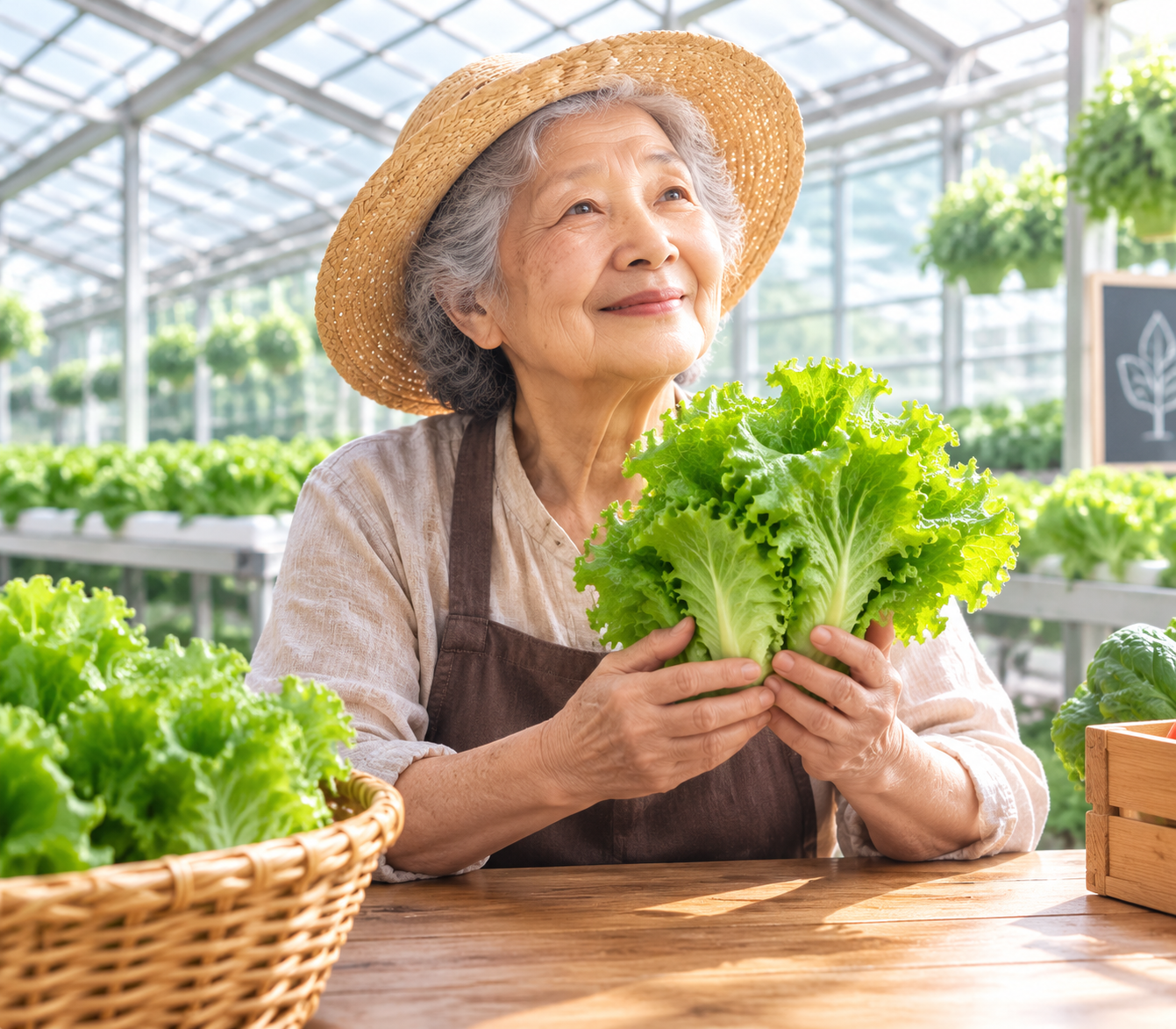
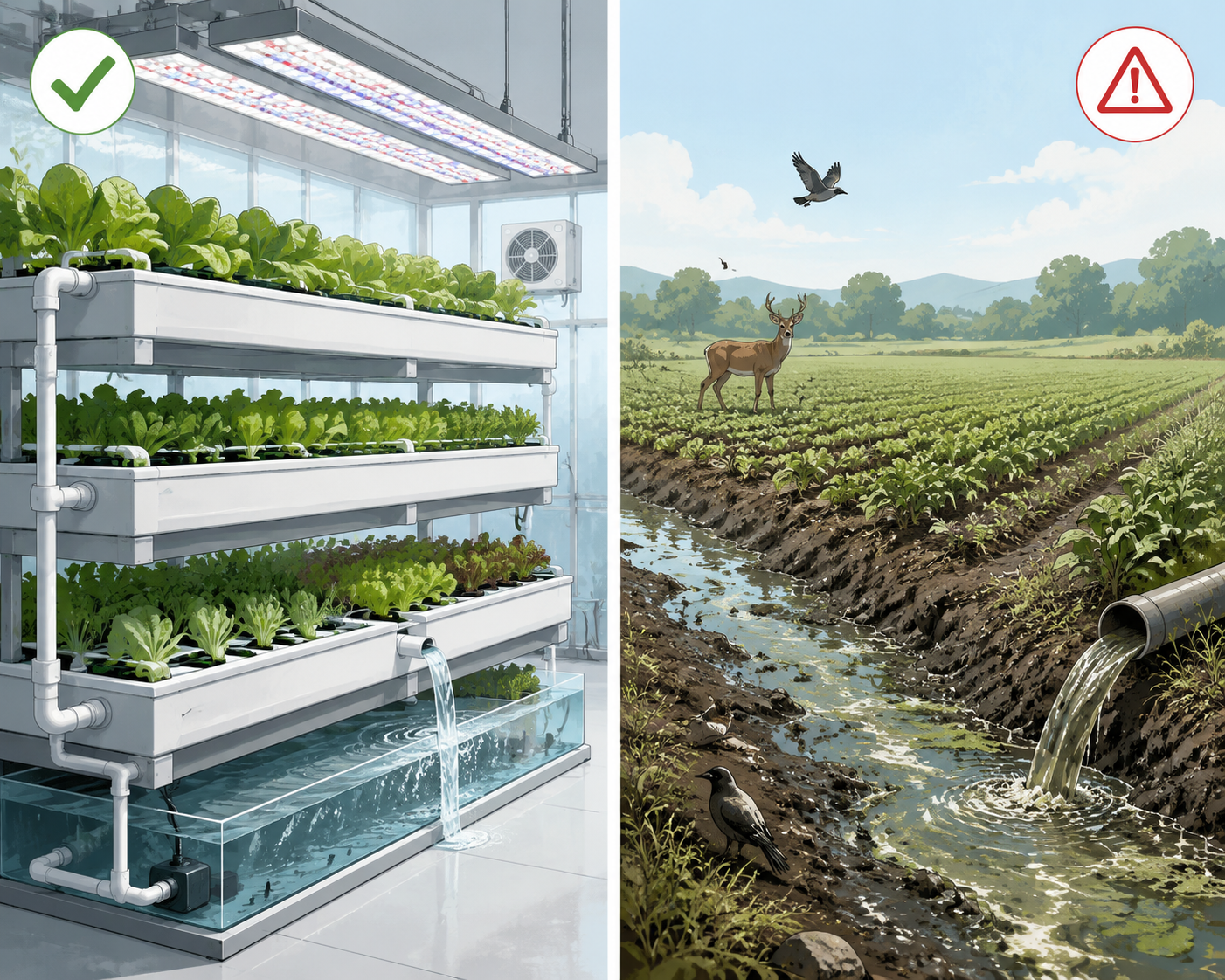
That is why this question is not an abstract farming debate. For a caregiver, the question is whether a greens bag, tomato, or lettuce box is less likely to carry the kind of contamination that turns a routine meal into a hospital visit. Indoor production removes several field-based exposure routes first: some indoor systems can avoid synthetic pesticide spraying altogether [4], and they also shut out a lot of what makes field-grown produce hard to control, including soil contact, bird droppings, wildlife intrusion, and contamination from runoff or adjacent livestock operations [3].
| Risk pathway | Field-grown produce | Indoor-grown produce |
|---|---|---|
| Synthetic pesticide residues | Exposure can occur depending on growing practices | Well-managed indoor systems can avoid synthetic pesticide spraying altogether [4] |
| Soil contact and splash | Part of the growing environment | Largely removed |
| Wildlife and bird contamination | Possible in open fields | Mostly blocked |
| Adjacent farm runoff | Can reach crops through environmental exposure | Largely removed |
That difference is not theoretical. During the 2019 E. coli romaine outbreak, CDC guidance steered consumers toward greenhouse-grown romaine as the safer choice while the field outbreak was being addressed, which is a useful reminder that indoor production can be a real reduction in risk, not just a marketing label [3].
What indoor farming leaves behind
The trap is treating indoor as automatically safe. A 2025 FAO global review says the warm, stable, nutrient-rich conditions that help plants grow can also help pathogens persist when monitoring is weak, and Dr. Keith Warriner put it plainly: the same constant system that supports plant growth can also support pathogen persistence [5][6].
Recirculating water is the biggest reason. In a closed loop, contamination does not just wash away; it can move from one tray to another, which is why water testing and filtration matter more, not less, in indoor systems [5][6]. Seed-borne contamination is another concern, because a clean-looking room does not guarantee clean starting material. Sealed spaces also hold humidity, which can raise mold and fungal pressure if ventilation and sanitation are sloppy [5][6].
Outbreaks can still happen indoors. Food Safety News reported a 2021 Salmonella outbreak tied to indoor-grown leafy greens that sickened 31 people across four states, which is enough to puncture the idea that no soil means no recall [3].
Handling is the other blind spot. Some growers skip washing because the crop never touched soil, but that is exactly how contamination introduced during cutting, packing, or transport stays on the product. In FMI-cited research, only 22% of greenhouse operations required handwashing before harvest [7].
Organic and indoor are not the same answer. Organic rules mainly address how something is grown; they do not automatically settle the question of whether a senior is less exposed to foodborne pathogens. For a caregiver, that means the label matters less than the actual controls behind it.
What to ask before you buy
- How is irrigation or recirculating water tested, and how often?
- Are seeds screened or sourced with documented food-safety controls?
- Is produce washed after harvest, and are workers required to wash hands before handling?
- Can the seller explain sanitation, filtration, and recall procedures without marketing language?
For a caregiver, the useful filter is simple: indoor-grown produce often removes several of the riskiest field exposures for older adults, but the benefit only holds when the operation can show how it manages water, seeds, handling, and cleanup in plain language.
References
- Food Safety for Older Adults and People with Cancer, Diabetes, HIV/AIDS, Organ Transplants, and Autoimmune Diseases - FDA
- Safer Food Choices for People With Weakened Immune Systems - CDC
- Safety Aspects of Indoor Farming Signal a Change in Agriculture - Food Safety News
- Why We Don't Spray: How Indoor Farming Eliminates the Need for Pesticides - Grow Space
- Indoor Farms Can Grow Food All Year, but Are They Safe? - University of Guelph News
- Indoor Farming Food Safety FAO Global Review - Userve/FAO
- Keeping Food Safety Top of Mind When Sourcing Produce Grown Indoors - FMI
Questions to bring to a clinician or OT
This is not medical, legal, or a family's final decision — only a framework. Bring these questions to a clinician, occupational therapist, or your local Area Agency on Aging.
Find Local HelpRelated reading
Noticed something outdated or inaccurate on this page? Flag a correction. We review every report against CDC, NIA, and AARP HomeFit guidance before updating a page.