
Caregiver decision guide
The Kratom Cardiac Arrest Risk in Older Adults
Many older adults use kratom as a 'natural' pain remedy, but poison center data reveals serious cardiovascular dangers, especially for those over 70. This guide explains the cardiac arrest risk, why age matters, and how caregivers can recognize warning signs.
If the question is whether a parent who swapped prescription pain medicine for kratom has moved to something safer, the answer for older hearts is no. Poison-center data shows enough cardiovascular trouble in older adults to make kratom a medication-safety issue, not a wellness shortcut, and the FDA still does not treat it as a harmless alternative.[1][3]
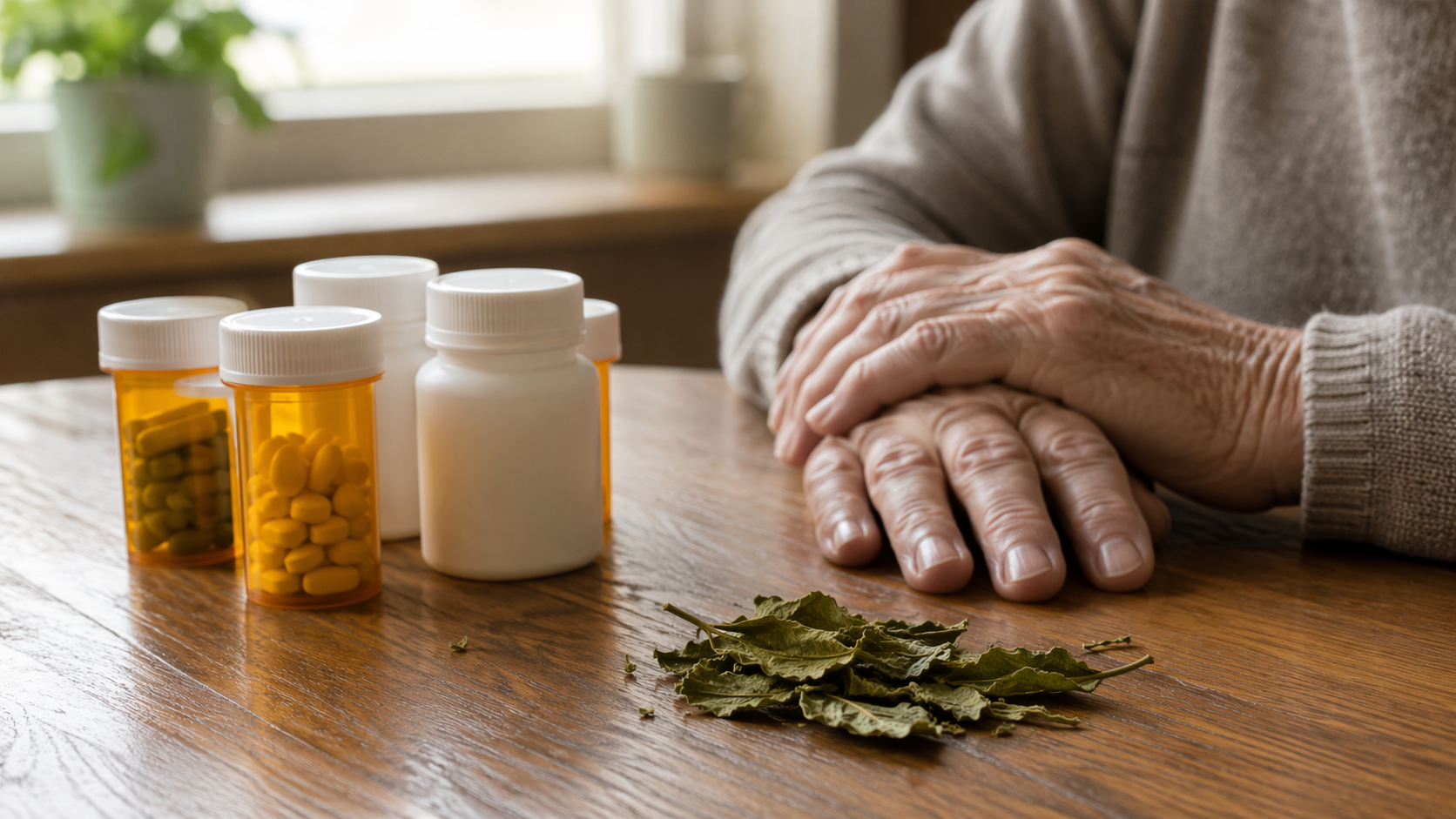
What the poison-center data shows
The most important older-adult study, from Graves et al. in the Journal of the American Geriatrics Society, found that nearly 5% of kratom exposures reported to U.S. poison centers from 2014 to 2019 involved adults 60+, nearly half of those older-adult cases were life-threatening or disabling, and 23 deaths were reported in the 70+ group.[1] That is not a harmless pattern hidden inside a few dramatic anecdotes.
A poison-center age breakdown shows the burden rising sharply with age: cardiovascular effects were reported in 36.8% of kratom-exposed adults 60 to 69 and 51.9% of those 70+, while cardiac arrest appeared in 0.4% of exposures overall.[2] The arrest number is low, but low frequency does not make it clinically small when the person taking kratom already has heart disease, hypertension, or a long medication list.
A Washington State University College of Nursing summary of the older-adult findings makes the practical point plainly: this is the age group where serious poison-center outcomes cluster, so a "natural" label does not buy much protection when the margin for error is already thin.[2]
The FDA is still clear that kratom is not approved for any medical use and continues to warn about safety concerns.[3]
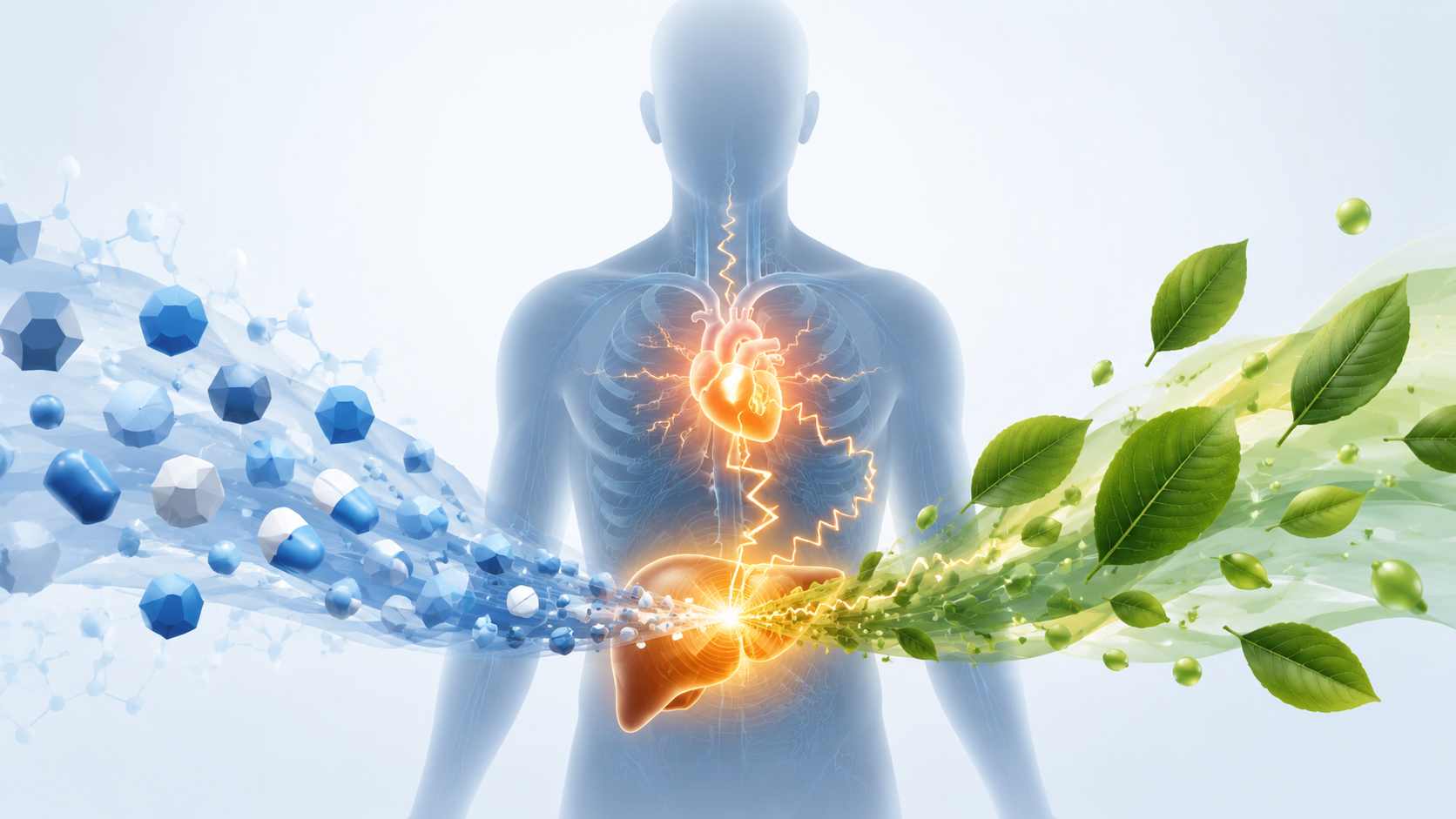
Why age makes the risk harder to see
The part caregivers run into is not kratom alone; it is kratom plus everything else already in the cabinet. One pharmacology study found kratom inhibits CYP2D6, an enzyme that helps process many beta-blockers, antiarrhythmics, antidepressants, and other common prescriptions older adults take.[4] If a parent is on a heart medication, an antidepressant, or both, that interaction can push a stable routine into something less predictable.
That fits the adverse drug reaction pattern reported in older adults: Graves et al. found adverse drug reactions in 21.9% of exposures in adults 70+.[1] Caregivers are often the first to notice the change that matters most — the parent who was "fine yesterday" is now dizzy, slow, confused, or having palpitations after adding a supplement that sounded mild.
Reviews of kratom's health effects and cardiotoxicity describe plausible pathways to arrhythmia, ventricular fibrillation, and, in rare cases, cardiac arrest.[5][6] Case-level reports have described those outcomes too, but they are better read as confirmation of the mechanism than as a way to estimate how often any one person will be affected.[5][6]
When kratom stops being a preference
For an older adult with known heart disease, multiple prescriptions, or unexplained symptoms after starting kratom, the right frame is medication safety, not preference. Mixed use is exactly how kratom risk enters real life, and most fatal reports involve polysubstance use, which is a caveat but not a reassurance.[5] If the parent is already on a beta-blocker, antiarrhythmic, antidepressant, or pain regimen, the combination deserves a closer look.[4]
- Chest pain, fainting, or new palpitations
- New confusion, severe dizziness, or trouble staying upright
- Shortness of breath, collapse, or a sudden change after starting kratom or changing dose
- Any symptom that appears after combining kratom with prescribed heart or psychiatric medication
The cleanest next step is a full medication review, including over-the-counter products and supplements, the same way you would with other fall-risk drugs in this fall-risk medications guide.
References
- Kratom Exposures Among Older Adults Reported to U.S. Poison Centers, 2014-2019. Journal of the American Geriatrics Society. 2021. https://agsjournals.onlinelibrary.wiley.com/doi/10.1111/jgs.17326
- Study: Kratom a Danger for Older Adults. Washington State University College of Nursing. 2021-06-23. https://nursing.wsu.edu/2021/06/23/study-kratom-a-danger-for-older-adults/
- FDA and Kratom. U.S. Food and Drug Administration. https://www.fda.gov/news-events/public-health-focus/fda-and-kratom
- Kratom inhibits CYP2D6 activity in vitro. PubMed. 2011. https://pubmed.ncbi.nlm.nih.gov/21876481/
- Health Effects Associated With Kratom: A Narrative Review. PMC. https://pmc.ncbi.nlm.nih.gov/articles/PMC9130800/
- Cardiotoxicity Associated With Kratom Use: A Comprehensive Review. PMC. https://pmc.ncbi.nlm.nih.gov/articles/PMC8504575/
Questions to bring to a clinician or OT
This is not medical, legal, or a family's final decision — only a framework. Bring these questions to a clinician, occupational therapist, or your local Area Agency on Aging.
Find Local HelpRelated reading
Noticed something outdated or inaccurate on this page? Flag a correction. We review every report against CDC, NIA, and AARP HomeFit guidance before updating a page.