
Caregiver decision guide
Kratom poses severe side effects for older adults
Kratom use among older adults is rising sharply, and severe outcomes—including cardiovascular events, seizures, and life-threatening drug interactions—occur at disproportionately higher rates. This guide helps family caregivers recognize the risks, understand how kratom interacts with common medications, and take practical action.
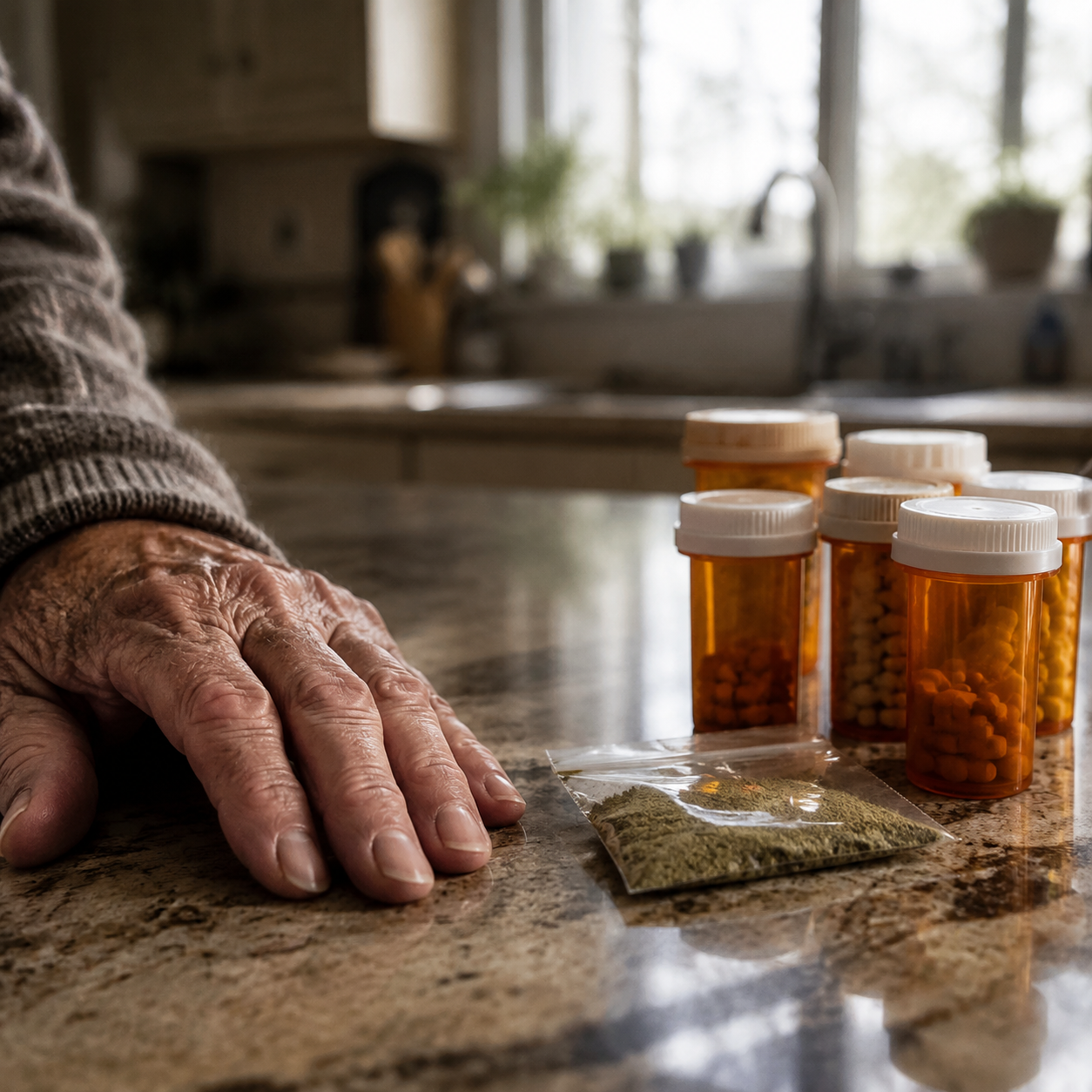
If you found a pouch of green powder next to your parent’s prescription bottles, the first question is not whether kratom is “natural.” The first question is whether anyone who prescribes, dispenses, or organizes those medications knows it is there.
That matters because kratom's severe side effects in older adults are not just a theoretical concern. In an age-stratified analysis of U.S. poison center data, adults 60 and older made up nearly 5% of kratom-related calls, but nearly half of those older-adult cases were life-threatening or resulted in significant disability.[1] Adults 70 and older were also more likely than younger adults to have an adverse reaction: 21.9% versus 9.6% among adults ages 18–59.[1]
The trend is moving in the wrong direction. U.S. poison centers recorded 14,449 kratom exposures from 2015 through 2025, with a record 3,434 exposures in 2025 alone; CDC described that as a 1,200% increase over the period.[2] That does not prove every exposure caused severe harm. It does prove that kratom is showing up in real-world emergencies far more often than it used to.
Older adults are not simply younger kratom users with more birthdays behind them. They are more likely to have heart disease, chronic pain, sleep problems, depression, anxiety, kidney or liver strain, and a medication list that has been built one specialist at a time. Kratom enters that already crowded room.
The older adult risk pattern is already visible
The clearest age-specific warning comes from poison center data. Among kratom-only exposures, cardiovascular effects were reported in 51.9% of adults 70 and older, compared with 36.8% of adults 60–69 and 22.5% among all adults 20 and older.[1] That is the kind of difference caregivers should take seriously, especially when the older person already has atrial fibrillation, hypertension, coronary artery disease, heart failure, or a history of fainting.
Poison centers also reported 23 deaths among adults 70 and older from 2014 through 2019.[1] That number should be read carefully. It is not proof that kratom alone caused every death, and later CDC reporting found that 79% of kratom-associated fatalities involved polysubstance use.[2] But that qualification does not make the finding harmless. It makes the caregiver’s job more urgent, because older adults are exactly the population most likely to have multiple substances in the picture: prescriptions, over-the-counter sleep aids, alcohol, cannabis products, pain medicines, and supplements.
The practical point is narrow and important: when an older adult has a fall, confusion, palpitations, seizure-like episode, severe sleepiness, agitation, or an emergency visit, kratom belongs on the same medication list as the blood thinner, antidepressant, beta-blocker, pain medicine, and sleep medication. If it is left off because everyone thinks of it as tea, powder, or a plant product, the people trying to treat the emergency may be missing part of the exposure.
Why kratom can make ordinary medication lists unsafe
The interaction concern is not vague “wellness product” anxiety. Kratom’s major alkaloid mitragynine has been described as a time-dependent inhibitor of CYP3A and a reversible inhibitor of CYP2D6, two liver enzyme pathways involved in metabolizing many prescription drugs.[3][4] When those pathways are inhibited, a medication that was tolerable at yesterday’s dose can become too much at today’s level.
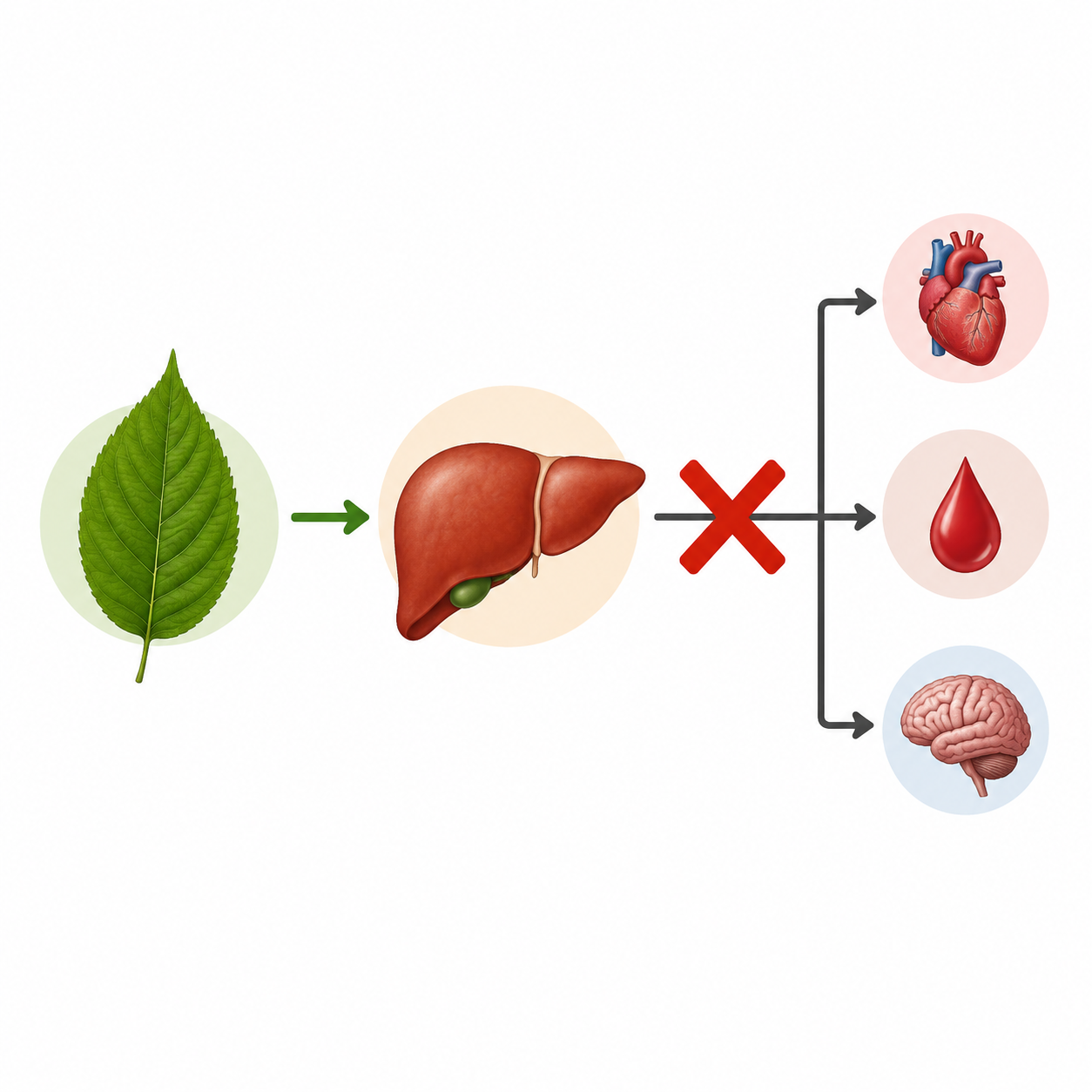
For a younger person taking few medications, that may still be risky. For an older adult, it can collide with the most ordinary parts of late-life care: antidepressants, antipsychotics, pain medicines, cholesterol drugs, beta-blockers, blood thinners, sedatives, and drugs used for sleep. The danger is not only that kratom has its own effects. It is that it may change how much of another drug remains active in the body.
This is where medication management stops being paperwork. A caregiver may know that Mom takes venlafaxine in the morning, quetiapine at night, a statin after dinner, and a blood pressure pill from the cardiologist. The clinician may know those prescriptions. The pharmacy may know most of them. But if no one asks, “Are you taking kratom?” the interaction check can look complete while still missing the product that changed the whole calculation.
What a severe interaction can look like
One documented case shows why this cannot be brushed off as a mild supplement issue. A patient taking kratom at about 90 grams daily along with venlafaxine and quetiapine developed serotonin syndrome and a QTc interval of 563 milliseconds; the symptoms and QTc prolongation resolved after the substances were stopped.[4]
That sentence contains several caregiver-level red flags. Venlafaxine is a common antidepressant. Quetiapine is commonly used in psychiatric care and is sometimes seen in older-adult medication lists for mood, agitation, or sleep, even when the situation is complicated. Serotonin syndrome can involve agitation, confusion, sweating, tremor, diarrhea, fever, muscle rigidity, and unstable vital signs. QTc prolongation is an electrical heart-risk signal; when it is severe, it can raise concern for dangerous arrhythmias.
This case should not be inflated into a claim that every older adult using kratom with an antidepressant will have serotonin syndrome. The kratom amount in the case was high, and a single case report cannot estimate frequency. Its value is different: it shows a plausible, documented pathway from kratom plus common psychoactive medications to a medical emergency.
The same report also describes a fatal case in which kratom and quetiapine were implicated in an interaction, with a quetiapine concentration of 12 mg/L, more than 10 times the therapeutic range.[4] Again, that does not let anyone assign simple blame from the outside. It does make one point very hard to ignore: when kratom interferes with drug metabolism, the medication already in the bottle may become the immediate danger.
Heart, seizure, liver, and fall risks deserve special attention
The cardiovascular signal in adults 70 and older is one of the most useful findings for families because it points to symptoms that should not wait for the next routine appointment. Chest pain, racing heartbeat, fainting, sudden dizziness, new shortness of breath, or a fall after lightheadedness should be treated as clinically relevant, especially if kratom is being used with heart medications or drugs that can affect rhythm.
Seizures and liver toxicity also appear in the severe-outcome discussion around kratom exposures, but the older-adult evidence is still limited compared with the poison center age comparisons. That limitation matters. A careful caregiver does not need exaggerated certainty to act. It is enough to know that kratom is associated with serious poison center outcomes, that older adults show higher adverse-reaction rates, and that the medication-interaction mechanism is plausible and documented.
Falls deserve their own place in the conversation because they are often treated as vague aging events. If an older parent is taking kratom for pain or anxiety and also uses sedating medications, blood pressure medications, alcohol, cannabis, or sleep aids, a fall may not be random. It may be the visible result of dizziness, sedation, low blood pressure, rhythm disturbance, confusion, or a drug level that has crept too high.
The product itself may not be what the label suggests
Even if the older adult is taking kratom for an understandable reason, the product still comes from a market with serious quality problems. FDA states that kratom is not lawfully marketed as a dietary supplement or food additive in the United States.[5] FDA has also warned about kratom products contaminated with Salmonella and heavy metals including lead.[5]
That matters more in a frail body. A contaminated or unusually potent product can turn a familiar routine into a new exposure. A caregiver cannot safely assume that one scoop from one pouch equals one capsule from another bottle, or that a product bought online has been tested to the standard implied by its packaging.
Newer concentrated kratom-related products, including those marketed around 7-hydroxymitragynine, add another reason not to rely on old assumptions about “just kratom.” If the label mentions extracts, enhanced formulas, high potency, or 7-OH, bring that exact product information to a clinician or pharmacist rather than trying to translate it into a generic kratom dose at home.
Why an older parent may not mention it
Many older adults are not using kratom because they are chasing a trend. Some are trying to manage pain. Some are trying to sleep. Some are anxious. Some are afraid of opioids, or trying to reduce them, or trying something a friend described as safer. Those motives can be real even when the product is risky.
Disclosure can fail for ordinary reasons. The older adult may not think of kratom as a drug. The intake form may ask about prescriptions and vitamins but not powders, teas, extracts, or smoke-shop products. A rushed appointment may focus on blood pressure and refill timing. An adult child may organize the pillbox perfectly and still miss the pouch in the pantry.
That is why the question has to be specific. “Do you take any supplements?” may not be enough. Ask: “Are you using kratom, mitragynine, 7-OH, green powder, capsules, extracts, or teas for pain, mood, energy, sleep, or opioid withdrawal?”
What to do if you find kratom
Do not throw the product away before documenting it. Do not tell the emergency department, primary care clinician, or pharmacist only that your parent takes “an herbal supplement.” The exact label may matter.
- Photograph the front label, ingredient panel, serving instructions, lot number, brand name, website, and any words such as extract, enhanced, mitragynine, or 7-OH.
- Write down how much your parent says they take, how often, when they last used it, and what symptom they are trying to treat.
- Bring the container, pouch, capsules, or photos to the prescribing clinician and pharmacist.
- Ask directly whether kratom could interact with antidepressants, antipsychotics, opioids, sleep medicines, blood pressure drugs, heart rhythm drugs, statins, or blood thinners.
- Report urgent symptoms such as chest pain, fainting, severe confusion, seizure, high fever, severe agitation, yellowing skin or eyes, or a major fall as medical concerns, not as routine side effects.
If your family already keeps a medication list, kratom belongs on it. If you do not have a system yet, use the same workflow you would use for prescriptions: one current list, one place for bottles and supplements, one pharmacy review when possible, and one clinician responsible for reconciling changes. This broader medication management for older adults is where kratom risk usually becomes visible.
Stopping kratom abruptly can also be complicated for someone who has been using it regularly, especially if they have been using it to manage pain, anxiety, sleep, or opioid withdrawal. The safer next move is not a kitchen-counter argument over whether it is a “real drug.” The safer next move is a medication review with someone who can evaluate the full list and help plan what changes, if any, should happen first.
References
- Kratom exposures among older adults reported to U.S. poison centers, 2014–2019, Journal of the American Geriatrics Society, 2021
- Kratom Exposures Reported to U.S. Poison Centers — United States, 2015–2025, CDC MMWR, March 2026
- Health effects associated with kratom (Mitragyna speciosa) and polysubstance use: a narrative review, 2022
- A Case of Potential Pharmacokinetic Kratom-Drug Interactions Resulting in Toxicity and Subsequent Treatment of Kratom Use Disorder With Buprenorphine/Naloxone, Journal of Addiction Medicine
- FDA and Kratom, FDA
Questions to bring to a clinician or OT
This is not medical, legal, or a family's final decision — only a framework. Bring these questions to a clinician, occupational therapist, or your local Area Agency on Aging.
Find Local HelpRelated reading
Noticed something outdated or inaccurate on this page? Flag a correction. We review every report against CDC, NIA, and AARP HomeFit guidance before updating a page.