
Caregiver decision guide
Protect Your Parent's Home Care During the Medicaid Freeze
Medicaid funding freezes threaten home- and community-based services for older adults, potentially forcing families to fill the gap. This guide explains the specific risks to home care and the steps family caregivers can take now to protect their loved one's care.
If your parent already gets help at home through Medicaid, the first thing to watch in a funding freeze is the schedule, not the headline. Home- and community-based services are the part states can tighten most easily because they are optional under federal law, while nursing home coverage is mandatory.[2] When that pressure shows up, families usually feel it as fewer hours, a paused waiver slot, or a new refusal to add staff.

That risk is not hypothetical. More than 700,000 Americans were already on HCBS waiting lists before the latest squeeze, and the average wait was about 40 months.[1] If your state does not track waitlists cleanly, that is exactly why the safest move is to confirm status in writing instead of relying on memory, a phone note, or a verbal promise.
Why home care gets hit first
HCBS is easier for states to ration than nursing home coverage, so a funding squeeze often appears as an enrollment freeze, a reduced care plan, or a narrower waiver. The staffing side makes that worse: Justice in Aging says 1 in 3 Medicaid home care workers is an immigrant, and wages are often only about $11 to $12 an hour.[3] When the workforce is already fragile, families may lose hours even if the person receiving care technically stays eligible.
States have also cut HCBS before. During the 2008 recession, California reduced IHSS hours by 8 percent and then another 7 percent through a court settlement, which is a blunt reminder that home care is often the first place budget stress lands.[4] The private-pay fallback is not realistic for most families: annual home care costs can top $75,000, so losing a waiver can quickly turn into unpaid family care or a move to a nursing home.[5] The burden does not stop with one household either; in 2022, 8.3 million adults 50 and older with functional limitations received no help at all, and the gap widens when formal services shrink.[6]
What to confirm now
- Verify the exact waiver name and whether your parent is actively enrolled, pending renewal, or still waiting for a slot.
- Ask the state Medicaid agency or managed care plan whether there is a waitlist, an enrollment cap, or a pause on new HCBS openings.
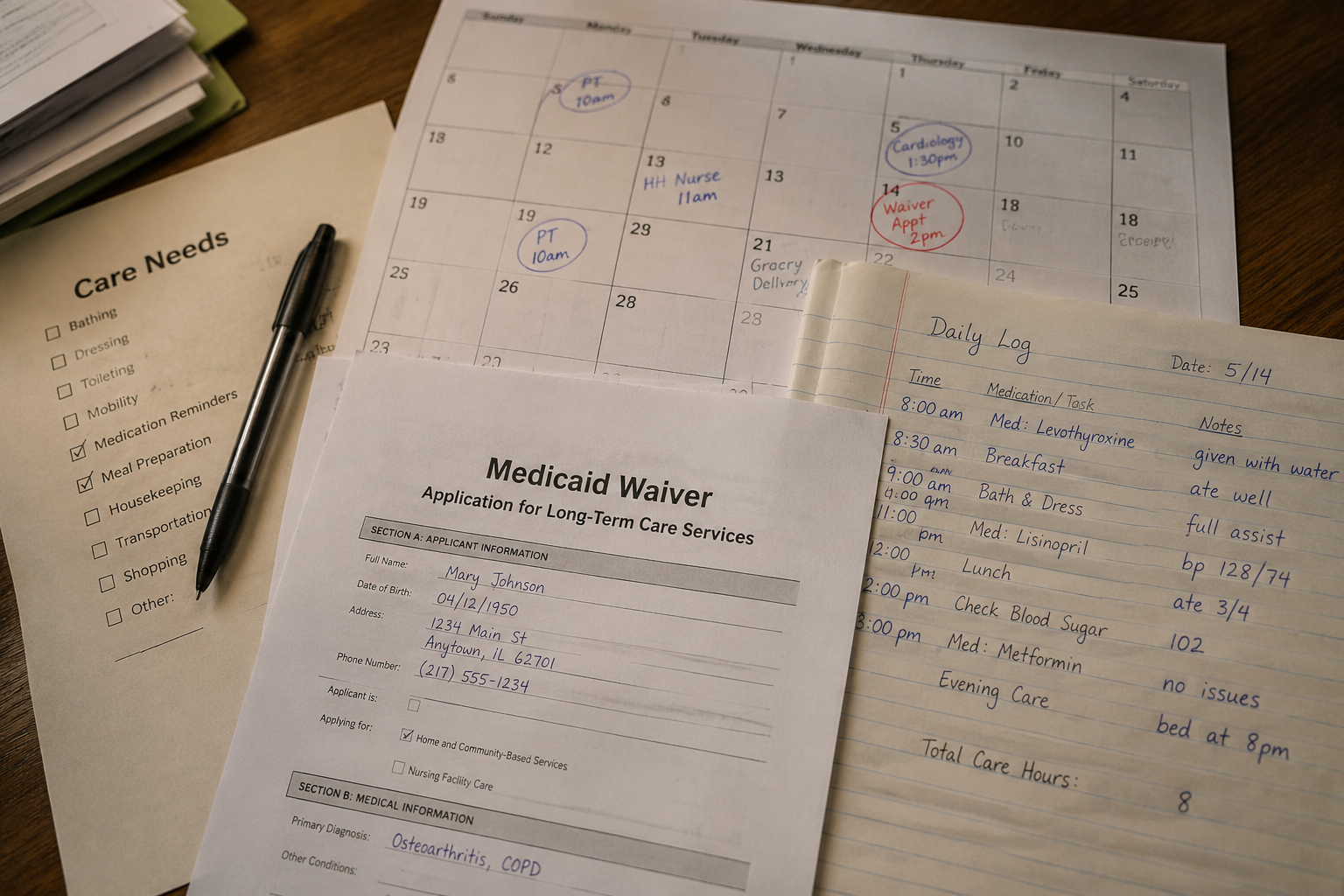
- Keep written proof of current needs: recent assessments, care logs, notices, and the daily tasks the aide actually covers.
- Check whether the state offers self-directed or consumer-directed care, since that can sometimes preserve more control if the usual agency route gets tighter.
- If a notice looks wrong or the waiver is unstable, talk with an elder law attorney or benefits counselor before the next recertification date.
The comparison that matters most is not abstract Medicaid reform; it is HCBS versus the nursing home side of the program, and active waiver enrollment versus waiting. If you already know the home schedule is thin, do not assume a state will absorb the gap smoothly. The more likely outcome is that family members start covering bath help, meal prep, rides, and supervision whether or not that was the original plan.
If the hours shrink
If a reduction notice arrives, ask for the reason in writing, the effective date, and the appeal deadline right away. Then start lining up a backup before the waiver is fully gone. Some families end up comparing respite care, companion care, or a live-in companion as temporary substitutes, not because they are the same as Medicaid HCBS, but because they may buy time while the state picture settles.
The practical rule is simple: do not wait for a formal freeze notice before checking the waiver, the waitlist, and the backup plan. In home care, the first cut is usually the one a family has to absorb.
References
- Medicaid: What to Watch in 2026 — KFF
- Aging at Risk — Milbank / SCAN Foundation
- How Medicaid Funding Caps Would Harm Older Adults — Justice in Aging
- Medicaid Cuts May Rob Seniors' Independence — CHCF / KFF Health News
- Long-term care statistics 2026 — SingleCare
- Cuts to Medicaid Put Older Americans and Their Families at Risk — SCEPA
Questions to bring to a clinician or OT
This is not medical, legal, or a family's final decision — only a framework. Bring these questions to a clinician, occupational therapist, or your local Area Agency on Aging.
Find Local HelpRelated reading
Noticed something outdated or inaccurate on this page? Flag a correction. We review every report against CDC, NIA, and AARP HomeFit guidance before updating a page.