
Caregiver decision guide
Can Your Parent Drink Wine in a Minnesota Nursing Home?
Minnesota's new law allows nursing homes to serve alcohol, but each facility decides its own policy. This guide explains what family caregivers need to know about medication interactions, facility opt-in, and how to talk to the care team about wine for your parent.
If the question at your kitchen table is, “Can Mom have a glass of wine at the nursing home now?” the honest Minnesota answer is: possibly, but not automatically.
Minnesota has enacted the law many people are calling the “Grandparents’ Happy Hour” law. The alcohol-service provision is widely reported as taking effect August 1, 2026, after Gov. Tim Walz signed Chapter 48 on April 20, 2026.[1] Once effective, it allows nursing homes, boarding care homes, and assisted living facilities to serve alcohol during organized activities on facility property without first getting a liquor license. That is state permission. It is not a promise that every facility will serve wine, and it is not a medical clearance for every resident.
For one parent, the real answer sits in a smaller and more practical place: the facility’s policy, provider orders, the medication list, the care plan, and the resident’s own wishes.
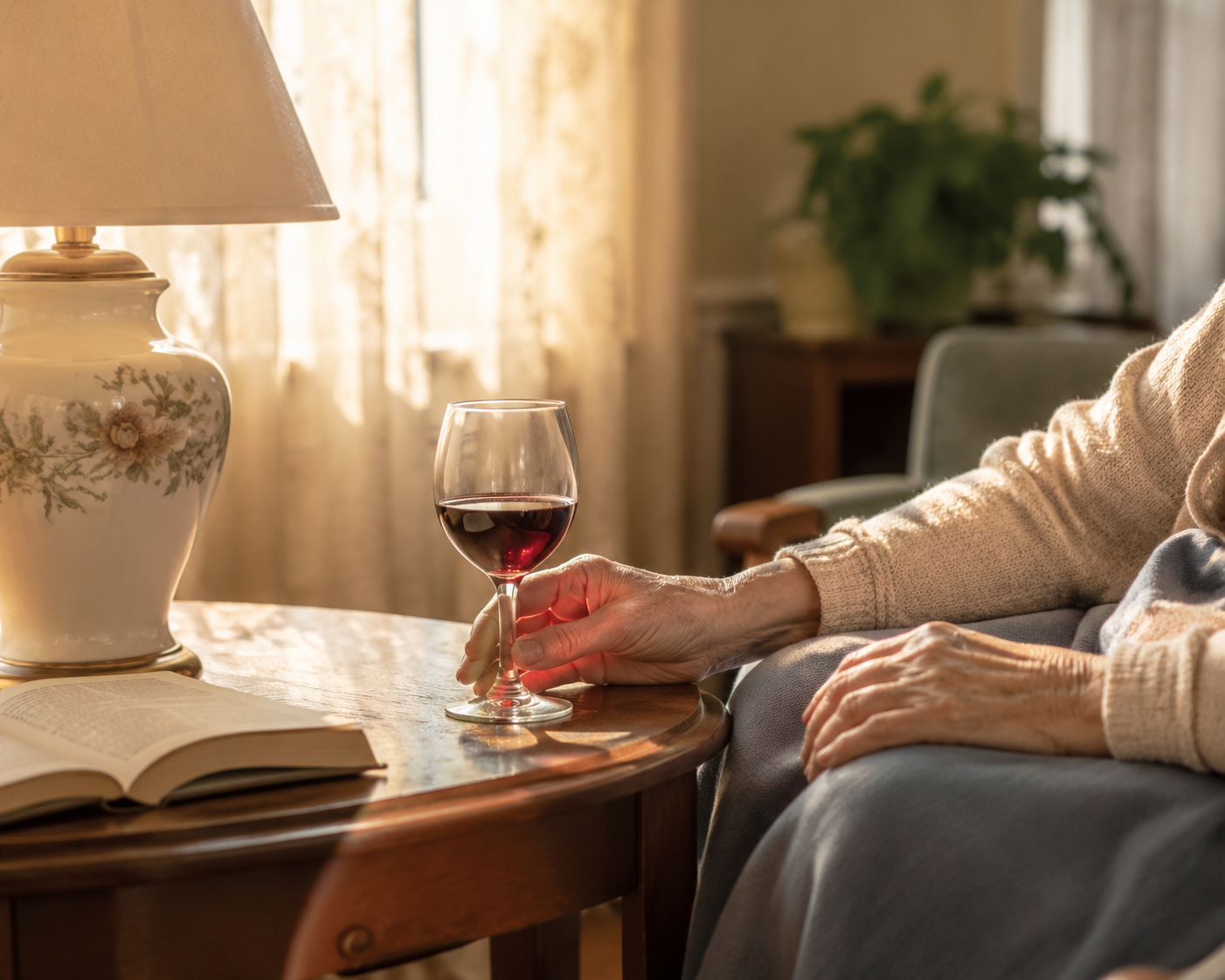
What Minnesota’s New Law Actually Allows
The law removes one major barrier: certain senior care settings do not need a liquor license just to offer alcohol at an organized activity. Before this change, a facility that wanted to host something as ordinary as wine with dinner, a holiday toast, or a happy-hour-style social event could run into liquor licensing rules that were not built for a nursing home dining room.
The permission is narrower than some headlines make it sound. Under the Minnesota House summary and legislative coverage, the alcohol must be provided free, not sold; it must be served only to residents and accompanied guests who are 21 or older; it must be tied to organized activities on facility property; and the facility must notify the Department of Public Safety before serving alcohol.[1][2]
Staff who serve alcohol must be at least 18. Facilities remain subject to inspections and enforcement, including violations for underage access or serving someone who is obviously intoxicated.[1] In other words, the law does not turn a nursing home into an unregulated bar. It creates a limited exemption from liquor licensing for a particular kind of resident activity.
| The law permits | The law does not do |
|---|---|
| Alcohol service during organized activities on facility property | Require any nursing home or assisted living facility to serve alcohol |
| Free alcohol for residents and accompanied guests who are 21 or older | Allow facilities to sell alcohol without a liquor license |
| Service without a liquor license if statutory conditions are met | Override physician orders, care plans, medication concerns, or facility rules |
| Facility participation after notice to the Department of Public Safety | Guarantee that a particular resident can drink wine |
That distinction matters for families. “Allowed by Minnesota law” is the first gate. “Allowed for my parent” is several gates later.
Your Parent’s Facility Still Gets to Decide
A facility can decide not to participate. It can also participate in a limited way: one monthly event, wine only at a holiday meal, beer at a supervised social hour, or alcohol only in certain common areas. The law creates room for a policy; it does not write that policy for every building.
Provider guidance after passage emphasized that facilities will need operational decisions about notification, supervision, service, documentation, and compliance before they start offering alcohol.[3] That is why two facilities in the same county may give families different answers. One may be ready with a written policy by August. Another may wait. A third may decide that its resident population, staffing model, or liability concerns make alcohol service too complicated.
This is also where the resident’s setting matters. The law covers nursing homes, boarding care homes, and assisted living facilities, but those settings do not operate identically. A nursing home with higher-acuity residents may handle alcohol differently from an assisted living community with more independent residents. The practical question is not only whether the statute names the setting. It is whether that specific facility has opted in and how it plans to manage service.
For readers who want the shorter overview of the law itself, see What Minnesota’s Grandparents Happy Hour Law Means for Your Parent. This guide stays with the harder follow-up: what to ask before your own parent drinks.
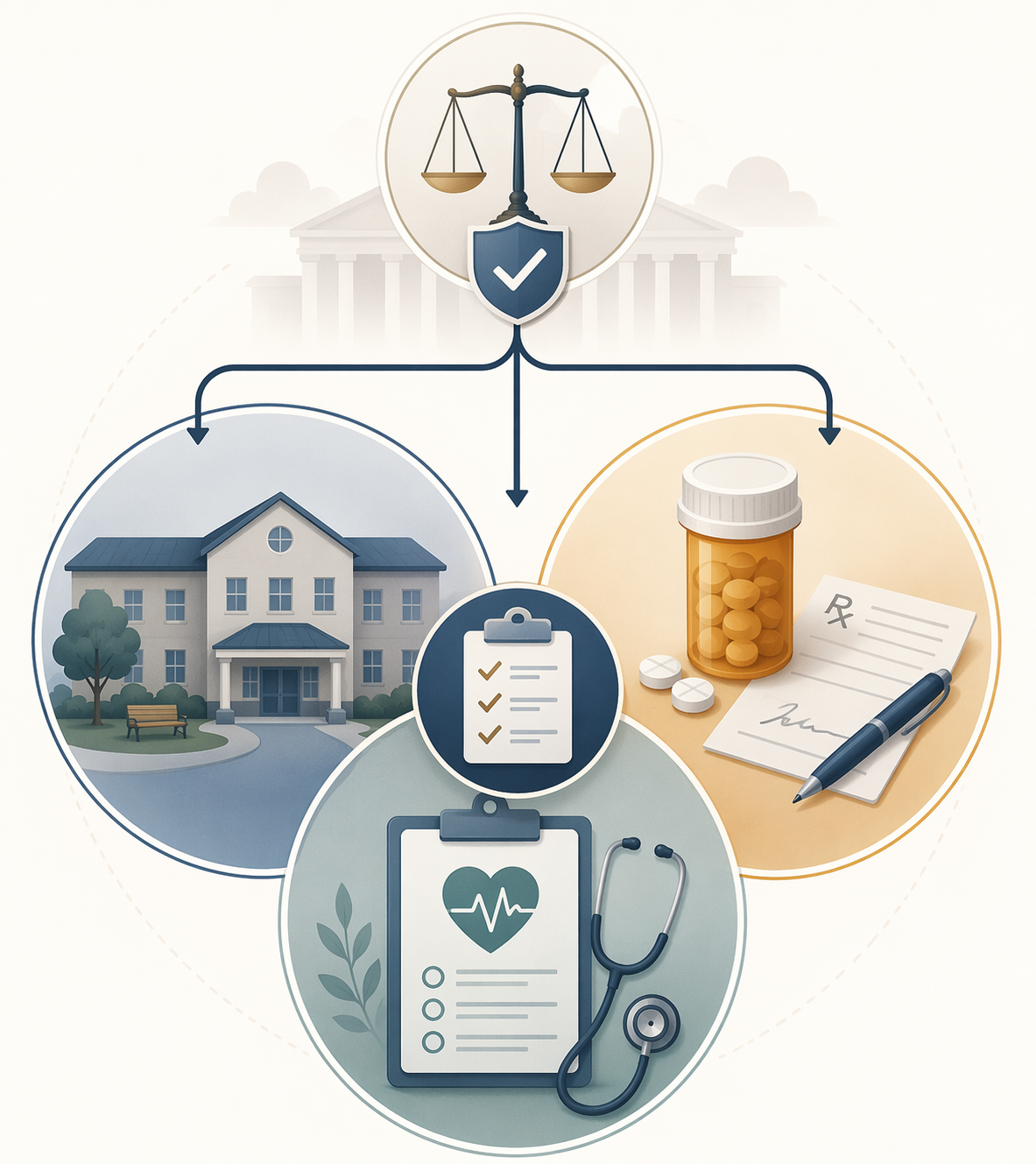
The Medication List Is Where the Headline Gets Smaller
A glass of wine can sound modest. For many adults, it is modest. In long-term care, though, the medication administration record can turn a small pleasure into a care-plan question.
The National Institute on Alcohol Abuse and Alcoholism reports that about 80% of adults age 65 and older took at least one medication in the past year that could interact negatively with alcohol. It also reports that about 78% of older adults who drink use alcohol-interactive medications.[4] Those figures do not mean every older adult must avoid alcohol. They do mean families should not treat wine in a facility as a purely social decision.
The NIAAA lists several kinds of alcohol-medication interactions that matter in elder care: alcohol can make some medications less effective, make side effects worse, increase drowsiness or dizziness, and contribute to problems such as falls, confusion, low blood pressure, breathing difficulty, or internal bleeding depending on the drug involved.[4] Older adults may also be more sensitive to alcohol because aging can change how the body handles it.[5]
That is why the useful question is not “Is wine safe for seniors?” It is “Has someone reviewed this resident’s actual medications against alcohol?”
Medication categories to ask about
Families do not need to play pharmacist. They do need to know which parts of the list deserve review before saying yes to wine at an event.
- Sleep medications, sedatives, anti-anxiety medications, and other drugs that can increase drowsiness or slow reaction time.
- Opioid or other pain medications, especially when balance, alertness, or breathing are already concerns.
- Antidepressants, antipsychotics, seizure medications, or dementia-related medications where alcohol may worsen confusion, sedation, or behavior changes.
- Blood thinners, diabetes medications, blood pressure medications, and heart medications, where the interaction question may be less visible to family members but clinically important.
- Antibiotics or short-term medications, because a resident who was fine with wine last month may not be fine this week.
The answer may not be permanent. A resident might be cleared for one small glass at a supervised dinner when stable, but not while recovering from an infection, adjusting to a new sleep medication, or starting a pain medicine after a fracture. That is not a moral judgment about drinking. It is how facility care plans are supposed to work: the plan changes when the resident’s condition changes.
Health Conditions Can Matter as Much as the Wine
Medication interactions are the easiest thing for a family to point to, but they are not the only issue. Alcohol can be a problem for some residents because of fall history, cognitive impairment, liver disease, diabetes, swallowing concerns, dehydration risk, sleep problems, or a pattern of alcohol use that has already caused harm.
Falls deserve particular caution in a nursing home conversation. One glass of wine will not make every resident fall. But alcohol can add to risks many residents already carry: slower reaction time, dizziness, nighttime bathroom trips, sedating medications, weak legs after an illness, or a walker that is sometimes left across the room. The NIAAA’s aging guidance notes that alcohol can affect balance and coordination and may increase the likelihood of falls and injuries in older adults.[5]
Cognitive impairment raises a different question. A resident with dementia may still have preferences. She may still enjoy the ritual of a toast, the taste of wine, or the normalcy of being included at a table. But the care team may need to decide whether she can understand and communicate consent in that moment, whether alcohol worsens agitation or confusion, and whether a substitute beverage would preserve the social experience with less risk.
None of these concerns should become an automatic “no” invented outside the care plan. They are topics for the physician, nurse practitioner, pharmacist, nurse, resident, and family representative to sort through together.
Why the Law Passed: A Small Request With a Larger Point
The story that helped move the bill was not wild partying in a care facility. It was Anita LeBrun, an 88-year-old resident at Amira Choice Champlin, wanting wine with dinner and running into rules that made that ordinary request difficult.[6]
That origin matters because it keeps the law from sounding sillier than it is. A person does not stop having tastes, routines, or small pleasures because she moves into care. Gov. Walz framed the bill in those terms, saying, “Living in a nursing home shouldn’t mean giving up everyday freedoms” and “You have earned the right to make your own choices.”[6]
That dignity argument is real. So is the staff responsibility that arrives the moment alcohol is served in a licensed care setting. A facility has to think about who pours, who tracks whether a resident has been restricted from alcohol, what happens if someone appears intoxicated, and how to respond if a guest brings in alcohol outside the organized activity. Celebration and caution are not opposites here. They are both part of making the law workable.
What to Ask Before Your Parent Drinks Wine
The best time to ask is before the first event flyer goes up. A short email or care conference question can prevent confusion for the resident, the family, and the staff who will be expected to enforce the policy.
- Has the facility opted in to alcohol service under the new Minnesota law?
- If yes, what events will include alcohol, where will they happen, and who may attend?
- Will alcohol be limited by type, serving size, number of servings, or time of day?
- Who checks whether a resident has a physician order, care-plan restriction, or medication concern before alcohol is offered?
- Has my parent’s medication list been reviewed specifically for alcohol interactions?
- How will the decision be documented so evening, weekend, agency, and new staff all know the plan?
- If my parent wants wine but the team has concerns, what lower-risk alternative can preserve the social ritual?
A practical script can be as plain as this: “My mom heard about the new Minnesota law and would like to have wine if the facility offers it. Can we review whether your policy allows that, whether her provider has any restrictions, and whether pharmacy or nursing has checked her current medications for alcohol interactions?”
If the answer is no, ask what kind of no it is. “No, our facility is not participating” is different from “No, her current medication makes it unsafe” or “No, not during this recovery period.” The first is a policy decision. The second is a clinical decision. The third may change.
If the Resident Wants Wine and the Family Is Nervous
Adult children often end up in the uncomfortable middle. Your parent may see wine as a normal adult choice. You may see the fall that happened last winter, the new blood pressure medication, or the confusion that gets worse after dinner. The facility may see both the resident’s rights and the incident report it will have to write if something goes wrong.
The cleanest conversation separates preference from clearance. Start by acknowledging the preference: “She would like to participate.” Then ask for the review: “What would make that safe or unsafe under her current care plan?” That framing avoids treating the resident like a child while still taking the clinical questions seriously.
Sometimes the answer may be a supervised small serving at a meal. Sometimes it may be nonalcoholic wine in the same glass everyone else is using. Sometimes it may be a temporary pause while a medication changes. The resident’s dignity is not served by pretending risks do not exist. It is also not served by letting institutional caution erase every preference before anyone has reviewed the facts.
The Bottom Line for Minnesota Families
So, can seniors drink wine in a nursing home in Minnesota? Beginning with the effective date of the alcohol-service provision, Minnesota law may allow a nursing home, boarding care home, or assisted living facility to serve wine during an organized activity without a liquor license, if the facility follows the law’s conditions. But that is only the state-law answer.
For your parent, the answer depends on whether the facility has opted in, whether the event fits the facility’s policy, whether the provider and care plan allow it, whether the medication list has been reviewed, and whether your parent actually wants it. A glass of wine may be possible, but the answer belongs in that individual care decision.
References
- Official Minnesota House summary, Minnesota House of Representatives, 2026.
- Session Daily article on House passage, Minnesota House of Representatives.
- Care Providers of Minnesota analysis, Care Providers of Minnesota.
- Alcohol-Medication Interactions: Potentially Dangerous Mixes, National Institute on Alcohol Abuse and Alcoholism.
- Aging and Alcohol, National Institute on Alcohol Abuse and Alcoholism.
- Grandparents' Happy Hour bill, CBS Minnesota.
Questions to bring to a clinician or OT
This is not medical, legal, or a family's final decision — only a framework. Bring these questions to a clinician, occupational therapist, or your local Area Agency on Aging.
Find Local HelpRelated reading
Noticed something outdated or inaccurate on this page? Flag a correction. We review every report against CDC, NIA, and AARP HomeFit guidance before updating a page.