
Caregiver decision guide
Why Aging Politicians and Parents Hide Health Problems
The national debate over aging politicians concealing health conditions mirrors the everyday experience of adult children whose parents minimize falls, cognitive changes, and medication errors. This article explains the common motivations behind health secrecy and provides practical observation and conversation strategies for families.
Last reviewed: July 18, 2026.
The latest debate over health transparency for older politicians has a familiar shape: a public explanation that gives people just enough information to quiet the room, but not enough to know what risk remains. Sen. Lindsey Graham died suddenly on July 11, 2026, at age 71, after being asked earlier in the year about cognitive testing; autopsy findings were withheld pending toxicology. Sen. Mitch McConnell was hospitalized in late June after a fall, with fuller details about a concussion and fractured rib coming weeks after admission. Rep. Kay Granger’s office had referred to “unforeseen health challenges” before reports revealed she had been living in an assisted living facility with a dementia ward during her final months in office. Rep. Tom Kean Jr. was absent from Congress for four months before disclosing treatment for depression after missing more than 100 votes. Sen. Rand Paul’s defense of privacy captured the other side of the argument: “people think they have a right to know everyone's medical problems, but where does it begin and end?” [1][2][3]
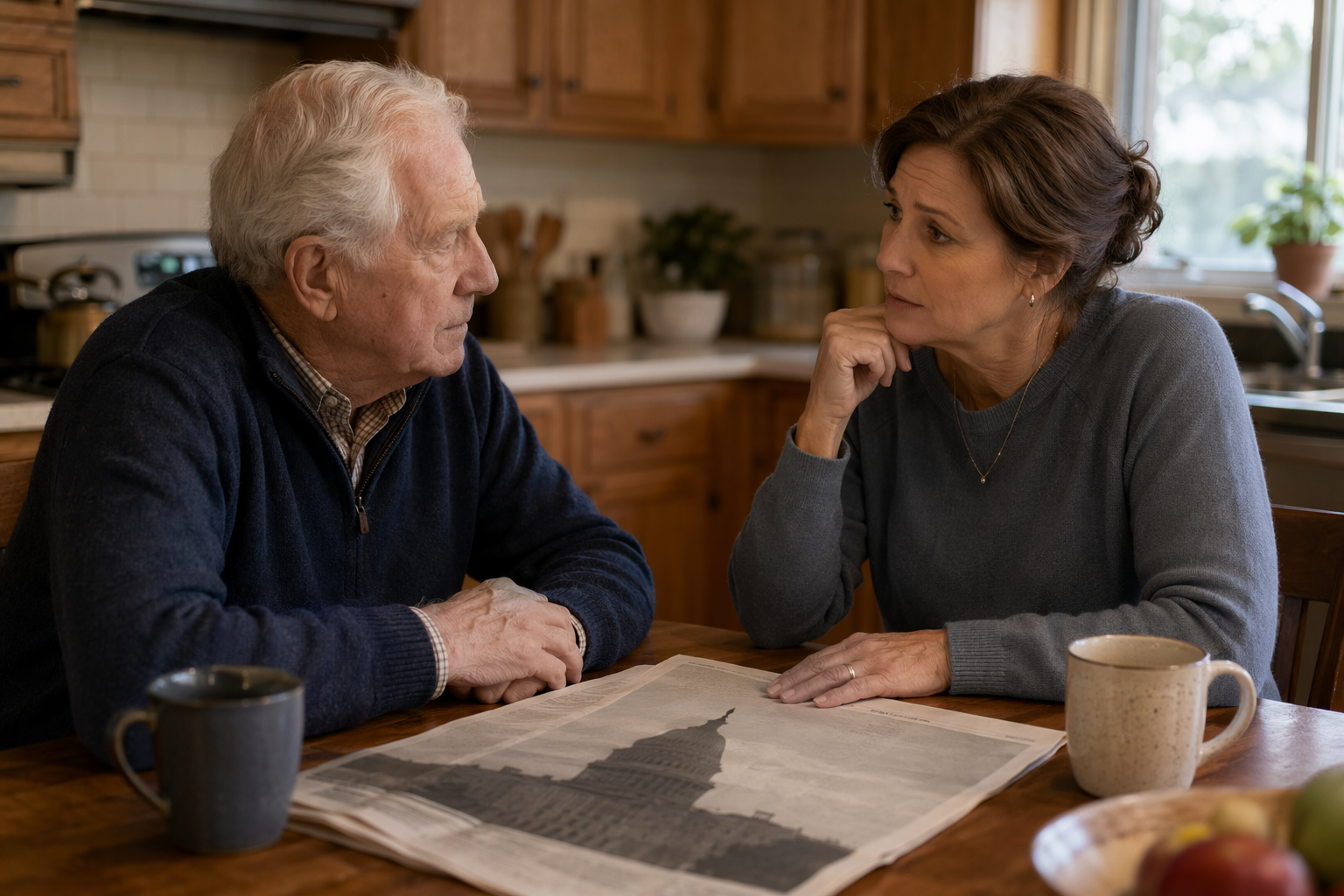
That question is not only a Washington question. It is also the question at the kitchen table when a parent says the bruise came from bumping into something, the missed bill was just confusing mail, the pillbox is full because the refill schedule changed, or the dent in the bumper was already there. Families are rarely asking for a full medical chart. They are trying to find out whether someone they love is still safe driving, managing medication, paying bills, eating well, and remembering enough to live the way they insist they are living.
The hard part is that secrecy is not always deception in the plainest sense. Sometimes it is pride. Sometimes it is shame. Sometimes it is a reasonable fear that one disclosure will turn into a family committee. And sometimes the person minimizing the problem genuinely cannot see how much has changed.
Why direct questions often fail
“Are you okay?” is a small question with a large threat inside it. To an aging parent, it may sound like the opening move in a debate about driving, moving, hiring help, changing doctors, or handing over financial authority. Even a parent who trusts you may hear loss of control before they hear concern.
That helps explain why families often get vague answers about the very areas that matter most. AgingCare identifies falls, pain, dizziness, driving accidents, financial trouble, medication mismanagement, cognitive lapses, alcohol misuse, elder abuse, and spending problems as issues older adults may conceal; it also notes that falls are a leading cause of injury and death among older adults and that less than one in seven incidents of physical elder abuse is revealed to caregivers. [4]
Home care guidance points to the same practical warning signs families tend to notice before anyone names a diagnosis: unreported falls, medication confusion, home disorganization, withdrawal, mood or personality changes, driving concerns, defensive avoidance, weight changes, and repeated “everything is fine” deflection. [5]
None of those signs proves a parent is hiding something serious. A messy counter can be a busy week. A forgotten appointment can be normal distraction. A short answer can be fatigue, not concealment. The question is whether separate small events begin to cluster across function: body, house, money, medication, mood, memory, and mobility.
Look for clusters, not confessions
A family can waste a lot of emotional force trying to make an older parent admit what happened. It is usually more useful to build a careful picture of what is changing. The goal is not to prosecute a secret. It is to understand whether daily function is slipping in ways that could lead to harm.

Start with what can be observed without spying. During visits, calls, errands, and ordinary family tasks, pay attention to whether the same kind of problem appears in more than one place.
| Area to Watch | What a Pattern May Look Like |
|---|---|
| Falls and balance | New bruises, a changed walk, furniture moved for support, reluctance to explain a fall, or sudden avoidance of stairs |
| Medication | Full pillboxes, mixed bottles, missed refills, confusion about dosing, or new side effects no one has discussed |
| Home upkeep | Spoiled food, unopened mail, clutter that blocks walkways, unpaid bills, or appliances left on |
| Driving | New dents, tickets, getting lost, defensive answers about routes, or avoiding night and highway driving without saying why |
| Memory and orientation | Repeating questions, forgetting recent conversations quickly, confusion about dates or places, or trouble following familiar routines |
| Mood and social life | Withdrawal, irritability, unusual suspicion, tearfulness, missed gatherings, or a sharp change in personality |
| Money and mail | Late notices, duplicate payments, unusual purchases, unexplained withdrawals, or increasing reliance on vague explanations |
| Technology | New inability to use familiar devices, repeated password lockouts, missed messages, or confusion with basic phone tasks |
Memory deserves special care because families often dismiss early warning signs as ordinary aging. The National Institute on Aging distinguishes normal age-related forgetfulness from signs that need medical attention, including rapid forgetting, repetitive questions, getting lost in familiar places, and confusion with time or place. [6]
The distinction matters because an older adult may still sound polished in a short conversation. A former professional, teacher, executive, volunteer leader, or public figure may be able to manage social conversation, make jokes, and pass through a brief exchange without obvious impairment. Families often see the other part: the unopened mail, repeated route confusion, missed medication, spoiled food, or the anxious phone call that is forgotten by morning.
Brief cognitive screens can be useful, but they are not the whole story. Expert commentary on cognitive reserve notes that high-functioning people may perform normally on short tests such as the MoCA even when meaningful daily decline is showing up at home. [7]
There is another complication: mild cognitive decline itself can impair insight and self-awareness, sometimes described as anosognosia. In those situations, a parent may not be lying about the problem. They may truly not grasp the extent of it. [7]
How to document without turning family life into surveillance
A simple observation note is enough. Write down dates, what you saw, what your parent said, and whether anyone else noticed the same issue. Keep it factual: “Dad said he fell in the garage last week; bruise on left forearm; refused urgent care; second fall mentioned by neighbor this month.” That kind of note is more useful than “Dad is being stubborn.”
- Record what changed, not just what worried you.
- Separate one-time incidents from repeated patterns.
- Track function: meals, medication, bills, driving, hygiene, appointments, and home safety.
- Include direct quotes when they matter, especially if explanations change.
- Note who else observed the issue: a sibling, neighbor, aide, pharmacist, or spouse.
Documentation has a human purpose. It prevents the family from overreacting to one scary moment or underreacting to six small ones. It also gives a clinician something concrete if the situation reaches the point where medical input is needed.
The conversation works better when it is not a trial
The first conversation should usually be smaller than the fear behind it. Choose a calm moment, not the minute after a fall, a driving argument, or a stack of unpaid bills appears. The Alzheimer’s Association recommends approaching memory concerns with “I” statements, choosing the right time and place, expecting more than one conversation, and involving a doctor when needed. [8]
That approach is useful beyond memory concerns. It keeps the focus on what you noticed and what would reduce risk, rather than whether your parent has been honest enough.
- Instead of “You’re hiding things from me,” try: “I noticed the pillbox still had several morning doses left. I’m worried the schedule may be getting too complicated.”
- Instead of “You can’t drive anymore,” try: “You mentioned getting turned around twice this month. What happened on those trips?”
- Instead of “Why didn’t you tell me you fell?” try: “I’m glad you’re standing here with me. Can we talk through what happened so we can prevent the next one?”
- Instead of “You need help,” try: “Which part of the week feels heavier than it used to?”
Open-ended questions are not magic. A parent may still deflect, joke, minimize, or get angry. But they leave more room for dignity than yes-or-no questions, and they sometimes reveal the practical barrier underneath the denial: the medication label is hard to read, the stairs feel unsafe, the banking app changed, the doctor gave instructions too quickly, or the parent is afraid that admitting depression, dizziness, or memory trouble will start a chain of decisions they cannot control.
One conversation rarely carries the whole truth. If the issue is not an immediate emergency, let the first talk open a door rather than force a verdict. “Can we keep talking about this?” is sometimes the most important sentence in the room.
When privacy has to give way to safety
Adult children are not entitled to every diagnosis, lab result, prescription change, or therapy note. Privacy still matters in old age. The line changes when hidden information affects safety or someone else’s ability to plan responsibly.
Falls, medication errors, driving risk, getting lost, unpaid essential bills, suspected abuse, rapid weight loss, and confusion with time or place deserve more than polite acceptance. So does a pattern where a spouse, neighbor, aide, or adult child is quietly cleaning up problems the parent continues to deny.
Escalation does not have to mean taking over. It may mean asking to attend a primary care visit, sending the doctor a written note before an appointment, requesting a medication review with a pharmacist, arranging a home safety assessment, or asking a trusted third party to join the conversation. If cognition is part of the concern, a clinician needs examples from daily life, not just a family’s general impression that “something is off.”
If your parent refuses to let you speak with the doctor, you can still share observations with the office. Privacy rules may limit what the clinician can tell you without permission, but they do not prevent you from providing information. A concise note about falls, medication mistakes, driving incidents, or memory changes can help the clinician ask better questions.
A practical threshold for action
A useful threshold is this: if the pattern could cause harm before the next routine visit, bring in help sooner. That includes repeated falls, suspected medication errors, unsafe driving, wandering or getting lost, sudden confusion, signs of self-neglect, or financial decisions that put housing, utilities, or care at risk.
If the pattern is concerning but not urgent, keep documenting and plan the next low-pressure conversation. Ask for one specific agreement rather than global surrender: a medication review, a ride-along to the doctor, permission to organize bills together once, or a home safety walk-through. Small agreements often reveal more than a direct demand for the full story.
The family does not need to win the privacy argument. It needs enough reliable information to prevent avoidable harm while preserving as much trust as possible. Start with the pattern, choose one calm conversation, and involve a clinician or care-planning resource when the pattern points to falls, medication errors, driving risk, or memory changes.
References
- PBS News report on aging politicians’ health disclosures, PBS News, July 2026.
- Report on Sen. Mitch McConnell’s hospitalization and congressional medical secrecy, The American Prospect, 2026.
- AP/PBS News report on Rep. Tom Kean Jr.’s depression treatment disclosure, AP/PBS News, July 2026.
- 10 Secrets Elderly Parents Keep, AgingCare.
- Signs Your Elderly Parent May Be Hiding Health Issues, Hero Home Care.
- Memory Problems, Forgetfulness, and Aging, National Institute on Aging.
- Harvard Gazette interview with Brody Magid on cognitive reserve and cognitive screening, Harvard Gazette.
- 10 Steps to Approach Memory Concerns, Alzheimer’s Association.
Questions to bring to a clinician or OT
This is not medical, legal, or a family's final decision — only a framework. Bring these questions to a clinician, occupational therapist, or your local Area Agency on Aging.
Find Local HelpRelated reading
Noticed something outdated or inaccurate on this page? Flag a correction. We review every report against CDC, NIA, and AARP HomeFit guidance before updating a page.