
Caregiver decision guide
The $6,000 Senior Deduction and Your Retirement Account Taxes
The One Big Beautiful Bill Act created a temporary $6,000 deduction for taxpayers 65 and older, but its impact on retirement accounts is often misunderstood. This article clarifies the confusion between the Inflation Reduction Act and OBBBA, explains how the deduction works, who actually benefits, and what financial planning moves caregivers can make before the deduction expires in 2028.
If you searched for the impact of the mega IRA bill on senior retirement accounts, the first cleanup item is the acronym. The “IRA” that changed Medicare drug costs was the 2022 Inflation Reduction Act. The 2025 law that created the new senior tax deduction is the One Big Beautiful Bill Act, often shortened to OBBBA. For retirement accounts, that distinction matters: the new law did not rewrite IRA rules, RMD rules, inherited IRA rules, or 401(k) contribution limits. Its main senior-facing tax change is a temporary deduction of up to $6,000 per taxpayer age 65 or older for tax years 2025 through 2028.[1]
That does not make the deduction unimportant. It means the effect is indirect. A parent’s traditional IRA withdrawals, required minimum distributions, pension income, Social Security benefits, and taxable brokerage income can all affect whether the deduction is usable. The deduction may lower taxable income once the return is prepared, but the income that flows from retirement accounts can also push the household into the phase-out range before the benefit is fully available.

What Changed, And What Did Not
The new senior deduction is layered on top of the existing standard deduction system. J.P. Morgan Asset Management describes it as a $6,000 deduction per eligible taxpayer age 65 or older, or $12,000 for a married couple when both spouses qualify, available only for 2025 through 2028.[1]
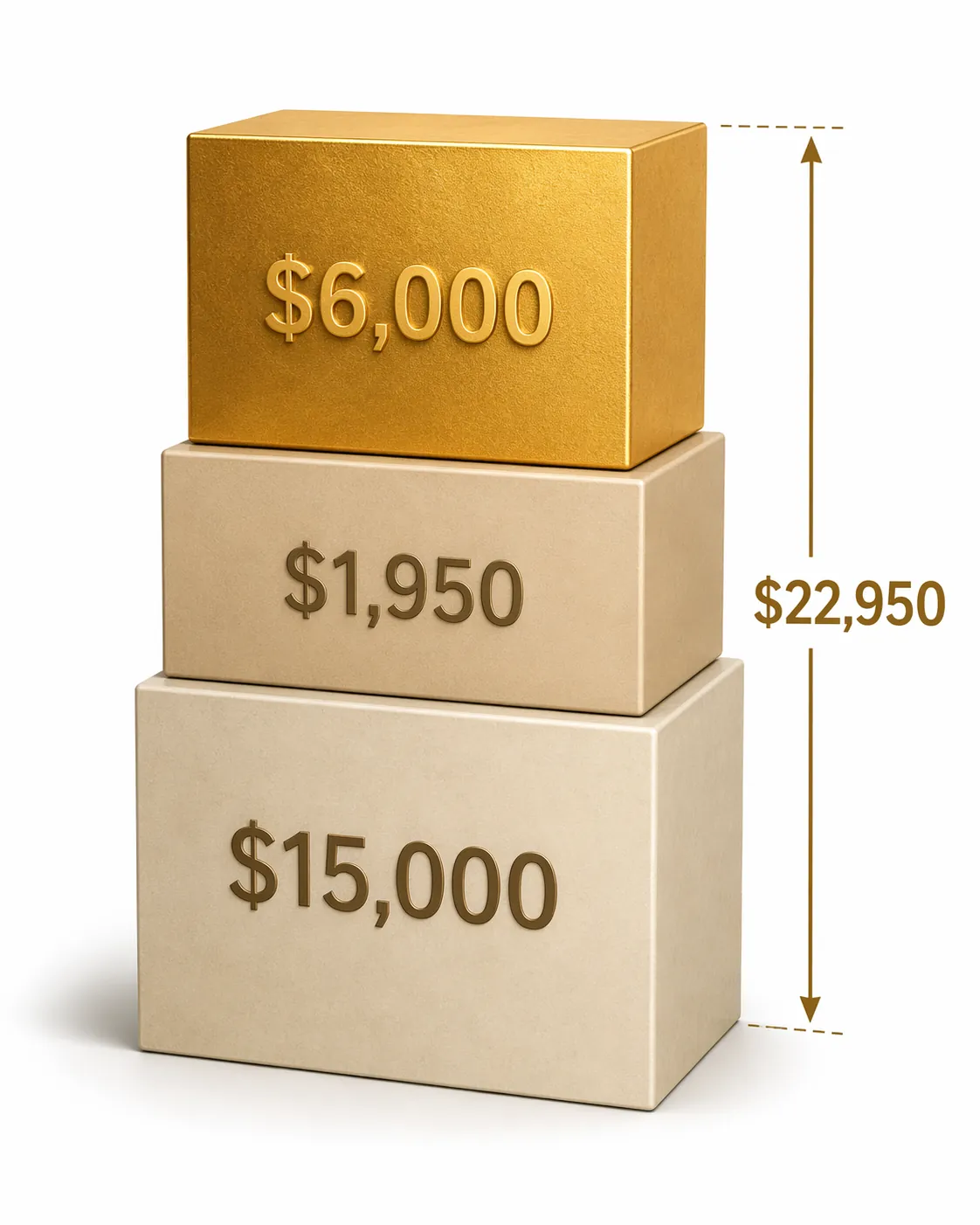
For 2026, J.P. Morgan’s example shows how the stack can look for seniors who take the standard deduction: a single filer age 65 or older has a $15,000 standard deduction, an additional age-65 deduction of $1,950, and the new $6,000 deduction, for about $24,150 total. A married couple filing jointly, with both spouses age 65 or older, can reach about $47,500 when the standard deduction, the existing age-based additional deduction, and the new senior deduction are combined.[1]
The Inflation Reduction Act is a different file in the folder. Its Medicare provisions include prescription drug price negotiation and lower Medicare Part D out-of-pocket exposure for enrollees.[2][3] Those drug-cost rules can matter a great deal to a household budget, but they are not the source of the $6,000 senior deduction.
For retirement accounts, the unchanged list is just as important as the new deduction. The OBBBA did not change RMD ages, IRA or 401(k) contribution limits, inherited IRA rules, or backdoor Roth rules.[1] So if a parent was already required to take an RMD, the RMD still has to come out. If an inherited IRA had a distribution schedule before this law, the senior deduction does not erase it. If the household was considering a Roth conversion, the conversion is still a taxable event.
| Question | Short answer |
|---|---|
| Did OBBBA create a new senior tax deduction? | Yes. Up to $6,000 per eligible taxpayer age 65 or older for 2025 through 2028. |
| Did it change traditional IRA withdrawal rules? | No. Withdrawals are still generally taxable as before. |
| Did it change RMD ages? | No. RMD ages were not changed. |
| Did it repeal federal tax on Social Security benefits? | No. The taxation formula did not change. |
| Can retirement account income affect the deduction? | Yes. IRA withdrawals and RMDs can increase MAGI and reduce or eliminate the deduction. |
The Phase-Out Is Where Many Households Need To Slow Down
The headline number is $6,000. The working number is whatever remains after the income limits are applied.
The deduction begins to phase out when modified adjusted gross income is over $75,000 for single filers and $150,000 for married couples filing jointly. It is fully eliminated at $175,000 for single filers and $250,000 for joint filers.[4] That is a wide phase-out range, but it is not a high-income-only concern. A couple with two Social Security checks, one pension, taxable interest, and a required IRA distribution can reach the joint threshold without feeling wealthy.
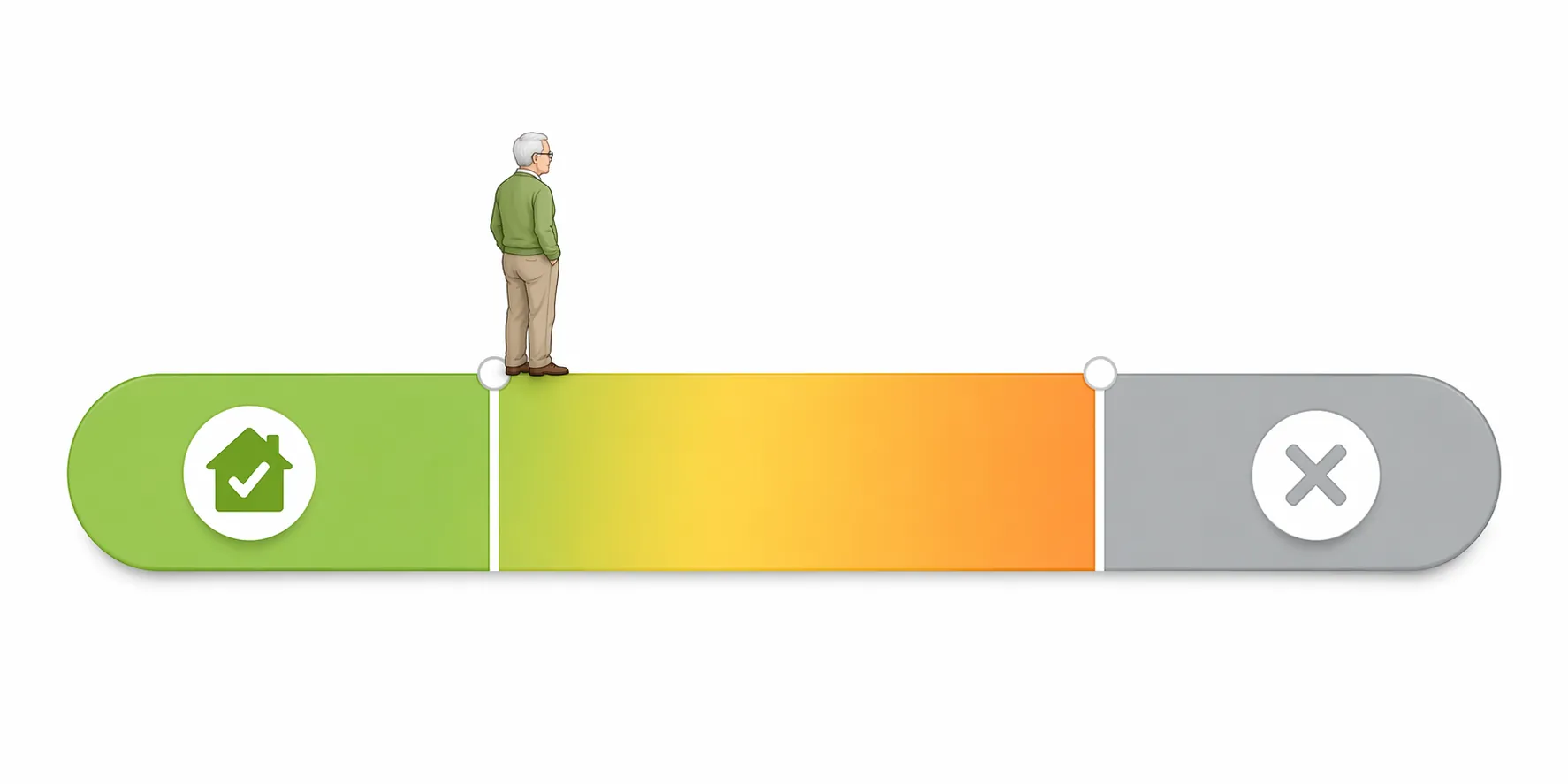
This is why the impact on retirement accounts is real but easy to misdescribe. The law does not make an IRA withdrawal tax-free. It does not create a special senior IRA exemption. Instead, a retirement account distribution increases income, and that income can determine whether the household gets the new deduction, gets part of it, or loses it entirely.
A caregiver doing year-end paperwork should separate three numbers before making assumptions:
- Gross retirement income: Social Security, pension payments, IRA withdrawals, annuity payments, taxable interest, dividends, and capital gains.
- MAGI for the senior deduction: the income measure used to decide whether the $6,000 amount phases out.
- Taxable income after deductions: the number left after the standard deduction, existing age-65 additional deduction, and any available new senior deduction are applied.
Those numbers are related, but they are not interchangeable. A deduction can reduce taxable income after the fact. It does not prevent an IRA withdrawal from counting in the income calculation that may reduce the deduction.
What This Means For Social Security Taxes
The new deduction did not repeal the federal taxation of Social Security benefits. The underlying Social Security benefit taxation formula remains in place. The deduction can still help some beneficiaries because it lowers taxable income on the return, and in some cases that may reduce or eliminate the final federal tax owed on benefits.
The important distinction is timing. Social Security taxation starts with provisional income thresholds, including $25,000 for single filers and $32,000 for married couples filing jointly.[4] IRA withdrawals, pensions, taxable interest, and other income can still cause a portion of benefits to be taxable. The new senior deduction may reduce the tax bill after that calculation, but it does not change the thresholds or the formula itself.
That matters when a parent hears that Social Security is now “tax free.” For some households, the final result may be no federal income tax on benefits. For others, especially those with meaningful IRA withdrawals or pension income, benefits may still be included in taxable income even if the new deduction lowers the overall bill.
Who Actually Benefits
The White House framing around the law has emphasized that 88% of Social Security recipients will owe no federal tax on their benefits. That is a claim about the projected final tax outcome for many beneficiaries, not proof that 88% receive a new tax cut of the same size.
The narrower beneficiary count is less sweeping. Tax Policy Center analysis reported by CNBC found that 46% of senior households benefit from the senior deduction, with gains concentrated among upper-middle-income seniors. CNBC also reported a Council of Economic Advisers estimate of roughly 33.9 million qualifying seniors and an average annual after-tax increase of about $670.[5]
That distribution makes practical sense once the deduction is treated as a tax deduction rather than a cash payment. A lower-income senior who already owes little or no federal income tax may have less room to benefit. A higher-income senior may lose the deduction through the phase-out. The cleanest benefit often lands in the middle-to-upper-middle band: enough taxable income to use the deduction, but not so much MAGI that the deduction disappears.
This is also why a household can be eligible by age and still get little from the law. Age 65 opens the door. Income decides how far the household gets through it.
Where IRA Withdrawals And RMDs Can Change The Result
For a parent with traditional IRA money, the deduction creates a four-year planning window, not a blanket instruction to withdraw more. The same distribution can do two things at once: provide cash or satisfy an RMD, while also raising MAGI and possibly reducing the deduction.
The most common problem is bunching. A parent waits until December, then takes an RMD, sells appreciated investments, and maybe pulls extra IRA money for a home repair. Each decision may be reasonable alone. Together, they can push MAGI above the $75,000 or $150,000 phase-out threshold and turn a full deduction into a partial one.
The opposite mistake is treating the deduction as if it can absorb unlimited taxable income. It cannot. For some households, an additional IRA withdrawal may still be worthwhile, especially if the money is needed or if a planner is deliberately filling a lower tax bracket. But the senior deduction should be part of that calculation, not an afterthought discovered when the 1099-R arrives.
Roth Conversions Need A Phase-Out Check
A Roth conversion during 2025 through 2028 may look more attractive if the senior deduction helps keep taxable income lower. But a conversion also increases income. The planning question is not simply “Should we convert while the deduction exists?” It is “How much, if any, can be converted before the household gives back too much of the deduction or triggers other tax effects?”
This is a CPA or financial planner question, especially for parents who also have Medicare premium concerns, capital gains, state taxes, or a surviving-spouse tax issue. The deduction expires after 2028 under current law, so a conversion plan that looks fine inside the four-year window may look different in 2029.[1]
Qualified Charitable Distributions Can Be Useful For The Right Parent
For an IRA owner who is already charitably inclined and eligible to use qualified charitable distributions, a QCD can send money directly from the IRA to charity and keep that amount out of income. The 2026 QCD limit is $108,000.[1] For senior deduction planning, the point is not the maximum limit; most households will not use anything close to it. The point is that a QCD can reduce MAGI in a way that a regular charitable gift made after taking an IRA withdrawal may not.
That makes QCDs worth asking about when a parent gives to charity every year, takes the standard deduction, and has IRA money subject to distribution rules. It is not a reason to give money away solely for tax reasons, and it needs to be executed correctly through the IRA custodian.
RMD Coordination Is Mostly Calendar Work
The RMD itself was not made optional by the OBBBA. If a parent is required to take one, the question becomes when and how it fits with the rest of the year’s income. Waiting until the last week of December leaves less room to adjust if the distribution pushes MAGI into the phase-out range.
A useful caregiver habit is to make a midyear income estimate and then update it after the fall brokerage and bank statements arrive. The estimate does not have to be perfect to be useful. It only needs to show whether the household is safely below the phase-out threshold, clearly above it, or close enough that another withdrawal, conversion, or asset sale deserves a second look.
The Trust Fund Tradeoff Should Not Be Ignored
The senior deduction is a near-term tax benefit. It also reduces federal revenue tied to Social Security taxation, and that has trust fund consequences. CNBC reported that Social Security Administration actuaries estimated the combined trust fund depletion timeline moved from the third quarter of 2034 to the first quarter of 2034. Investopedia reported a Committee for a Responsible Federal Budget estimate that the retirement fund depletion date moves from 2033 to 2032.[5][6]
Those dates are estimates, not a household tax-planning instruction. But they matter for senior-care planning because the households least helped by the deduction may also be the least able to absorb future Social Security uncertainty. A lower-income beneficiary who already owes no federal income tax may see little direct gain from the deduction, while still living in a system where trust fund pressure arrives sooner.
That does not mean a family should refuse a deduction the law allows. It means the policy should not be mistaken for a broad, permanent improvement in retirement security.
A Caregiver’s 2026 Planning File
For 2026, the practical work is narrower than the headlines. Start by confirming which law is being discussed. If the question is Medicare drug costs, that is the Inflation Reduction Act. If the question is the $6,000 senior deduction, that is the OBBBA.
Then build the tax conversation around the numbers that decide the outcome:
- Age: confirm whether each taxpayer will be 65 or older for the tax year.
- Filing status: single, married filing jointly, or another status changes the thresholds.
- Estimated MAGI: include IRA withdrawals, RMDs, pensions, taxable interest, dividends, and realized gains.
- Phase-out position: compare the estimate with $75,000 single or $150,000 joint before making extra year-end moves.
- Known decisions: list planned Roth conversions, charitable giving, large withdrawals, and investment sales.
- Professional review: bring the estimate to a CPA before December transactions become hard to undo.
The $6,000 senior deduction is real, temporary, and worth checking before it expires after 2028. It can soften the tax effect of retirement income for some households, including those managing IRA withdrawals and RMDs. But it is not a retirement account rewrite, not a permanent repeal of Social Security benefit taxation, and not evenly helpful across senior households.
For the person gathering the 1099s, the safest conclusion is practical: estimate MAGI before year-end, check the phase-out range, do not assume Social Security tax formulas changed, and take the numbers to a tax professional before using the four-year window.
References
- One Big Beautiful Bill Act: What Retirement Savers Need to Know, J.P. Morgan Asset Management
- Explaining the Prescription Drug Provisions in the Inflation Reduction Act, KFF
- How will the Inflation Reduction Act affect Medicare enrollees?, Medicare Resources
- New Tax Break for Seniors, Center for Retirement Research at Boston College
- Big Beautiful Bill senior deduction, CNBC
- The Big Beautiful Bill and Retirees, Investopedia
Questions to bring to a clinician or OT
This is not medical, legal, or a family's final decision — only a framework. Bring these questions to a clinician, occupational therapist, or your local Area Agency on Aging.
Find Local HelpRelated reading
Noticed something outdated or inaccurate on this page? Flag a correction. We review every report against CDC, NIA, and AARP HomeFit guidance before updating a page.