
Caregiver decision guide
Senior-friendly desserts without artificial sweeteners
This guide shares 10 easy, naturally sweetened dessert recipes that use fruit and pantry staples to deliver protein, fiber, and comfort—without relying on artificial sweeteners or refined sugar.
The fastest rule for senior-friendly desserts without artificial sweeteners is this: let fruit do the sweetening, then add protein or fiber when you can. A ripe banana, warm apple, soft peach, berries, mango, or cherries will not behave exactly like sugar in a recipe, but they bring flavor along with something useful. Yogurt adds calcium and protein. Chia seeds add fiber. Oats make a muffin more filling. Milk turns a sweet drink into something more nourishing than a cup of syrupy cocoa.
There is also a good reason not to simply swap sugar for Splenda, aspartame, or another non-sugar sweetener and call the problem solved. In 2023, the World Health Organization advised against using non-sugar sweeteners for weight control, and a 2024 review in Nutrients discussed concerns around chronic artificial sweetener use, including possible links with gut dysbiosis, insulin resistance, and nonalcoholic fatty liver disease risk.[1][2] That does not mean every sweet bite has to disappear. It means the better starting point is real food: fruit, dairy, oats, seeds, nuts when tolerated, and familiar spices.
| If you need | Start with | Best texture | Prep burden |
|---|---|---|---|
| A soft no-cook dessert tonight | Berry Greek yogurt parfait, chia pudding, cottage cheese with peaches | Spoonable, easy to soften further | 5 minutes, or overnight for chia |
| A warm dessert that smells familiar | Baked cinnamon apples, cherry crumble, banana oat muffins | Soft baked fruit; muffins can be moistened | 10-30 minutes |
| Something cold and treat-like | Banana nice cream, yogurt bark with berries | Creamy or slowly melting | Freeze-ahead |
| A dessert drink for low appetite | Golden milk shake, warm cinnamon milk | Sip-friendly | 5-10 minutes |
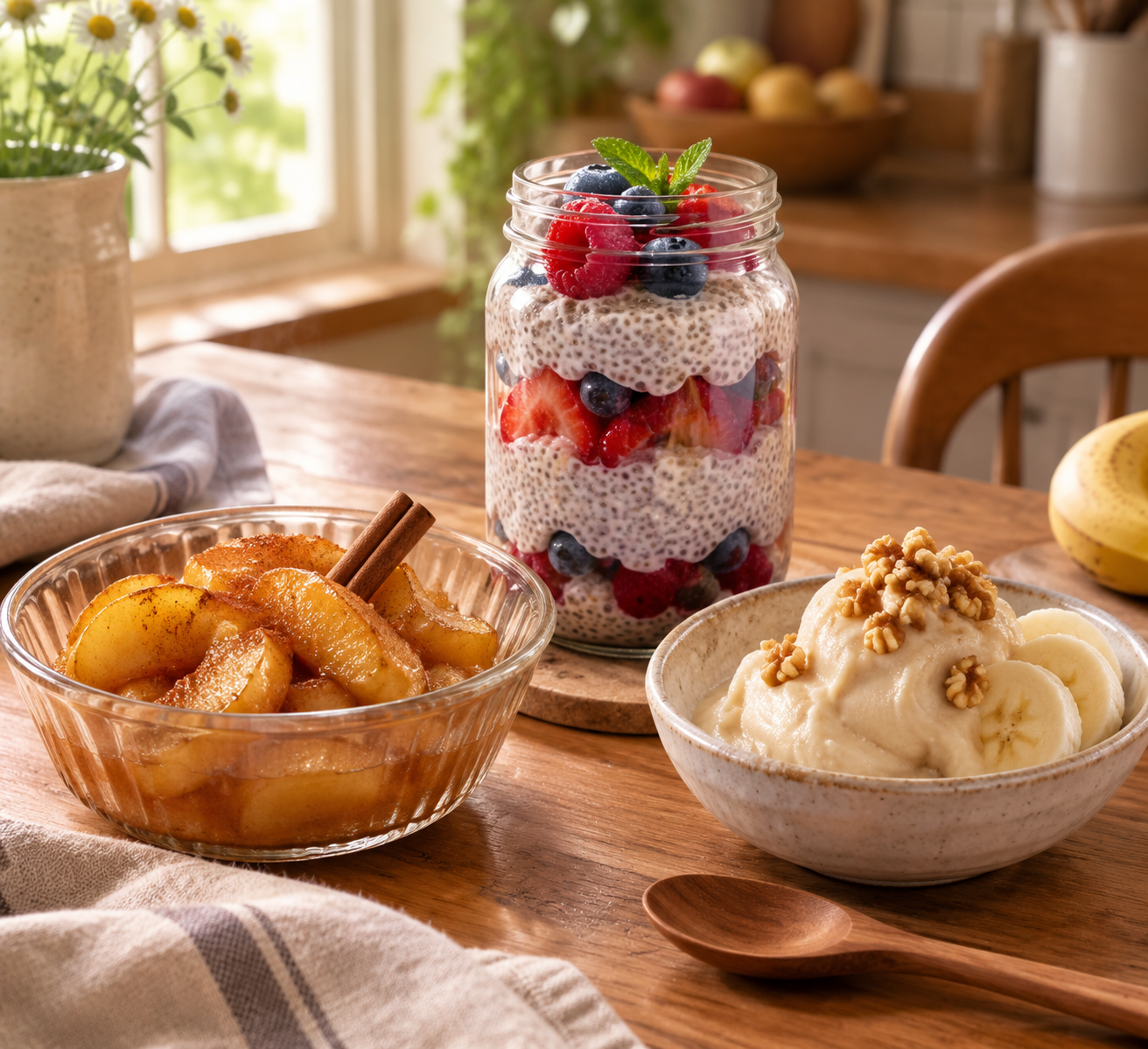
No-Cook, Soft Desserts
These are the desserts to keep close when dinner was only half eaten, chewing is tiring, or the caregiver has no interest in washing three pans. They are also the easiest to adjust: thinner with milk, smoother with a blender, or smaller in portion without making the plate look abandoned.
1. Berry Greek Yogurt Parfait
Spoon plain Greek yogurt into a small glass or bowl, add mashed berries or warmed frozen berries, and finish with a pinch of cinnamon. If the berries are tart, mash in a few pieces of ripe banana instead of adding sugar. For a little texture, use finely ground oats or a spoonful of soft cooked oats rather than hard granola.
This works because it still looks and feels like dessert, but it quietly brings in nutrients many caregivers are already trying to protect. NCOA notes that women 51 and older need 1,200 mg of calcium per day, while men need 1,000 mg; yogurt can help move a day in the right direction, and it also provides probiotics for gut health.[3] The fruit gives sweetness, color, and softness without a packet of sweetener.
- For chewing trouble: use thawed berries and mash them well, or blend the fruit into the yogurt.
- For low appetite: serve it in a small custard cup rather than a full bowl; a modest portion can feel more manageable.
- For extra calories when recommended: stir in a spoonful of nut butter if nuts are safe and tolerated.
2. Chia Pudding With Mango
Stir chia seeds into milk or unsweetened yogurt, add mashed ripe mango or banana, and refrigerate until thick. The easiest caregiver version is made in two or three small jars at once, because the pudding waits in the refrigerator instead of asking for attention at 8 p.m.
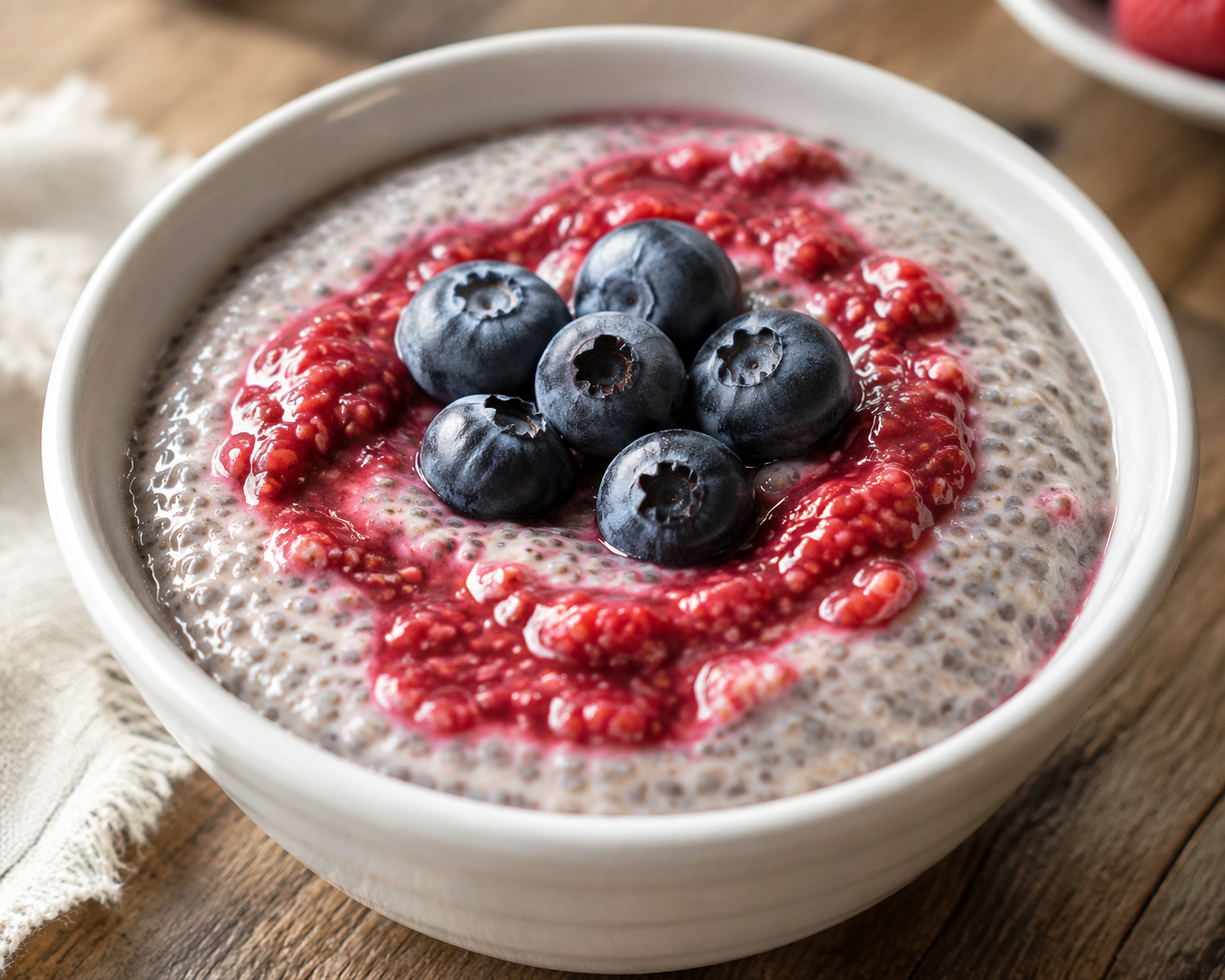
Chia pudding earns its place because it is soft, cold, and spoonable, yet it is not nutritionally empty. Chia can contribute omega-3 fatty acids, protein, and about 10 grams of fiber per serving; NCOA cites guidance that adults 51 and older need 21-30 grams of fiber daily.[3] That matters when dessert is one of the few foods a tired or under-hungry older adult is willing to finish.
Texture is the one thing to watch. Some people dislike the seeded gel texture, and some swallowing plans may not allow it. If the texture is questionable, blend the pudding until smooth after it thickens, or choose yogurt parfait instead. Do not guess with dysphagia; use the texture level recommended by the clinician or speech-language pathologist.
3. Cottage Cheese With Peaches
Use plain cottage cheese and soft sliced peaches packed in juice, fresh ripe peaches, or thawed frozen peaches. Mash the fruit lightly so the juices sweeten the cottage cheese. A little cinnamon or vanilla extract makes it feel less like a diet plate and more like something someone might actually want after supper.
The advantage here is protein with almost no cooking. If curds are difficult to chew or swallow, blend the cottage cheese until smooth before adding mashed peaches. If sodium is a concern, choose a lower-sodium cottage cheese when available and keep the serving small.
Warm Desserts That Still Feel Like Home
Warm fruit does a lot of caregiving work. It smells like someone made an effort, even when the actual effort was slicing an apple and turning on the oven. It also softens the fruit, which can make dessert easier to chew without pushing it into the category of “special food.”
4. Baked Cinnamon Apples
Core and slice apples, place them in a small baking dish, add cinnamon and a splash of water, and bake until soft. If the apples are not very sweet, mix in a few mashed raisins or a little unsweetened applesauce rather than brown sugar. EatingWell includes baked apple desserts among no-added-sugar options, and apples bring soluble fiber, including pectin, which is associated with digestive and heart-health support.[4]
For many older adults, this dessert has a second advantage: it is familiar. Cinnamon and warm apple do not require a sales pitch. Serve the apples alone, spoon them over plain yogurt, or mash them into oatmeal if dessert needs to become part of a more substantial evening snack.
- Softer version: peel the apples before baking and cook them until they collapse easily with a fork.
- Higher-protein version: add a spoonful of Greek yogurt after the apples cool slightly.
- More filling version: sprinkle with finely ground oats before baking, not hard nuts or brittle topping.
5. No-Sugar-Added Cherry Crumble
Use frozen or fresh pitted cherries, warm them in a small baking dish, and top with a simple mixture of oats, cinnamon, and a small amount of mashed banana or unsweetened applesauce to help the topping clump. Bake until the cherries are bubbling and the oats are soft. This is not the shattering, buttery crumble from a bakery case; it is a softer fruit dessert that keeps the cherry flavor in charge.
The important adjustment for seniors is the topping. Crisp toppings can be hard to chew or can scatter in the mouth. If that is a problem, grind the oats first, keep the topping thin, and serve the crumble warm with yogurt so the texture softens further.
6. Banana Oat Muffins
Mash very ripe bananas, stir in eggs, oats or oat flour, cinnamon, and a little milk as needed, then bake in mini muffin cups. The banana is the sweetener. Mini muffins are useful because a large muffin can look like a commitment, while one small warm muffin with tea may be accepted.
This is the recipe to batch when bananas are going soft on the counter. Freeze the extras, then thaw one or two at a time. If dryness is an issue, split a muffin and spoon warm applesauce, mashed berries, or yogurt over it. If chewing is limited, use oat flour rather than whole oats and bake until tender rather than crusty.
Banana oat muffins also show why “natural” still needs judgment. A muffin sweetened with banana is different from one sweetened with refined sugar, but it is still a carbohydrate-containing dessert. For seniors with diabetes or blood-sugar targets, portion size and the rest of the meal still matter.
Frozen and Refreshing Options
Cold desserts can be helpful when appetite is low, the mouth feels dry, or a warmer dessert sounds too heavy. The trick is to avoid making them so icy, hard, or chunky that they become difficult to manage.
7. Banana Nice Cream
Slice ripe bananas, freeze them, then blend until creamy. Add a spoonful of milk or yogurt if the blender needs help. That is the base. Cinnamon, unsweetened cocoa powder, peanut butter, or a few berries can change the flavor without changing the basic idea: fruit is doing the sweetening. GoGoGrandparent highlights frozen banana “nice cream” as a senior-friendly dessert idea, and NCOA notes that older men need about 3,400 mg of potassium per day while older women need about 2,600 mg; bananas can contribute potassium along with vitamin B6.[5][3]
Serve it right after blending, when it is soft like soft-serve. If it sits in the freezer until hard, let it thaw before serving. For someone who tires easily while eating, a small scoop in a chilled bowl is better than a large serving that melts into frustration.
8. Yogurt Bark With Berries
Spread plain yogurt on a parchment-lined tray, swirl in mashed berries or thin slices of banana, and freeze until firm. Break into pieces and store frozen. This can be a pleasant little dessert for seniors who can safely manage cold, firm textures.
The caution is right there in the format: bark breaks. For dentures, chewing fatigue, or swallowing concerns, let a piece soften in a bowl until it becomes more like frozen yogurt, or skip the bark and make a parfait. Not every clever dessert format is worth keeping if the texture creates work.
Dessert Drinks for Evenings When Chewing Is Too Much
A beverage-style dessert is not a replacement for a meal, but it can be kinder than insisting on another forkful when the person is tired. Keep the portion modest, serve it in a handled mug or small glass, and make sure the thickness matches any swallowing guidance already in place.
9. Golden Milk Shake
Blend milk or unsweetened yogurt with half a ripe banana, a small pinch of turmeric, cinnamon, and vanilla. Serve it cold as a shake, or warm it gently if a soothing mug is more welcome. The banana rounds out the flavor so the drink does not need honey or artificial sweetener.
Use a light hand with turmeric. The goal is comfort, not a medicinal-tasting drink. If the older adult dislikes turmeric, leave it out and keep the cinnamon-banana milk. A dessert that actually gets finished is more useful than one that wins an ingredient contest.
10. Warm Cinnamon Milk
Warm milk with cinnamon and vanilla, then whisk in a spoonful of unsweetened applesauce or a little mashed banana for sweetness. Strain it if needed for a smoother sip. This is the simplest dessert on the list, and that is its strength: it can be made when everyone is tired.
For someone who grew up with warm milk at bedtime, the comfort may matter as much as the nutrient profile. The milk still contributes protein and calcium, while the fruit keeps the sweetness gentle. If dairy is not tolerated, use the milk alternative recommended by the clinician or dietitian, especially if protein and calcium intake are concerns.
Texture and Prep Notes That Make These Desserts Easier to Use
The best recipe is the one that survives the actual evening. A few habits make these desserts more realistic for caregivers who are cooking around medications, appointments, fatigue, and changing appetites.
- Keep soft fruit ready: freeze ripe banana slices, buy frozen berries, and keep unsweetened applesauce or peaches packed in juice on hand.
- Batch the waiting foods: chia pudding, baked apples, banana muffins, and yogurt bark can be made ahead in small portions.
- Moisten dry foods: yogurt, warm fruit, milk, or applesauce can make muffins and oat toppings easier to chew.
- Blend when dignity and safety both improve: a smooth parfait or blended pudding is often more appealing than a visibly “modified” plate.
- Serve small first: a few spoonfuls can invite eating better than a full dessert bowl placed in front of someone with low appetite.
Honey, maple syrup, and agave are not artificial sweeteners, but they are still sweeteners. For a senior with diabetes, prediabetes, or a blood-sugar plan, they should not be treated as free foods. In these recipes, use ripe fruit first; if a clinician has given carbohydrate targets, follow those targets over any general dessert idea.
Swallowing concerns deserve the same seriousness. If coughing, choking, pocketing food in the cheeks, wet-sounding voice after eating, or repeated difficulty with thin liquids shows up, dessert texture is no longer just a preference. Ask the care team whether a swallowing evaluation or a specific texture plan is needed before offering seeds, crumbly toppings, icy pieces, or thin drinks.
Dessert does not have to become a nutrition lecture to become more useful. A bowl of cinnamon apples, a little yogurt with berries, a jar of chia pudding, or a scoop of banana nice cream can satisfy the wish for something sweet while adding protein, fiber, calcium, potassium, or simply a familiar comfort at the end of the day.
References
- WHO advises not to use non-sugar sweeteners for weight control — WHO, 2023
- Chronic Use of Artificial Sweeteners: Pros and Cons — PMC / Nutrients, 2024
- What Nutrients Do Seniors Need Most? A Caregiver's Guide — NCOA
- 7 No-Added-Sugar Dessert Recipes to Help Reduce Inflammation — EatingWell
- 11 Healthy but Delicious Dessert Ideas for Seniors — GoGoGrandparent, Feb 2026
Questions to bring to a clinician or OT
This is not medical, legal, or a family's final decision — only a framework. Bring these questions to a clinician, occupational therapist, or your local Area Agency on Aging.
Find Local HelpRelated reading
Noticed something outdated or inaccurate on this page? Flag a correction. We review every report against CDC, NIA, and AARP HomeFit guidance before updating a page.