
Caregiver decision guide
The 2026 Senior Tech Reality Check: What Family Caregivers Get Wrong About Older Adults and Technology
Many adult children assume their aging parents are unwilling or unable to learn new technology, but the data tells a different story. This article uses 2026 AARP survey findings to bust five common myths and show caregivers how to shift from skepticism to support.
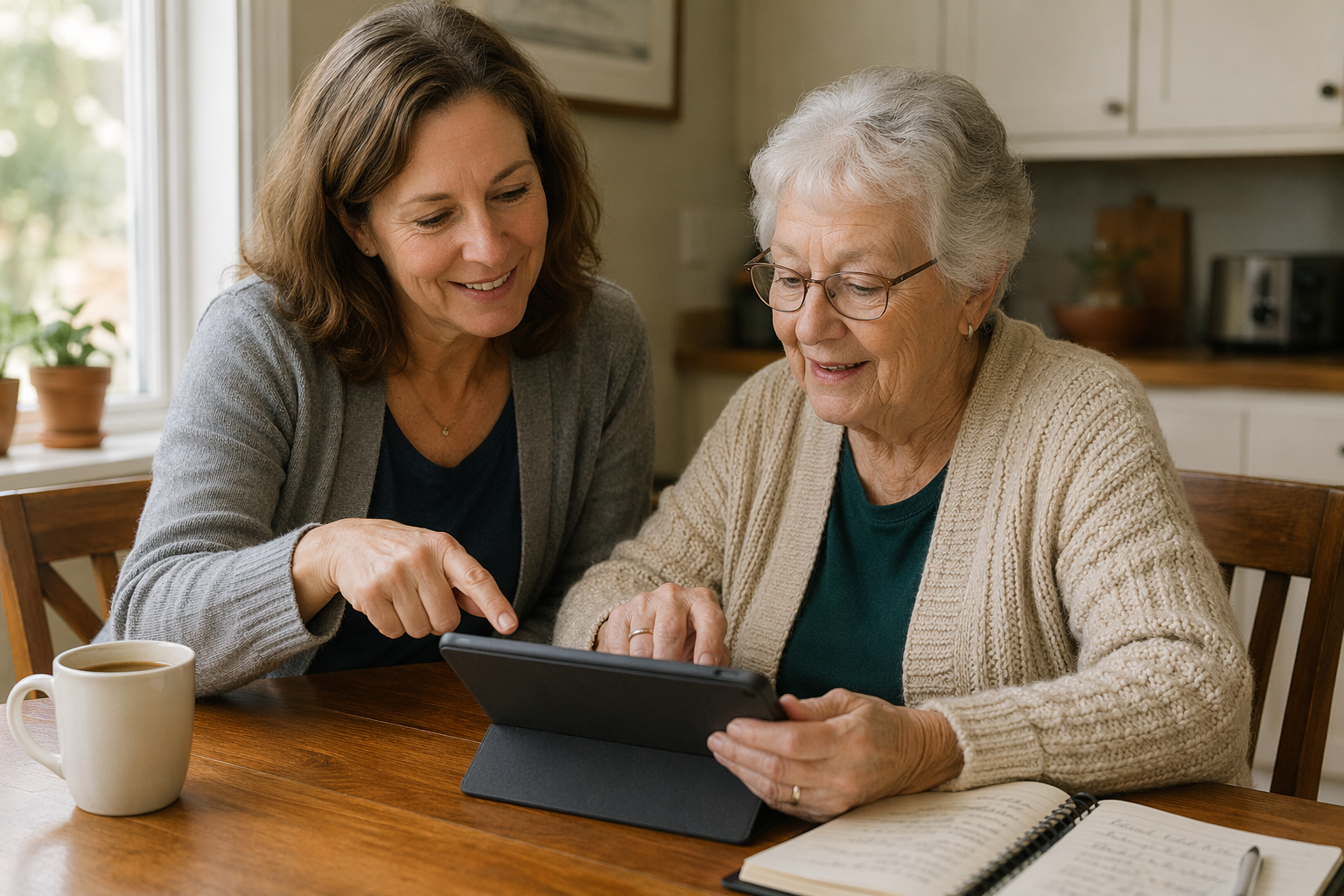
Your mother owns a smartphone. She texts you regularly. She may have already used an AI chatbot, and you probably don't know about it. The 2026 AARP Technology Trends survey, fielded September–October 2025 and published early this year, is the largest current snapshot of how adults 50-plus actually interact with technology. Its findings directly contradict a story many family caregivers tell themselves: “My parent is too old for this, will never learn, doesn't want it.” The data says the opposite. The problem is not willingness. It's design and support.
Let's start with the mismatch. Below are five common caregiver assumptions and the actual figures from the AARP survey. No argument yet—just the numbers.
| Myth | Reality (AARP 2026) |
|---|---|
| Older adults don't own smartphones. | 9 in 10 adults 50-plus own smartphones, up 35% since 2016. |
| They barely use digital communication. | 94% text regularly—texting now exceeds email as the top method. |
| They avoid new technology like AI. | 30% have used generative AI in 2025, up from 18% in 2024 and 9% in 2023. |
| They don't spend money on tech. | Adults 50-plus spent about $94.5 billion on technology in 2025 – nearly double pre-pandemic. |
| They're just not interested. | 60% say tech isn't designed with them in mind—that's a design gap, not a desire gap. |
These numbers land hard. But they also raise a genuine question: if adoption is so high, why does the stereotype persist?
What the Data Really Shows
The 90% smartphone ownership figure is not an outlier. It represents a 35-point jump since 2016. The same survey shows adults 50-plus now own an average of 7 tech devices per person, up from 4 in 2016. And they are spending: the cohort spent roughly $94.5 billion on technology in 2025, nearly double the pre-pandemic level of $394 per person per year in 2019. That spending shows deliberate choice: older adults are not being handed devices—they are buying them and integrating them into daily life.
Smart home safety and security device ownership more than doubled from 10% in 2019 to 27% in 2025. Home safety devices (sensors, monitors) jumped from 19% to 34% in a single year. These are not gadgets gathering dust in a drawer; they are actively adopted tools for aging in place.
Communication patterns back this up. 94% of adults 50-plus text regularly, making it the dominant method—ahead of email. 91% have used social media in the past three months. 87% stream entertainment. 78% rely on technology to stay connected with family and friends. According to the Creating Results blog (which repackages the AARP data), adults 50-plus use about 14 digital services and 10 apps in a typical three-month period. These behaviors are not marginal. They are mainstream. The cohort you assume is offline is actually texting, streaming, and posting—just perhaps not on the same platforms you use.
The AI Adoption That Should Reset Your Assumptions
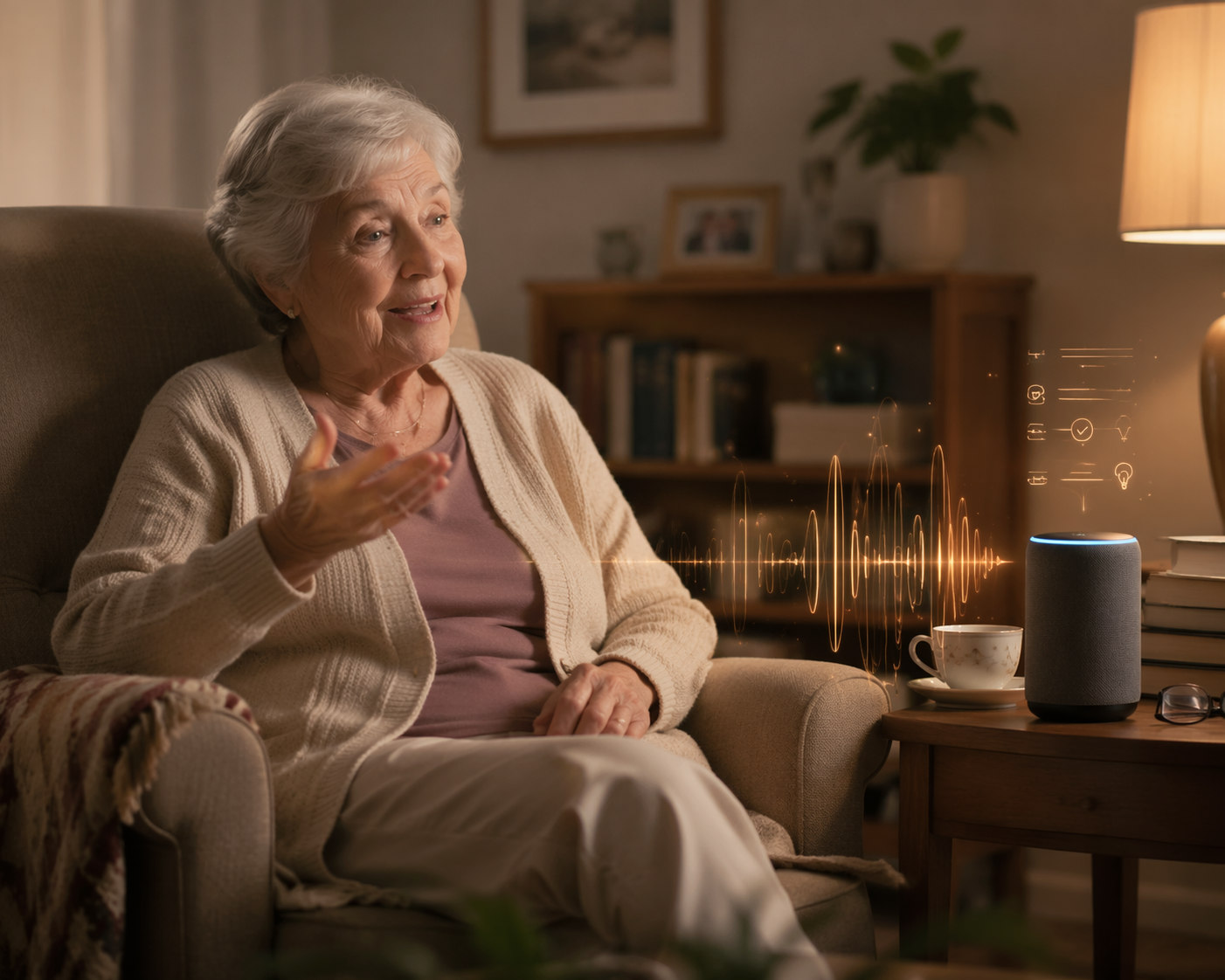
Here is the number that genuinely should reset your assumptions: 30% of adults 50-plus have interacted with a generative AI platform or app. That is up from 18% in 2024 and 9% in 2023—tripled in three years. This is not passive consumption. Using generative AI requires deliberate action: opening a new app, typing a prompt, evaluating a response. Older adults are doing this voluntarily. The trope that seniors are afraid or incapable of new technology collapses against this trajectory.
If They're Willing, Why Does It Feel Like They Aren't?
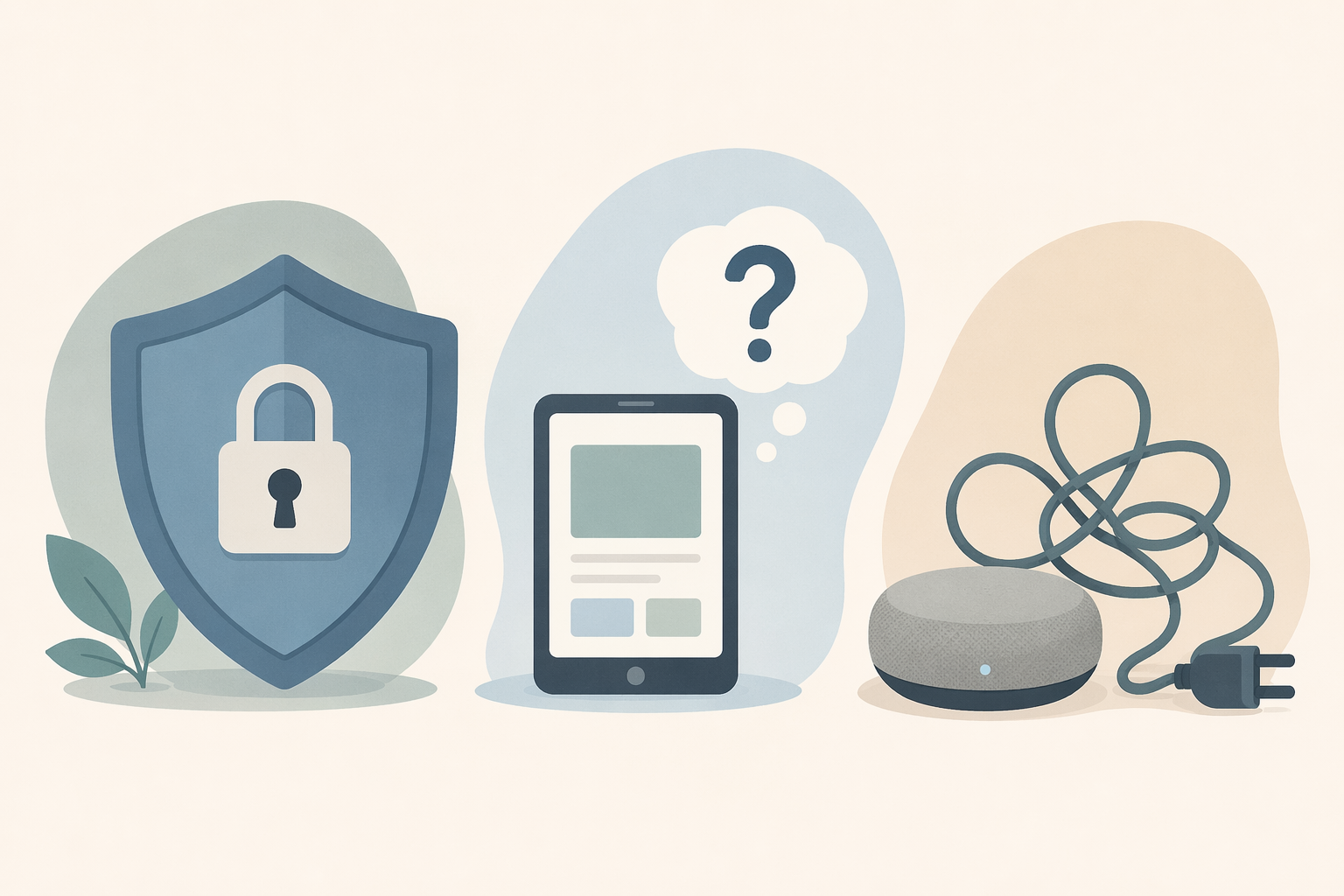
Now we reach the real problem. If older adults are buying smartphones, texting, streaming, and using AI, why does the caregiver experience of frustration and refusal persist? The AARP survey provides a clear answer: 60% of adults 50-plus do not believe today's technology is designed with them in mind. They are willing but underserved. The top barriers:
- Privacy and security concerns: 25% – the #1 barrier. This is not irrational fear. A 2023 systematic review of 83 studies in PMC confirms that older adults make rational trade-offs: they are willing to sacrifice some privacy for safety if autonomy is preserved.
- Perceived lack of value or interest: 20% – often because the product does not solve a problem they actually have.
- Set-up and support complexity: 18% – they want technology, but the onboarding is too difficult.
And critically, 71% are interested in tech support services designed specifically for older adults. The desire to learn is there. The infrastructure to teach is missing.
What They Actually Want
The same survey answers what they do want: 66% agree technology enriches life and makes daily tasks, aging in place, and staying connected easier. 75% want to remain in their homes for the long term, and many see technology as a means to that end. The PMC systematic review reinforces this: older adults are benefit-driven. They adopt technology when the perceived usefulness is high—when it helps them stay independent, connected, or safe. They resist technology that replaces human interaction. A voice assistant that helps set reminders? Welcome. A system that makes them feel monitored without consent? Rejected.
This is not a list of things you need to convince them of. It's a list of things they already value. The mismatch is that the products they encounter are designed for younger users with different priorities.
The Caregiver's Blind Spot: You're the One Who Needs to Update
At this point the evidence is clear: the bottleneck is not your parent's willingness. It is your assumption about their willingness, combined with products that were not built for them and a support system that does not exist.
I have watched this narrative for years. The “tech-averse senior” is a convenient story that lets caregivers off the hook. It shifts responsibility: “Dad just won't learn.” But the data has been piling up in the other direction. The 2026 AARP survey is the fullest picture yet. It shows an older adult population that is buying, using, exploring—and frustrated that the products don't fit. The most helpful shift you can make is from “I need to teach them” to “I need to support what they already do and listen to what they actually want.”
What to Do Next: Start a Conversation, Not a Purchase Order
If you have read this far, the next action is not to buy a device. It is to ask.
Once you have done that, and only then, explore the technology categories that support aging in place. Our guide to technology categories for aging in place walks you through the options without pushing any product—exactly the kind of neutral evaluation your parent deserves.
If, however, your parent struggles with technology in ways that seem uncharacteristic or are accompanied by memory concerns, the issue may not be design at all. Our article on when Mom can't use her phone addresses the medical angle—when tech difficulty signals something deeper.
For the vast majority of families, though, the data is clear: your parent is already participating in the digital world. The next step is to make that world work for them. And that begins with updating your own assumptions.
Questions to bring to a clinician or OT
This is not medical, legal, or a family's final decision — only a framework. Bring these questions to a clinician, occupational therapist, or your local Area Agency on Aging.
Find Local HelpRelated reading
Noticed something outdated or inaccurate on this page? Flag a correction. We review every report against CDC, NIA, and AARP HomeFit guidance before updating a page.