
Caregiver decision guide
How Joan Collins' Packing Method Boosts Senior Travel Independence
Discover how to apply Joan Collins' iconic packing strategy to create a lightweight capsule wardrobe that keeps you looking elegant while managing your own luggage. This approach supports travel independence by reducing bag weight and simplifying outfit decisions.
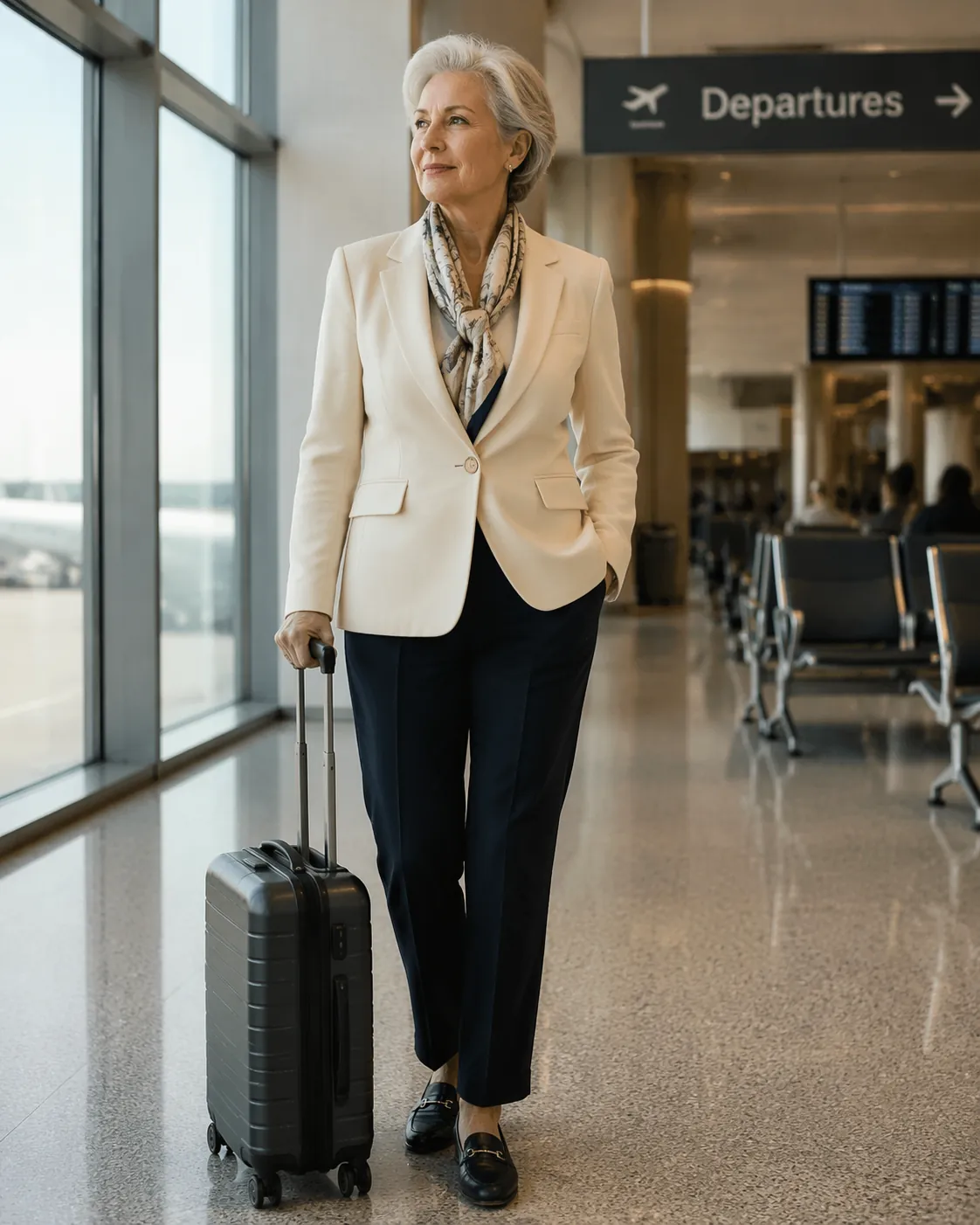
The hard part of senior travel style is not choosing between elegance and comfort. It is closing the suitcase, getting it into the car, rolling it through an airport, lifting it when necessary, and still having enough spirit left to enjoy the first evening. A polished travel wardrobe that depends on someone else hauling the overflow is not really independence. It is decoration with a porter attached.
That is why Joan Collins is more useful here than she might first appear. Not because she has traveled lightly all her life. She has not. Collins has openly belonged to the grand tradition of abundance, glamour, and serious luggage. The point is not to copy her volume. It is to borrow the part of her method that gives clothes order before they ever touch the suitcase.
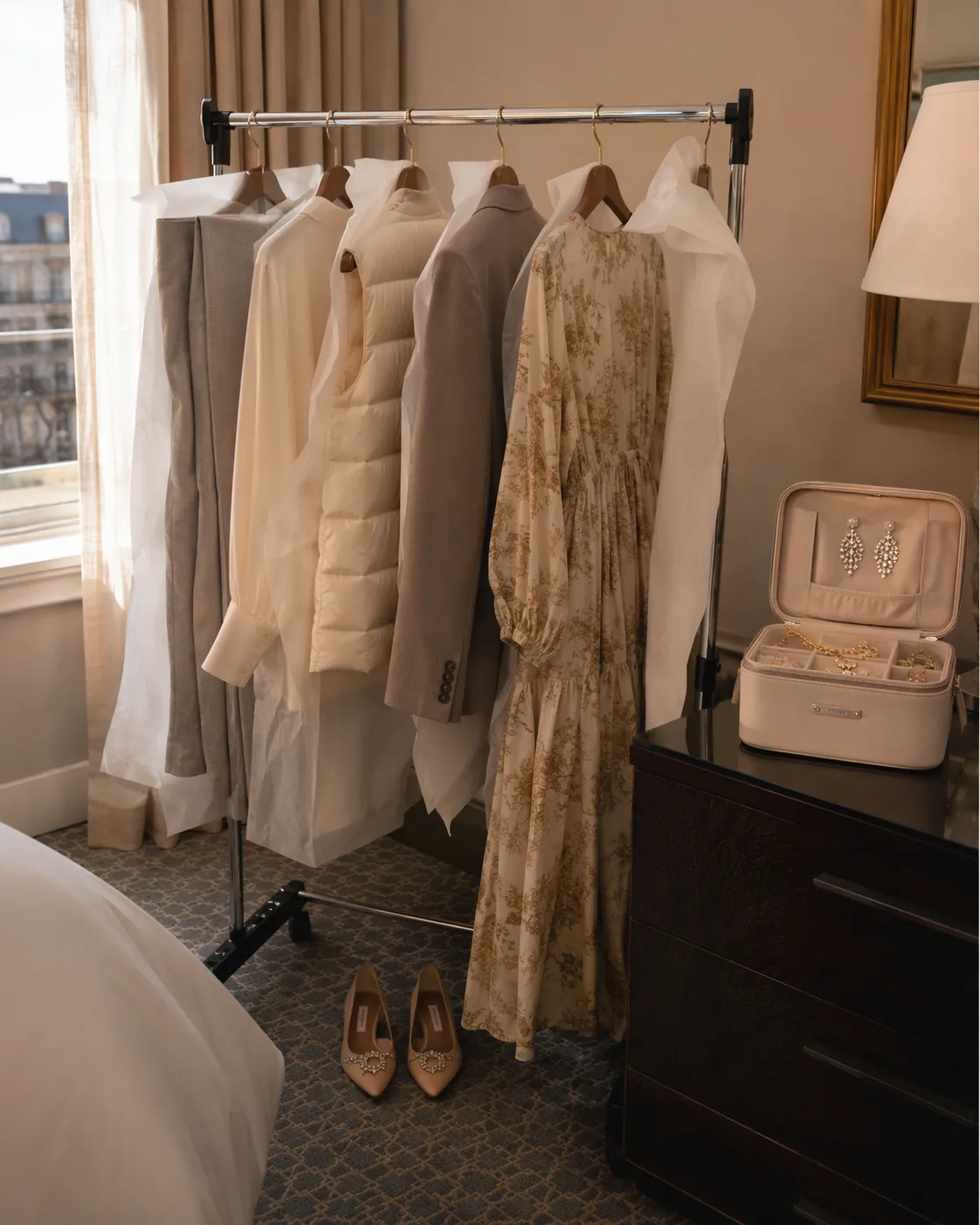
In a 2015 Guardian interview, Collins described a packing sequence that is admirably old-school and still practical: she lays clothes out on a portable rack, plans outfits in advance, packs heavy items first, places delicate pieces on top, uses white tissue paper against creasing, and keeps jewelry in hand luggage.[1] The Independent captured the same essential attitude in her line, “if I’m going somewhere, I want to look good,” while also noting her use of door-to-door luggage services.[2] The Toronto Sun separately reported the same packing method, which matters because this is not a stray celebrity anecdote; it is a repeatable system.[3]
Start With The Rack, Not The Suitcase
A suitcase hides mistakes. A rack exposes them. Hang the clothes where you can see them as outfits, not as hopeful individual garments. That one lovely blouse that goes with nothing will reveal itself. So will the extra jacket that repeats the job of the better jacket beside it.
This is the strongest travel-style lesson Collins offers older women: decide the public version of yourself before the bag is open on the hotel bed. The rack turns packing from a last-minute heap into a small dressing room. Day clothes, dinner clothes, pool or spa pieces, a light wrap, and shoes can be judged together. If two pieces do not speak to the same trip, one of them can stay home without drama.
There is a dignity to this kind of planning. It does not say, “Mother cannot manage.” It says, “I intend to manage.” That distinction matters in families, especially when adult children are trying to be helpful and accidentally begin taking over. Guidance on helping parents age gracefully often comes back to the same principle: support independence and dignity rather than quietly removing choice. A travel wardrobe is a small place to practice that, but it is not a trivial one.
If you want a practical test, put every planned outfit on the rack and then ask three plain questions: Can I dress from this without standing too long and fussing? Can I repack it myself? Can I lift or roll the case that will hold it? If the answer to the last question is no, the prettiest outfit has become someone else’s burden.
Build The 8-To-12 Piece Wardrobe Around How You Actually Move
Traveling Tulls, writing specifically for women over 60, gives the useful bridge from inspiration to arithmetic: an 8-piece travel capsule and the reminder that “being able to manage my own bags without constantly needing to ask for help is a huge part of my travel freedom.”[4] Arcido makes a similar packing point from the Collins example, arguing that keeping clothing under 12 pieces and limiting shoes to 2 pairs can make a small carry-on manageable.[5]
The number is not a moral test. Eight pieces may work for a short warm-weather trip. Twelve may be more realistic if the itinerary includes dinners, religious sites, cool evenings, or a cruise day where clothes must shift from deck chair to dining room. The discipline is that every piece must earn its weight twice.
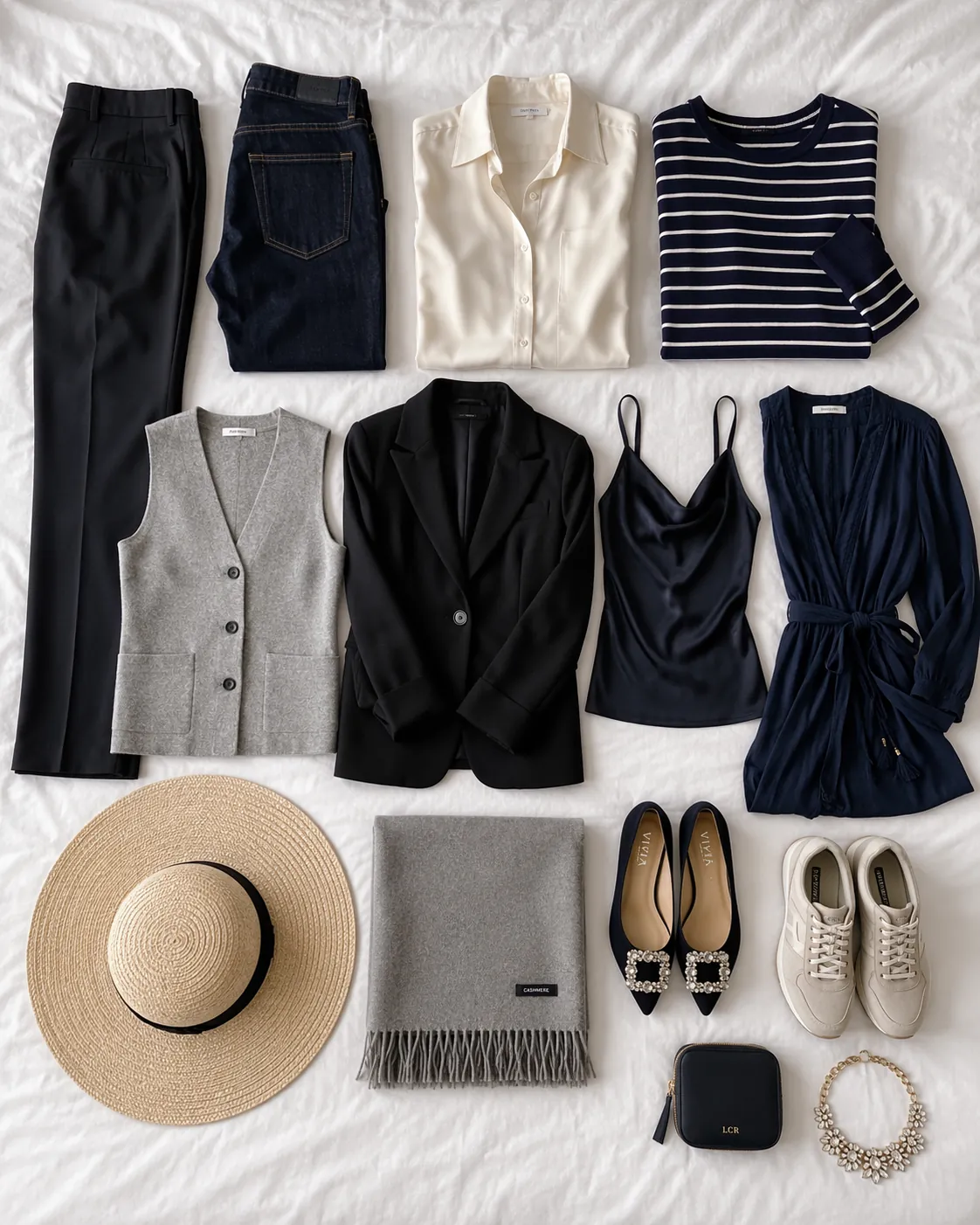
| Piece | Why It Belongs In A Senior Travel Capsule |
|---|---|
| Dark cashmere or soft knit trousers | Comfortable for sitting, polished enough for dinner, and easier to dress up than ordinary lounge pants. |
| One second bottom | A tailored dark jean, travel pant, or skirt gives rotation without doubling the whole wardrobe. |
| Silk blouse or dressy top | Creates an evening outfit without requiring a separate dress. |
| Striped knit, fine tee, or shell | Works under a blazer or gilet and handles ordinary sightseeing hours. |
| Light gilet or vest | Adds warmth without the bulk of another coat. |
| Blazer, soft jacket, or elegant cardigan | Makes the capsule feel intentional in restaurants, hotel lobbies, and photographs. |
| Exercise wear that can lounge | Useful for a walk, stretching, or a quiet morning without packing a separate house outfit. |
| Swim cover-up or light tunic | Moves from poolside to breakfast or balcony without looking like an afterthought. |
| Cashmere wrap or scarf | Serves as warmth, plane comfort, and instant polish. |
| Sun hat | Protects, finishes the outfit, and prevents the need for another hair rescue. |
The Gloss Magazine’s former-employee account gives the most lived-in version of this idea: Collins using a portable clothes rack, wearing cashmere trousers that could move between lounging and evening, and favoring clothes that did more than one job.[6] That is not the same as dressing down. It is dressing with fewer weak links.
Cashmere trousers are a good example because they do not punish the body for traveling. They sit softly on a plane, look composed in a hotel lobby, and can be lifted by jewelry and a silk blouse at dinner. A gilet is similar: it gives warmth at the shoulder and torso without the weight and arm restriction of a heavier coat. Exercise wear, if chosen carefully, becomes morning loungewear rather than a separate category that eats space.
Color is where many travel wardrobes either become useful or collapse into a suitcase full of almosts. Choose one dark base, one light neutral, and one accent that flatters the face. Navy, cream, and coral; black, ivory, and emerald; charcoal, soft white, and red. The exact palette matters less than the agreement among the pieces. A capsule wardrobe should let you dress when tired, not require a committee meeting at the mirror.
Where The Glamour Goes
Glamour belongs in the high-impact, low-bulk places: earrings, a necklace, a silk scarf, a good lip color, a polished flat, a wrap that catches light. Collins’ public style has long been built on refusal to disappear, and Vogue has preserved one of her sharper preferences: she said she hates jeans, using far more Joan Collins language than most packing lists would dare.[7] The lesson is not that every older traveler must reject denim. It is that personal style should not be flattened into beige utility just because the traveler has birthdays behind her.
If jeans are your uniform and they fit beautifully, pack the pair that behaves. If you feel more yourself in fluid trousers, pack those. The capsule works when the clothes are honest about the person wearing them. An outfit that is technically efficient but makes a woman feel erased will be resented every time it comes off the hanger.
Shoes: Two Pairs, Both Respectable
Shoes are where many carry-ons gain weight and many trips lose pleasure. For most short and moderate trips, two pairs are the cleanest rule: one supportive walking shoe and one polished flat or sandal. Collins has been photographed in everything from jeweled flats to supportive sandals, which is a useful reminder that comfort and sparkle are not enemies.
The walking pair should be the heavier pair and should be worn in transit. The dressier pair should still be a real shoe, not a decorative object with a sole attached. Jeweled flats, metallic loafers, elegant low sandals, or a low block heel can handle hotel corridors, restaurant floors, and short evening walks without demanding a handrail at every step.
- Reject any shoe that has not already passed a full afternoon at home.
- Choose soles that grip polished floors, wet pavement, and airport tile.
- Avoid packing a special dinner shoe if it only works from taxi to chair.
- Let shine, color, or ornament do the evening work instead of height.
There is no virtue in arriving at dinner beautifully dressed and unable to cross the lobby confidently. A senior travel capsule should honor the foot as much as the photograph.
Pack Like Delicate Clothes Deserve Protection, Not Extra Suitcases
Collins’ packing order is wonderfully sensible: heavier pieces below, delicate pieces above, white tissue paper to reduce creasing, jewelry in hand luggage.[1] The Toronto Sun account corroborates the same sequence.[3] Nothing about that requires five suitcases. It requires attention.
In a compact senior capsule, that usually means shoes and sturdier bottoms go in first. The blazer or soft jacket lies next, opened flat if the case allows. Silk, fine knits, and evening tops sit near the top with tissue between folds. The wrap can cushion the upper layer. The hat, if it is crushable, can be nested with soft pieces; if it is not, wear it or choose another hat.
White tissue paper sounds fussy until it saves a blouse from arriving with hard fold lines. It also makes unpacking calmer because garments are separated rather than fused into one compressed stack. Calm matters. After a transfer day, the difference between opening a case and finding order versus rummaging through a dark tangle is the difference between dressing for dinner and deciding not to bother.
A Simple Packing Order
- Wear the bulkiest shoes and outer layer in transit.
- Place the second pair of shoes, soles covered, along the wheel end of the case.
- Pack heavier trousers and sturdy layers at the bottom.
- Lay fine knits, silk, and evening pieces above them with tissue paper.
- Keep jewelry, medication, essential documents, and one useful scarf or wrap in hand luggage.
The jewelry rule deserves its own respect. Collins keeps jewelry in hand luggage, and for ordinary travelers the principle extends to anything small, valuable, medically necessary, or difficult to replace.[1] Costume jewelry can still carry emotional value; good earrings packed in a checked suitcase are no help if the bag takes a holiday of its own.
The Luggage Has To Obey The Wardrobe
A capsule wardrobe loses its advantage if the case itself fights you. Arcido links the Collins packing lesson to hard-sided cases and 360-degree wheels, a combination that suits many older travelers because the bag rolls beside the body instead of dragging behind it.[5] The test is practical: can you turn it in a tight hotel hallway, guide it over a curb cut, and hold it steady while checking in?
Hard-sided luggage also protects shape. A soft overstuffed bag encourages negotiation: one more sweater, another pair of shoes, the “just in case” dress. A firm shell gives clearer boundaries. If the wardrobe has been planned on the rack, the case is not asked to absorb indecision.
There are trips where a door-to-door luggage service is sensible rather than indulgent. The Independent noted Collins’ use of such services, and that choice translates well for longer trips, formal occasions, cruises, or itineraries with rail stations and stairs.[2] Help can be planned without surrendering the trip. Sending a larger bag ahead is different from standing helpless at every threshold.
For many travelers, the best arrangement is one small rolling carry-on plus a personal item that truly sits on top of it. Not a shoulder bag that strains the neck. Not a tote so full it becomes a second suitcase. The personal item should hold the valuables, medications, documents, phone charger, a light wrap, and perhaps the jewelry pouch. If it cannot be secured to the handle, it will eventually become one more thing to juggle.
Stamina Is Part Of Style
Collins’ glamour is visible, but her stamina is part of the story. AARP has reported her emphasis on Pilates-type exercise, eight hours of sleep, avoiding junk food, and not relying on “tweakments.”[8] That does not mean every traveler must copy her routine. It does mean the body that wears the clothes deserves as much planning as the clothes themselves.
A wardrobe that lets you sit comfortably, walk safely, regulate temperature, and dress without complicated fastenings preserves energy. So does choosing companions carefully. The Gloss Magazine piece recalls Collins’ “drains and heaters” way of thinking about people, a social philosophy that applies neatly to travel: some companions leave you warmer and more capable; others make every small decision heavier.[6]
That is not a packing tip in the narrow sense, but it affects the suitcase. A traveler who is rushed, corrected, or second-guessed will pack defensively. A traveler who is trusted can choose fewer things with more confidence.
What To Leave Behind
Leave behind the third shoe. Leave behind the blouse that only works with one skirt and perfect lighting. Leave behind the heavy robe if the hotel provides one. Leave behind the backup evening outfit for the fantasy invitation unless the invitation actually exists.
More gently, leave behind the idea that elegance requires a separate costume for every hour. A silk blouse can dine twice with different jewelry. Cashmere trousers can appear at breakfast, on a balcony, and in a restaurant if the styling changes. A wrap can be plane blanket, theater cover, and color near the face. Repetition is not failure when the pieces are good.
The useful part of Collins’ method is that it separates glamour from excess. Plan the outfits on a rack. Limit the pieces until the case remains manageable. Pack heavy things low and delicate things high. Protect what wrinkles. Keep jewelry and essentials with you. Choose shoes that let you move through the trip, not merely pose at the destination.
A capsule wardrobe will not solve every mobility issue, and refusing all help is not the point. The better aim is quieter and stronger: to arrive looking like yourself, open a case you can control, and remain meaningfully in charge of your own movement.
References
- Do something creative: Joan Collins, The Guardian, May 5, 2015
- My Life in Travel: Joan Collins, The Independent
- Joan Collins shares travel tips for packing perfect suitcase, Toronto Sun, May 6, 2015
- Travel Clothing for Women Over 50, Traveling Tulls
- What Joan Collins Can Teach Us About Minimalist Packing, Arcido
- What Dame Joan Collins Taught Me, The Gloss Magazine
- Joan Collins Is a Camp Icon in Valentino’s Christmas Campaign, Vogue
- Joan Collins on Aging, AARP
Questions to bring to a clinician or OT
This is not medical, legal, or a family's final decision — only a framework. Bring these questions to a clinician, occupational therapist, or your local Area Agency on Aging.
Find Local HelpRelated reading
Noticed something outdated or inaccurate on this page? Flag a correction. We review every report against CDC, NIA, and AARP HomeFit guidance before updating a page.