
Caregiver decision guide
Why sugar-free candy triggers digestive trouble in older adults
Learn why sugar alcohols in sugar-free candies cause diarrhea, bloating, and gas in older adults, and how caregivers can identify triggers, adjust portions, and choose gentler alternatives without banning treats entirely.
The clue is often sitting in plain sight: a dish of sugar-free mints by the recliner, a bag of hard candies on the side table, a few pieces of gum after meals. Then come the loose stools, gas, bloating, cramping, or a bathroom rush that seems to appear from nowhere. For an older adult with diabetes or prediabetes, sugar-free candy can feel like the safe compromise. But yes, it can also be a very real cause of digestive trouble.
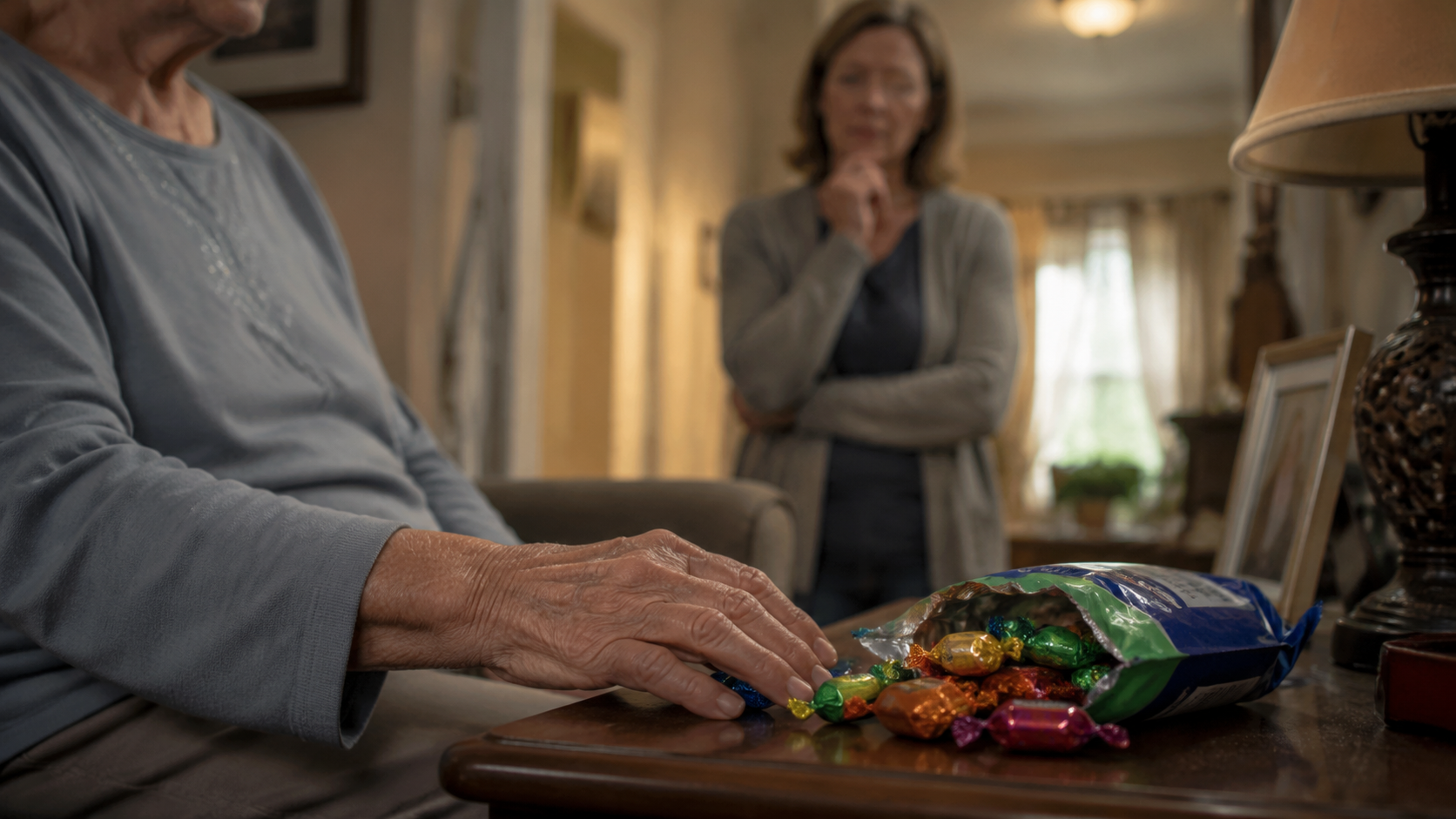
The usual issue is not that the candy is spoiled, or that someone suddenly developed a mysterious new illness overnight. Many sugar-free candies, gums, mints, and pastilles are sweetened with sugar alcohols, also called polyols. Common names include sorbitol, maltitol, mannitol, xylitol, erythritol, lactitol, and isomalt. Several of these are only partly absorbed in the small intestine. What remains can pull water into the bowel and then be fermented by gut bacteria, producing gas along the way.[1]
That is why the symptoms can look so ordinary and still be connected to the candy: watery stool, urgency, bloating, flatulence, gurgling, and cramps. In older adults, the same amount that seemed harmless on the label may be harder to tolerate, especially when pieces are eaten across the day and nobody is counting them.
Why the candy causes so much water, gas, and urgency
Sugar alcohols are not alcohol in the drinking sense. They are sweet-tasting carbohydrates used to reduce sugar content while still giving candy, gum, and mints a familiar taste and texture. The problem is that the gut does not always absorb them cleanly.
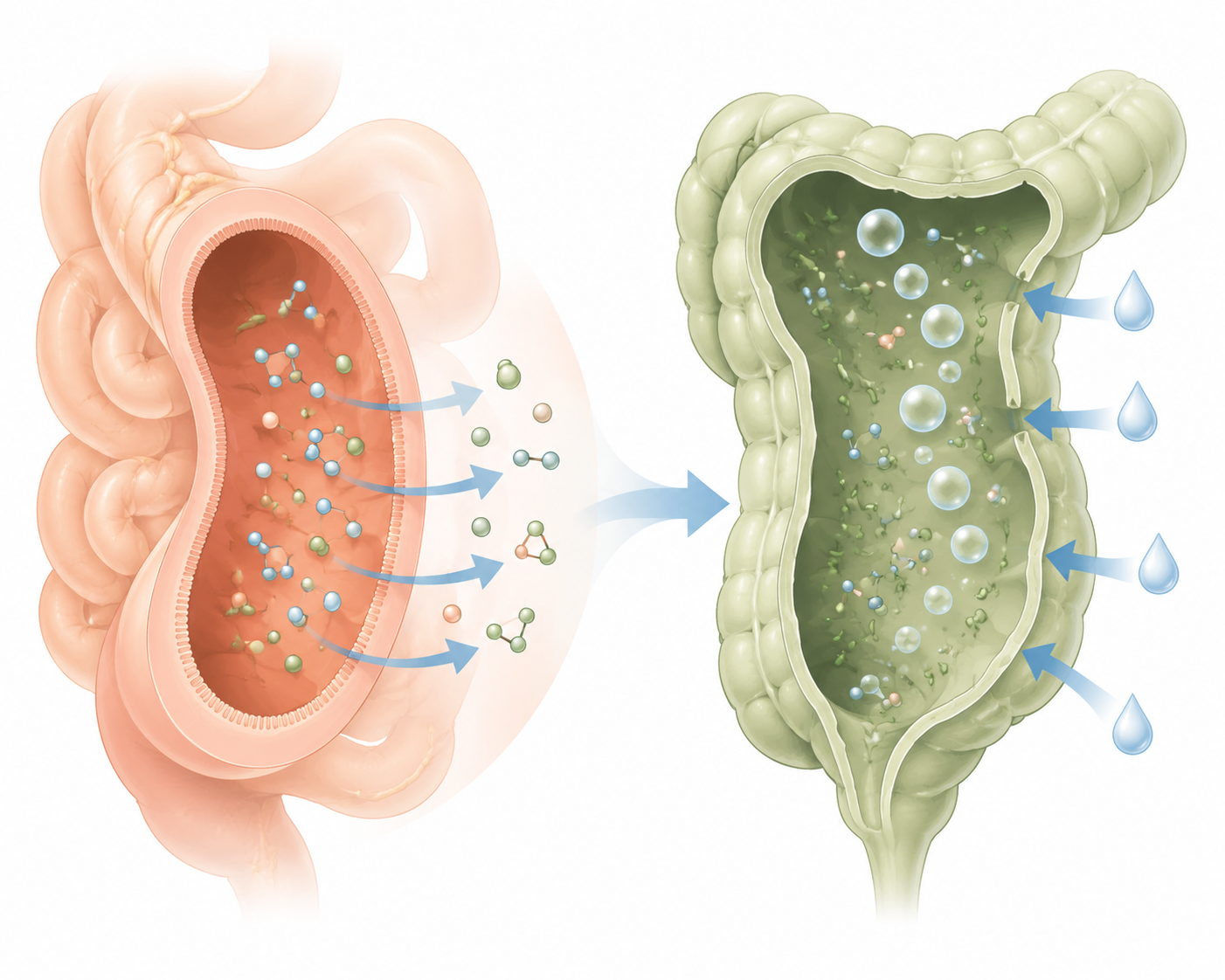
When poorly absorbed polyols move through the small intestine, they carry an osmotic effect: water follows them into the intestinal tract. Once they reach the colon, bacteria ferment what is left. Water makes the stool looser; fermentation adds gas; together they can create pressure, bloating, cramping, and the kind of urgency that turns a normal afternoon into a laundry-and-bathroom emergency.[1]
This is not just a theoretical warning from a candy wrapper. A scientific review reported that hexitols such as sorbitol and mannitol can cause gastrointestinal changes at about 10 to 20 grams per day in adults, while xylitol may be tolerated at higher amounts after adaptation. The same review described erythritol as better tolerated, with reported tolerance up to about 0.66 to 0.8 grams per kilogram of body weight without laxation.[1]
The Centers for Disease Control and Prevention documented a sorbitol-related diarrhea outbreak from dietetic candies in 1984. In that report, 10 grams of sorbitol was described as enough to typically cause bloating and flatulence, while 20 grams or more could cause abdominal cramps and diarrhea.[2]
Those numbers are useful because they make the side-table candy math visible. They are not perfect senior-specific cutoffs, and they should not be treated like a medication dose. But they do show why “just a few” can become enough to matter.
| If the label lists | Why caregivers should notice it |
|---|---|
| Sorbitol | Common in sugar-free gum and candies; strongly associated with osmotic diarrhea at realistic intake levels |
| Maltitol | Common in sugar-free chocolate and sweets; can ferment and cause gas, bloating, and loose stool |
| Mannitol | A polyol with known laxative potential; often grouped with sorbitol in warning guidance |
| Xylitol | Common in gum and mints; may be tolerated differently after adaptation, but can still cause symptoms |
| Erythritol | Generally better tolerated than many sugar alcohols, though individual tolerance still varies |
The dose can add up faster than it looks
Candy portions are easy to underestimate because each piece looks small. A person may have one mint after breakfast, two pieces of gum in the car, a few hard candies while watching television, and another mint before bed. No single moment looks excessive. The day total is the problem.
The GI Society notes that sugar-free gum may contain about 1.25 grams of sorbitol per piece, while a piece of sugar-free hard candy may contain about 3 grams. At that rate, 5 to 10 pieces of candy or gum can move an older adult into a range where symptoms are plausible, especially if that person is sensitive or already has a fragile digestive routine.[3]
That is why the first practical question is not “Did Dad eat candy?” It is “How many pieces did he actually eat between waking up and bedtime?” A bag that lasts two weeks is a different digestive exposure from a bag that disappears in three days.
This also explains why the reaction can seem inconsistent. If the candy is eaten with meals one day, spaced out another day, and eaten quickly during an anxious afternoon the next, the gut may not respond the same way each time. Hydration, other foods, medications, illness, and constipation patterns can all change what happens.
Why older adults may have less digestive margin
Most sugar alcohol threshold studies were not designed around frail older adults with multiple medications, diabetes, variable appetite, and slower routines. So it is safer to use the adult numbers as a warning range, not as a promise that every parent will tolerate everything below them.
Aging changes the digestive system in ways that can narrow tolerance. Reports on digestion and aging describe reduced stomach acid, decreased digestive enzyme production after about age 50, slower gut motility, and microbiome changes. None of those changes means every older adult will react badly to sugar-free candy. Together, though, they make it more believable that a sweetener load that once caused only mild gas can now cause loose stool or urgency.[4]
There is also some senior-specific evidence, though it is not as clean as one would like. A New Zealand aged-care study using 54 dietary records from residents with a mean age of 86 found a significant relationship between total FODMAP intake and diarrhea. Polyols are one part of the FODMAP group, but the study did not prove that sugar alcohols alone were responsible for the diarrhea.[5]
That distinction matters. The evidence supports a careful suspicion, not a courtroom verdict. If an older adult is eating sugar-free candies and having gas, bloating, cramping, loose stools, or urgency, sugar alcohols belong high on the list of possible triggers. They do not automatically explain every episode.
How to check without turning candy into a fight
The most useful first move is quiet observation. Before asking a parent to give something up, read the bag, check the serving size, and look for sweeteners ending in “-ol”: sorbitol, maltitol, mannitol, xylitol, erythritol, lactitol, or isomalt. Some sorbitol- and mannitol-containing products carry laxative-effect warnings, which are easy to miss when the front of the package is busy advertising “sugar free.”
Then estimate the real daily amount. That may mean noticing how many wrappers are in the trash, how fast the bag empties, or whether the candy dish is being refilled more often than anyone realized. It does not need to become surveillance. The goal is to see whether the timing of symptoms matches the timing of intake.
- Write down the candy, gum, mint, or pastille brand and the listed sweeteners.
- Count an ordinary day’s intake before changing anything.
- Note stool looseness, gas, bloating, cramping, and urgency for a short window.
- Reduce the portion or switch the product, then watch whether symptoms improve.
- Keep diabetes care steady; do not replace sugar-free candy with regular candy without considering the person’s glucose plan.
A reduction often lands better than a ban. Instead of “You can’t have these anymore,” the conversation can be: “These may be upsetting your stomach. Let’s try fewer for a few days and see if the bathroom trips calm down.” That preserves some choice and makes the candy a testable trigger, not a character flaw.
A small test that usually gives clearer answers
For several days, keep meals as normal as possible and change only the suspected candy or gum. If the person usually eats sugar-free hard candies all afternoon, try cutting the amount down rather than removing every sweet thing in the house. If symptoms improve, that is useful information. If nothing changes, the candy may be innocent, or there may be more than one trigger.
This kind of home trial works best when symptoms are mild and the person is otherwise stable. It is not the right response to severe diarrhea, dehydration, blood in stool, fever, sudden confusion, or meaningful weight loss.
What to try instead
If sugar-free candy is helping a parent feel less restricted, replacing it thoughtfully is kinder than simply removing it. The first option is portion control: fewer pieces, slower timing, and avoiding a pile of candies beside the chair where eating becomes automatic.
Storage can do more than speeches. A small dish with the day’s portion is different from an open bag within reach. Keeping extra candy in a cabinet may reduce unconscious grazing without making the parent feel watched every minute.
Switching sweeteners may also help. Harvard Health describes erythritol as generally less likely than other sugar alcohols to cause digestive symptoms because most of it is absorbed before reaching the colon, leaving less for gut bacteria to ferment. Stevia and monk fruit are non-polyol sweeteners, so they do not create the same osmotic-fermentation pattern that sorbitol, maltitol, mannitol, and xylitol can.[6]
That does not mean every erythritol, stevia, or monk fruit product is automatically gentle. A candy may combine several sweeteners, add fibers that cause gas, or use serving sizes that do not match how people actually eat. The front label is less useful than the ingredient list.
| Caregiver move | Why it helps |
|---|---|
| Choose a smaller daily portion | Reduces the total osmotic load without taking away the treat entirely |
| Move the open bag out of constant reach | Cuts down on automatic grazing while preserving access |
| Try a product without sorbitol, maltitol, mannitol, or xylitol | Removes the most likely digestive trigger for many people |
| Look for stevia or monk fruit sweetening | Uses non-polyol sweeteners that do not work through the same bowel mechanism |
| Change one product at a time | Makes it easier to tell whether the switch actually helped |
When it is no longer a label-reading problem
Most candy-related digestive issues are uncomfortable, embarrassing, and disruptive rather than dangerous. Still, older adults have less room for dehydration and rapid decline. A parent who is having repeated watery stools may drink less because getting to the bathroom is hard, and that can make the whole situation worse.
Medical evaluation is the safer next step if diarrhea lasts more than 48 hours, if there are signs of dehydration, or if weight loss becomes meaningful. Weight loss greater than 5% of body weight is a reason to stop troubleshooting at home and seek care. Case reports have also described chronic diarrhea and severe weight loss linked to excessive sorbitol intake, with recovery after sorbitol was removed.[7]
It is also worth calling a clinician sooner if symptoms appear after a medication change, antibiotics, a possible infection, a fall, new confusion, blood in stool, fever, or severe abdominal pain. Sugar-free candy can explain a lot, but it should not become a reason to ignore a sicker-looking parent.
If symptoms calm down after reducing or switching the candy, the caregiver has probably found a manageable trigger. If they do not, the next step is not more suspicion over every mint; it is a medical conversation with the candy label, symptom notes, and a realistic count of daily pieces in hand.
References
- Gastrointestinal Disturbances Associated with the Consumption of Sugar Alcohols with Special Consideration of Xylitol: Scientific Review and Instructions for Dentists and Other Health-Care Professionals, PMC, 2016, link
- Sorbitol-Induced Diarrhea, CDC MMWR, 1984, link
- Sugar-Free Gum and Candies, GI Society / BadGut.org, link
- Foods That Become Harder to Digest as You Age, Cary Gastroenterology, link
- FODMAP Intake in Older Adults from Residential Aged Care Facilities, PMC, link
- How healthy is sugar alcohol?, Harvard Health, 2023, link
- Sugar-Free Treat Wreaked Havoc on Digestive Tract, People's Pharmacy, link
Questions to bring to a clinician or OT
This is not medical, legal, or a family's final decision — only a framework. Bring these questions to a clinician, occupational therapist, or your local Area Agency on Aging.
Find Local HelpRelated reading
Noticed something outdated or inaccurate on this page? Flag a correction. We review every report against CDC, NIA, and AARP HomeFit guidance before updating a page.