
Caregiver decision guide
Two Wildfire Safety Plans for Seniors and Their Caregivers
A dual-plan framework helps family caregivers protect an aging parent during wildfire season. Learn to build a shelter-in-place plan for smoke events and an early-evacuation plan for fire threats, with steps tailored to mobility, medication, and chronic conditions.
A go-bag by the door is not a wildfire safety plan for seniors. It is one container, useful only if the person who needs it can leave quickly, breathe safely, keep medications on schedule, and reach a place that can actually receive them.
For an older parent living independently, the first decision is not what to pack. It is which threat the family is facing. Smoke that lingers for days may make a long drive or crowded shelter more dangerous than staying home. A direct fire threat can make staying home deadly, especially when walking speed, oxygen equipment, hearing loss, or medication timing slows every step.
That distinction is not academic. In the January 2025 Los Angeles County wildfires, 26 of the 31 people killed were over age 65 or living with a disability, and the Eaton Fire burned at a reported rate of seven football fields per minute.[1] The painful lesson is not that families failed to care. It is that many plans collapse when the person at risk cannot move, decide, hear, pack, or relocate at the speed the fire demands.
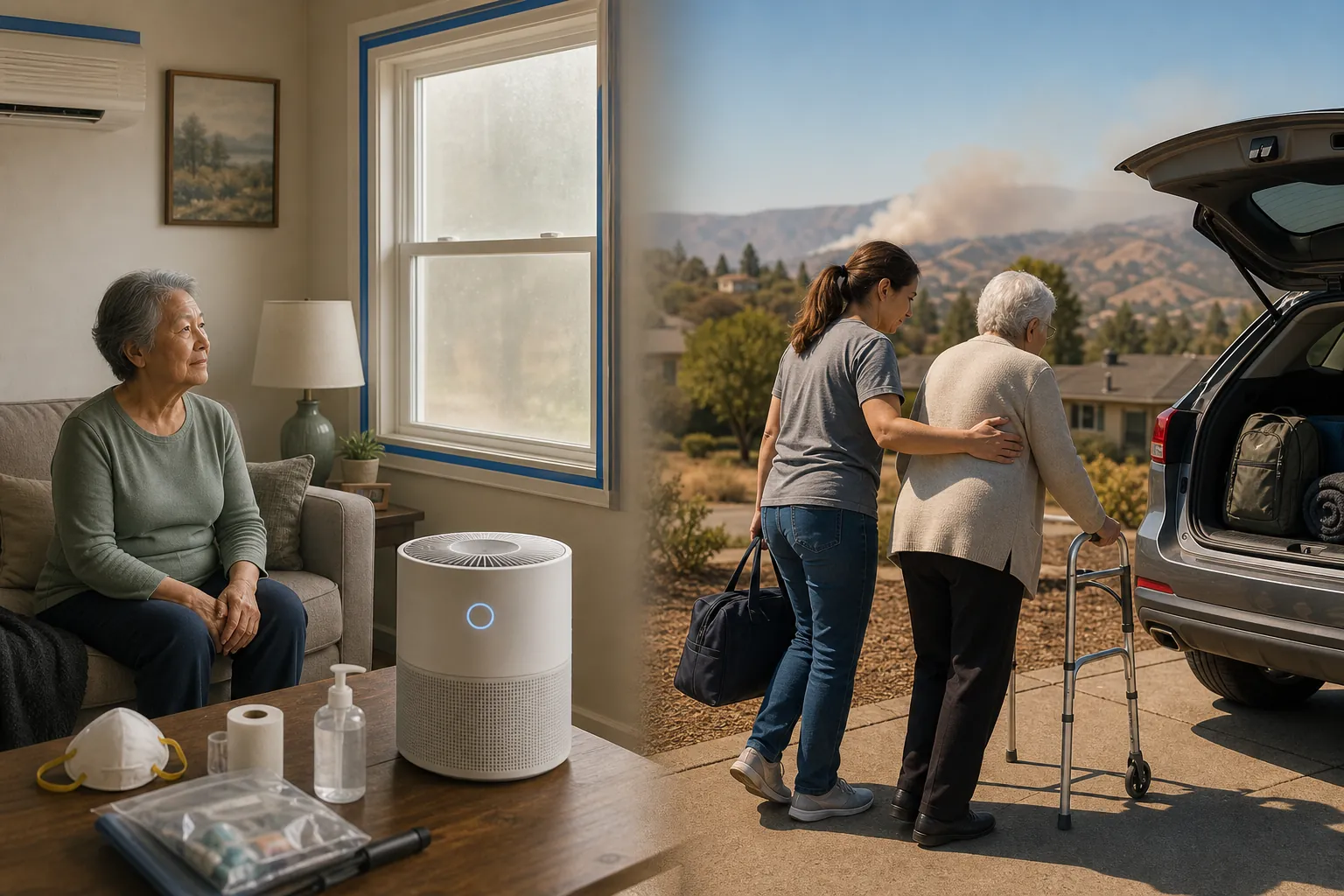
Start With Two Plans, Not One Checklist
A caregiver needs two separate plans because wildfire season creates two different jobs.
| Threat | Main Goal | What Must Be Ready Beforehand |
|---|---|---|
| Smoke event without immediate fire threat | Keep the older adult breathing cleaner indoor air while avoiding an unnecessary evacuation | Clean room, filtration, sealed gaps, no-cook food, respirators, medications, power plan |
| Direct fire threat or evacuation warning/order | Leave early enough that mobility, equipment, and decision delays do not trap the parent | 15-minute drill, accessible transportation, packed medical supplies, documents, confirmed destination |
This two-plan structure is a practical caregiving framework, not an official CDC or FEMA category. Its value is that it forces the family to stop treating “wildfire safety tips for seniors” as a packing exercise and start treating them as decisions that must work with a real body: how fast your parent walks, whether they use oxygen, how long they can sit upright in a car, which medications cannot be missed, whether they can hear an alert, and whether they can sleep somewhere without stairs.
Broader fire data points in the same direction, though they should be read carefully. U.S. Fire Administration data from 2014 to 2023 shows adults ages 65 to 74 had 2.2 times the fire death risk of the general population; ages 75 to 84 had 2.9 times the risk; and adults 85 and older had 4.7 times the risk.[2] Those figures cover all fires, not wildfires only. They still matter because they describe the age-related vulnerability that wildfire evacuation plans often underestimate.
Plan A: Shelter Safely When Smoke Is the Main Threat
“Stay indoors” is too thin to be a smoke plan. Wildfire smoke is not ordinary bad air. AARP reported in July 2026 that research cited by Tarik Benmarhnia of the Scripps Institution found wildfire smoke to be approximately 10 times as toxic as regular PM2.5 air pollution from fossil fuel combustion.[3] For an older adult with asthma, COPD, heart disease, diabetes, frailty, or limited stamina, that difference changes the job inside the house.
The goal is to create one room where the air is cleaner than the rest of the home, supplies are within reach, and the older adult can remain there without cooking, searching for medication, or repeatedly opening outside doors.

Build the Clean Room Before Smoke Arrives
Choose the room with the fewest exterior leaks, enough space for a chair or bed, and a door that closes well. A bedroom often works better than a living room because it is smaller and easier to filter. If the parent uses a walker, wheelchair, commode, oxygen concentrator, or recliner for sleeping, the room has to fit those items without turning every trip to the bathroom into an obstacle course.
- Use a portable HEPA air purifier sized for the room, or prepare the HVAC system with a MERV 13 or higher filter if the system can safely handle it.
- Seal obvious gaps around doors and windows with weather stripping before fire season; wet towels can help temporarily during an event.
- Keep the parent’s inhalers, nebulizer supplies, oxygen tubing, pulse oximeter if used, glasses, hearing aids, phone, charger, water, and snacks inside or immediately beside the room.
- Set up seating and lighting so the parent does not have to cross a dark hallway or hunt through cabinets while the house is closed up.
This is a good moment for a pre-season home review, especially if the parent has new mobility limits since last year. A professional home safety assessment can identify blocked exits, poor lighting, loose thresholds, and bathroom or bedroom layouts that will matter during both smoke sheltering and evacuation. If the home needs structural changes, a CAPS-certified aging-in-place specialist may be able to help with widened pathways, safer thresholds, grab bars, and exits that do not require a step down.
Take Cooking Out of the Smoke Plan
During heavy smoke, the kitchen can work against the clean room. CDC guidance cited by AARP warns that frying, grilling, or broiling worsens indoor air quality.[3] That means the plan should not depend on the parent cooking “just a little” while every window is shut.
- Buy no-cook foods the parent will actually eat: shelf-stable meals, nut butters, crackers, canned fruit, protein drinks, low-sodium options if needed, and easy-open packaging.
- Keep water in the clean room or close enough that the parent does not have to lift a heavy case.
- Plan for dentures, swallowing issues, diabetic meal timing, and foods that conflict with medications.
- If the parent receives delivered meals, decide what happens when drivers cannot reach the neighborhood.
Do Not Treat Any Mask as Good Enough
N95 respirators belong in the smoke plan. Surgical masks do not filter fine particulate matter the same way and should not be treated as a substitute for PM2.5 protection. The family should check fit before the first smoky day, because arthritic hands, facial hair, oxygen tubing, anxiety, or cognitive changes can make a technically correct respirator unusable in practice.
The respirator is not a permission slip for errands. It is backup for unavoidable movement: getting to a medical appointment that cannot be delayed, moving from the car into a clinic, or leaving if the smoke event turns into a fire threat.
Stock Medication for the Way Your Parent Actually Takes It
A medication list is not the same as medication access. The plan should account for refill rules, mail-order delays, refrigeration, pill organizers, eye drops, inhalers, injections, wound supplies, test strips, and the person who knows how to set everything up.
CDC guidance recommends keeping a 7- to 10-day supply of prescription medications in a waterproof, childproof container; AARP recommends 30 days where possible.[3] For some families, insurance rules make 30 days difficult. In that case, the caregiver’s job is to know the earliest refill date, the pharmacy backup location, and which prescriptions cannot safely be skipped.
- Keep an updated medication list with dose, timing, prescriber, pharmacy, allergies, and diagnoses.
- Photograph prescription labels and store copies where both the parent and caregiver can reach them.
- Ask the pharmacist which medications are sensitive to heat, refrigeration loss, or missed doses.
- Place backup batteries for hearing aids, glucose meters, blood pressure cuffs, and other daily devices in the same supply zone.
Plan B: Leave Early When Fire Threatens the Home
Evacuation planning for an older adult should begin earlier than the official moment that sounds decisive to everyone else. If your parent needs 10 minutes to stand, use the bathroom, find shoes, attach oxygen tubing, and reach the car, a late decision is not really a decision. It is a bet that the road, the caregiver, the power, the phone network, and the parent’s body will all cooperate at once.
The California Fire Safe Council’s AARP wildfire preparedness guide uses a 15-minute drill: practice going from alert to loaded vehicle within 15 minutes.[4] For many families, that drill will be uncomfortable the first time. That is the point. It reveals whether the parent can move through the doorway with a walker, whether the oxygen concentrator has a battery, whether the go-bag is too heavy, and whether the caregiver is depending on memory instead of a written sequence.
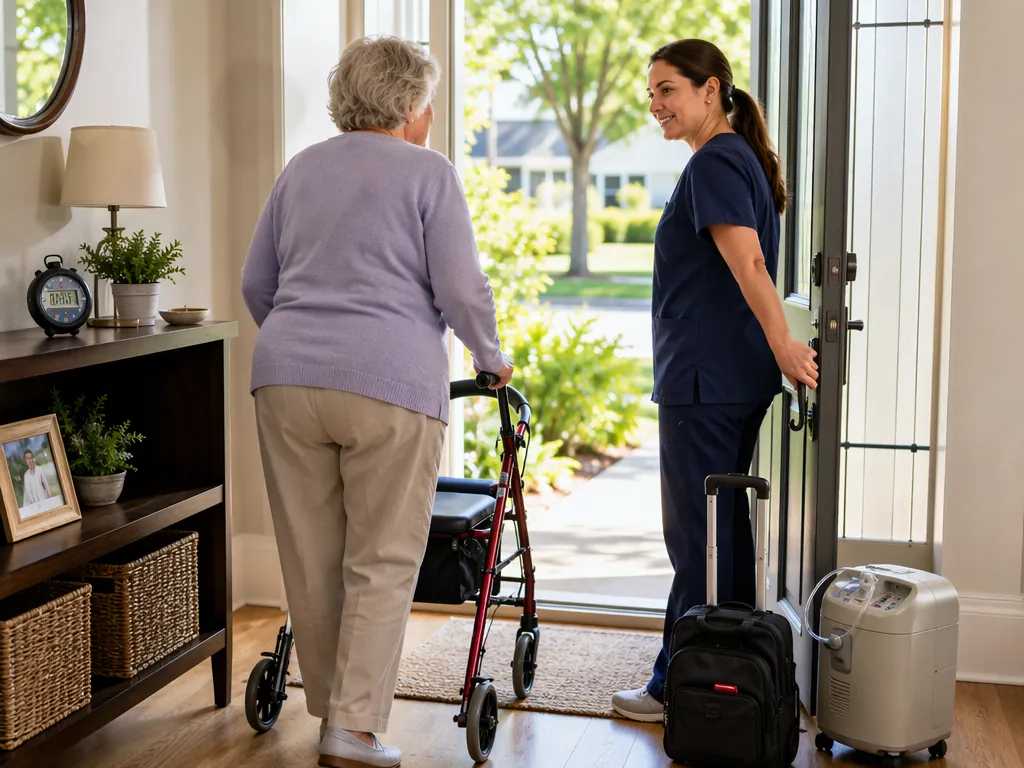
Run the 15-Minute Drill Like a Real Departure
Do not rehearse only the easy part. Start wherever your parent usually is at that time of day: recliner, bed, bathroom, garden, kitchen table. Use the shoes they actually wear, the walker they actually use, and the car they would actually ride in. If they need help transferring, include that transfer. If they cannot lift their legs into an SUV without a stool or handle, find out now.
- Start a timer when the alert is noticed.
- Have the parent put on shoes, glasses, hearing aids, and outerwear if needed.
- Move medications, phone, charger, wallet, documents, mobility aids, and medical devices into the vehicle.
- Load oxygen tanks, concentrator, wheelchair, walker, scooter, or transfer equipment.
- Close the home and get everyone seated with seat belts fastened.
- Stop the timer only when the vehicle is ready to leave the driveway.
After the drill, fix the first bottleneck rather than praising the intention. If the walker catches on the threshold, that is a home modification issue. If the parent cannot hear the alert, that is an alerting issue. If the medication bin is in three places, that is a packing issue. If the caregiver has to drive 40 minutes before the parent can begin leaving, that is a transportation issue.
Transportation Has to Match the Equipment
A neighbor with a sedan may be kind and still be the wrong evacuation plan. Before fire season, confirm who can transport the parent, what vehicle they will use, and whether it can handle the parent’s equipment without leaving the caregiver to improvise in smoke.
- For walkers: Can the parent reach the car, fold the walker, and get seated without blocking the driveway?
- For wheelchairs or scooters: Is there a ramp, lift, or accessible vehicle, and who knows how to secure the device?
- For oxygen: Are tanks upright and secured, and is there enough supply for the drive plus delays?
- For power-dependent devices: Are batteries charged, labeled, and packed with the correct cords?
- For pets or service animals: Is there room for the animal, carrier, food, and documents without displacing medical equipment?
If the local emergency management office offers a disability or access-and-functional-needs registry, register before the season begins. A registry is not a guarantee of rescue, and families should not treat it as a substitute for transportation. It is one more way to make the parent visible to local systems when resources are strained.
Pack the Go-Bag Around Medical Continuity
The go-bag matters, but only after the evacuation sequence works. Pack it so another adult could understand your parent’s care needs if you were separated or delayed.
- Medications and supplies: 7 to 30 days where possible, including inhalers, injections, eye drops, wound care, test strips, and written dosing instructions.
- Medical devices: glasses, hearing aids, dentures, mobility aids, oxygen accessories, CPAP supplies, batteries, chargers, extension cords, and backup power if used.
- Documents: ID, insurance cards, medication list, diagnoses, physician contacts, pharmacy information, advance directives, power of attorney documents, and copies of key medical records.
- Communication: phone charger, backup battery, written phone numbers, and instructions for relatives who may not know the parent’s routines.
- Daily function: incontinence supplies, wipes, easy clothing, sturdy shoes, snacks, water, cash, spare keys, and comfort items that reduce distress without overloading the bag.
Use a wheeled bag if the parent or caregiver cannot safely carry weight. Label it plainly. Keep it in the same place. If the parent resists having an emergency bag near the door, put the most time-sensitive medical items in a smaller grab pouch and store bulky supplies in the car during red-flag conditions, if it is safe and appropriate to do so.
Confirm the Destination Before the Road Is Full
“We’ll go to my sister’s” is not a plan until someone checks the entrance, bathroom, sleeping surface, medication storage, pet rules, and distance from medical care. A family home can be safer and calmer than a shelter for some older adults, but only if it can handle the parent’s body and routines.
- Can the parent enter without stairs, or is there a ramp that works in the dark?
- Is there a bathroom on the same level as the sleeping area?
- Can a walker, wheelchair, oxygen tubing, or bedside commode fit without creating a fall hazard?
- Is there a place for refrigerated medication, charging medical equipment, and storing backup supplies?
- Who will help with bathing, toileting, meals, and medication setup if the stay lasts more than one night?
The same thinking applies to hotels and public shelters. Call ahead when possible, keep a short list of accessible options, and note which ones can handle elevators being unavailable, power interruptions, service animals, oxygen equipment, or a caregiver staying in the same room. If a family member may host your parent, prepare that home the way you would prepare for any elderly guest: clear walking paths, night lighting, bathroom safety, medication space, and a quiet place to rest.
Do Not Assume Paid Help or Public Systems Will Fill the Gaps
Many families discover the missing pieces only after a warning arrives. Less than 1 in 3 adults ages 50 to 80 had an emergency kit assembled before recent wildfire seasons, according to a national survey cited by California Commission on Aging Chair David Lindeman and reported by the Los Angeles County Aging & Disabilities Department.[1] A kit is only the baseline; many older adults do not even have that.
Paid caregiving does not automatically solve the logistics either. CalMatters reported in February 2025 that only about 4,000 of approximately 600,000 California In-Home Supportive Services caregivers had received emergency planning training as of early 2025.[5] That figure is California-specific and should not be stretched to describe every state or every care program. It does show why a family should not assume that a home aide, however devoted, has been trained to choose evacuation timing, secure oxygen, locate documents, and move a frail adult under wildfire conditions.
Write down who does what. One person may monitor alerts. Another may call the parent. A neighbor may knock if phones fail. A paid aide may help gather daily-use items but may not be available after hours. The plan should name backups, because wildfire timing rarely respects work schedules.
Decide Early Triggers With the Parent, Not Over the Parent
An older parent who values independence should be part of the plan while decisions are still calm. The conversation does not have to begin with “You can’t manage this.” It can begin with observable constraints: the road out is narrow, the walker takes time, the oxygen battery lasts only so long, the pharmacy may close, the family destination has one step at the entry.
Set triggers that do not require a debate in smoke. For example, the family may agree that the parent leaves during an evacuation warning, not after an order, because loading the car takes longer than it does for younger neighbors. Or the parent may shelter during smoke unless breathing symptoms worsen, the air filtration fails, power is lost, or a direct fire threat develops.
The trigger should be written in plain language and posted where the parent and caregiver can see it. A plan that depends on everyone remembering a nuanced conversation under pressure is not kind to the person who has to execute it.
The Caregiver-Ready Test
Before fire season, test the plan rather than admiring the supplies. A family should be able to verify four things.
- One clean room can function during a smoke event, with filtration, sealed gaps, no-cook food, water, respirators, medications, communication, and the parent’s daily devices.
- One evacuation route works with the parent’s real mobility, including thresholds, stairs, darkness, footwear, transfers, and loading equipment into the vehicle.
- One destination is actually accessible, with entry, bathroom, sleeping, medication, charging, and caregiving needs checked before the family needs it.
- One drill proves the parent can be out within the needed window, or shows exactly what must change before the next red-flag warning.
If your parent has dementia or significant cognitive impairment, add another planning layer. Evacuation can be disorienting, refusal may be more likely, and identification, supervision, calming routines, and caregiver backup become more important than this general framework can fully cover.
A generic kit can sit untouched for years and still fail the moment it is needed. The dual plan is different: it is a practiced decision system. It tells the family when to keep the parent breathing cleaner air at home, when to leave early, and whether the parent’s medications, mobility, equipment, and destination can survive the decision.
References
- Lessons from the January Wildfires: Why Preparedness Matters, Los Angeles County Aging & Disabilities Department, February 2026.
- Older adults fire death and injury statistics, U.S. Fire Administration.
- Wildfire Smoke Health Risks for Older Adults, AARP, July 2026.
- AARP Wildfire Preparedness Guide, California Fire Safe Council.
- California wildfires expose emergency preparedness gaps for caregivers, CalMatters, February 2025.
Questions to bring to a clinician or OT
This is not medical, legal, or a family's final decision — only a framework. Bring these questions to a clinician, occupational therapist, or your local Area Agency on Aging.
Find Local HelpRelated reading
Noticed something outdated or inaccurate on this page? Flag a correction. We review every report against CDC, NIA, and AARP HomeFit guidance before updating a page.