
6 Best Skechers for Elderly Comfort and Support
Not all Skechers are safe for seniors. This guide ranks six popular models by fall-prevention criteria like arch support, stability, and slip resistance, helping you choose the right pair for your aging parent.
Key tradeoffs: stability versus cushioning
If you are trying to choose the best Skechers for elderly comfort and support, my short answer is this: start with the Skechers Arch Fit 2.0 if fall prevention is the main worry, consider Max Cushioning Arch Fit when knee or hip pain makes shock absorption more important, and be careful with very soft Go Walk models if your parent has balance issues or spends a lot of time on smooth indoor floors.
That is not because comfort does not matter. It matters a lot. A shoe your parent refuses to wear is useless. But for an older adult, comfort has to survive ordinary moments: turning at the kitchen counter, standing up from a recliner, crossing polished lobby tile, stepping into a bathroom at night, or catching a toe on a threshold. Soft, light, and easy are good only if the shoe still gives the foot a steady base.
The fall-prevention frame is not theoretical. The National Council on Aging describes safer shoes as part of fall protection for older adults, and the broader CDC STEADI approach treats footwear as one modifiable risk factor among many, alongside vision, medications, strength, and home hazards.[1] RunRepeat’s senior walking-shoe guide also summarizes footwear traits that matter for older adults: shock absorption, moderate stack height, a firm-enough midsole, a wide base, non-slip outsole, and proper fit.[2]
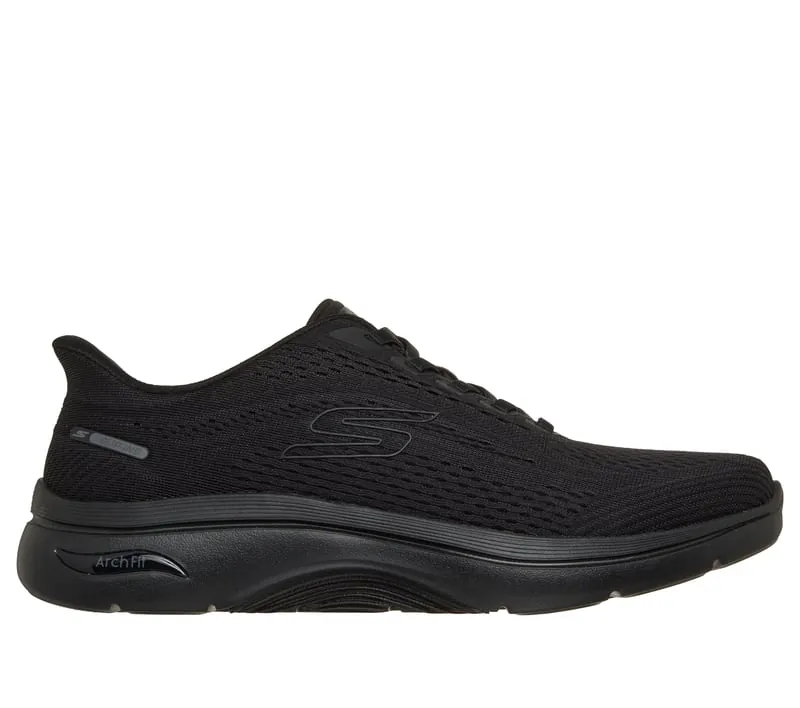
The ranking, if you need to buy today
| Rank | Skechers model | Best use | Safety judgment |
|---|---|---|---|
| 1 | Skechers Arch Fit 2.0 | Best overall for elderly comfort, support, and fall-prevention priorities | Strongest balance of arch support, stable platform, measured shock absorption, and outsole durability. |
| 2 | Skechers Max Cushioning Arch Fit | Best when arthritic knees, hips, or general joint pain dominate | Excellent shock absorption with Arch Fit support, but the higher cushioning feel may not suit every balance-impaired senior. |
| 3 | Skechers Go Walk 7 Springtime | Best lighter option for lower-risk seniors and short errands | More structured than the softest Go Walk picks, lightweight, and machine-washable. |
| 4 | Skechers Arch Fit slip-on styles | Best when limited dexterity makes laces unrealistic | Worth considering when the shoe keeps Arch Fit support and a secure heel fit; avoid any slip-on that feels loose at the heel. |
| 5 | Skechers Go Walk Joy | Best only for lower-risk indoor comfort, not balance concerns | Comfortable and popular, but its very low torsional rigidity makes it a poor choice for seniors with existing balance issues. |
| 6 | Skechers Go Walk Flex | Best approached cautiously | Flexible and easy, but poor twisting resistance and wet-traction concerns make it hard to recommend for fall-risk seniors. |
The order above weights safety more heavily than pure softness. If your parent is steady, active, and mainly wants a light walking shoe for short errands, the middle of the list may be fine. If your parent has already fallen, reaches for furniture while walking, has neuropathy, or hesitates on shiny floors, I would not start with the softest Go Walk models.
Why Arch Fit 2.0 is the safest overall pick
The Arch Fit 2.0 wins because its comfort features do not erase its stability features. RunRepeat measured a 39.2 mm heel stack, a 50.1 AC midsole firmness reading, a 15.2 mm heel-to-toe drop, a 114.5 mm forefoot width, a 90.0 mm heel width, a 134 SA shock absorption score, and only 0.2 mm of outsole wear in its Dremel durability test.[3] Those are shoe-lab numbers, not a clinical prescription, but they tell you more than a product page saying “cushioned” or “lightweight.”
The midsole firmness matters because a senior shoe should not collapse under the foot like a pillow. Too much squish can make turning and side-stepping feel vague. The Arch Fit 2.0’s measured firmness is slightly firmer than RunRepeat’s average, which is exactly the kind of detail I want to see in a shoe that still needs to feel comfortable on a long grocery-store aisle.[3]
The platform width matters just as much. A wider forefoot and heel give the foot more ground contact, and that becomes noticeable during small corrections: pivoting at the stove, stepping around a dog bowl, or shifting weight while opening a heavy door. The Arch Fit 2.0 does not depend only on cushioning to feel good; it spreads the foot over a broad base.[3]
The outsole durability result is another reason I would put this shoe first. RunRepeat’s test found only 0.2 mm of wear after its Dremel abrasion test, which suggests the outsole should hold up better than many softer-bottom walking shoes.[3] For a senior, outsole wear is not cosmetic. A worn, smoothed-down sole can turn a familiar hallway or parking-lot stripe into a slip hazard.
The Arch Fit line also carries the APMA Seal of Acceptance, and podiatrists quoted in consumer testing and walking-shoe guides repeatedly point caregivers toward Skechers Arch Fit or selected supportive Skechers models for older adults who need arch support and accessible designs.[4][5][6] I still would not treat any seal or podiatrist quote as a substitute for watching your parent walk in the shoe, but it adds useful support to what the lab measurements already suggest.
Who should choose Arch Fit 2.0
- A parent with flat feet or tired arches who still needs a stable walking base.
- A parent who walks on smooth indoor floors, apartment lobbies, clinic floors, or grocery-store tile.
- A parent who needs cushioning but feels unsteady in very soft shoes.
- A caregiver who wants one everyday Skechers model for errands, appointments, and home use.
When Max Cushioning Arch Fit makes more sense
Max Cushioning Arch Fit is the shoe I would look at when pain, not just balance, is driving the purchase. RunRepeat measured a 139 SA shock absorption score, which it reports as 36% above average, along with very durable outsole performance.[3] That combination matters for a parent whose knees or hips complain after every hard-floor errand.
This is where I would not overcorrect toward firmness. A frail parent with arthritic knees may truly need more cushioning. The caution is not “avoid cushioning.” The caution is “do not buy cushioning that comes with a flimsy, twisting sole.” Max Cushioning Arch Fit keeps the Arch Fit support story while adding more impact protection, which is why it ranks second rather than getting dismissed as too soft.
Have your parent test it on turns, not just straight walking. A shoe can feel wonderful for ten straight steps and still feel too tall or too plush when the wearer pivots. If the extra cushioning makes your parent slow down, widen their stance, or reach for the wall, choose the steadier-feeling Arch Fit 2.0 instead.
The Go Walk models need a slower look
Go Walk shoes are easy to like. They are light, familiar, often simple to slip on, and many older adults will actually wear them. That is not a small thing. The problem is that the exact qualities that make some Go Walk models feel effortless can become a drawback for an older adult who needs more structure underfoot.
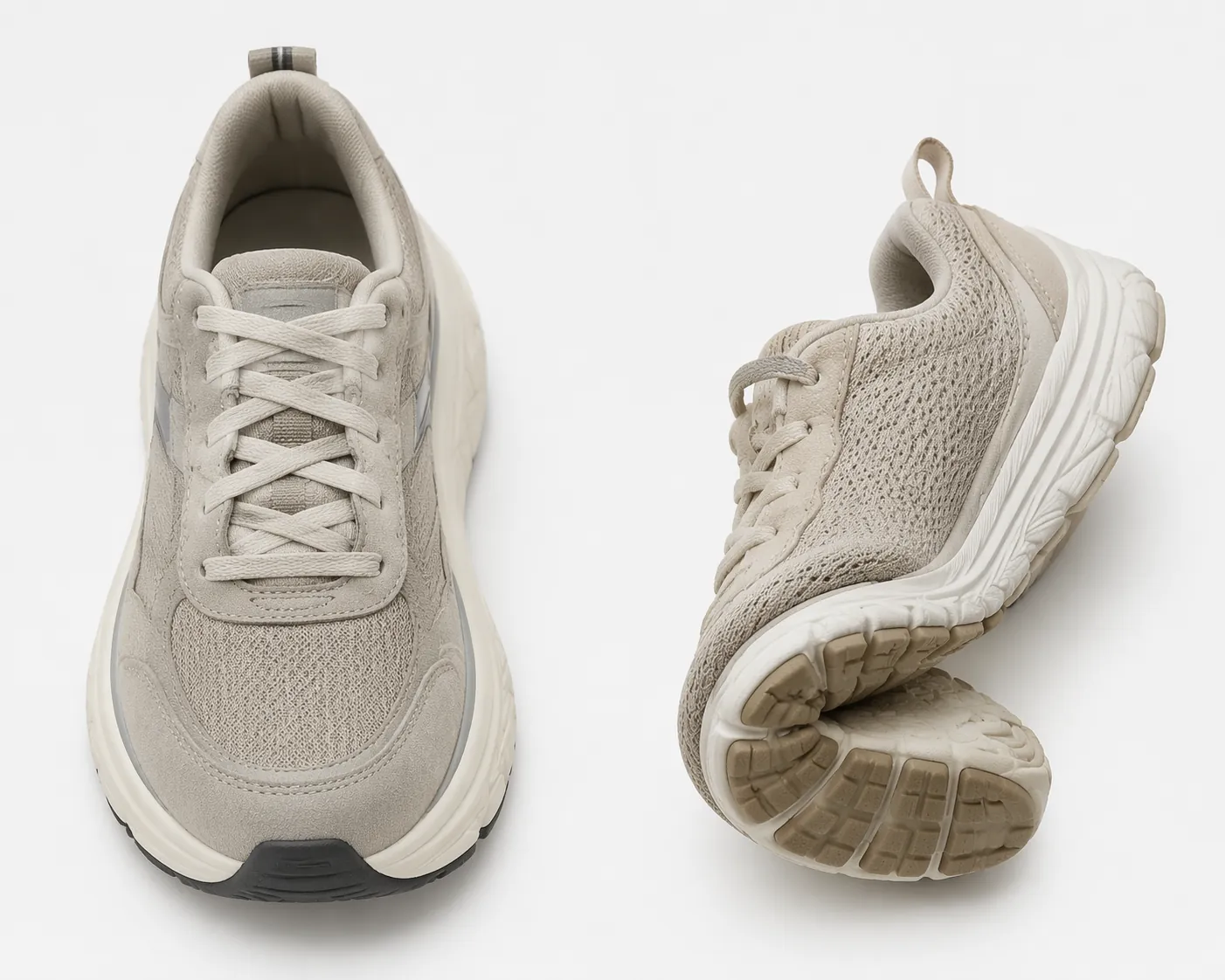
RunRepeat gave the Go Walk Joy a 1 out of 5 torsional rigidity score and noted the lack of reinforcing elements, concluding that it is not recommended for seniors with existing balance issues.[3] Torsional rigidity sounds technical, but the practical meaning is simple: when the shoe twists too easily, the foot gets less help resisting awkward rotation.
That matters most during messy movement, not during a neat shoe-store walk. A parent rarely falls while taking perfect forward steps in a clear aisle. The risky moments are sideways, diagonal, rushed, or half-awake: turning away from the sink, stepping around a laundry basket, or changing direction when someone calls from another room.
The Go Walk Flex raises a similar concern. RunRepeat describes it as poor in stability, noting that it caves into twisting and lacks stabilizing features, with wet-traction concerns also flagged.[3] That does not mean every person wearing it will slip. It does mean I would not choose it as the main walking shoe for a parent who already has balance issues, neuropathy, slow reaction time, or a home full of slick surfaces.
A fair caution about smooth floors
There are repeated caregiver community reports of falls or near-falls on smooth indoor floors while wearing certain soft-soled Skechers. I would not treat those reports as peer-reviewed proof, and I would not use them to condemn an entire brand. But I also would not ignore them when lab findings already show very flexible, minimally structured soles in some popular Go Walk models.
The practical response is modest: if your parent wants Go Walk shoes, test them on the actual surfaces they use. Kitchen tile, bathroom flooring, polished apartment hallways, clinic lobbies, ramps, and wet entryways matter more than carpet. If the shoe squeaks, skids, twists, or lets the heel slide, do not talk yourself into it because the upper feels comfortable.
Where Go Walk 7 Springtime fits
Go Walk 7 Springtime is the Go Walk option I would consider before Go Walk Joy or Go Walk Flex for a lower-risk senior. RunRepeat lists it as a lighter option, with weights ranging from 6.17 to 8.78 ounces, and notes that it has better structure than other Go Walk models.[3] The machine-washable design is also useful when hygiene is a real issue, such as for seniors prone to fungal infections or those who wear the same shoes daily.[3]
This is not my first pick after a fall. It is more of a compromise shoe for a parent who dislikes heavier footwear, has decent balance, and needs something easy for short errands. I would still check the heel hold, outsole grip, and twisting resistance by hand before keeping it.
Quick picks by parent need
| Parent need | Start with | Why |
|---|---|---|
| Flat feet or fallen arches | Arch Fit 2.0 | Best overall mix of arch support, firm-enough cushioning, and platform width. |
| Arthritic knees or hips | Max Cushioning Arch Fit | Higher shock absorption may reduce hard-floor impact while keeping Arch Fit support. |
| Diabetes or reduced foot sensation | Arch Fit 2.0 in the correct width | Prioritize secure fit, stable base, and room that does not pinch; inspect feet and shoe interiors regularly. |
| Balance issues or prior fall | Arch Fit 2.0 | Avoid the most flexible Go Walk models; prioritize torsional resistance and outsole grip. |
| Limited dexterity | Arch Fit slip-on style or secure Skechers Slip-ins option | Easy entry helps only if the heel stays secure and the shoe does not slide around. |
| Mostly indoor walking | Arch Fit 2.0 | Smooth floors make outsole grip, base width, and twisting resistance more important. |
| Short errands and low fall risk | Go Walk 7 Springtime | A lighter option when the parent is steady and does not need maximum structure. |
Fit can undo a good model. RunRepeat’s senior footwear guide cites research finding that 72% of seniors wear incorrectly fitting shoes on both feet, while many also walk barefoot, in socks, or in slippers at home, all of which can impair balance.[2] Skechers’ wide options are one reason the brand is useful for older adults, but wide should mean enough room across the forefoot, not a sloppy heel.
How to check the shoe before your parent keeps it
Do the try-on at the time of day when your parent’s feet are most swollen, usually later in the day. Use the socks they normally wear. If they use orthotics, bring them. If one foot is larger, fit the larger foot.
- Check heel hold: the heel should not lift or slide when your parent walks or turns.
- Check toe room: the front should not squeeze, curl toes, or rub bunions.
- Twist the shoe gently: a senior walking shoe should bend at the forefoot, but it should not wring out like a towel.
- Watch turns: ask your parent to turn around, step sideways, and stand from a chair, not just walk straight.
- Test real surfaces: tile, bathroom flooring, entry mats, ramps, and wet-weather thresholds reveal more than carpet.
If your parent has diabetes, neuropathy, severe swelling, foot deformity, recent surgery, or repeated falls, use this guide as a shopping filter, not medical advice. A podiatrist, physical therapist, or falls clinic can spot problems that a family try-on cannot.
Replace them before the outsole becomes the hazard
Even a good Skechers pair has a safety clock. RunRepeat’s senior walking-shoe guide gives a general replacement window of 300 to 400 miles or 8 to 12 months, and cites research finding that 90% of older adults in one study wore shoes with partially or fully worn outsoles.[2] That last point is the one families miss because the upper can still look clean while the bottom has quietly gone smooth.
For fall prevention, choose Arch Fit 2.0 first. Choose Max Cushioning Arch Fit when joint pain is the bigger daily problem and the shoe still feels steady during turns. Use Go Walk 7 Springtime only for lower-risk seniors who truly need lightness. Be cautious with Go Walk Joy and Go Walk Flex for anyone with balance concerns or smooth-floor exposure. And when the outsole is worn, replace the shoe before it becomes one more thing your parent has to recover from.
References
- How the Right Pair of Shoes Can Prevent a Fall – NCOA
- 7 Best Walking Shoes For Seniors in 2026 – RunRepeat
- 7 Best Skechers Walking Shoes in 2026 – RunRepeat
- The 11 Most Comfortable Sneakers for Seniors, Tested by PEOPLE – PEOPLE
- The 12 Best Walking Shoes for Seniors of 2026, Tested – Verywell Fit
- 7 Best Women's Skechers for Walking, According to Podiatrists – Women's Health
Where this decision comes from
Suggest a correction
We keep this content strictly product-neutral and reviewed against CDC STEADI, NIA, and AARP HomeFit guidance. If something here looks outdated, unclear, or inaccurate, tell us — this page does not carry open public comments, because it touches medical urgency, cost, or capacity-adjacent decisions where a discussion thread is a trust liability rather than a trust asset.
See the correction process on our editorial standards page →