
How Do You Plan a 79th Birthday for an Aging Parent?
This guide provides a structured framework for adult children planning a 79th birthday for an aging parent, helping you assess their health status, preferences, and energy level while managing caregiver burnout. You'll learn how to create a celebration that feels meaningful without overcomplicating it.
A 79th birthday can sound simple until you are the one deciding whether Mom can handle a restaurant, whether Dad will enjoy visitors or just endure them, and whether everyone expects you to make this year big because next year is 80. The useful starting point is not a theme. It is an assessment: what can your parent actually enjoy this year, and what will it cost them afterward?
That is why many of the most practical ideas for a 79th birthday are smaller than the internet makes them look. Several senior-party guides converge on the same first corrections: avoid surprise parties, ask the parent what they want, choose a time earlier in the day, keep the event short, delegate specific jobs, and build in flexibility if the day goes sideways [1][2][3]. Those are not boring details. They are the difference between a warm birthday and a recovery project.
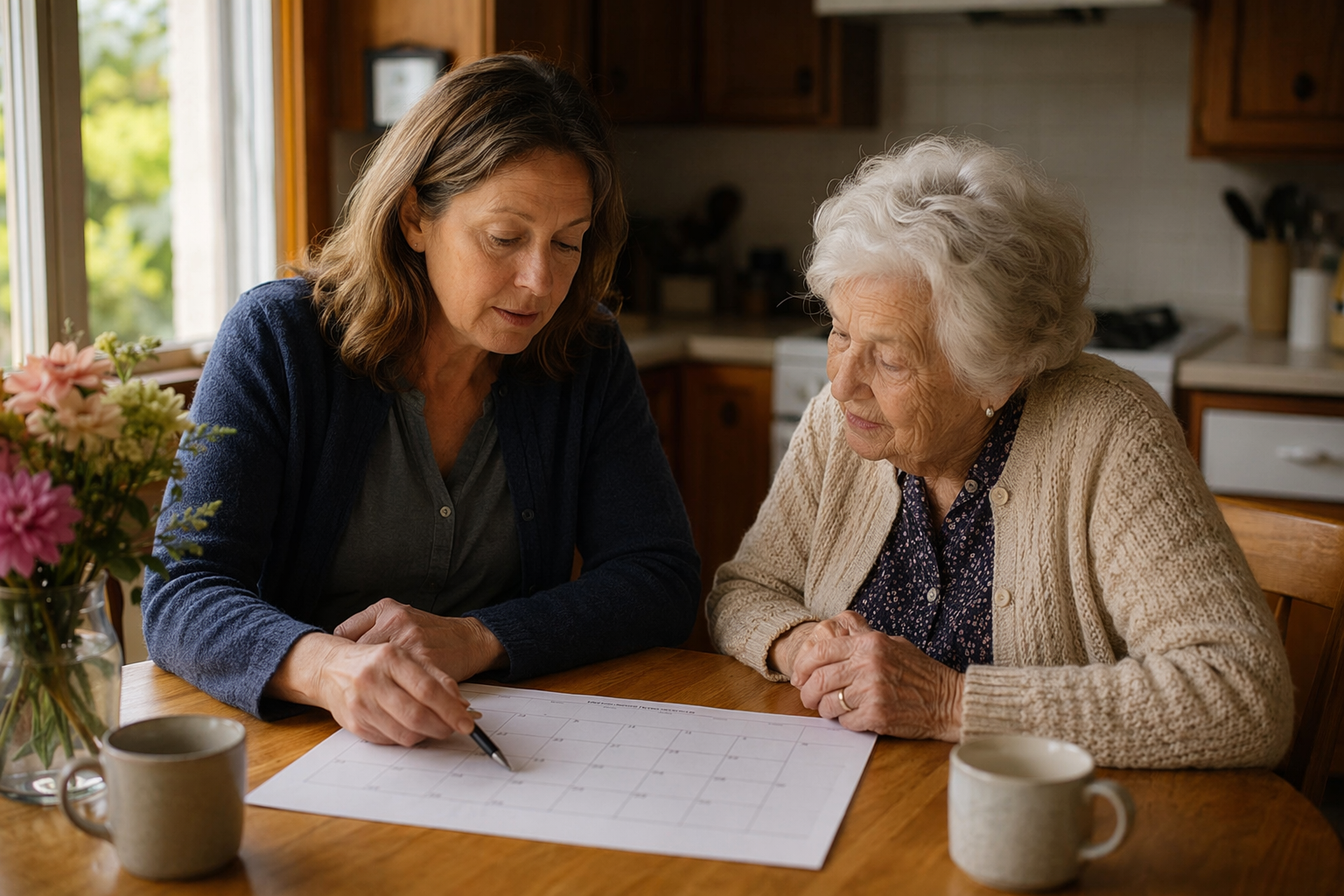
Start With What the Birthday Is Supposed to Do
Birthdays matter because being remembered matters. The National Council on Aging summarizes broader social-connection research showing that social isolation is associated with a 29% increased risk of heart disease, while stronger social ties are associated with 50% improved odds of survival [4]. That does not prove that one birthday lunch improves anyone’s health. It does support a more modest and still important point: connection is not decorative in later life.
The mistake is treating connection as volume. More guests, more photos, more food, more surprises, more speeches. For an aging parent who tires quickly, hears poorly in restaurants, uses a walker, or has had a recent hospitalization, connection may need to be quieter and more controlled. The goal is not to create a party impressive enough for the group chat. The goal is for your parent to feel recognized without having to perform being fine.
Ask Directly, Without Making Them Manage Your Feelings
The first planning conversation should be plain and kind. Not, “We can do whatever you want,” which often makes a parent feel responsible for everyone’s expectations. Not, “You don’t want anything big, right?” which quietly pushes them toward the answer that is easiest for you. Try something more specific: “I’d like your birthday to feel like you. Would you rather have lunch with just us, a few people at the house, a short restaurant meal, or phone calls spread through the day?”
If your parent tends to dismiss their own needs, add boundaries that make acceptance easier: “I’m thinking of something around 90 minutes, earlier in the day, so it doesn’t wear you out.” That tells them you are not asking them to choose between being celebrated and being sensible.
If the conversation itself is hard because your parent resists help, denies changes, or worries about being a burden, it may help to treat the birthday as one small version of a larger skill: talking honestly without taking away dignity. A deeper guide on having hard conversations with aging parents can help you prepare for that part before you ask about cake or guests.
Do the Caregiving Assessment Before You Pick the Celebration
A 79th birthday is not medically distinct from 78 or 80. What makes it feel different in many families is the timing: people are starting to notice changes, comparing this year with last year, and quietly wondering what the 80th will require. That makes the assessment more important than the number.

Before you book anything, run through the ordinary things that determine whether the day will work.
- Health status: recent fall, surgery, hospitalization, infection, medication change, pain flare, appetite change, or new shortness of breath.
- Mobility: whether they can get from car to entrance, sit comfortably, stand from the chair, manage stairs, and reach the bathroom safely.
- Energy pattern: best time of day, usual nap time, how long they can visit before their face changes even if they insist they are fine.
- Cognitive or sensory needs: memory changes, anxiety in crowds, hearing difficulty, vision limitations, or trouble following fast conversation.
- Recovery time: whether an outing means they will be wiped out that evening or the next day.
- Caregiver capacity: who is driving, cooking, cleaning, cueing medications, managing guests, and staying alert for signs of fatigue.
If this list makes you realize the birthday is exposing a bigger functional shift, pause there. A guide to assessing IADLs in an aging parent or the signs your aging parent needs in-home assistance may be more useful than another page of party ideas.
Choose the Format That Matches This Year’s Capacity
Once you know the constraints, the options narrow in a helpful way. You are not trying to find the most creative idea. You are trying to find the kind of celebration your parent can receive.
| If this is true | Choose this kind of celebration |
|---|---|
| Your parent is medically stable, mobile enough for a short outing, and enjoys being out | Early lunch or dessert at a familiar, accessible restaurant |
| Your parent tires quickly but likes seeing family | Short open-house window at home with strict guest timing |
| Your parent is recovering, anxious, or easily overstimulated | Quiet home celebration with one or two visitors and favorite food |
| Family is far away or travel is too much | Brief video call, recorded messages, mailed cards, or staggered phone calls |
| Memory changes are significant | Metered, familiar visits with clear introductions and low noise |
A Familiar Restaurant, Not a Production
A restaurant can work if it is chosen like a care setting, not like a special-occasion venue. Look for easy parking, a short walk from the door, stable chairs with arms if your parent needs help standing, a bathroom on the same level, and enough quiet for conversation. General senior-party guidance also emphasizes accessibility, timing, and flexibility when planning outside the home [7].
Reserve early, ideally before the lunch rush or in the early afternoon. Cheryl’s Cookies recommends early-afternoon timing and a 1.5- to 2-hour cap for senior birthday gatherings [2]. That cap is not rude. It is protective. It lets people enjoy the meal while there is still enough energy left to get home, take medications, and recover.
The guest list should be smaller than the table you could technically fill. Four people who listen and speak clearly may be better than twelve people who love your parent but talk over one another. If someone wants to drop by later “just for a minute,” give them a different job or a different day.
A Short Home Gathering With Jobs Assigned
Home is often easier for the parent and harder for the caregiver. That tradeoff needs to be named before the plan becomes yours by default. If the celebration is at home, assign jobs in complete sentences: “Mark brings lunch.” “Dana handles dessert and candles.” “Jess takes photos and leaves by 3.” “I will not be cleaning after everyone while Mom is exhausted.”
Working Daughter’s birthday-party advice includes delegating to siblings and building in flexibility, which is exactly the part many families skip until the responsible child is standing in the kitchen resenting everyone [1]. If sibling dynamics are already uneven, use the birthday as a small test of clearer division, not another proof that “everyone helps” means nobody owns the task. A guide on talking to siblings about parent care when equal isn’t fair can help if that conversation is already loaded.
Keep the home gathering recognizable: favorite soup, a bakery cake, the grandchildren singing, a chair set where your parent can see people without being trapped in the center of the room. Decorations are fine if they do not create clutter, tripping hazards, or a cleanup shift that lasts longer than the party.
A Quiet Celebration for a Parent Who Is Fragile This Year
Some years do not need a party. They need a birthday that still feels like a birthday: clean clothes if that matters to your parent, a favorite dessert, flowers where they can see them, familiar music, a short toast, and one person who is not rushing through the visit. If your parent is recovering from a fall or hospitalization, this may be the kindest version.
Limited mobility does not mean the day has to be empty. Hired Hands Homecare suggests adapting activities for seniors with limited mobility, including seated games and lower-effort participation [8]. The key is choosing activities that do not make your parent feel tested. A seated card game your parent already likes may work. A new “senior game” that requires instructions, speed, or performance may not.
A Distance-Friendly Birthday That Does Not Become a Two-Hour Video Call
When family is spread out, a video call can be lovely or punishing. The safest version is short, scheduled, and moderated by one person. Ask relatives to send recorded messages in advance if live calls become chaotic. Play only a few at a time. A parent who loves hearing everyone’s voices may not be able to process twenty people talking from tiny squares.
Cards still count. So do printed photos with names on the back, a mailed dessert from a place they remember, or a playlist of familiar songs. The point is not to prove that everyone appeared at once. The point is to let your parent receive affection in a form they can actually take in.
If Dementia Is Part of the Picture, Plan the Greetings
Dementia changes the birthday because the hard part may not be food or decorations. It may be arrivals, names, noise, and the pressure to remember. In an AgingCare caregiver forum discussion about a birthday party for a mother with dementia, caregivers suggested name tags that include relationships, one-at-a-time greetings, and avoiding questions like “Do you remember me?” [5]. That is caregiver-sourced lived experience, not a clinical rulebook, but it is practical and humane.
A better greeting sounds like: “Hi, Aunt Ruth, it’s Karen, your niece. I’m happy to see you.” Then stop. Let the parent respond without a quiz. If they call someone by the wrong name, the goal is not correction for the record. The goal is keeping the visit safe and kind.
Senior Housing Options recommends morning or early-afternoon celebrations for people with dementia to reduce the risk of sundowning-related difficulty, and describes a metered-visit model rather than one large crowd [6]. That approach can also help the caregiver watch for fatigue: fewer guests, shorter visits, more room to end the celebration without explaining to ten people why it is time to go.
- Use name tags with first name and relationship if guests may not be recognized.
- Have guests approach one at a time instead of crowding the doorway.
- Skip memory-test questions, especially “Do you remember?”
- Keep background music low or off during conversation.
- Schedule the visit for the part of the day when your parent is usually calmest.
- Plan the exit before agitation or exhaustion makes it urgent.
Use Decorations, Food, and Photos After the Framework Is Set
Once the format is safe, then the sweeter details can come in. A favorite cake from childhood. The good plates. A framed photo from a trip they still talk about. Music from the years they loved most. A small toast that says something specific instead of turning the parent into a symbol of aging.
Photos are worth planning gently. Some parents love a group picture. Others dislike being posed, especially if they feel physically changed. Ask before lining everyone up. If you do take photos, get one early, before fatigue shows. Do not make the birthday depend on documenting every minute.
Food should be familiar and manageable. Consider appetite, swallowing concerns, diabetes restrictions if applicable, denture comfort, sodium limits, and whether your parent can eat neatly without feeling watched. The perfect menu is not impressive if they cannot enjoy it.
Make an Exit Plan Before Anyone Arrives
The exit plan is not pessimism. It is how the celebration stays kind. Decide who will notice when your parent is fading, who will end the visit, who will drive, who will clean up, and what phrase you will use. “This has been wonderful, and we’re going to let Dad rest now” is enough.
Build in a quiet place your parent can retreat to without feeling they have ruined the party. Keep medications, water, mobility aids, hearing aids, glasses, and bathroom access in the plan. If there are stairs, loose rugs, low chairs, or poor lighting, fix those before you worry about balloons. A guide to evaluating home safety products for seniors may be useful if the venue itself is becoming part of the problem.
Do Not Ignore What the Planning Is Showing You
Sometimes the birthday is the first event that makes the caregiving load visible. You notice that your parent cannot manage the bathroom alone at a restaurant. Or that your siblings assume you will coordinate everything because you always do. Or that one pleasant afternoon requires three days of phone calls, shopping, cleaning, transportation, medication timing, and emotional smoothing.
If that is the case, the answer is not to push harder. The birthday plan may be telling you to get more help. If you are seeing your own irritability, dread, sleep disruption, or resentment rise before a single guest arrives, use that information. A guide to matching caregiver burnout symptoms to the right respite option or an article on the hidden emotional toll of caring for aging parents may be more relevant than another decoration idea.
For caregivers who are newly in this role because of a recent fall, diagnosis, or hospitalization, the birthday may land inside a larger adjustment period. A structured guide to the first 30 days of caring for an aging parent can help separate the birthday decision from the bigger care decisions now arriving all at once.
A Simple Planning Decision
Choose the smallest celebration that still feels recognizably like your parent. If they love people, make it social but short. If they love food, make the food familiar and easy. If they love music, play the songs they actually know. If they hate fuss, do not disguise fuss as love.
Then add the protections: ask directly, avoid surprises, schedule early, cap the duration, delegate named tasks, reduce noise, check the bathroom and chairs, and give yourself permission to end the day while it is still going well. A 79th birthday is successful when your parent feels seen without being overwhelmed, and you are not destroyed by making that happen.
References
- Dad Turns 90; Elderly Birthday Party Ideas, Working Daughter, 2016
- 10 Birthday Party Ideas for Seniors, Cheryl's Cookies
- 4 Awesome Birthday Party Ideas For Seniors, Always Best Care Charleston
- Why Social Connections Matter as You Age, National Council on Aging
- Birthday party advice for mom with dementia?, AgingCare
- What is the Best Birthday Celebration for a Person with Dementia?, Senior Housing Options
- How to Throw a Birthday Party for a Senior, Right at Home Jacksonville
- 10 Unique Birthday Party Ideas for Seniors, Hired Hands Homecare
Where this decision comes from
Suggest a correction
We keep this content strictly product-neutral and reviewed against CDC STEADI, NIA, and AARP HomeFit guidance. If something here looks outdated, unclear, or inaccurate, tell us — this page does not carry open public comments, because it touches medical urgency, cost, or capacity-adjacent decisions where a discussion thread is a trust liability rather than a trust asset.
See the correction process on our editorial standards page →