
Caregiver decision guide
Know the AQI thresholds that protect older adults from wildfire smoke
Learn when to take action for your older parent during wildfire smoke. This guide explains the AQI levels where adults 65+ become a sensitive group and provides a condition-specific action table for chronic conditions like COPD, heart disease, and dementia.
If the Air Quality Index is Orange, it is already time to act for an older parent. EPA and CDC guidance places adults 65 and older in a group at increased risk from wildfire smoke, which means AQI Orange, 101–150, is not a wait-and-see zone for them; it is the first action threshold.[1][2]
That distinction matters because many alerts are written for the general public. A healthy adult may read Orange as a caution and Red as the point where plans change. A caregiver should read Orange differently: close the house, reduce exposure, check medications, watch symptoms, and start making the day smaller before breathing gets harder or fatigue sets in.
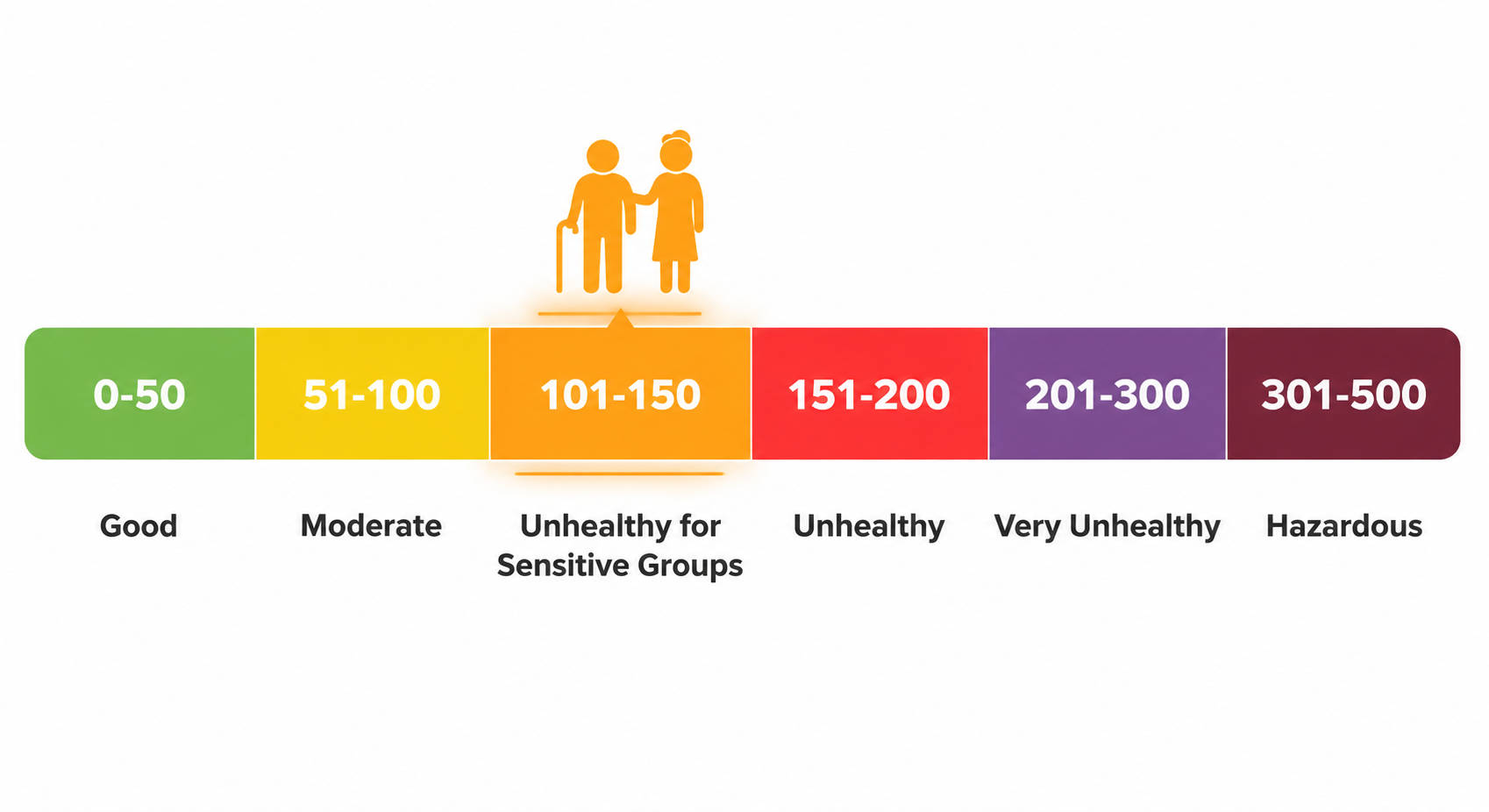
The caregiver version of the AQI scale
AQI is useful only if it changes what someone does. For an older adult, the practical question is not whether the sky looks bad. It is whether today’s number should change appointments, errands, outdoor time, indoor air, medications, and symptom checks.
| AQI level | What it means for an older adult | Caregiver action |
|---|---|---|
| Green, 0–50 | Air quality is generally good. | Keep the normal routine. If smoke is forecast, confirm that windows close, HVAC filters are ready, and medications are not running low. |
| Yellow, 51–100 | Air quality is acceptable for many people, but a medically fragile parent may already feel symptoms. | Check the forecast more than once that day. Move optional outdoor activity earlier or indoors if your parent has COPD, asthma, heart disease, or recent respiratory symptoms. |
| Orange, 101–150 | Unhealthy for sensitive groups, including adults 65 and older.[1][2] | Start protection now: keep windows and doors closed, reduce outdoor exertion, run filtered air if available, check rescue and daily medications, and monitor breathing, chest symptoms, unusual fatigue, confusion, or dizziness. |
| Red, 151–200 | Unhealthy. The general public is affected, and older adults have higher concern. | Cancel nonessential outdoor plans. Reschedule routine appointments if travel means smoke exposure. Keep the parent indoors in the cleanest available air and increase check-ins, especially if they live alone. |
| Purple, 201–300 | Very unhealthy. | Treat this as a serious exposure day. Avoid outdoor time except for urgent needs, use the best indoor filtration available, contact a clinician if symptoms worsen, and consider whether the home can remain safe if smoke persists. |
| Maroon, 301–500 | Hazardous. | If the home cannot maintain cleaner indoor air, or if the parent depends on electricity-powered medical equipment, has worsening symptoms, or cannot understand or follow precautions, discuss leaving the area or moving temporarily to cleaner air. |
The table is deliberately conservative because the consequence of waiting often lands on the caregiver after the alert is already obvious: a parent who became short of breath overnight, used a rescue inhaler more often than usual, skipped a diuretic because the day felt chaotic, or insisted on keeping a long-planned appointment while smoke was still rising.
Why wildfire smoke deserves earlier action
Wildfire smoke is not just a darker version of an ordinary smog day. Fine particles from smoke can reach deep into the lungs, and older adults are more likely to have the heart, lung, metabolic, or cognitive conditions that make that exposure harder to tolerate. One 2021 study in Nature Communications found wildfire smoke PM2.5 to be about 10 times more harmful for respiratory hospital admissions than PM2.5 from other sources in the Southern California data it analyzed.[3] That is an important warning, not a universal rule for every fire, city, or patient.
Recent smoke events show how quickly respiratory demand can rise. During the 2023 Canadian wildfire smoke episode, AARP reported a 17% average national increase in asthma-related emergency room visits and an 82% increase on the worst day in New York.[4] Those figures are about asthma visits, not every health effect in every older adult, but they make the caregiver problem concrete: by the time a region is visibly smoky, clinics, pharmacies, and families may all be reacting at once.
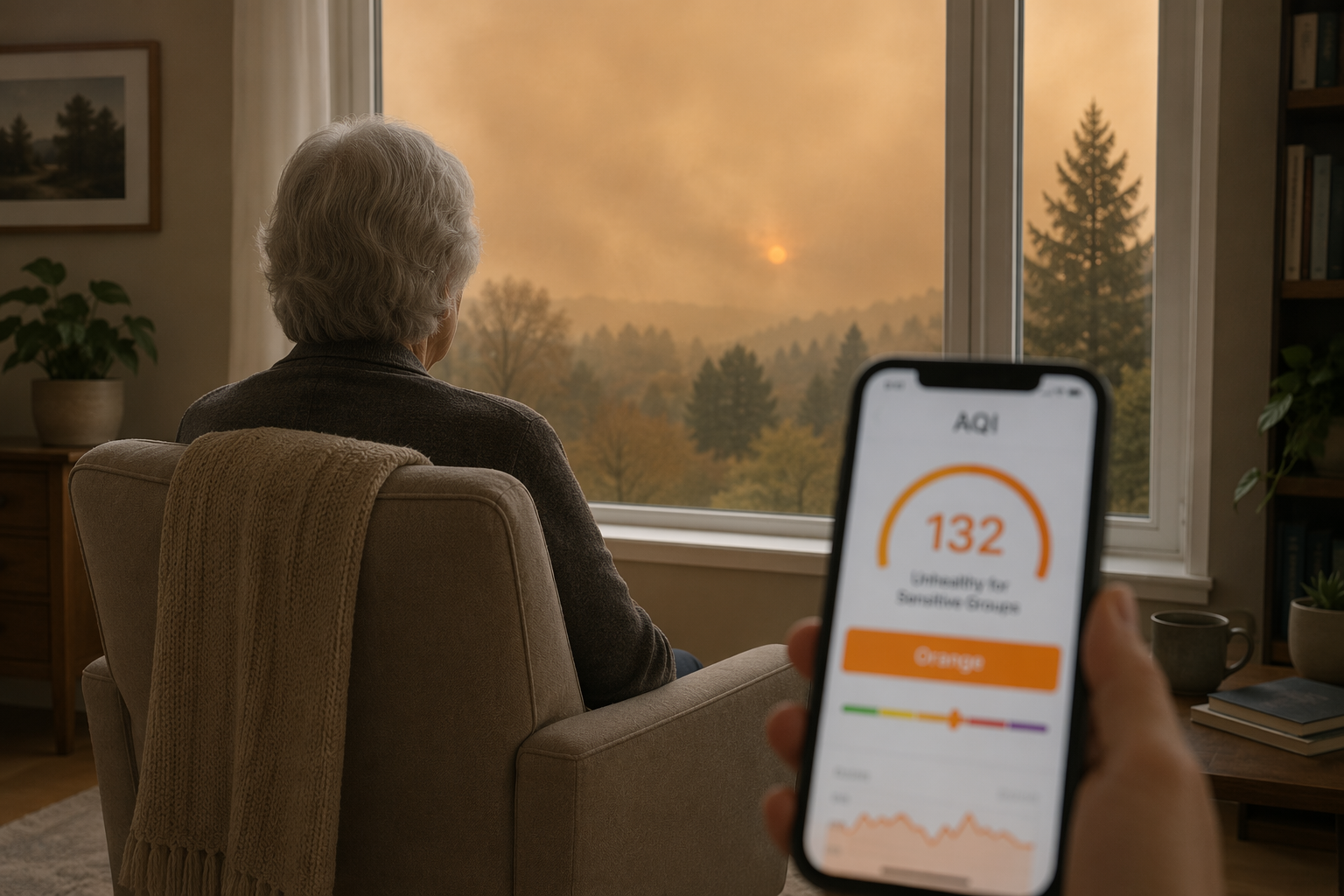
How the plan changes by condition
A generic air quality alert cannot know whether your parent has COPD, heart failure, diabetes, asthma, or dementia. The AQI number tells you when exposure risk is rising. The condition tells you what can go wrong first and what needs checking before the day gets away from you.
| Condition | At AQI Orange, 101–150 | At AQI Red or worse | Symptoms or situations that should escalate the plan |
|---|---|---|---|
| COPD | Keep the parent indoors as much as possible, reduce exertion, confirm inhalers, nebulizer supplies, oxygen supplies if prescribed, and the written COPD action plan if they have one. | Cancel outdoor errands and nonessential travel. If symptoms increase, call the clinician rather than trying to manage a worsening flare only by watching the AQI. | More shortness of breath than usual, wheezing, increased rescue inhaler use, bluish lips, difficulty speaking in full sentences, or oxygen readings outside the parent’s usual clinician-provided range. |
| Heart disease or heart failure | Reduce physical strain, heat exposure, and smoke exposure at the same time. Confirm heart medications are available and that the parent is not skipping meals, fluids, or prescribed medicines because the routine changed. | Avoid outdoor exertion and long trips through smoky air. If the home is hot and smoky, the combined stress may matter more than the AQI number alone. | Chest pain or pressure, new or worse shortness of breath, fainting, sudden swelling, unusual weakness, rapid or irregular heartbeat, or symptoms that resemble the parent’s prior cardiac warning signs. |
| Diabetes | Keep meals, hydration, glucose checks, and medications on schedule. Smoke days can disrupt shopping, walking routines, appetite, and caregiver visits. | Make the day simpler: avoid smoky errands, confirm supplies, and watch for illness-like changes that can affect glucose control. | Confusion, vomiting, inability to eat or drink, very high or very low glucose compared with the parent’s usual plan, or signs of infection or dehydration. |
| Asthma | Treat Orange as an asthma action day. Confirm controller and rescue medications, spacer or nebulizer supplies if used, and the parent’s asthma action plan. | Keep the parent in filtered indoor air if possible and avoid any optional outdoor exposure. Do not wait for severe symptoms before contacting a clinician if rescue medication use is increasing. | Wheezing, coughing that does not settle, chest tightness, waking at night with symptoms, or needing rescue medication more often than the parent’s plan allows. |
| Dementia or cognitive impairment | Do not rely on the parent to interpret the alert or remember instructions. Close windows, remove the need for outdoor errands, and use short, concrete explanations. | Increase direct supervision or check-ins. If the parent wanders, opens windows, resists staying indoors, or cannot safely use equipment, the setting may no longer be protective enough. | New confusion, agitation, sleepiness, wandering, missed medications, leaving doors or windows open, or inability to report breathing or chest symptoms reliably. |
These are not substitutes for a clinician’s individualized instructions. They are the caregiver layer that sits around those instructions: the phone call, the indoor air, the medication check, the decision to reschedule, and the observation that something has changed.
What to do inside the house when Orange appears
At Orange, the goal is to reduce the dose of smoke the parent breathes over the day. Start with the boring steps because they are the ones that actually lower exposure: close windows and doors, limit door-opening trips, set air conditioning or HVAC systems to recirculate when that option exists, and run a portable HEPA air cleaner in the room where the parent spends the most time if one is available.
If there is no air cleaner, choose the cleanest practical room: fewer exterior doors, fewer drafts, no fireplace use, no candles, no smoking, no frying, and no vacuuming unless the vacuum has appropriate filtration. A caregiver does not need to turn the house into a sealed laboratory. The immediate job is to stop adding indoor particles while outdoor smoke is already doing enough.
- Move outdoor chores, walks, and errands indoors or postpone them once AQI reaches Orange.
- Ask the parent to keep exertion low, especially stairs, yard work, carrying groceries, or walking long distances from parking lots.
- Use phone or video check-ins if you live away from the parent, but ask specific questions: breathing, chest discomfort, cough, dizziness, confusion, medication use, and whether windows are closed.
- If the parent has paid aides, neighbors, or relatives nearby, give them the AQI threshold in advance so Orange triggers the same plan for everyone.
Medication and supply checks belong early, not after symptoms start
CDC advises people with chronic conditions to keep a 7–10 day supply of prescription medications during wildfire smoke planning.[2] For caregivers, that recommendation is less about stockpiling and more about avoiding the worst timing: realizing during Red or Purple air that the rescue inhaler is nearly empty, the heart medication refill is waiting at a pharmacy across town, or the parent’s glucose test strips ran out during a smoke advisory.
| Check before or at AQI Orange | Why it matters |
|---|---|
| Prescription medications for at least 7–10 days | Smoke events can disrupt pharmacy trips, deliveries, and caregiver visits. |
| Rescue inhalers, controller inhalers, nebulizer supplies, spacers, oxygen supplies if prescribed | Respiratory symptoms can worsen quickly, and missing equipment turns a manageable plan into a crisis. |
| Clinician instructions or action plans | COPD and asthma plans often specify when to adjust treatment or call for help. |
| Chargers, backup batteries, and power needs for medical devices | Portable oxygen concentrators, nebulizers, phones, and monitoring devices may become essential during prolonged smoke. |
| Food, fluids, and diabetes supplies | A parent may skip meals or checks when routines change, especially if errands are canceled. |
| Current contact list | The person noticing symptoms may be a neighbor, aide, or adult child in another state. |
The medication check should happen when the alert is still manageable. Once smoke is heavy, every task gets harder: driving, waiting in pharmacy lines, reaching a clinician, persuading a parent to change plans, and deciding whether symptoms are from smoke, anxiety, heat, infection, or the underlying disease.
When to cancel, call, or consider leaving
Canceling an outing at Orange can feel excessive when the parent says they feel fine. It is often the cleaner decision for routine appointments, casual shopping, outdoor meals, religious gatherings, and family visits that require walking through smoke or sitting in traffic with poor filtration. Urgent medical care is different; do not skip necessary care because the air is bad. In that case, call ahead and ask how to reduce exposure during travel and arrival.
At Red, the default should shift from “Can we still do this?” to “What is essential?” A routine lab, haircut, grocery trip, or social visit can often move. A medication pickup may need to happen, but the caregiver can look for delivery, curbside pickup, a less exposed helper, or a transfer to a closer pharmacy before sending an older parent outside.
At Purple or Maroon, the question becomes whether the current indoor setting is actually protective. A well-sealed home with filtered air and a calm parent may be safer than a rushed drive through smoke. A hot apartment with no filtration, a parent with worsening COPD symptoms, or a person with dementia who keeps opening doors may not be. Leaving the area is not an AQI reflex; it is a decision about symptoms, indoor air, medical dependence, transportation, and whether a cleaner, safer destination is genuinely available.
Call a clinician or seek urgent help when the plan is no longer holding
Smoke plans fail quietly before they fail dramatically. The warning may be a parent who is too tired to get dressed, a COPD patient using rescue medication more often, a person with heart disease saying their chest feels “off,” or a parent with dementia becoming unusually confused and opening windows because the house feels strange.
- Call the parent’s clinician when symptoms are increasing, medications are being used more than usual, or you are unsure how their chronic-condition action plan applies to the smoke event.
- Seek urgent medical help for severe trouble breathing, chest pain or pressure, fainting, blue lips, sudden weakness, severe confusion, or symptoms that match the parent’s emergency warning signs.
- Do not use AQI improvement alone as proof that the parent is fine; symptoms can lag behind exposure, and chronic conditions may flare after the worst-looking air has passed.
- If you are coordinating from a distance, ask someone local to look at the parent, not just ask how they feel by phone, when the parent has dementia, serious lung disease, or new symptoms.
The bigger numbers explain why the small decisions matter
The daily caregiver decisions sit inside a larger health burden. A 2024 NBER working-paper estimate attributed about 10,070 excess premature deaths and about 191,541 excess emergency department visits each year among Americans over 65 to wildfire smoke.[5] Because it is a working paper, those figures should not be treated as the final word in public health guidance. They do, however, reinforce the practical point caregivers already see up close: older adults are not a side note in smoke planning.
The safest caregiver rule is not complicated, but it does need to start early enough. For a parent 65 or older, Orange is the action level. Red is not the starting line. And when COPD, heart disease, diabetes, asthma, or dementia is part of the picture, the alert should trigger a condition-specific plan rather than a generic reminder to “limit outdoor activity.”
References
- Who is at Increased Risk of Health Effects from Wildfire Smoke Exposure? — EPA
- Wildfire Smoke and People with Chronic Conditions — CDC
- Wildfire smoke impacts respiratory health more than fine particles from other sources: observational evidence from Southern California — Nature Communications, 2021
- 8 Ways Wildfire Smoke Affects Your Health — AARP, July 17, 2026
- Health Consequences of Wildfire Smoke — NBER, 2024
Questions to bring to a clinician or OT
This is not medical, legal, or a family's final decision — only a framework. Bring these questions to a clinician, occupational therapist, or your local Area Agency on Aging.
Find Local HelpRelated reading
Noticed something outdated or inaccurate on this page? Flag a correction. We review every report against CDC, NIA, and AARP HomeFit guidance before updating a page.