
Caregiver decision guide
How to Spot Food Poisoning Symptoms in Older Adults
Learn how food poisoning symptoms in older adults differ from those in younger people, when to seek emergency care, and how to manage mild cases at home using CDC-backed thresholds for dehydration, fever, and symptom duration.
When an older adult may have food poisoning, the first question is not whether the vomiting, diarrhea, or stomach pain looks “severe enough.” The safer question is whether they have crossed a danger threshold. In adults over 65, confusion, weakness, dehydration, or inability to keep fluids down can matter more than the number of bathroom trips.
Seek emergency care now, or call emergency services if transport is unsafe, if an older adult with suspected food poisoning has any of these signs: confusion or altered mental state, inability to keep liquids down for more than 24 hours, no urination for 8 hours or more, bloody diarrhea, fever over 102°F, diarrhea lasting more than 3 days, or signs of dehydration such as dry mouth or dizziness when standing. These thresholds come from CDC and FoodSafety.gov guidance on food poisoning symptoms and older-adult risk.[1][2]
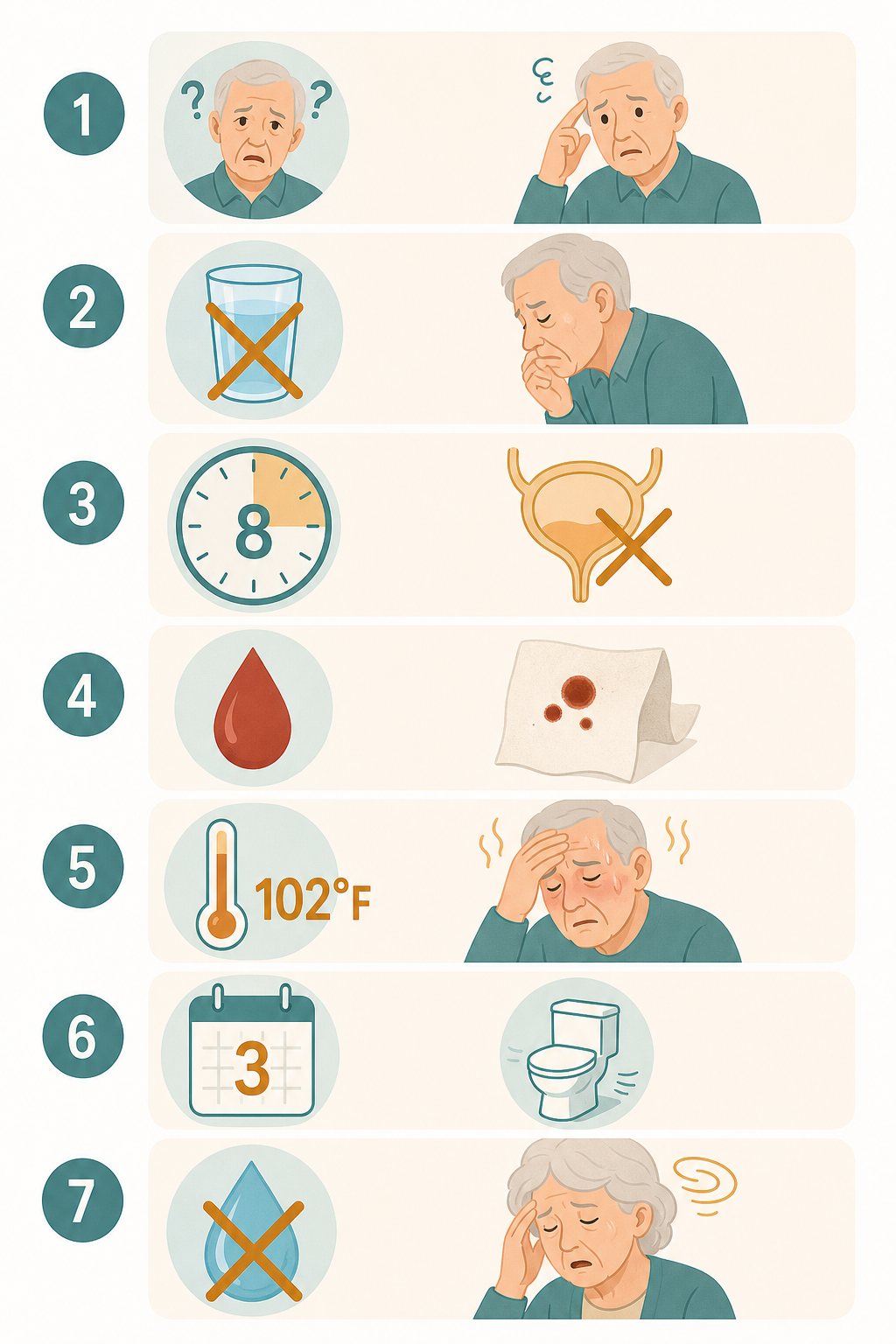
The Thresholds That Should Override “Wait and See”
A younger adult may spend a miserable day near the bathroom and recover with fluids and rest. An older adult can look only moderately ill and still be moving toward a dangerous place. That is why the threshold matters more than the label. You do not need to know whether the germ is norovirus, Salmonella, Listeria, or something else before you act.
| What you see | Why it matters in an older adult | What to do |
|---|---|---|
| Confusion, unusual sleepiness, agitation, not making sense, or a clear change from normal behavior | Altered mental state can be a visible sign of dehydration, infection stress, or delirium, even when stomach symptoms do not look dramatic. | Treat as urgent. Seek emergency care. |
| Cannot keep liquids down for more than 24 hours | Ongoing vomiting blocks the one home treatment that matters most: replacing fluid. | Seek medical care promptly; emergency care is appropriate if weakness, dizziness, or confusion is present. |
| No urination for 8 hours or more | Low urine output is a practical sign that fluid loss may be outpacing intake. | Seek urgent medical care. |
| Bloody diarrhea | Blood can signal a more serious infection or intestinal irritation that should not be managed casually at home. | Seek medical care promptly. |
| Fever over 102°F | High fever raises concern for more severe infection and faster fluid loss. | Call a clinician urgently or seek emergency care, especially with weakness or dehydration signs. |
| Diarrhea lasting more than 3 days | Prolonged diarrhea increases dehydration risk and may need clinical evaluation. | Call a clinician; seek urgent care if dehydration signs are present. |
| Dry mouth, dizziness when standing, fast heartbeat, marked weakness, or inability to sit or stand safely | These are dehydration warning signs. In seniors, dehydration can worsen quickly. | Do not rely on rest alone. Seek medical guidance urgently. |
The hardest cases are the ones that look ordinary for the first few hours. A parent says, “I just ate something bad.” They vomit once or twice, have loose stool, and want to lie down. That can be mild. But if the same person becomes newly confused, cannot keep even small sips down, has not urinated since morning, or gets dizzy when standing, the situation has changed. The home plan is no longer the main plan.
If you are watching someone at home, write down three things: the time vomiting or diarrhea began, the last time they urinated, and what they have actually kept down. “Drank some water” is less useful than “kept down three small sips at 2 p.m. and vomited again at 2:20.” Clear notes help the clinician judge dehydration and duration without making you reconstruct the day under stress.
Why Food Poisoning Can Turn Faster After 65
Older adults have less margin for fluid loss. They may have lower fluid reserve, less muscle mass, weaker thirst signals, kidney or heart disease, or medications that make dehydration more consequential. A day of vomiting and diarrhea is not just uncomfortable; it can mean falling blood pressure, faster heart rate, weakness, falls, kidney strain, or delirium.
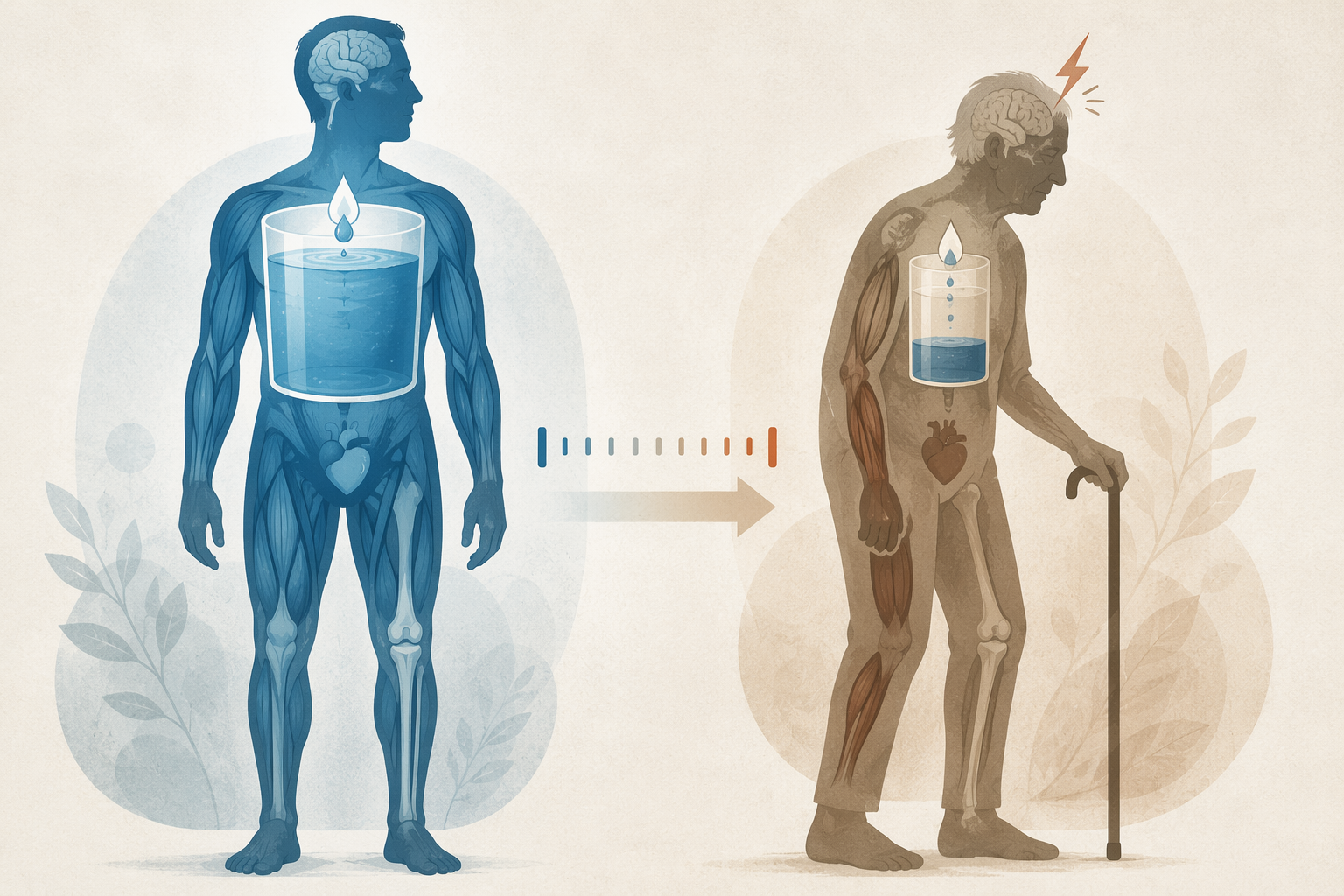
CDC says nearly half of people aged 65 and older with lab-confirmed Salmonella, Campylobacter, Listeria, or E. coli infection are hospitalized.[3] That number does not mean every older adult with diarrhea needs an ambulance. It does mean that “food poisoning” is not automatically a minor home illness in this age group.
Norovirus shows the same age pattern from another angle. A peer-reviewed review reported that about 90% of norovirus-associated deaths in the United States occur in people 65 and older, even though this group made up about 16% of the population. The same review found the case fatality rate for norovirus was 21 times higher in adults 65 and older than in adults 18 to 64.[4]
Those figures are not there to make every stomach bug sound catastrophic. They explain why the warning signs need to be lower and clearer for seniors. A 78-year-old who is suddenly weak, dizzy, or not answering normally may be showing the dangerous part of the illness before the diarrhea looks extreme.
Confusion Is a Symptom, Not Just a Mood
Caregivers often notice behavior first: the person cannot follow a simple conversation, repeats odd phrases, seems suddenly suspicious, cannot remember where the bathroom is, or is too weak to transfer safely. In an older adult with vomiting, diarrhea, fever, or poor intake, that change should be treated as a medical warning sign.
Do not wait for the person to “act more sick” in a familiar stomach-flu way. Delirium can come from dehydration, infection, electrolyte problems, medication effects, or a combination of stressors. At home, the job is not to separate those causes. The job is to recognize that altered mental state crosses the line into urgent evaluation.
Symptom Timing Can Help, But It Cannot Diagnose the Germ at Home
Timing is useful for conversation with a clinician. It is not a home diagnostic tool. Many foodborne illnesses overlap: nausea, vomiting, diarrhea, cramps, fever, weakness, and dehydration signs can appear in different combinations. The same meal can also expose different people differently, and older adults may react more severely than younger relatives.
| Possible cause | Typical timing | How to use this information |
|---|---|---|
| Norovirus | Symptoms often begin 12 to 48 hours after exposure. In seniors, diarrhea may last 3 to 9 days. | Think about recent shared meals, visitors, facilities, or outbreaks, but still act based on danger signs. |
| Salmonella | Symptoms can begin 6 hours to 6 days after exposure and often last 4 to 7 days. | A delayed start does not rule out food poisoning. |
| Listeria | Illness can appear after a longer delay, including around 2 weeks, and may have flu-like features. | Do not dismiss symptoms just because the suspect food was not eaten yesterday. |
CDC lists common food poisoning symptoms as diarrhea, stomach pain or cramps, nausea, vomiting, and fever, while also warning that severe symptoms require medical attention.[1] For older adults, the practical addition is this: weakness, dizziness, dry mouth, low urine output, and confusion may be the signs that tell you the illness has moved beyond ordinary home care.
Norovirus can also last longer in seniors than people expect. The review by Cardemil and colleagues reported that diarrhea in seniors lasted 3 to 9 days, compared with 2 to 3 days in younger adults, and that headache and vertigo could persist up to 19 days after onset.[4] A longer course does not prove norovirus, but it does explain why an older adult may still need monitoring after the first bad night has passed.
What Counts as Mild Enough for Home Care
Home care is reasonable only when the older adult is alert and acting like themselves, can keep fluids down, is urinating, has no blood in the stool, has no fever over 102°F, has no severe or worsening abdominal pain, and is not becoming weaker or dizzy when standing. Mild does not mean “has diarrhea.” Mild means the safety thresholds have not been crossed.
In a clearly mild case, the basics are simple: small frequent sips of fluid, rest, and bland food as tolerated. Do not push a full meal because the clock says it is dinner. Start with what stays down. If plain water is not appealing, ask the clinician or pharmacist whether an oral rehydration solution is appropriate, especially if the person has heart failure, kidney disease, diabetes, or fluid restrictions.
- Offer small sips rather than large glasses, especially after vomiting.
- Track urination; “none for 8 hours” is a medical threshold, not just a note.
- Help the person stand slowly and watch for dizziness or near-fainting.
- Keep a written record of temperature, fluids kept down, diarrhea frequency, vomiting, and mental status.
- Call sooner if the person lives alone, is frail, has dementia, or cannot reliably report symptoms.
Be Careful With Anti-Diarrheal Medicine
Do not automatically reach for anti-diarrheal medicine in an older adult with possible food poisoning. Bloody diarrhea, high fever, severe abdominal pain, or suspected invasive infection are reasons to avoid casual use and get medical advice. Even when an over-the-counter medicine is allowed, older adults may be more vulnerable to constipation, sedation from combination products, or complications from dehydration.
Medication context matters. Diuretics, some blood pressure medicines, diabetes medicines, anticholinergic drugs, and sedating medicines can all make a dehydration episode harder to manage safely. If the person takes several daily medications, call the clinician or pharmacist before holding, doubling, or adding anything. For a broader explanation of dehydration and medication vulnerability, see CareWise Guide’s article on 8 medication classes that raise heat risk in older adults.
When to Call a Clinician Even If It Is Not Yet an Emergency
There is a middle zone between “watch at home” and “go now.” Use it. Call the older adult’s clinician, an after-hours nurse line, or urgent care if symptoms are not improving, if diarrhea is continuing toward the 3-day mark, if vomiting makes regular medication difficult, if the person has significant heart, kidney, immune, or diabetes-related risk, or if you are having to supervise every sip and bathroom trip to keep them safe.
FoodSafety.gov identifies adults 65 and older as a higher-risk group for foodborne illness because aging and chronic conditions can weaken the body’s ability to fight germs and recover from illness.[2] That higher-risk status should lower the threshold for a phone call. It does not require panic; it requires less guessing.

If the older adult lives in assisted living, a nursing home, or another shared setting, tell the staff promptly about vomiting or diarrhea. Norovirus and other gastrointestinal illnesses can spread quickly in close-contact environments. The immediate concern is still the person in front of you, but staff also need to know so they can monitor others and follow infection-control procedures.
The Caregiver’s Bottom Line
For food poisoning symptoms in older adults, do not let a familiar phrase like “stomach bug” make the decision for you. Confusion, altered mental state, inability to keep liquids down for more than 24 hours, no urination for 8 hours or more, bloody diarrhea, fever over 102°F, diarrhea lasting more than 3 days, dry mouth, dizziness when standing, or marked weakness should override the impulse to wait and see.
References
Questions to bring to a clinician or OT
This is not medical, legal, or a family's final decision — only a framework. Bring these questions to a clinician, occupational therapist, or your local Area Agency on Aging.
Find Local HelpRelated reading
Noticed something outdated or inaccurate on this page? Flag a correction. We review every report against CDC, NIA, and AARP HomeFit guidance before updating a page.