D'Youville Senior Care: What Families Need to Consider Before Choosing
For: adult childReviewed: 2026-06-27
D'Youville Senior Care: What Families Need to Consider Before Choosing
This article helps families evaluate D'Youville Senior Care by examining its campus continuum of care, CMS ratings, staffing levels, and clinical outcomes. Readers will learn what questions to ask during a tour to determine if the facility meets their parent's specific needs.
By Editorial Team
new caregiver
experienced caregiver
long-distance caregiving
spousal caregiver
working caregiver
daily routines
medication management
personal hygiene
care coordination
first steps
ADLs
IADLs
D'Youville Senior Care can look like two different answers depending on which doorway a family is standing in front of. On one hand, U.S. News recognizes D'Youville for short-term rehabilitation, and the DCAT rehab unit on the Lowell campus is described as separately certified with a 5-Star CMS rating. On the other hand, the main 208-bed D'Youville Senior Care skilled nursing facility carries a Below Average overall CMS rating on Medicare Care Compare.[1][2]
That is not a small technical distinction. It is the kind of distinction families miss when everyone is tired, one parent is being discharged from the hospital, and the conversation has already turned into scraps of memory: a good rehab stay, a neighbor's warning, a promise that a campus has everything in one place. “D'Youville” can mean the broader Life & Wellness Community, the skilled nursing facility, or the separately rated DCAT rehab program. Those are related, but they are not interchangeable.
For a family considering D'Youville Senior Care, the right question is not whether the campus is “good” or “bad.” The more useful question is narrower: which unit is being proposed for this parent, for which level of care, under which staffing pattern, and with what happens next if the parent's needs change?
First, separate the campus from the unit
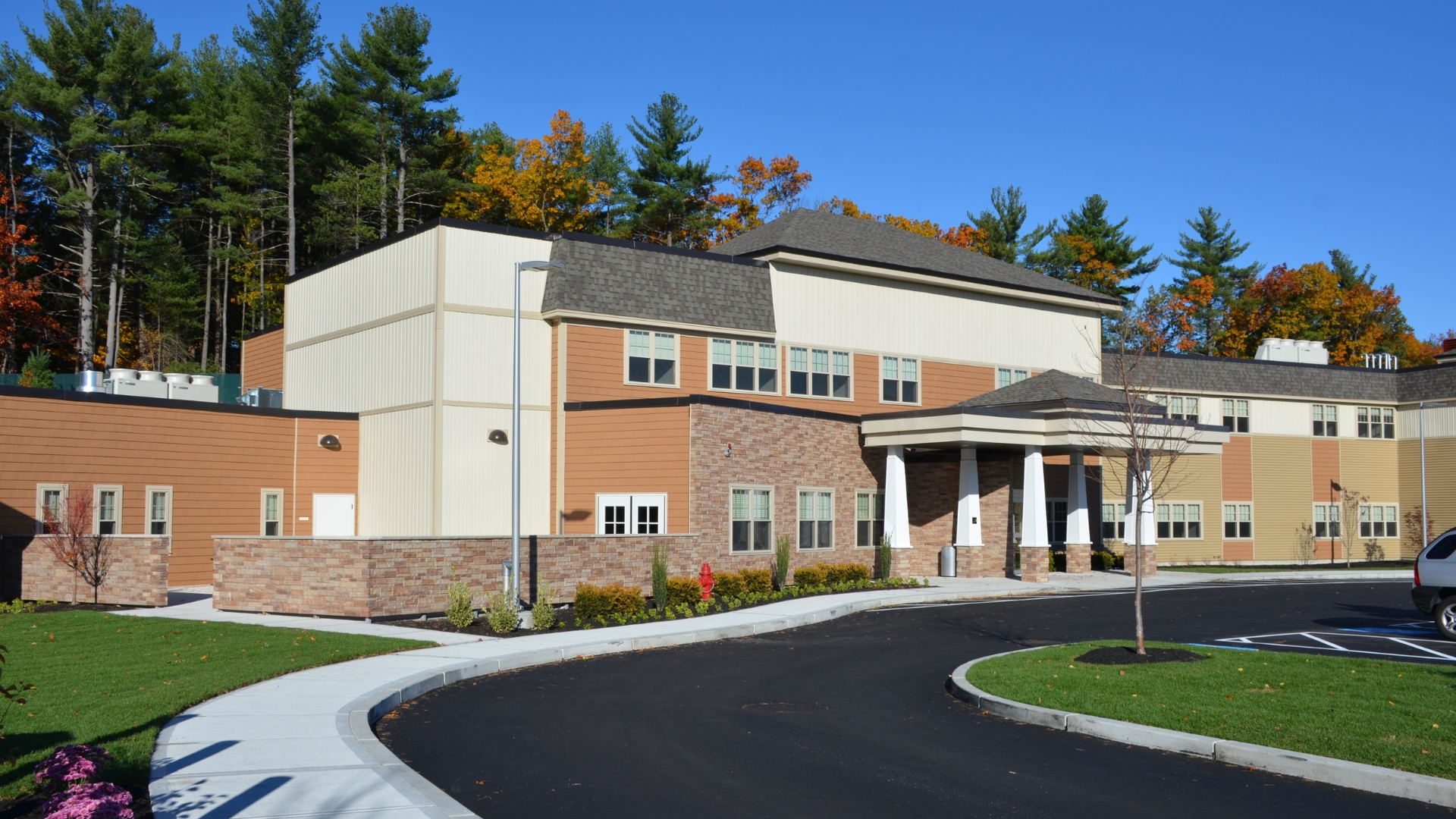
D'Youville's own materials describe a Lowell campus with multiple senior care settings, including independent living, assisted living, skilled nursing, memory care, and rehabilitation services.[3] That structure matters. A parent who is still managing many daily routines may need a very different setting from a parent who needs help transferring, toileting, eating, medication management, or post-hospital nursing care.
The danger is letting the campus name do too much work. A short-term rehab badge does not automatically describe the long-term skilled nursing floor. A memory care program on the same campus does not automatically mean every person with dementia will be well matched there. A continuum of care does not guarantee that the right bed will be open when the family needs it.
What the family hears
What to verify before relying on it
“D'Youville has a strong rehab reputation.”
Is the parent being admitted to DCAT short-term rehab, or to the main skilled nursing facility?
“The campus has memory care.”
What dementia stage and behaviors can that specific program safely support?
“There is a continuum of care.”
If needs increase, is there an internal transfer process, and are beds actually available?
“CMS gives ratings.”
Which CMS provider number, unit, and rating date are being discussed?
“The building has skilled nursing.”
How are RN hours, overnight coverage, weekend staffing, and care-plan updates handled on the unit being considered?
This is where families should slow the tour down. If the discharge planner, admissions office, or brochure uses the word “D'Youville,” ask them to name the exact care setting. Then ask whether the rating, award, or outcome measure being discussed applies to that same setting.
What the continuum really helps with
The campus model is still a real advantage. Families are often trying to avoid the most painful version of senior care planning: independent living no longer works, assisted living helps for a while, then a fall or infection triggers a hospital stay, then a rehab bed is needed, then the parent cannot safely return to the old apartment. Every move requires paperwork, transportation, medication reconciliation, new staff, new routines, and another round of family negotiation.
When several care levels sit within one ecosystem, some of that friction can be reduced. Records may be easier to share. Family members may already know the campus. A spouse or sibling may be able to visit without learning a new route across Greater Lowell. Staff may have more context than a totally new provider would. For a parent who says, “I don't want to move twice,” this matters.
But a continuum is a structure, not a promise. It does not erase admission criteria. It does not create a skilled nursing bed on demand. It does not make assisted living appropriate for someone who truly needs nursing-home-level care. It does not prove that a memory care unit is the right match for a parent who wanders, resists care, has complex medical needs, or needs frequent redirection.
Before treating the campus as a long-term solution, families should connect the decision to the parent's actual functional needs. If the parent mainly needs meals, housekeeping, medication reminders, and some cueing, the decision starts in a different place than it does for someone needing two-person transfers, wound care, injections, or close dementia supervision. A level-of-care comparison such as Home Care, Assisted Living, or Nursing Home: How to Choose the Right Level of Care can help frame that first cut. For families still sorting out the whole ladder of options, Senior Care Options by Level of Need: A Decision Framework is the better starting point.
For dementia, the same rule applies even more sharply. “Memory care” is not one uniform product. Some families need secured assisted living with dementia programming. Others need skilled nursing with dementia-informed care because the medical needs are too heavy for assisted living. Senior Care Options for Dementia can help families prepare the right questions before they decide whether D'Youville's memory care resources match the parent's stage and behaviors.
The evidence to bring into a tour
A tour should not become a courtroom cross-examination, but it should not be a walk through nice common areas either. Massachusetts' own nursing home guidance tells consumers to visit facilities, ask questions, and review inspection information as part of choosing a nursing home.[4] AARP and the National Institute on Aging also emphasize matching care needs, checking staffing, reviewing quality information, and visiting in person rather than relying on one reputation signal.[5][6]
For D'Youville, the useful evidence falls into a few buckets: ratings, staffing, clinical outcomes, inspections and fines, unit fit, and cost. None of those buckets should decide the case alone.
Evidence area
What is known from available sources
Tour question to ask
Short-term rehab
U.S. News recognizes D'Youville for short-term rehabilitation; DCAT is described as a separately certified 5-Star CMS-rated rehab unit.
Is my parent being considered for DCAT short-term rehab or another part of the campus?
Main skilled nursing rating
The main 208-bed D'Youville Senior Care skilled nursing facility carries a Below Average overall CMS rating.
Which current CMS rating applies to the exact unit my parent would enter?
Total nurse staffing
Total nurse staffing is listed at 3 hours 43 minutes per resident day, compared with a Massachusetts average of 3 hours 52 minutes.
How does staffing change on evenings, overnights, weekends, and high-acuity days?
RN staffing
RN time is listed at 20 minutes per resident day, compared with a Massachusetts average of 39 minutes.
When is an RN physically present, and who updates care plans after a change in condition?
Clinical outcomes
Available measures show lower antipsychotic use, depression, and falls with injury than Massachusetts averages.
What practices are driving those results, and do they apply on the unit being considered?
Fines and inspections
U.S. News reports $79,671 in fines, while ProPublica's presentation differs by lookback window and shows no fines in its last-three-years view.
Can the facility walk us through the relevant inspection history and what has changed since?
Cost
Third-party pricing data lists a broad monthly range of $1,970 to $12,395, but this should be checked against D'Youville's current 2026 rate sheet.
What is the current all-in monthly cost for this level of care, and what services are billed separately?
Staffing: the modest gap and the bigger RN question
The total nurse-hour comparison looks modest at first: D'Youville is listed at 3 hours and 43 minutes of total nurse staffing per resident day, compared with a Massachusetts average of 3 hours and 52 minutes.[2] Nine minutes may not sound like much when it sits in a spreadsheet.
The RN comparison is harder to brush aside. D'Youville is listed at 20 minutes of RN time per resident day, compared with a Massachusetts average of 39 minutes.[2] RN time matters because registered nurses often carry the work that families assume is simply “nursing”: assessing a change in condition, escalating concerns, reviewing care plans, coordinating with providers, and interpreting whether a new behavior or symptom is urgent.
That does not mean every resident receives exactly 20 minutes of RN attention. Staffing measures are averaged, and resident needs vary. Still, the gap should shape the questions. Ask who is in the building overnight. Ask what happens on weekends. Ask how quickly a care plan is updated after a fall, infection, medication change, weight loss, pressure injury, or new confusion. Ask whether staffing differs between short-term rehab, long-term skilled nursing, and memory care.
Clinical outcomes: give credit where the measures are better
Some of D'Youville's reported clinical outcome measures are meaningfully better than Massachusetts averages. Antipsychotic use is listed at 15%, compared with a statewide average of 24.7%. Depression is listed at 0.4%, compared with 9.5% statewide. Falls with injury are listed at 0.5%, compared with 0.9% statewide.[2]
Those are not abstract numbers. Antipsychotic use matters because medication can become a blunt tool in dementia care if a facility is not careful. Depression touches daily mood, participation, appetite, and family visits. Falls with injury are exactly the kind of event that can change a parent's whole trajectory. These favorable measures deserve real attention during a tour, especially if the family is trying to understand daily life rather than just building appearance.
The right follow-up is not to praise the numbers and move on. Ask how the facility keeps antipsychotic use down. Ask how mood changes are identified. Ask what happens after a fall without injury, before the next fall becomes more serious. Then ask whether those practices are consistent across the exact unit being considered.
Fines and inspection history: reconcile the sources
Fines need careful handling because public sources do not always present the same window in the same way. U.S. News reports $79,671 in fines for D'Youville.[1] ProPublica's Nursing Home Inspect page, using its own presentation and lookback view, shows no fines in the last three years.[7]
That does not automatically make one source “wrong.” It means the family should ask what time period each source is counting, whether fines are tied to older inspections, and what corrective actions were taken. Inspection history is most useful when it becomes a conversation about present practice: what happened, what changed, who monitors the fix, and whether the same issue has recurred.
Questions that should be asked by care level
The same campus can be a sensible fit for one parent and the wrong fit for another. The difference usually shows up in daily tasks, not in the brochure language.
If the parent needs...
Ask D'Youville...
Short-term rehab after hospitalization
Is this admission to DCAT? What therapy schedule is typical? What happens if the parent cannot safely go home after rehab?
Long-term skilled nursing
Which long-term unit is being considered? What are the RN coverage patterns? How are chronic conditions, falls, wounds, and hospital transfers managed?
Memory care
What dementia stages and behaviors can the program support? How are antipsychotics avoided or reduced? When would a resident need a higher level of care?
Assisted living with possible future decline
What signs would trigger a recommendation for skilled nursing or memory care? Is there a formal internal transfer process?
A couple with different needs
Can both people remain on campus if one needs more care than the other? How would visiting and transportation work?
Families should also bring an ADL and IADL list to the conversation. Bathing, dressing, toileting, transferring, eating, continence, medication management, shopping, transportation, meal preparation, and finances are not just checklist items. They are the evidence that tells a provider whether assisted living is enough or whether skilled nursing is already the safer level. Senior Care Options: A Complete Decision Framework Based on ADL and IADL Needs is useful preparation before a tour because it turns vague worries into concrete care needs.
Cost belongs in the decision, but it needs verification
Third-party pricing data lists a broad D'Youville-related monthly range of $1,970 to $12,395. That range is too wide to decide much by itself, and it should be checked against D'Youville's current 2026 rate sheet before a family treats it as reliable for a specific care level.
The important cost questions are practical: what is included in the quoted rate, what is extra, whether memory care has a different structure, whether rehab is being billed differently from long-term residence, and what happens if the parent spends down assets. Families comparing assisted living, skilled nursing, memory care, and home-based alternatives should pair the facility quote with The True Cost of Long-Term Care in 2026 so the campus decision is not made in isolation.
A fair way to decide
D'Youville is most compelling for families who value campus stability and can realistically imagine a parent needing more than one level of care over time: rehab after a hospital stay, skilled nursing after a decline, memory care if dementia progresses, or assisted living before nursing-home-level care is needed. The campus model can reduce some transitions, and the favorable outcome measures on antipsychotic use, depression, and falls with injury are worth taking seriously.
It should not move forward on the campus name alone. Before choosing D'Youville Senior Care, confirm the exact unit, verify current CMS ratings after the July 2025 methodology changes, ask how staffing works on that unit, review inspection and fine history by time period, and test the match against the parent's ADL, IADL, dementia, rehab, and medical needs. The family member who has to solve the problem six months later will be the one living with the details that were not checked at the beginning.



Comments
Join the discussion with an anonymous comment.