Walk-in Shower vs Tub Conversion for Seniors: A Mobility-Based Decision Guide
Deciding between a walk-in shower and a tub conversion for an aging parent? This guide helps you match the bathroom upgrade to your senior's current mobility level and future needs, with cost ranges and safety considerations drawn from expert and government sources.
By Editorial Team
new caregiver
experienced caregiver
long-distance caregiving
spousal caregiver
working caregiver
daily routines
medication management
personal hygiene
care coordination
first steps
ADLs
IADLs
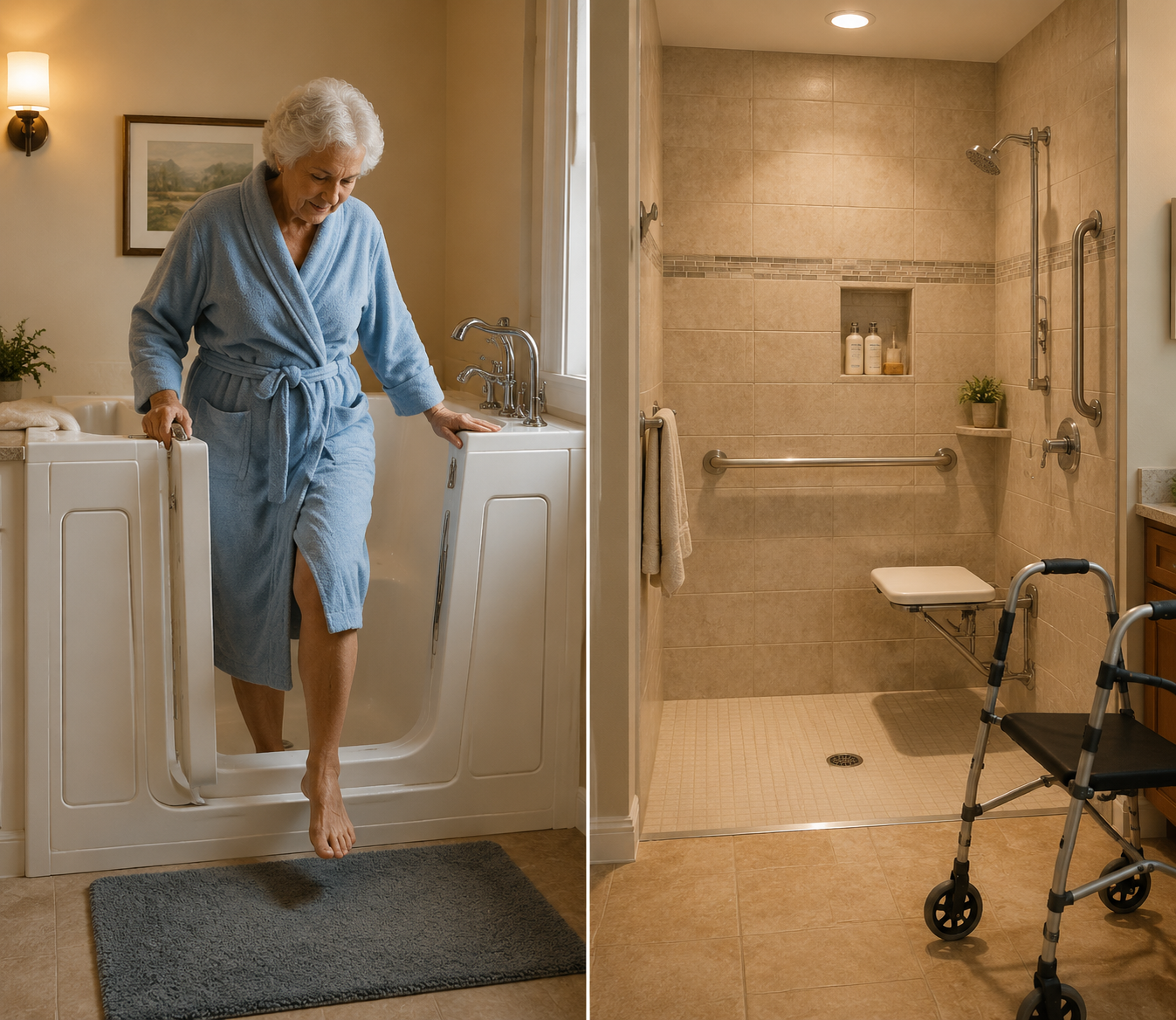
For most families comparing a walk-in shower vs tub conversion for seniors, the first question should not be tile, jets, door style, or resale value. It should be mobility. An older adult who still walks independently but feels cautious may be able to use a walk-in tub if soaking matters enough to accept the tradeoffs. A person who uses a cane or walker, is starting to need help bathing, or may need a wheelchair in the next few years is usually better served by a curbless roll-in shower.
That may sound blunt, but bathroom decisions are not cosmetic once someone has already slipped, stumbled, or started avoiding the tub. The CDC reports that 1 in 4 older adults falls each year, and research on injurious home falls found that bathroom falls were 2.4 times more likely to cause injury than living room falls; bathrooms accounted for 17% of injurious home falls in that study.[1][2] A bathroom upgrade is not a comfort project with safety attached. It is a safety project that still has to work on an ordinary Tuesday morning when someone is wet, tired, and trying not to panic.
Start With The Senior’s Real Mobility Level
The useful dividing line is not “senior” versus “not senior.” It is what the person must physically do to bathe safely today, and what they are likely to need before the next remodel would be realistic. A fixture that works only while someone is steady, continent, and able to follow every step independently may fail quickly if balance, stamina, cognition, or toileting control changes.
Mobility situation
Better starting choice
Why
Independent but cautious; no regular mobility aid
Walk-in tub may work if bathing is a strong preference; curbless shower is still more future-proof
The person may be able to manage the door, seat, and wait times, but still has to step in and sit through filling and draining.
Uses a cane or walker
Curbless walk-in shower
The remaining threshold on many walk-in tubs can still be a fall point, and a walker user needs room to approach, turn, sit, and transfer.
Uses a wheelchair or is likely to need one
Curbless roll-in shower
Zero-threshold entry and transfer space matter more than the ability to soak.
Needs caregiver help for bathing
Curbless shower with seating, handheld shower, grab bars, and caregiver space
The caregiver needs room to assist without lifting, twisting, or trapping the person inside a filling or draining tub.
The hardest category is the second one: the parent who is “just using a cane,” or “only uses the walker at night,” or “does fine if someone is nearby.” That is exactly when families can buy too optimistically. A walk-in tub can look safer because the wall of the old bathtub is gone, but it does not remove every transfer problem. Many models still have a step-in threshold, and the person still has to get seated, close the door, wait for the tub to fill, bathe, wait for it to drain, open the door, stand up, and step out.
When A Walk-In Tub Is A Reasonable Choice
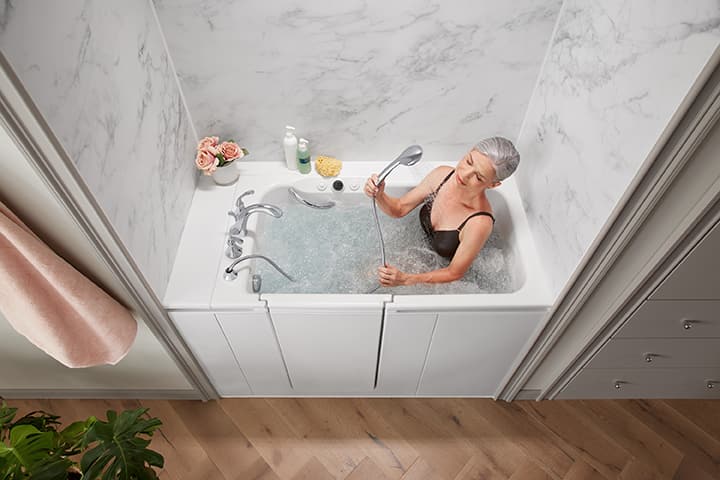
A walk-in tub is most defensible for an older adult who is still independently mobile, can follow the bathing sequence without supervision, has enough balance to step over a low threshold, and strongly values soaking. This is the parent who loves a bath, does not want showers to replace that routine, and is not yet relying on a walker or another person to get through bathing.
Even then, the family should treat “walk-in” as a limited claim. SeniorLiving.org’s 2026 walk-in tub guide reports typical step-in thresholds of about 3 to 7 inches, fill times of about 5 to 10 minutes, and drain times that can range from about 2 to 15 minutes depending on the model and plumbing.[3] NCOA’s 2026 guide to walk-in tub-shower combinations also flags fill and drain time as practical concerns, not minor inconveniences.[4]
Those numbers change meaning once you picture the person using the tub. A 3-inch threshold may be manageable for a steady person in shoes during a showroom visit. It is different for someone stepping out wet, tired, and possibly lightheaded. A 10-minute fill time may be tolerable for someone who is warm, relaxed, and continent. It is very different for someone with urinary urgency, bowel issues, dementia, or pain that makes sitting and waiting difficult. A long drain time means the person cannot simply open the door and leave; the water has to go first.
The more a senior’s safety depends on perfect timing, dry hands, good judgment, and no urgent need to get out, the less forgiving a walk-in tub becomes. It may still be a good answer for the right person. It is not the same as barrier-free access.
Why Walker Users Usually Need A Curbless Shower Instead
A cane or walker changes the whole bathroom calculation. The person is no longer only stepping into a fixture; they are managing an approach, a turn, a transfer, wet flooring, towel placement, and often fatigue. A low tub threshold may be lower than an old bathtub wall, but it is still an obstacle. The question becomes: where does the walker go, where do the feet go, and what is the person holding when both hands are already busy?
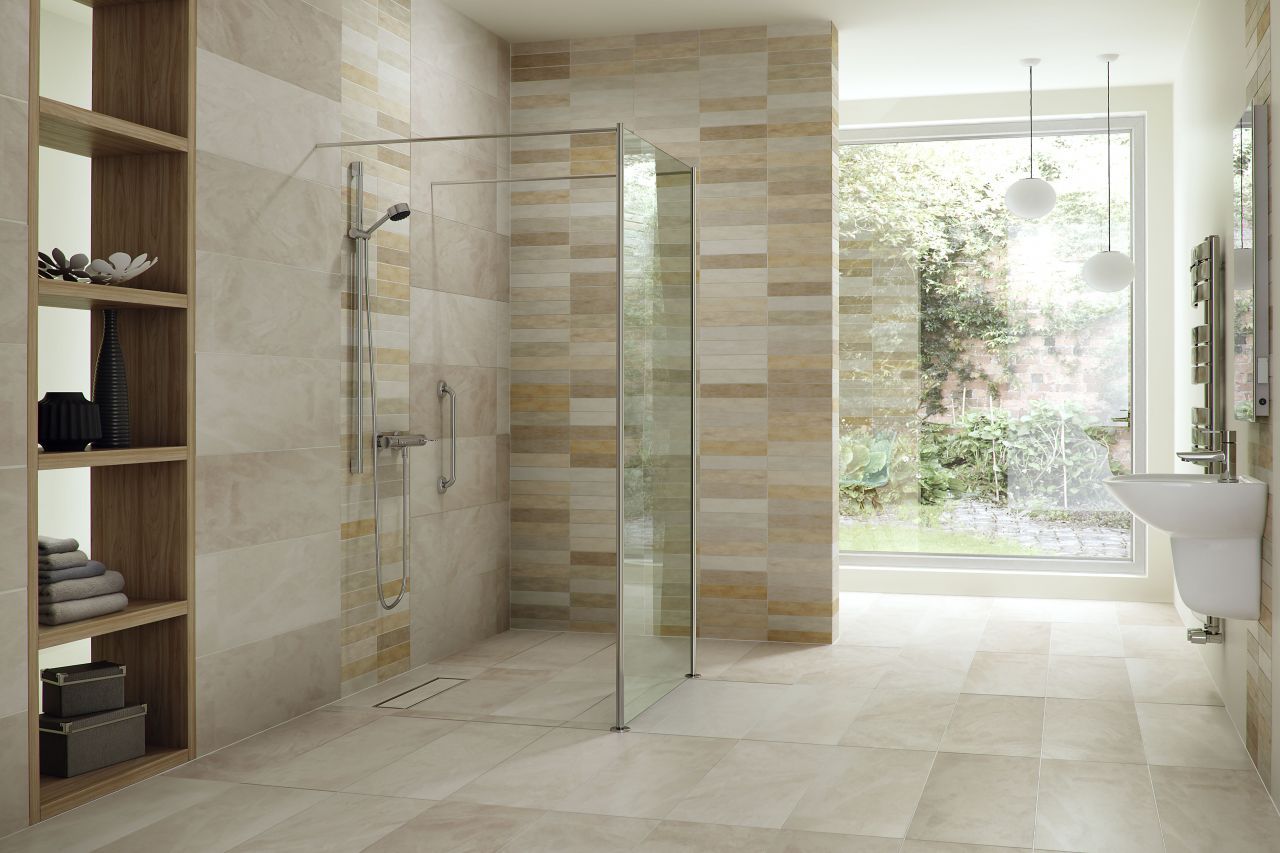
A curbless shower removes the raised entry point and gives the design more room to adapt. NAHB’s CAPS aging-in-place remodeling checklist calls for bathroom features such as curbless entries, fold-down seats, handheld shower wands with 6-foot hoses, and grab bars.[5] The U.S. Access Board’s ADA bathing-room guidance is written for accessibility compliance, not private-home wish lists, but it is useful because it shows why roll-in shower dimensions, grab bar placement, and transfer space are not decorative details.[6]
In a good curbless shower plan, the senior can enter without stepping over a lip, sit before water starts, use a handheld wand, and rely on grab bars placed for actual movement rather than for appearance. If a caregiver helps, that person has space to stand beside or in front of the senior instead of reaching over a tub wall or trying to stabilize someone at a narrow doorway.
This is also where a standard “tub-to-shower conversion” needs a second look. Some conversions replace the tub with a shower pan that still has a curb. That may be fine for a steady adult who simply dislikes climbing into a tub. It is not the same as a curbless roll-in shower for someone using a walker. If the goal is aging in place, ask specifically about threshold height, finished floor slope, seat location, grab bar backing, and whether a mobility aid can approach the shower without a tight turn.
Wheelchairs And Caregiver Help Make The Decision Clearer
Once a wheelchair is part of the present or near future, the case for a walk-in tub narrows sharply. The problem is not only the tub door. It is the transfer into a seated bathing position, the available space for a wheelchair beside the fixture, the ability to manage clothing and towels, and the need to exit safely after bathing. A roll-in or transfer-friendly shower can be planned around those movements. A tub usually asks the person and caregiver to work around the tub.
The same is true when caregiver help is already needed. Bathing assistance is physical work. A spouse may be too frail to catch a fall. An adult child may not be there every morning. A paid aide may have limits on lifting. The safer design is the one that reduces awkward transfers, not the one that assumes the caregiver can make up for a fixture that almost works.
Caregiver forum discussions are not clinical evidence, but they are useful for spotting the ordinary failures that sales pages tend to skip. In one AgingCare.com discussion about a person with dementia, caregivers described walk-in tubs becoming impractical when incontinence, confusion, and waiting inside the tub entered the routine.[7] That does not prove every walk-in tub will fail for every family. It does show why the fill-and-drain sequence deserves more attention before anyone signs a contract.
Test The Choice Against The Next Five Years
A bathroom fixture is expensive enough that it should not be judged only against today’s best day. Before choosing, run the option through a less flattering but more useful set of questions:
If the senior starts using a walker every day, can they still enter, sit, bathe, and exit without a risky step?
If they need a shower chair or fold-down seat, is there room to use it without blocking the caregiver?
If they develop urgency or incontinence, will fill and drain times create distress or cleanup?
If cognition declines, can the bathing sequence still be supervised safely?
If a wheelchair becomes necessary, would this project still help, or would the family be remodeling again?
This is where curbless showers often pull ahead. They are not automatically perfect; poor drainage, slippery tile, bad grab bar placement, and cramped layouts can ruin the design. But they leave more room for declining mobility. A shower can add a seat, a handheld wand, caregiver space, and transfer support. A walk-in tub remains a tub with a door, a threshold, and a water-waiting sequence.
Cost Ranges To Put Beside The Mobility Decision
Cost matters, especially when a fall has pushed the family into a fast decision. The ranges below are national 2025–2026 figures from consumer remodeling and senior-product sources, so they should be treated as planning ranges rather than bids. Region, plumbing changes, flooring work, wall repair, waterproofing, permits, and whether the bathroom needs structural changes can move the final number.
Project type
Reported installed cost range
What to watch
Walk-in tub
$2,000–$20,000; common average $5,000–$10,000
Lower entry than a standard tub, but still has step-in, fill, and drain issues.
Walk-in tub-shower combination
$3,000–$17,000
Adds showering flexibility, but does not remove the tub’s waiting sequence or transfer concerns.
Standard tub-to-shower conversion
$1,200–$15,000
May still include a curb unless curbless access is specified.
Custom curbless shower
$4,500–$15,000
Usually the stronger mobility choice, but waterproofing, slope, and floor work must be done correctly.
These ranges come from SeniorLiving.org’s walk-in tub cost data, NCOA’s walk-in tub-shower combination guide, and This Old House’s tub-to-shower and curbless shower estimates.[3][4][8]
The cheapest option is not automatically the wrong one, and the most accessible-looking option is not automatically built well. But if two quotes are close, the one that still works with a walker, shower chair, or caregiver is usually the safer use of money.
Funding: Verify Before You Count On It
Families often hear that a bathroom modification “may be covered,” which is true only in a narrow, paperwork-heavy sense. Original Medicare generally does not cover walk-in tubs or showers because they are not treated as durable medical equipment. Other programs may help, but eligibility and local rules matter.
Medicaid HCBS waivers: Coverage varies by state, and some states cover bathroom modifications when they support home-based care.[9]
VA HISA grants: ConsumerAffairs reports that eligible veterans may receive up to $6,800 for medically necessary home improvements through this program.[10]
USDA Section 504: ConsumerAffairs reports loans up to $40,000 and grants up to $10,000 for eligible rural low-income seniors.[10]
Local aging agencies or nonprofit programs: Availability varies, so check locally before assuming there is no help.
Do the funding check before demolition, not after the contractor is scheduled. Some programs require assessment, documentation, approval, or vendor rules before work begins.
Who Should Look At The Bathroom Before Work Begins
If the senior has already fallen, uses a mobility aid, has dementia, or needs help bathing, an occupational therapist evaluation is worth considering before choosing a fixture. The point is not to make the project more complicated. It is to have someone watch the actual transfers: toilet to sink, doorway to bathing area, walker placement, towel reach, turning space, and how the person behaves when tired.
A CAPS-informed contractor can also help translate aging-in-place goals into construction details: blocking behind walls for grab bars, shower slope, drain placement, seat height, handheld wand reach, lighting, ventilation, and whether the existing bathroom footprint can support a true curbless entry. Those details decide whether the finished bathroom quietly supports the person or keeps asking them to compensate.
The Practical Decision Boundary
Choose a walk-in tub only when the senior is independently mobile, strongly prefers bathing, can manage the door and seated routine without help, and understands the 3- to 7-inch step-in plus the 5- to 10-minute fill and 2- to 15-minute drain tradeoffs.[3] If that same person is already becoming unsteady, build the decision around the next stage, not the old routine.
Choose a curbless roll-in shower when a cane, walker, wheelchair, caregiver assistance, or likely mobility decline is already part of the picture.

Comments
Join the discussion with an anonymous comment.