
A Five-Domain Caregiver Self-Care Checklist: Where to Focus This Week
Most self-care lists give you vague advice. This five-domain checklist helps you spot the area of your life you have been neglecting and gives you one concrete action to take this week.
- Last Reviewed
- 2026-06-28
- caregiver burnout
- respite care
- caregiver guilt
- emotional support
- working caregiver
- driving cessation conversation
- accepting help
- role reversal
- caregiver stress
- self-care
- difficult conversations
- caregiver identity
A useful caregiver self care checklist should answer one question before it gives advice: which part of your life is slipping this week?
Many caregivers already know the standard answers. Sleep more. Take a walk. Eat something green. Call a friend. Those are not wrong, but they can be too flat for the week you are actually living through: one parent waiting for test results, one spouse waking at night, one sibling asking for updates, one employer expecting you to be fully present, and one body quietly learning to run on strain.
The problem is not usually that caregivers have never heard of self-care. In A Place for Mom’s 2025 survey of 1,029 caregivers ages 40 to 75, 72% said they make time for self-care at least weekly, yet 78% reported burnout and 41% reported low psychological well-being.[1] That sample may lean toward caregivers already under pressure because it comes from a senior living referral platform, but the gap is still worth taking seriously. People are trying, and many are still being worn down.
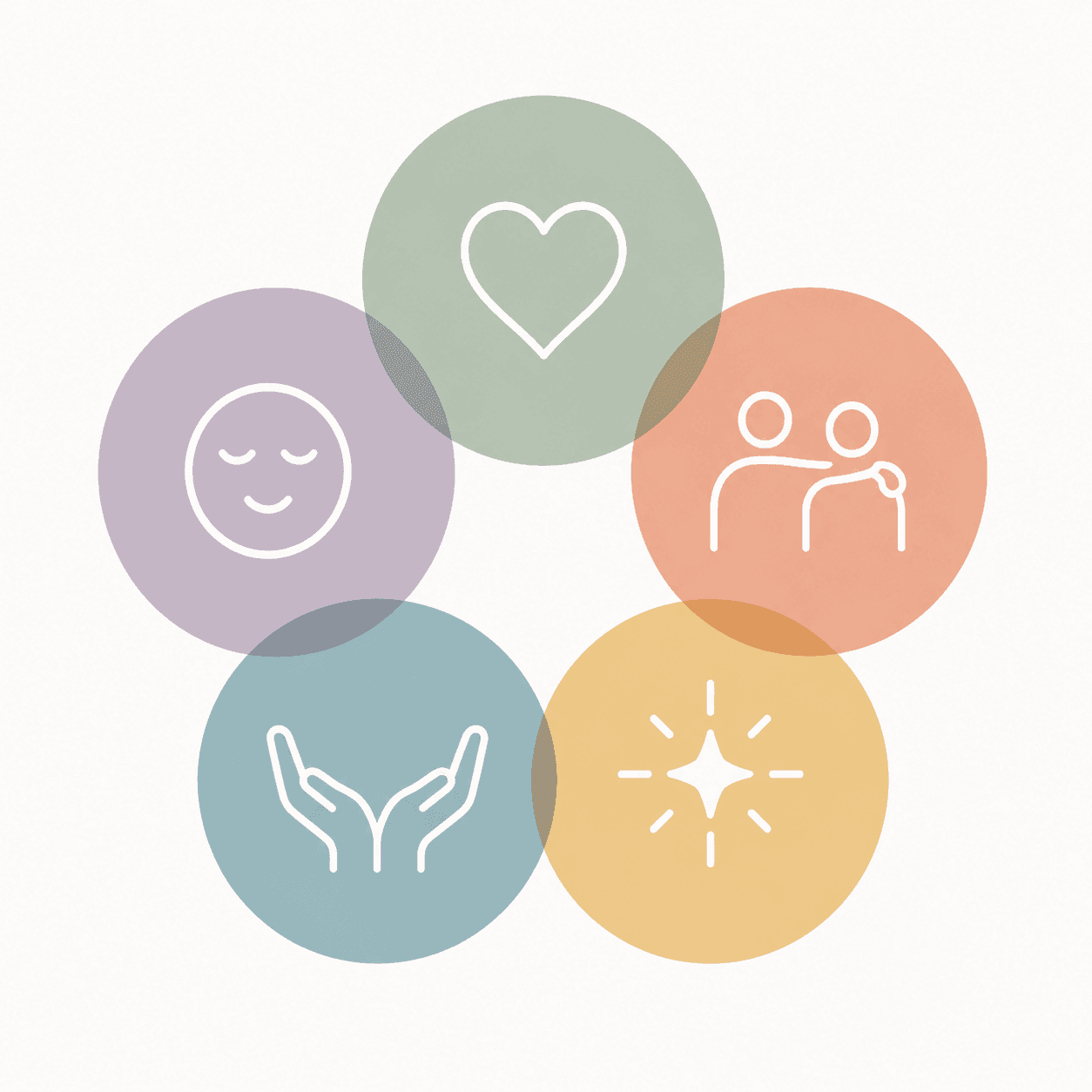
That is why the checklist below uses five domains instead of one long list of tips: physical health, emotional health, social connection, spiritual or meaning-based health, and caregiving health. The five-domain frame comes from Iona Senior Services’ caregiver self-care checklist, a practical social work model rather than a formally validated hierarchy.[2] Its value is simple: it helps you see whether you have been caring for your body while abandoning your friendships, or managing appointments while ignoring grief, or praying every morning while never arranging backup.
The Five-Domain Caregiver Self-Care Checklist
| Domain | What to Check | One Action This Week |
|---|---|---|
| Physical health | Sleep, meals, movement, medication, preventive care, chronic conditions | Schedule or complete one health task for yourself, not the person receiving care. |
| Emotional health | Guilt, sadness, resentment, worry, depression symptoms, emotional numbness | Name the strongest feeling you are carrying and tell one safe person or professional. |
| Social connection | Friendship, family contact, non-caregiving conversation, isolation | Put one low-effort social contact on the calendar before the week fills up. |
| Spiritual or meaning-based health | Faith practices, values, grief, identity, purpose, time for reflection | Spend 15 minutes with a practice, place, text, ritual, or silence that reconnects you to meaning. |
| Caregiving health | Diagnosis knowledge, legal and financial planning, respite, backup help, care coordination | Choose one care-system gap and move it one step forward. |
Do not use this table as a report card. Use it as a way to find the domain that has gone quiet. Caregivers often know where the crisis is; they are less practiced at noticing where the slow leak is.
Why Generic Self-Care Lists Miss the Mark
A caregiver can do one visible self-care task and still be in trouble. You may shower, answer your email, make it through the neurology visit, pick up prescriptions, and still be losing ground because your own cardiology appointment has been postponed twice. Or because you have not had a conversation that was not about care in three weeks. Or because you are calling guilt “commitment” because guilt sounds more noble than fear.
This matters most for caregivers whose risk is already layered. Among caregivers age 65 and older in A Place for Mom’s 2025 survey, 53.4% had two or more chronic conditions.[1] That figure does not prove caregiving caused those conditions, but it does show why a spousal caregiver’s own health cannot be treated as an optional side project.
Family Caregiver Alliance also notes that caregivers are less likely than non-caregivers to practice preventive healthcare, regardless of age, sex, or race.[4] That is the kind of fact that rarely announces itself dramatically. It looks like a mammogram delayed until “after things settle down,” a blood pressure refill stretched a few days too long, or a dental problem tolerated because nobody else can stay with Dad that morning.
The old Schulz and Beach study, published in JAMA in 1999, is still cited because it gave clinical weight to something families had been seeing for years: older spousal caregivers who were experiencing strain had a 63% higher mortality risk than non-caregiving controls.[4] It should not be used as a scare tactic, and it is not a fresh measurement of today’s families. It is still a sober reminder that devotion does not make a body exempt from consequences.
How to Find the Domain That Needs Attention First
Start with the domain you are most tempted to dismiss. That is often the one carrying the most risk.
If you say, “I am just tired,” check physical health. If you say, “Anyone would feel this way,” check emotional health. If you say, “I do not have time for people,” check social connection. If you say, “I do not know who I am outside this,” check spiritual or meaning-based health. If you say, “There is no one else and no plan,” check caregiving health.
The point is not to improve all five domains this week. Most caregivers do not need a more ambitious list. They need a smaller decision. Circle the domain where neglect would create the most damage if nothing changed for another month.
- If your own medical care is overdue, physical health is first.
- If guilt, anger, dread, or hopelessness is shaping your decisions, emotional health is first.
- If no one outside the care situation knows how you are really doing, social connection is first.
- If caregiving has crowded out faith, values, grief, or identity, spiritual or meaning-based health is first.
- If the care arrangement depends on you never getting sick, caregiving health is first.
A checklist earns its keep when it reduces the number of choices. Pick one domain. Then pick one action small enough that it can survive a difficult week.
Physical Health: Protect the Body Doing the Work
Physical self-care is not a spa category. It is the maintenance plan for the person lifting, driving, monitoring, calling, cleaning, translating, and staying alert.
Look at the basics without making them decorative. How many nights this week were broken by care needs? Did you eat a meal sitting down? Are your own medications current? Is there a preventive appointment you have been postponing? If you are an older spouse with your own diagnoses, this domain deserves special attention because the margin for physical depletion may already be narrow.
Your action this week: schedule, attend, or prepare for one health task that belongs to you. That might be calling your primary care office, refilling a prescription, arranging transportation to your own appointment, or asking someone to sit with your spouse while you go. A walk is fine if movement is the missing piece. But if your blood pressure medication is running out, the walk is not the priority.
Emotional Health: Stop Treating Distress as a Character Flaw
Emotional strain in caregiving often arrives disguised as responsibility. You become sharper with your spouse, then ashamed. You feel relief when an appointment is canceled, then ashamed. You dread a parent’s phone call, then ashamed. Shame is efficient; it can shut down a request for help before the sentence forms.
The National Institute on Aging says plainly that feelings of sadness, frustration, and guilt are normal and understandable for caregivers.[3] That sentence is not a treatment plan, but it can loosen the grip of the idea that a “good” caregiver has only clean emotions.
Family Caregiver Alliance reports that 46% to 59% of caregivers are clinically depressed.[4] That range should be read carefully; it does not mean every overwhelmed caregiver has depression, and it does not diagnose anyone reading this page. It does mean emotional health belongs in the checklist beside sleep and respite, not hidden behind them.
The most common emotional traps are not exotic. “If I do not do it, no one will.” “Our family takes care of our own.” “I am responsible for my parent’s health.” Family Caregiver Alliance names these as caregiver beliefs that can block self-care.[4] Some families do have thin options. Some promises are real. Still, a belief can be understandable and damaging at the same time.
Your action this week: name the strongest emotion you are carrying and put it somewhere outside your own head. Tell a trusted friend, a support group, a therapist, a clergy member, or your doctor. The sentence can be plain: “I am angry more often than I want to admit,” or “I feel trapped,” or “I love him and I need a break.” You are not asking the listener to fix the whole care situation. You are interrupting isolation around the feeling.
If you are having thoughts of harming yourself or someone else, or you feel unable to stay safe, that is not a checklist item. It is an urgent health situation. Contact emergency services or a crisis line in your area.
Social Connection: Keep One Door Open to the Rest of Your Life
Social connection is easy to mislabel as optional because no one’s prescription bottle depends on it. Yet isolation changes the way caregiving feels. Without ordinary contact, every decision starts to echo. A minor disagreement with a sibling can take over the day. A hard appointment can become the only story your mind has to work with.
This domain is not asking for a full social life to reappear by Friday. It asks whether you have one person, one group, or one place where you are not only the care coordinator. Adult daughters and sons who work full-time often need the smallest possible version: a ten-minute call during a commute, a standing coffee once a month, a text thread where not every message is about medication or discharge instructions.
Your action this week: schedule one contact before the calendar fills around care. Make it specific enough to happen. “Call Mara after Tuesday’s appointment” is better than “reach out more.” If conversation feels like too much, send one honest message: “I have been swallowed by caregiving and I do not want to disappear. Can we talk for ten minutes this week?”
Spiritual or Meaning-Based Health: Notice What Caregiving Has Crowded Out
For some caregivers, this domain is religious practice. For others, it is a sense of meaning, moral grounding, grief, nature, music, recovery meetings, service, cultural tradition, or quiet. The shared question is not “Are you being spiritual enough?” It is “Do you still have contact with what helps you remember who you are and what matters?”
Caregiving can put meaning under pressure. A spouse may feel that marriage vows require unlimited endurance. An adult child may feel pulled between love, duty, old family wounds, and the needs of their own children. A person of faith may feel guilty for anger or abandoned when prayers do not change the disease. None of that fits neatly into a meal plan, but it shapes the caregiver’s capacity to continue.
Your action this week: set aside 15 minutes for one meaning-based practice that does not require you to perform for anyone. Sit in a sanctuary. Read a familiar text. Walk without listening for the phone, if someone else can safely cover. Write one page about what you are grieving. Light a candle. Listen to music that belongs to you. The measure is not whether you feel restored. The measure is whether this part of your life still gets a doorway.
Caregiving Health: Treat the Care Setup as Part of Self-Care
Caregiving health is the domain most likely to be mistaken for paperwork. It includes understanding the diagnosis, knowing what changes to expect, having legal and financial documents in motion, arranging respite, keeping medication information current, and building backup plans. Iona’s checklist includes these practical care-system tasks as part of caregiver self-care, and that is the right instinct.[2]
The reason is blunt: a care plan that depends on one person’s constant availability is not really a plan. It is a hope. When the primary caregiver gets sick, has a work deadline, needs surgery, or simply reaches the edge, the absence of backup becomes a health risk for both people.
This is where many competent caregivers become unreliable witnesses to their own limits. They know every specialist’s portal password, but they cannot name who would cover Wednesday afternoon if they had a fever. They can explain the medication list, but no one else has a copy. They have researched the diagnosis late at night, but they have not asked the doctor what symptom should trigger a call, an urgent appointment, or an emergency room visit.
A Place for Mom’s 2025 survey found that 30% of caregivers felt unprepared when caregiving began.[1] That matters because unprepared caregivers often compensate by becoming hyper-available. They answer every call, absorb every uncertainty, and postpone every boundary until the arrangement feels impossible to change.
Your action this week: choose one care-system gap and move it one step forward. Do not choose five. One is enough.
- If the diagnosis is unclear, write down three questions for the next clinician visit.
- If no one else can step in, ask one person for one defined backup task.
- If respite feels impossible, call one local agency, adult day program, faith community, or benefits office to ask what exists.
- If legal or financial planning has been avoided, locate the existing documents or schedule one consultation.
- If siblings or relatives are confused, send one shared update with the current needs and one specific request.
Caregiving health can be uncomfortable because it exposes how much has been held together by memory, urgency, and goodwill. But this is exactly why it belongs on a caregiver self-care checklist. A better system gives the caregiver fewer emergencies to absorb alone.
Use the Checklist Without Turning It Into Another Job
The country’s caregiving load is large: AARP and the National Alliance for Caregiving estimated 63 million caregivers in Caregiving in the U.S. 2025, using a broad definition that includes people with very different levels of responsibility.[5] That scale matters for policy and workplace planning. It does not tell you what to do this Thursday.
For this week, the useful version is smaller. Read the five domains. Mark the one that would create the most harm if neglected for another month. Choose one action from that domain. Put it on the calendar, attach it to an existing appointment, or ask a specific person for help with it.
If you resist checklists because your life already feels over-managed, keep only the question: what part of me is being left out of the care plan? The answer may be your body, your feelings, your friendships, your faith or meaning, or the structure of caregiving itself.
The best caregiver self care checklist is not the one that asks you to improve everything. It is the one that helps you see the domain most at risk this week and take one concrete step before depletion becomes the default.
References
- Caregiver Burnout and Stress Statistics, A Place for Mom, 2025, https://www.aplaceformom.com/senior-living-data/caregiver-burnout-statistics
- Self-Care Checklist for Caregivers, Iona Senior Services, https://iona.org/self-care-checklist-caregivers/
- Taking Care of Yourself: Tips for Caregivers, National Institute on Aging, https://www.nia.nih.gov/health/caregiving/taking-care-yourself-tips-caregivers
- Taking Care of YOU: Self-Care for Family Caregivers, Family Caregiver Alliance, https://www.caregiver.org/resource/taking-care-you-self-care-family-caregivers/
- Caregiving in the US 2025, AARP, https://www.aarp.org/pri/topics/ltss/family-caregiving/caregiving-in-the-us-2025/
Continue Your Caregiving Journey
When you are ready, these resources can help with specific caregiving tasks.
- How to Have the Hard Conversations with Aging Parents: A Practical Guide to Talking About Driving, Money, Independence, and Care Needs
A structured, empathetic framework for adult children who need to have difficult conversations with aging parents about driving safety, memory concerns, finances, moving from home, and end-of-life wishes — with specific scripts and strategies grounded in research from AARP and Banner Health.
- The Health Case for Senior Companionship: What the Research Says About Loneliness, Isolation, and the Measurable Benefits of Companion Services
Many families dismiss companion care as a 'nice to have,' but peer-reviewed research shows that regular social interaction is a legitimate health intervention. This article presents the evidence linking companionship to reduced depression, preserved cognitive function, lower cardiovascular risk, and improved functional independence.
- How Seniors Helping Seniors Programs Can Lighten Your Caregiving Load
If you’re a family caregiver feeling stretched thin, structured peer-to-peer programs like senior peer counseling, Village memberships, and AmeriCorps Seniors can give your aging parent meaningful companionship while giving you breathing room and peace of mind.
Comments
Join the discussion with an anonymous comment.