
Caregiver decision guide
The Emotional Toll No One Warns You About: Why Caring for an Aging Parent Affects Women and Men Differently — and How to Protect Your Mental Health
New Pew Research reveals a striking gender gap in caregiving's emotional toll: 47% of women vs. 30% of men report negative impacts on their well-being. This article explores the unequal task distribution driving this disparity and provides evidence-based strategies to protect your mental health.
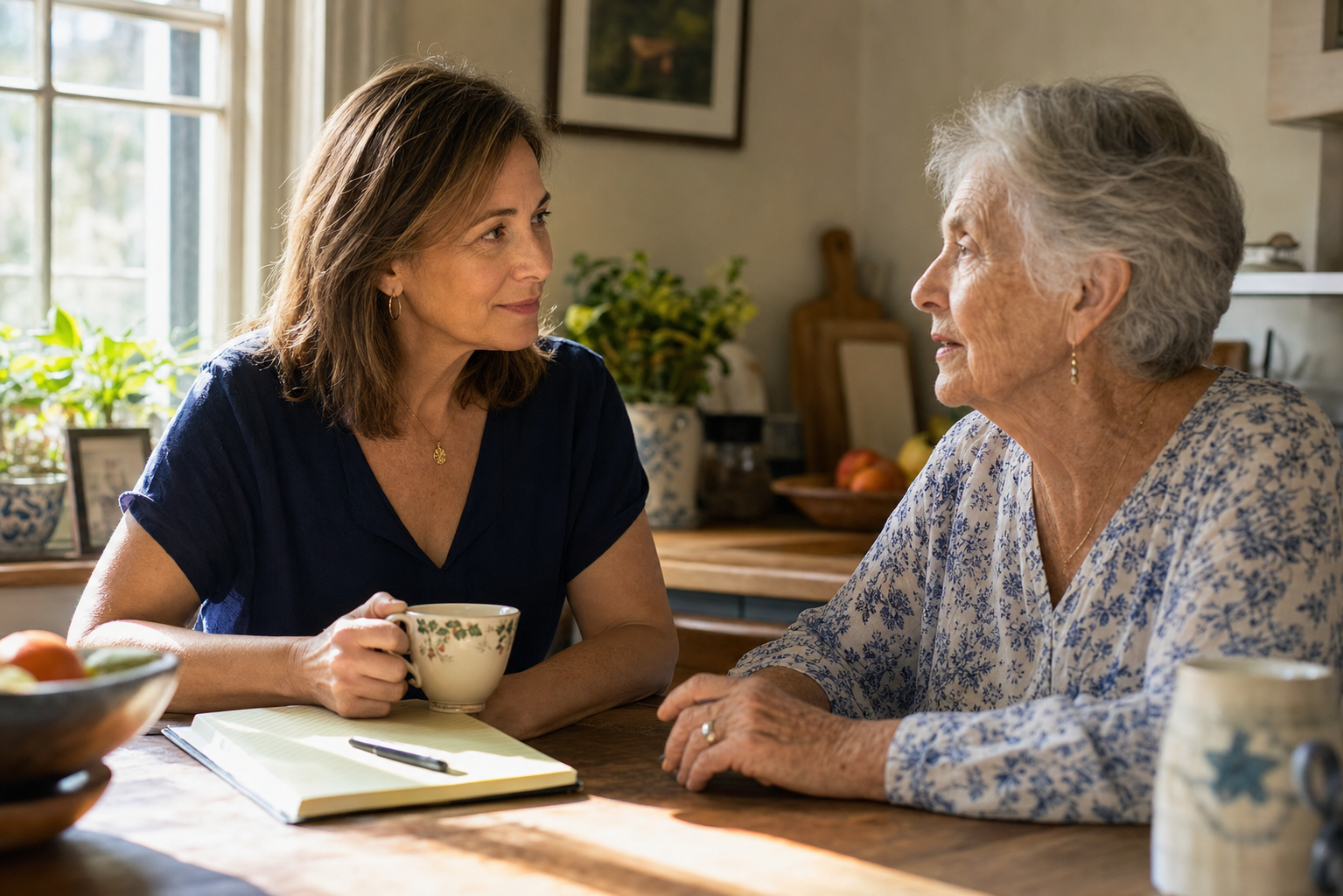
The Gender Gap in Caregiving's Emotional Toll
If you are a woman caring for an aging parent and you feel emotionally drained, you are not alone — and your experience is backed by national data. A February 2026 survey by the Pew Research Center found that 47% of women who regularly help a parent with daily tasks say caregiving has had a negative impact on their emotional well-being. Among men in the same role, that figure drops to 30%. The gap is not small — it is a 17-percentage-point chasm that reflects a fundamentally different caregiving experience.
The disparity extends beyond emotions. The same Pew study reports that 38% of women caregivers say their physical health has suffered, compared with 26% of men. Women are also more likely to report negative impacts on their social lives and careers. On balance, caregivers overall report more negative than positive impacts on emotional well-being (39% vs. 28%), physical health (33% vs. 19%), and finances (32% vs. 18%). But for women, every one of those numbers is worse.
Why Women Bear More of the High-Burden Tasks
The emotional gap is not about inherent differences in resilience. It is driven by an unequal distribution of the most demanding caregiving tasks. Data compiled by the Family Caregiver Alliance (FCA) shows that women are significantly more likely to handle intimate personal care — the tasks that are physically strenuous, emotionally taxing, and often performed in private, vulnerable moments.
| Caregiving Task | Women | Men | Difference |
|---|---|---|---|
| Assisting with bathing | 30% | 16% | 14 percentage points |
| Assisting with dressing | 28% | 24% | 4 percentage points |
| Handling most difficult tasks (bathing, toileting, dressing) | 36% | 24% | 12 percentage points |
| Average hours per week spent caregiving | 21.9 hours | 17.4 hours | 4.5 hours |
These numbers reveal a pattern: women are not just doing more caregiving overall — they are doing the kind of caregiving that is hardest to outsource or ignore. Bathing, toileting, and dressing require physical proximity, emotional presence, and a level of intimacy that can feel overwhelming day after day. A man who handles finances and coordinates appointments may spend fewer hours overall and face less emotional exposure to the parent's physical decline.
The 'Sandwich Generation' Squeeze
Many women in their 40s and 50s are not only caring for an aging parent — they are also raising children, managing a household, and holding down a job. The Caregiver Action Network reports that 3 in 5 caregivers are women, with a median age of 50.6. The median age tells the story: these are women in the middle of life, pulled in three directions at once.
This triple role — parent, employee, caregiver — amplifies emotional strain in ways that single-role caregiving does not. When a working mother spends 22 hours a week on parent care on top of her job and her children's needs, there is simply no time left for recovery. The physical health numbers from Pew (38% of women vs. 26% of men reporting negative impacts) make sense in this context: sleep, exercise, and preventive medical appointments are the first things to go when every waking hour is spoken for.
The Emotional Cascade: Exhaustion → Guilt → Resentment
For many women caregivers, the emotional toll follows a predictable progression. It starts with physical exhaustion from the high-burden tasks described above. That exhaustion then feeds a cycle of guilt — guilt about not doing enough, about feeling resentful, about wanting a break. And guilt, left unchecked, can curdle into resentment: toward the parent who needs so much, toward siblings who help less, toward a society that expects women to handle it all without complaint.
This cascade is not a sign of weakness. It is a normal response to an unsustainable load. Research compiled by the FCA estimates that 46% to 59% of family caregivers meet the criteria for clinical depression — a rate far higher than the general population. The Caregiver Action Network adds that only 23% of all caregivers report having 'good' mental health, and 40% say caregiving negatively impacts their stress levels.
- Exhaustion: The physical and emotional depletion that comes from performing high-burden tasks day after day without adequate rest.
- Guilt: The belief that you should be doing more, feeling more grateful, or handling the situation better — even when you are already doing more than your share.
- Resentment: The anger that surfaces when the load is unequal, when siblings do not step up, or when the caregiving role consumes your identity.
If you recognize yourself in this cascade, the most important thing you can do is stop treating it as a personal failing. The problem is not that you are not strong enough. The problem is that the load is not distributed fairly, and you have been carrying the heaviest part.
Why Self-Care Is Especially Hard for Women Caregivers
Every caregiver has heard the advice to 'take care of yourself.' But for women caring for an aging parent, that advice often lands as another obligation rather than a relief. The barriers are not logistical — they are emotional and cultural.
- Internalized expectations: Many women have absorbed the message that their role is to be the nurturer — the one who sacrifices her own needs for others. Taking a break can feel like a betrayal of that identity.
- Guilt about relinquishing control: Handing over a task — even temporarily — means trusting someone else to do it 'right.' For women who have been managing the details, letting go can feel riskier than just doing it themselves.
- Fear of judgment: Women caregivers report feeling judged by family, friends, and even healthcare providers if they admit they are struggling. The pressure to appear capable is intense.
- Lack of a model: Many women grew up watching their mothers and grandmothers care for elders without ever taking a break. There is no generational template for prioritizing your own health while caregiving.
These barriers are real, and they are not solved by a bubble bath or a yoga class. They require a fundamental shift in how you think about your own needs — and permission to put yourself on the list. For a deeper look at the guilt and fear that block respite, see our guide on overcoming emotional barriers to respite care.
Evidence-Based Coping Strategies for Women Caregivers
The strategies below are adapted from the National Institute on Aging (NIA), the Family Caregiver Alliance (FCA), and the American Psychiatric Association (APA). They are not generic self-care tips — they are targeted responses to the unequal task burden that women face.
| Strategy | What It Looks Like | Why It Matters for Women |
|---|---|---|
| Audit and redistribute tasks | List every caregiving task you do. Categorize: must be you, could be a sibling, could be a paid aide, could be dropped. Start with one high-burden task (e.g., bathing) and delegate it. | Women are more likely to assume all tasks are their responsibility. A written audit makes the imbalance visible and creates a concrete delegation plan. |
| Set boundaries on high-burden tasks | Decide which personal care tasks you will and will not do. Communicate this clearly to family and the care recipient. Use a home health aide for bathing or toileting. | Women are socialized to say yes to intimate care. Setting a boundary is not selfish — it is a sustainable-care decision. |
| Prioritize sleep and medical appointments as non-negotiable | Schedule 7–9 hours of sleep. Keep your own doctor's appointments. Treat these as fixed commitments, not optional extras. | Caregivers are less likely than non-caregivers to practice preventive healthcare (FCA). Sleep deprivation and postponed medical care compound physical health decline. |
| Use respite care proactively | Schedule regular respite — even 4 hours a week — before you are in crisis. Treat it as a care plan component, not a reward for surviving. | Women wait until they are exhausted to seek respite. Proactive use prevents the exhaustion → guilt → resentment cascade. |
| Seek peer support | Join a caregiver support group (in-person or online). Talk to other women who understand the specific pressure of caring for a parent. | Only 23% of caregivers report good mental health (Caregiver Action Network). Peer support reduces isolation and normalizes the experience. |
For a more detailed look at how to plan and pay for a break, read our respite guide for caregivers facing burnout. And if sleep deprivation is part of your story — and it likely is — the caregiver sleep crisis guide offers a practical recovery plan.
What Men Need to Know Too
The gender gap in caregiving's emotional toll does not mean men are unaffected. The FCA estimates that approximately 14.5 million male caregivers exist in the United States, and 30% of men in the Pew survey reported negative emotional impacts from caring for a parent. That is nearly one in three — a significant number that deserves attention.
Men face their own set of challenges. They are less likely to seek support, less likely to be offered help by family or friends, and often expected to handle logistics and finances rather than personal care. When men do take on high-burden tasks, they may have less social permission to admit they are struggling. The result is a quieter kind of suffering — one that goes unacknowledged because it does not fit the cultural image of the male caregiver.
Resources and Next Steps
Understanding the gender dynamics of caregiving is not an academic exercise. It is the first step toward protecting your mental health. The following resources can help you take the next step — whether that is finding a support group, arranging respite, or simply talking to someone who understands.
- National Institute on Aging (NIA): Evidence-based self-care tips for caregivers, including guidance on sleep, nutrition, stress reduction, and knowing when to ask for help.
- Family Caregiver Alliance (FCA): Comprehensive fact sheets, self-care tools, and state-by-state resource directories. Their caregiver statistics page provides context for the numbers in this article.
- Caregiver Action Network: Peer support, educational resources, and a caregiver help desk. Their data on caregiver mental health (23% report good mental health) underscores the urgency of this issue.
- Area Agencies on Aging (AAA): Local support services, respite programs, and caregiver counseling. Search for your local AAA through the Eldercare Locator.
- Related guides on this site: If you are caring for a spouse, see our spousal caregiver burnout prevention guide. For help navigating the guilt and fear that block respite, read about overcoming emotional barriers to respite care.
You are not failing. You are carrying a load that was never designed to be carried by one person — and certainly not by one person who is also expected to work, raise children, and maintain a household. The data shows that women bear the heaviest part of that load, and the emotional toll is real. But the data also shows something else: when the load is shared, the toll decreases. Your next step is to start sharing it.
Questions to bring to a clinician or OT
This is not medical, legal, or a family's final decision — only a framework. Bring these questions to a clinician, occupational therapist, or your local Area Agency on Aging.
Find Local HelpRelated reading
Noticed something outdated or inaccurate on this page? Flag a correction. We review every report against CDC, NIA, and AARP HomeFit guidance before updating a page.