
STEADI: Intervene
Create a Clean Air Room for Seniors Before Wildfire Smoke
Vague 'stay indoors' advice isn't enough when wildfire smoke threatens an older adult at home. One prepared room — chosen, sealed, filtered, cooled, and stocked before smoke arrives — can serve as a true smoke refuge.
“Stay indoors” sounds simple until you are standing in an older parent’s house and the smoke is already in the forecast. Which room? Which door gets closed? Is the window AC helping or pulling smoke in? Can your parent reach the bathroom without crossing a dark hallway or stepping over an extension cord? The useful version of wildfire smoke safety tips for seniors at home starts with one prepared room, not a vague promise that the whole house will be fine.
A clean air room works best when the decisions happen in order: choose the safest room, tighten it against outside air, filter it continuously, cool it without bringing smoke inside, stop indoor particle sources, and stock it before anyone is tired or coughing.
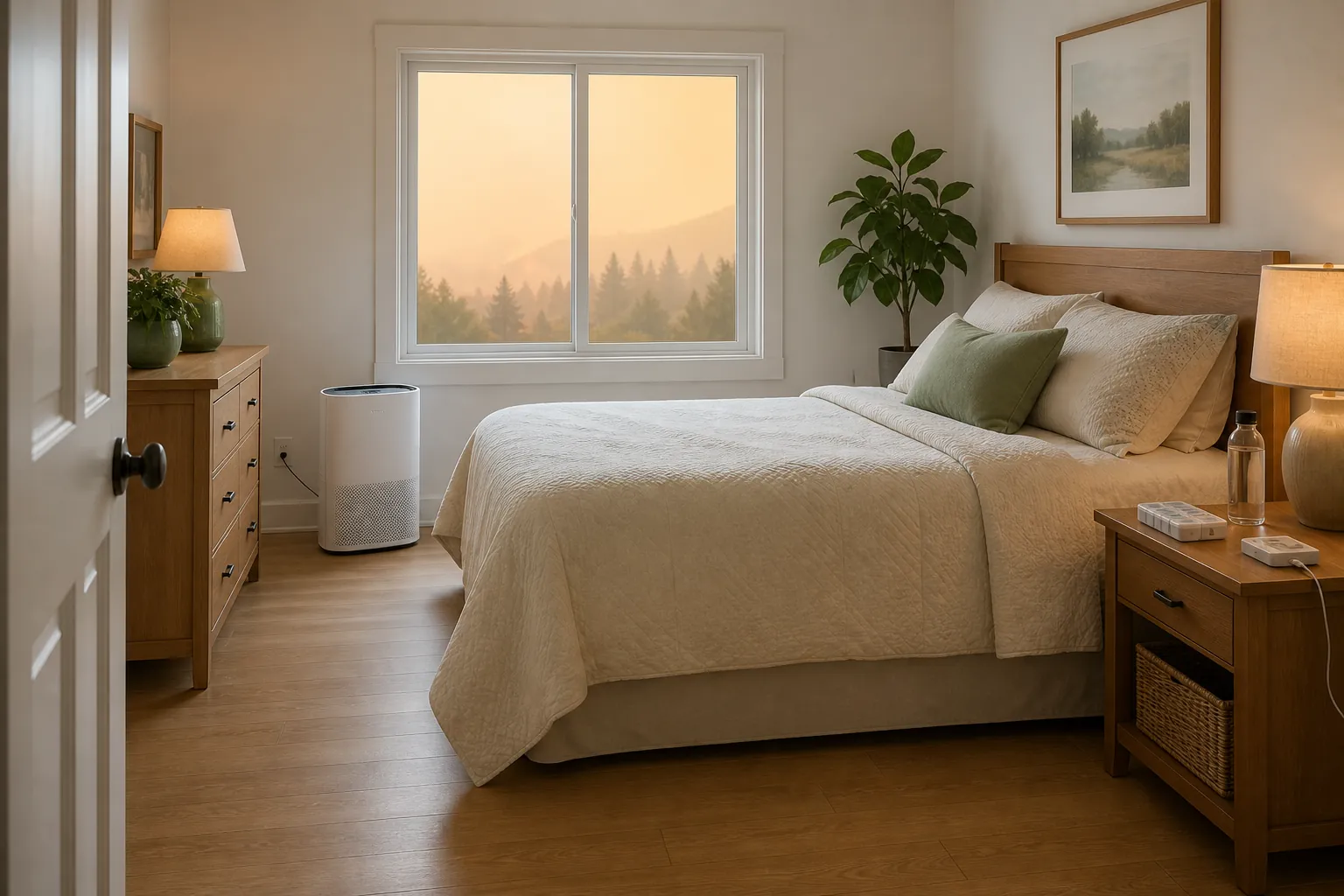
| Decision | What to do before smoke arrives |
|---|---|
| Choose the room | Pick a room that can be closed off, has space to rest, is near where the older adult spends the day, and has a clear walking path; a bedroom with an attached bathroom is ideal. |
| Seal the room | Close windows and doors, place a rolled towel at the door base, and close fireplace dampers while keeping exits usable. |
| Filter the air | Use a portable air cleaner sized for the room, run it continuously on the highest fan speed, and avoid ozone-generating units. |
| Cool safely | Use window or central AC only on recirculate; avoid whole-house fans and portable ACs with outside hoses. |
| Stop indoor particles | Skip candles, incense, gas or propane stoves, wood stoves, frying, grilling, vacuuming, and smoking. |
| Stock the room | Stage prescriptions, no-cook food, water, N95 masks for unavoidable outdoor trips, and phone chargers. |
Start with the room, because the room decides almost everything else
The best clean air room is not automatically the largest room or the room with the newest gadget. Guidance from AirNow and the CDC points to a room that can be closed off from outside air, has enough space to sit and rest, and is near where the person spends the day; for an older adult, a bedroom with an attached bathroom is especially useful because it reduces trips through the house while smoke levels are high.[1][2]
That bathroom detail matters. If the chosen refuge is a spare room at the far end of the house, the plan may look good on paper while creating a bad nighttime route: down the hall, around a laundry basket, past a low table, across a cord, then back again. Smoke safety and fall prevention meet in that walk. A shorter, clearer path means fewer openings of interior doors, less time breathing questionable air, and fewer chances to stumble when visibility, fatigue, or medication side effects are already working against the person.
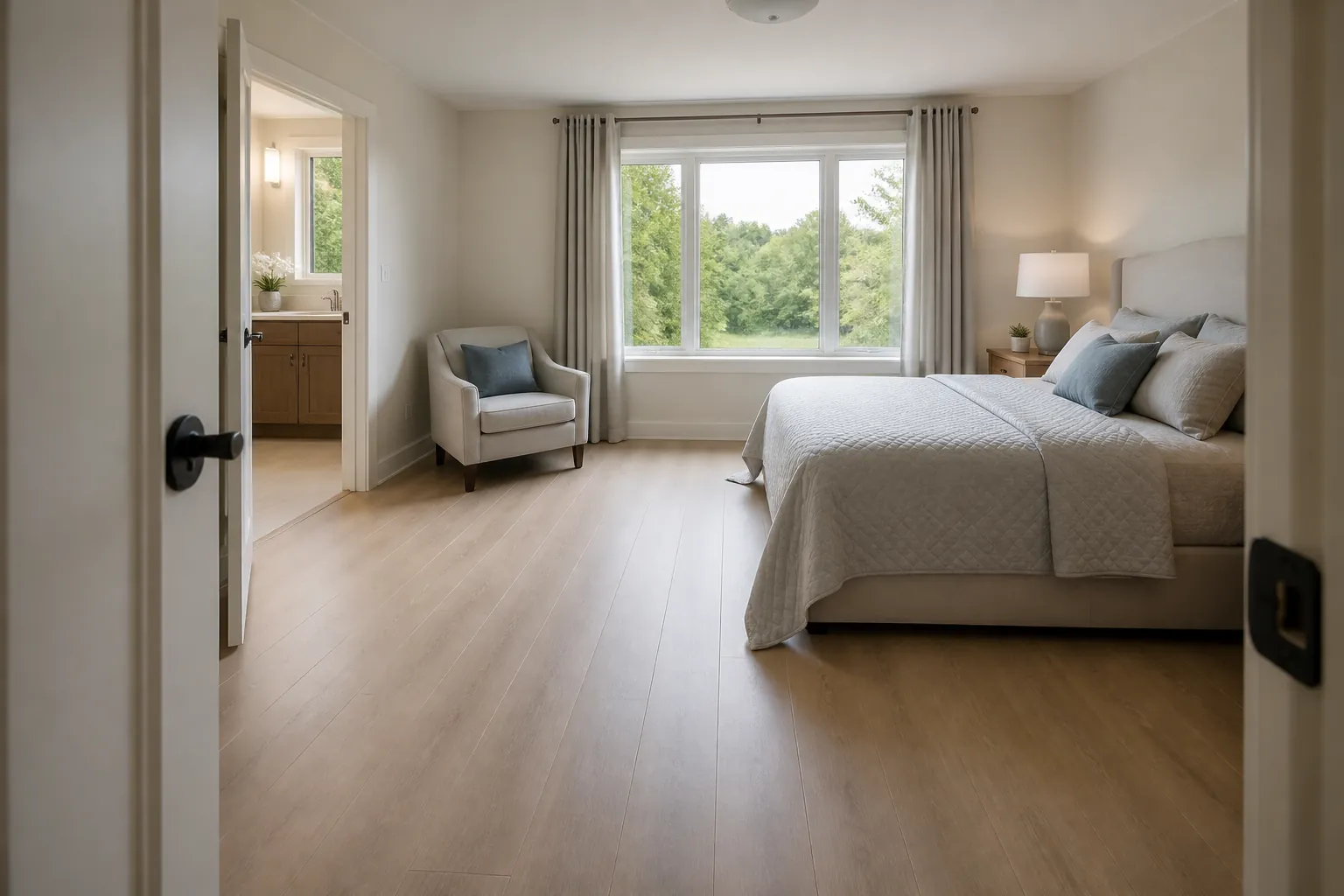
Walk the route before choosing the room. Open the door the way it will be opened during the night. Check whether a walker can turn beside the bed. Look for curled rug edges, footstools, baskets, oxygen tubing, pet bowls, and charging cords. If a portable air cleaner will sit on the floor, place it where it can move air freely without becoming another obstacle.
A practical room choice usually has these traits:
- A door that closes fully.
- Few or no obvious leaks to the outdoors.
- Enough floor space for the older adult to rest, stand, and use a walker or cane if needed.
- A nearby or attached bathroom.
- A clear path from the usual daytime chair to the room.
- Enough outlets for the air cleaner, phone charger, lamp, and medical devices without running cords across the walking path.
Seal the room without trapping the person
Once the room is chosen, make it a smaller target for smoke. Close windows and doors. Put a rolled towel at the base of the door. Close fireplace dampers if the room or nearby area has a fireplace, while making sure the older adult can still leave the room quickly if needed.[1]
Do this before the air gets bad. A tired caregiver trying to tape plastic, move furniture, and find medication while an older adult is already uncomfortable will miss things. The pre-smoke version is calmer: shut the window, check the latch, roll the towel, clear the threshold, and confirm the door still opens easily from inside.
Sealing is not the same as blocking exits. Do not wedge a door so tightly that the person cannot open it. Do not create a path that forces someone to step over towels, cords, or boxes. The room should be tighter against smoke and still simple to leave.
Filtration is where many clean air rooms succeed or fail
A portable air cleaner should match the room. Follow the manufacturer’s square-footage rating for the unit, run it continuously on the highest fan speed, and do not use an ozone-generating air cleaner.[1] A small unit tucked in a large bedroom may be comforting to look at, but the setup depends on moving enough air through the filter for the actual room.
Place the air cleaner where air can circulate around it and where the older adult will not trip over it. The corner behind a chair may keep it out of sight, but it can also block airflow and create a cord problem. The middle of the walking route is worse. A good location usually has a nearby wall outlet, open space around the unit, and no cord crossing the route from bed to bathroom.
If the home uses central HVAC, filtration can also happen through the system, but only within the system’s limits. EPA guidance allows for a MERV 13 or higher filter if the HVAC system can handle the pressure drop; the system should be set to recirculate, and the outdoor intake damper should be closed.[3] This is a place to check the manual or ask an HVAC professional before wildfire season, not to force in the densest filter during an emergency and hope the system tolerates it.
The DIY box fan option has a narrow safe lane
A box fan with a furnace filter attached can be a practical backup when used carefully, but it is not a set-and-forget device. EPA and AirNow guidance limits this approach to a 2012-or-later box fan because older fans can pose an electrical or fire hazard, and the DIY setup should never be left unattended, including while people are sleeping.[1][3]
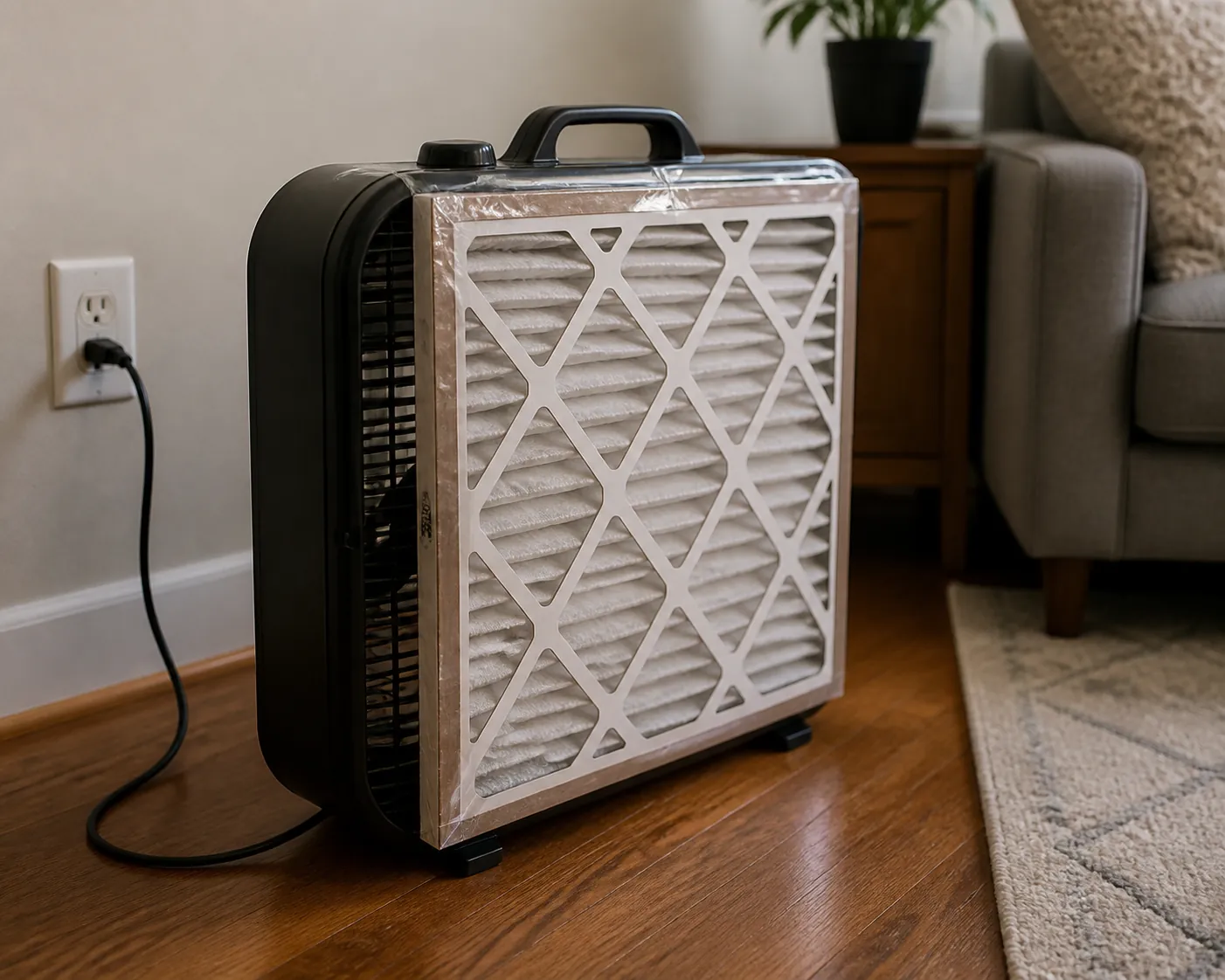
That unattended rule is the hard stop. If the older adult is likely to nap, forget the fan is running, or be alone for long stretches, a properly sized portable air cleaner is the safer plan. Improvisation is useful only when the person living with it can use it safely.
Cool the room without inviting smoke inside
A smoke refuge that overheats the person is not a refuge. The American Lung Association advises that window or central air conditioning can be used on recirculate, while whole-house fans and portable air conditioners with hoses to the outside should be avoided because they can pull smoky outdoor air indoors.[4]
Check the controls before smoke season. Many window units have a fresh-air vent or setting that is easy to overlook. Central systems may have settings that sound harmless but bring in outdoor air. The clean air room plan should name the exact setting to use, so no one is guessing while the house smells smoky.
Cooling also affects fall risk. If the room is too warm, an older adult may keep getting up to adjust fans, move to another chair, open a door, or look for water. Put water within reach, keep the phone charger in the room, and make the temperature plan simple enough to run overnight.
Do not add new particles indoors
During a smoke event, indoor habits matter. CDC and American Lung Association guidance says to avoid candles, incense, gas or propane stoves, wood stoves, frying, grilling, vacuuming, and smoking because these activities add particles indoors.[2][4]
This is why the supply plan cannot be an afterthought. If the only food in the house requires frying, boiling, or using a gas stove, the clean air room depends on someone leaving the refuge and making the indoor air worse. Stock food that can be eaten without cooking. Put snacks, water, medication, reading glasses, hearing-aid supplies, and phone chargers where the older adult can reach them without repeated trips.
Stock the room so staying put is realistic
CDC guidance for people with chronic conditions recommends keeping a 7–10 day supply of prescription medicines in a waterproof, childproof container and buying groceries that do not require cooking.[2] For an older adult’s clean air room, that preparation should be visible and reachable, not stored in a distant cabinet behind other emergency supplies.
- Prescription medicines for 7–10 days, stored as directed and kept in a waterproof, childproof container.
- No-cook groceries and easy snacks.
- Water within reach of the bed or chair.
- Phone charger and backup charging option if available.
- Flashlight or battery lamp positioned so it does not create a cord or trip hazard.
- N95 masks for unavoidable outdoor trips.
- A written list of medications, clinician contacts, and emergency contacts.
The mask point needs restraint. N95 masks are for unavoidable trips outside, not for making a smoky house acceptable. The American Lung Association notes that N95 or N100 respirators can be difficult for people with lung disease to use and advises wearing them only when going outside is unavoidable.[4] If masks are staged, also stage the judgment that they may not be tolerable for every older adult.
Know when the clean air room is no longer enough
A prepared room can reduce exposure, but it does not turn a medical problem into a home-maintenance problem. If an older adult has trouble breathing that does not improve, the household should treat the room’s protection as exceeded and seek outside help.[2]
That boundary belongs in the plan before smoke arrives. Write down who will call, where the medication list is, which door is safest to use, and how the person will leave without rushing through clutter. The clean air room is strongest as a plan-ahead protection: one room chosen carefully, tightened, filtered, cooled, cleared, and stocked before anyone has to depend on it.
References
- Create a Clean Room to Protect Indoor Air Quality During a Wildfire — AirNow.
- Wildfire Smoke and People with Chronic Conditions — Centers for Disease Control and Prevention.
- Research on DIY Air Cleaners to Reduce Wildfire Smoke Indoors — U.S. Environmental Protection Agency.
- Protecting Yourself from Wildfire Smoke — American Lung Association.
Related reading
Noticed something outdated or inaccurate on this page? Flag a correction. We review every report against CDC, NIA, and AARP HomeFit guidance before updating a page.
Part of the Fall Prevention section.