
STEADI: Intervene
Heat and Wildfire Smoke Safety Checklist for Seniors
When extreme heat and wildfire smoke arrive on the same day, the standard advice conflicts — seal the house against smoke, or open it up to cool down? This combined checklist gives seniors and their caregivers one set of daily rules based on whichever is worse, the CDC HeatRisk level or the AirNow AQI, so a home response protects against both hazards instead of trading one risk for the other.
The hard part is not knowing that heat is dangerous or that wildfire smoke is unhealthy. The hard part is the afternoon when the smoke guidance says to close the house, the heat guidance says to cool the house, and an older adult says they feel fine while the indoor temperature keeps climbing.
For a senior living at home, those two playbooks cannot run separately. Adults 65 and older are more vulnerable to heat because the body becomes less able to adjust to temperature changes, chronic conditions are more common, and medications can interfere with cooling; CDC also notes that heat causes more than 700 deaths in the United States each year. [1][2] When smoke joins the heat, the margin gets thinner: AARP’s reporting on older-adult wildfire smoke risk points to a CDC analysis in which emergency department visits ran 17% above average on days when AQI exceeded 101, and to a Circulation study in which heart-attack death risk nearly doubled during extreme heat plus high fine-particle pollution, with higher risk for older people. [3]
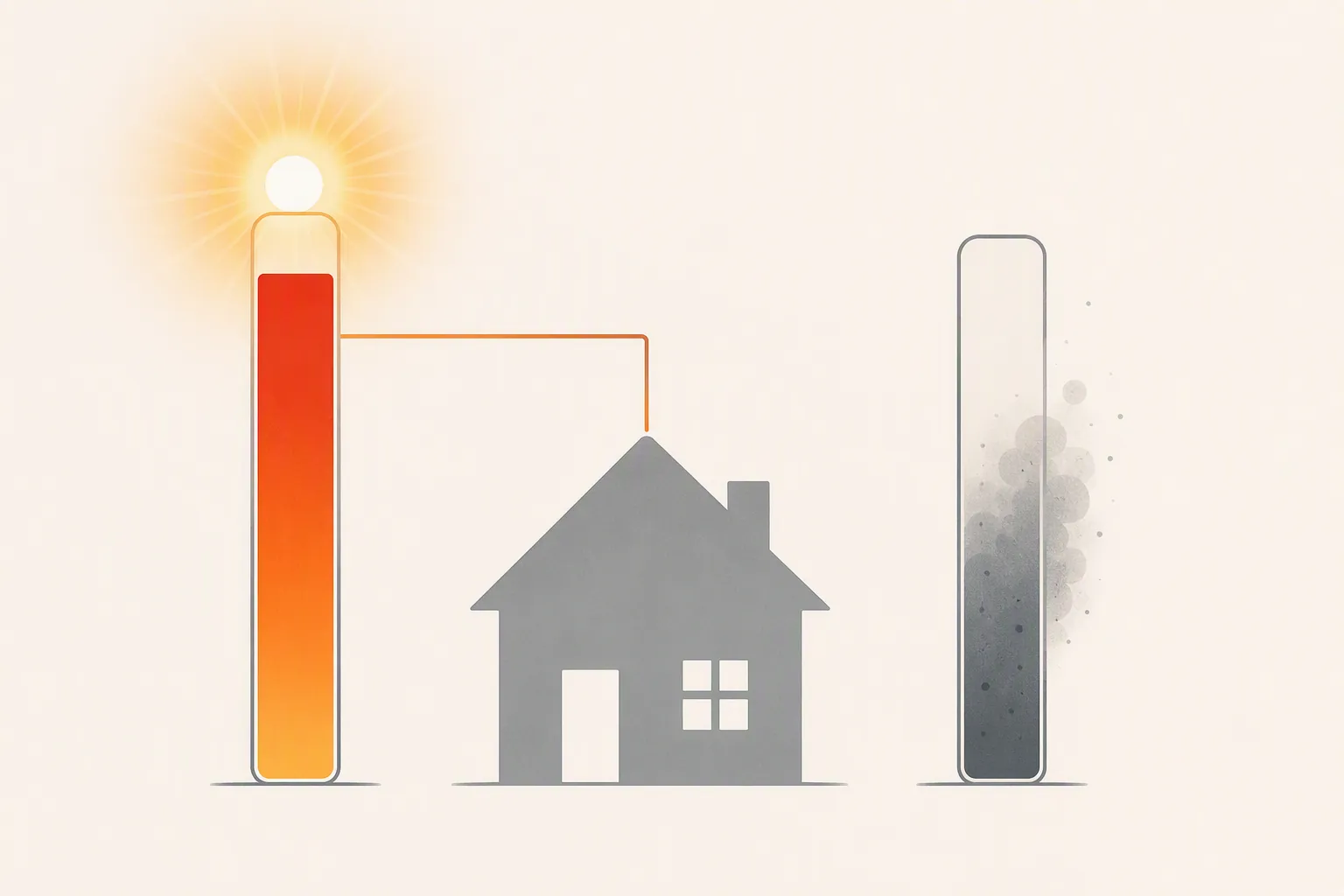
The useful rule is simple enough to use before breakfast: check the CDC HeatRisk level and the AirNow AQI for the senior’s exact location, then let the worse condition set the day’s plan. If one screen is low or moderate and the other is orange or worse, the household follows the stricter one.
The 9 a.m. rule: choose the stricter plan
Do this check early enough that you can still change the day: cancel errands, close up the house before smoke gets inside, start cooling before rooms overheat, or arrange a ride before everyone is tired. Waiting until the senior “feels bad” is a poor safety system, especially for someone on blood pressure medicine, a diuretic, or a medication that affects sweating or alertness.
| Morning readings | What controls the day | What the caregiver or senior does |
|---|---|---|
| HeatRisk is low or moderate, and AQI is green or yellow | Routine watch | Keep the clean air room ready, check indoor temperature, confirm medications and fluids, and plan a second check-in during the hotter part of the day. |
| HeatRisk is orange, red, or magenta while AQI is green or yellow | Heat controls | Cool the house early with air-conditioning if available, close blinds, avoid the hottest errands, and use a cooling center if the home cannot stay cool. Use the heat-only check-in script if you need a call plan. |
| AQI is orange or worse, including AQI 101+, while HeatRisk is low or moderate | Smoke controls | Keep windows and doors closed, run the clean air room, reduce indoor pollution, avoid outdoor exertion, and follow smoke precautions for sensitive groups. |
| HeatRisk is orange or worse and AQI is orange or worse | Both control | Do not solve heat by opening smoky windows. Use cooled, filtered indoor air: air-conditioning on recirculate where available, a portable HEPA cleaner in one closed room, and a plan to relocate if the home is hot, smoky, without power, or medically unsafe. |
| Evacuation order, power loss, worsening symptoms, or no safe indoor room | The home plan is no longer enough | Follow local evacuation instructions, go to a cooling or clean air center, or call 911 for emergency symptoms. Threshold charts do not outrank evacuation orders or urgent symptoms. |
For smoke-only days, use the deeper AQI precautions for older adults. For heat-only days, use the heat wave safety checklist for elderly parents. On mixed days, do not average the two. The worse threshold gets the first vote.
What to check before the day gets away from you
- CDC HeatRisk for the senior’s ZIP code or neighborhood, including whether the risk rises later in the day.
- AirNow AQI for the same location, not just the nearest big city.
- Indoor temperature in the room where the senior actually spends time and in the bedroom where they will sleep.
- Power status: whether air-conditioning, filtration, phone charging, medical equipment, and elevators are working.
- Symptoms since waking: dizziness, faintness, unusual fatigue, confusion, cough, wheezing, chest pressure, shortness of breath, nausea, or a new fall or near-fall.
- Medication changes: new diuretic dose, blood pressure medication change, sedating medication, anticholinergic medication, or any drug that has reduced appetite, thirst, sweating, balance, or alertness.
- Local instructions: evacuation orders, clean air centers, cooling centers, transit changes, and whether a neighbor or family member can physically check in.
The global numbers are useful only if they make this daily check more disciplined. WHO reports that heat-related mortality among people older than 65 rose by about 85% globally between 2000–2004 and 2017–2021. [4] That is not a prediction about one household in Oregon, Colorado, California, or New York on a particular Tuesday. It is a reason not to treat “they’ve always handled heat” as a safety assessment.
Make one room both cooler and cleaner
The house does not need to be perfect. It needs one room that can be kept cooler, cleaner, and easier to supervise than the rest of the home. That room is where the senior rests during the worst hours, takes medications, drinks fluids, charges a phone, and waits for a ride if the home plan fails.
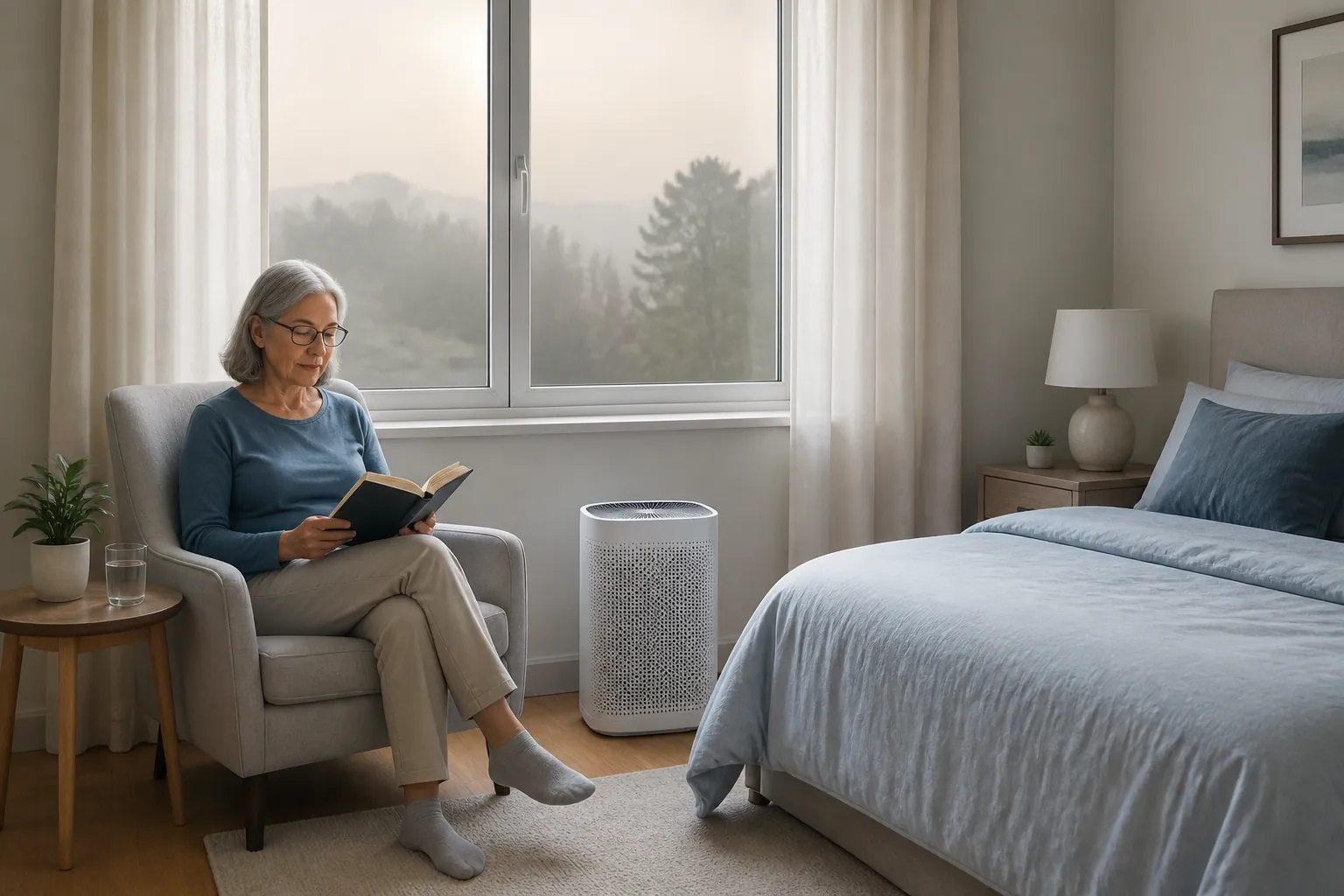
EPA’s clean room guidance points to a room with few windows and doors, kept closed as much as practical, with a portable air cleaner sized for the room and indoor pollution sources reduced. [5] CDC wildfire safety guidance also tells people to keep smoke out by closing windows and doors and using filtered air when possible. [6]
- Choose the room before smoke season. A bedroom or small living room is usually easier to filter than a large open kitchen-family room.
- Put a portable HEPA air cleaner in that room and run it before the room smells smoky. Do not wait until the older adult starts coughing.
- Keep windows and exterior doors closed when AQI is high. If the room has obvious gaps, address them before the season rather than improvising during a warning.
- Avoid adding indoor particles: no smoking, candles, incense, frying, wood burning, or unnecessary vacuuming during smoky periods.
- Keep a chair with arms, a clear path to the bathroom, water, medications, a phone charger, glasses, hearing aids, and a flashlight in or near the room.
For the whole home, EPA advises improving filtration where possible, including using a MERV 13 filter or the highest-rated filter the HVAC system can handle, and running central air or HVAC systems with the fresh-air intake closed or on recirculate where that option exists. [7] If the system cannot handle a high-MERV filter, forcing one in can reduce airflow; the safe choice is the highest filter the system can use without strain.
Older adults and people with heart or lung disease are among the groups CDC identifies as needing special protection from wildfire smoke. [8] That is why the clean air room is not a luxury item for mixed heat-and-smoke days. It is the place where a caregiver can stop juggling two bad options: the windows stay closed against smoke, and cooling comes from air-conditioning or a safer relocation plan rather than smoky outdoor air.
The fan limit matters
A fan is not a cooling plan for a high-risk older adult in a hot room. WHO says electric fans can provide relief when temperatures are below 104°F/40°C, while CDC warns not to rely on a fan as the main cooling source during extreme heat. [4][2] Those are source-specific cautions, and both matter.
Use a fan as a comfort tool only when the room itself is not dangerously hot and the person is able to drink fluids, sweat, and move safely. Do not point a fan at an older adult in a sealed, overheating room and treat that as protection. If the room keeps heating up and air-conditioning is not working, the next step is a cooled public place, a relative’s filtered and cooled home, or a cooling center—not a stronger fan.
Medication risk is where heat becomes a fall problem
Wildfire smoke should not be blamed for falls in a vague way. The fall connection on mixed heat-and-smoke days is more practical: heat, dehydration, low blood pressure, fainting, fatigue, breathing trouble, and medication effects can make standing, walking, and decision-making less safe.
CDC’s clinician guidance on heat and medications flags several drug groups and combinations that can raise heat danger. Diuretics can contribute to volume depletion and electrolyte problems; anticholinergics can impair sweating and thermoregulation; psychotropics can affect alertness, sweating, or heat response; and ACE inhibitor or ARB combinations with diuretics can increase the risk of hypotension, reduced cardiac output, fainting, and falls during heat exposure. [9]
This does not mean a caregiver should stop a medication during a heat warning. It means the medication list should be reviewed before the season with a clinician or pharmacist, especially after dose changes. For drug-class depth, use which medications raise heatwave danger and preventing heat stroke in seniors starts with medications.
Smoke planning also has a medication piece. The American Lung Association advises people to have enough medication and to keep rescue medications available during wildfire conditions. [10] For a senior with asthma, COPD, heart disease, or another chronic condition, the clean air room should include the current medication list, rescue inhaler if prescribed, pharmacy phone number, and enough charged phone access to call for help.
Run the mixed-hazard day in shifts
A combined heat-and-smoke day is easier to manage if nobody has to invent the plan at 3 p.m. The day should have a morning setup, a midday reality check, an evening sleep plan, and a clear person responsible for each check.
Morning: close, cool, filter, assign
- Check HeatRisk, AQI, indoor temperature, and local orders.
- If smoke is expected, close windows before the smoke arrives, not after the room smells smoky.
- Start cooling early if heat is expected. It is harder to recover a room that has been allowed to overheat all afternoon.
- Run the portable HEPA cleaner in the clean air room.
- Set one check-in time for the hottest part of the day and one for evening. If you need exact wording for calls, use the heat wave caregiver check-in script.
Midday: believe the room, not just the reassurance
A senior saying “I’m fine” is worth hearing, but it is not the whole assessment. Check whether the room is still comfortable, whether the person has urinated normally, whether walking looks steady, whether speech and thinking are normal, and whether breathing has changed. NIA describes heat syncope as sudden dizziness that can happen during activity in hot weather, and heat-related illness warning signs include symptoms such as dizziness, confusion, fainting, nausea, and headache. [11]
This is also the point to reduce fall exposure. Move needed items within reach, clear cords and filter placement from walking paths, use chairs with arms, keep bathroom routes lit, and avoid showering or outdoor errands during the hottest, smokiest part of the day. The goal is not to wrap the person in restrictions. It is to remove the predictable ways a hot, tired, mildly dehydrated person gets hurt.
Evening: make sleep part of the safety plan
Do not stop checking just because the sun is lower. Smoke can worsen overnight, indoor heat can persist, and poor sleep makes the next day’s balance and judgment worse. Before bed, confirm the clean air room can still be used, the phone is charged, the path to the bathroom is clear, and the morning’s ride or check-in is already arranged if heat or smoke is expected to continue.
For room-by-room adjustments—bedroom, bathroom, kitchen, and living room—use extreme heat home safety tips for older adults. Keep this page for the mixed-hazard decision: when heat and smoke disagree, follow the stricter threshold and keep the senior in cooled, filtered air.
When staying home is no longer the safe choice
There is a point where a tidy checklist can become dangerous if it keeps everyone trying to make an unsafe home work. Leaving earlier is usually easier than leaving after symptoms start, after power has failed, or after the person is weak enough to need lifting.
Go to a cooling center, clean air center, or safer home when
- The home cannot stay cool without opening smoky windows.
- Air-conditioning fails, power is out, or the clean air room cannot be filtered.
- The senior lives alone and cannot reliably answer calls, manage fluids, or report symptoms.
- A clinician, local health department, utility, or emergency manager advises relocation.
- There is an evacuation warning or order. Do not let the clean air room become a reason to delay official instructions.
For the more urgent sheltering and evacuation sequence, including go-bag thinking, use wildfire safety for older adults during a heat dome or how seniors can stay safe through a heat dome. This checklist is for routine seasonal mixed days; evacuation orders move the household into a different plan.
Call 911 for emergency symptoms
- Confusion, loss of consciousness, fainting, collapse, or a sudden inability to stand or walk safely.
- Very high concern for heat stroke: hot skin, severe confusion, fainting, or symptoms that do not improve after moving to a cooler place.
- Chest pain, severe shortness of breath, blue lips, or breathing symptoms that are worsening despite prescribed rescue medication.
- Repeated vomiting, inability to keep fluids down, or signs of severe dehydration.
- A fall with head injury, new weakness, new confusion, or inability to get up.
Use heat exhaustion or heat stroke in older adults for symptom triage detail, but do not use an article to delay emergency care when symptoms are severe or worsening.
The seasonal routine
A workable heat and wildfire smoke safety checklist for seniors is not a stack of separate printouts. It is a routine the household can repeat without arguing over which hazard “counts” today.
- Before the season: set up the clean air room, buy or service the portable HEPA cleaner, confirm HVAC filtration, learn the recirculate or outdoor-air damper settings, review medications, and list cooling centers, clean air centers, neighbors, and rides.
- Each morning: check CDC HeatRisk, AirNow AQI, indoor temperature, power status, symptoms, medications, and local orders.
- If heat is worse: cool early and do not rely on a fan as the main cooling source.
- If smoke is worse: close the house, run filtration, reduce indoor particles, and keep activity low.
- If both are high: keep the senior in cooled, filtered air. Do not open smoky windows to solve heat.
- If the home cannot provide cooled, filtered air—or if power, evacuation orders, or symptoms change—leave for a safer place or call 911.
That is the practical endpoint: one daily threshold check, one prepared room, one medication-aware fall-risk check, and one escalation path when the house stops being safe.
References
- Heat and Older Adults (Aged 65+), CDC
- Protect Yourself From the Dangers of Extreme Heat, CDC
- Wildfire Smoke Health Risks for Older Adults, AARP
- Climate change: Heat and health, World Health Organization
- Create a Clean Room to Protect Indoor Air Quality During a Wildfire, EPA
- How to Stay Safe During a Wildfire, CDC
- Wildfires and Indoor Air Quality, EPA
- Risk Factors for Wildfire Smoke, CDC
- Heat and Medications – Guidance for Clinicians, CDC
- Wildfires, American Lung Association
- Hot Weather Safety for Older Adults, National Institute on Aging
Related reading
Noticed something outdated or inaccurate on this page? Flag a correction. We review every report against CDC, NIA, and AARP HomeFit guidance before updating a page.
Part of the Fall Prevention section.