
Code Purple Air Quality Precautions for Older Adults at Home
Learn what a Code Purple air quality alert means for an older adult's fall risk and how to take immediate room-by-room action to prevent dizziness, fatigue, and balance loss. This guide provides a fall-prevention-centered plan with specific steps for each AQI level, including indoor air cleaning, safe activity alternatives, and symptom monitoring.
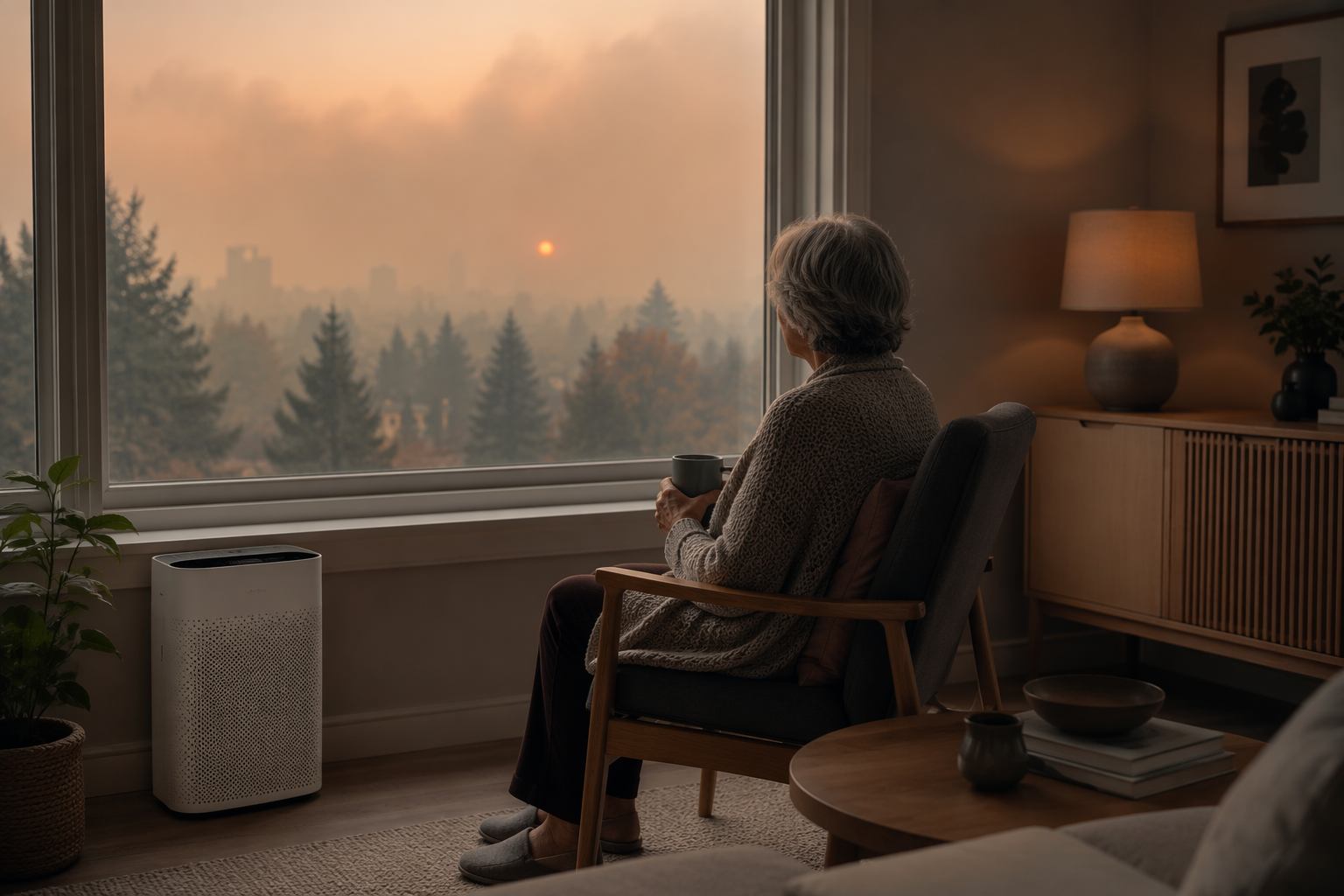
A Code Purple air quality alert means the air has reached the “very unhealthy” range, with an AQI of 201–300. At that level, the advice for older adults is not “take it easy outside.” It is to avoid outdoor physical activity, because the air is unhealthy enough to affect everyone and can hit older lungs, hearts, and energy reserves harder and faster.[1]
For a caregiver, the danger is not only coughing or wheezing. The practical danger is the chain that starts with smoke exposure and ends in the hallway, the bathroom, or next to the bed: shortness of breath, dizziness, fatigue, slower thinking, a rushed transfer, one missed grab bar, one foot catching a rug. Code Purple is a breathing-risk day, but inside a real home it is also a fall-risk day.
What Code Purple Changes Right Now
The first move is to stop treating the day like a normal stay-home day. Bring the older adult indoors, close windows and doors, and cancel outdoor walking, yard work, errands that can wait, and any “quick” trip that requires exertion. If a medical appointment cannot be delayed, plan the route as if stamina is lower than usual: door-to-car, car-to-door, no wandering through parking lots, no standing outside to talk.
Then make the indoor environment easier to move through. Poor air can make an older adult feel off before they admit it. A parent may say they are fine while walking more slowly, leaning on furniture, forgetting where they put a cane, or getting irritated when asked to sit. Those are not character flaws. They are the exact conditions under which falls happen.
| AQI color | What it means for an older adult at home | Caregiver response |
|---|---|---|
| Green | Usual conditions | Keep normal fall-prevention routines in place |
| Yellow | Some sensitive adults may notice symptoms | Watch breathing and energy during longer activity |
| Orange | Older adults are more likely to be affected | Reduce outdoor exertion and prepare indoor air tools |
| Red | Unhealthy air can affect many people | Move activity indoors and shorten errands |
| Purple | Very unhealthy air; outdoor physical activity should stop | Use a clean-air room, reduce indoor particles, and treat dizziness or fatigue as fall warnings |
| Maroon | Hazardous air | Stay indoors, minimize exposure, and follow local emergency and medical guidance |
The important shift at Code Purple is that the home becomes part of the care plan. It is not enough to close the front door and hope the air inside is automatically safe. Smoke particles can enter through leaks, doors, windows, ventilation systems, and repeated trips in and out. The goal is to reduce exposure and reduce the number of risky movements the older adult has to make while their balance and judgment may be worse than usual.
Why Bad Air Turns Into Fall Risk
Fine particle pollution from smoke is small enough to affect breathing and strain the body. During smoke events, public health agencies warn people to watch for symptoms such as coughing, wheezing, chest tightness, shortness of breath, dizziness, headache, and unusual fatigue.[1][2] For an older adult, those symptoms are not just respiratory complaints. They change how someone stands up, walks, turns, showers, and decides whether they need help.
Dizziness changes balance. Fatigue shortens steps and makes an older adult reach for walls or furniture. Shortness of breath can make someone hurry toward a chair or bathroom instead of moving deliberately. Cognitive fog can turn a familiar transfer into a clumsy one: standing before the walker is in place, forgetting to lock a rollator, stepping into the tub without pausing.
That is the hidden part of a Code Purple alert. The alert is about air, but the consequence may be a fall after lunch, a stumble on the way to the toilet, or a collapse of confidence after a near-miss. If the older adult already has COPD, asthma, heart disease, diabetes, limited mobility, or early cognitive changes, the margin for error is thinner. A small drop in energy or attention can matter.
This is also where ordinary fall prevention still matters. Clear paths, steady footwear, good lighting, grab bars, and a walker within reach are not separate from air-quality precautions; they are what make “stay indoors” safer. If the house has not been checked recently, use a room-by-room fall prevention pass like the CDC STEADI home fall prevention checklist as the practical companion to the air alert.
Set Up One Clean-Air Zone First
Before rearranging the whole house, choose one room where the older adult can spend most of the day and recover between necessary movements. The best clean-air zone is usually a bedroom or living room with a door, few exterior leaks, enough space for a chair or bed, medications nearby, water within reach, and a clear path to the bathroom.
- Close windows and exterior doors, and avoid repeated door opening.
- Run a portable HEPA air cleaner if available, sized appropriately for the room.
- Keep the older adult’s cane, walker, glasses, hearing aids, phone, water, and medications inside or just beside the zone.
- Use a stable chair with arms, not a low soft couch that makes standing harder.
- Do not add candles, incense, aerosols, frying smoke, or vacuum dust to the room.
A clean-air zone does not have to be perfect to be useful. It has to be calmer, cleaner, and easier to supervise than the rest of the house. If buying equipment, focus on plain fit-for-purpose choices rather than gadgets: true HEPA filtration, room size, safe cord placement, noise tolerance, and whether the older adult will actually keep it running. The same practical standard applies to other home safety products for seniors: the device has to make the room safer, not create another obstacle.
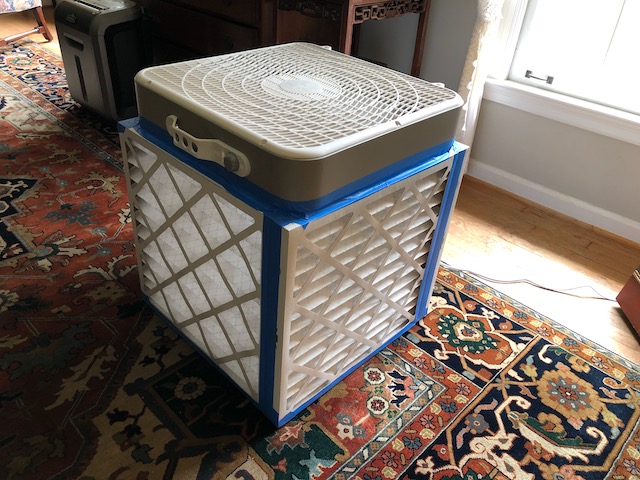
A DIY box-fan filter can be a useful low-cost backup when built and used safely, but it belongs where it will not be kicked, tripped over, or blocked by furniture. Keep cords out of walking paths. Do not place a fan-filter setup where an older adult has to step around it on the way to the bathroom.
Room-by-Room Code Purple Precautions
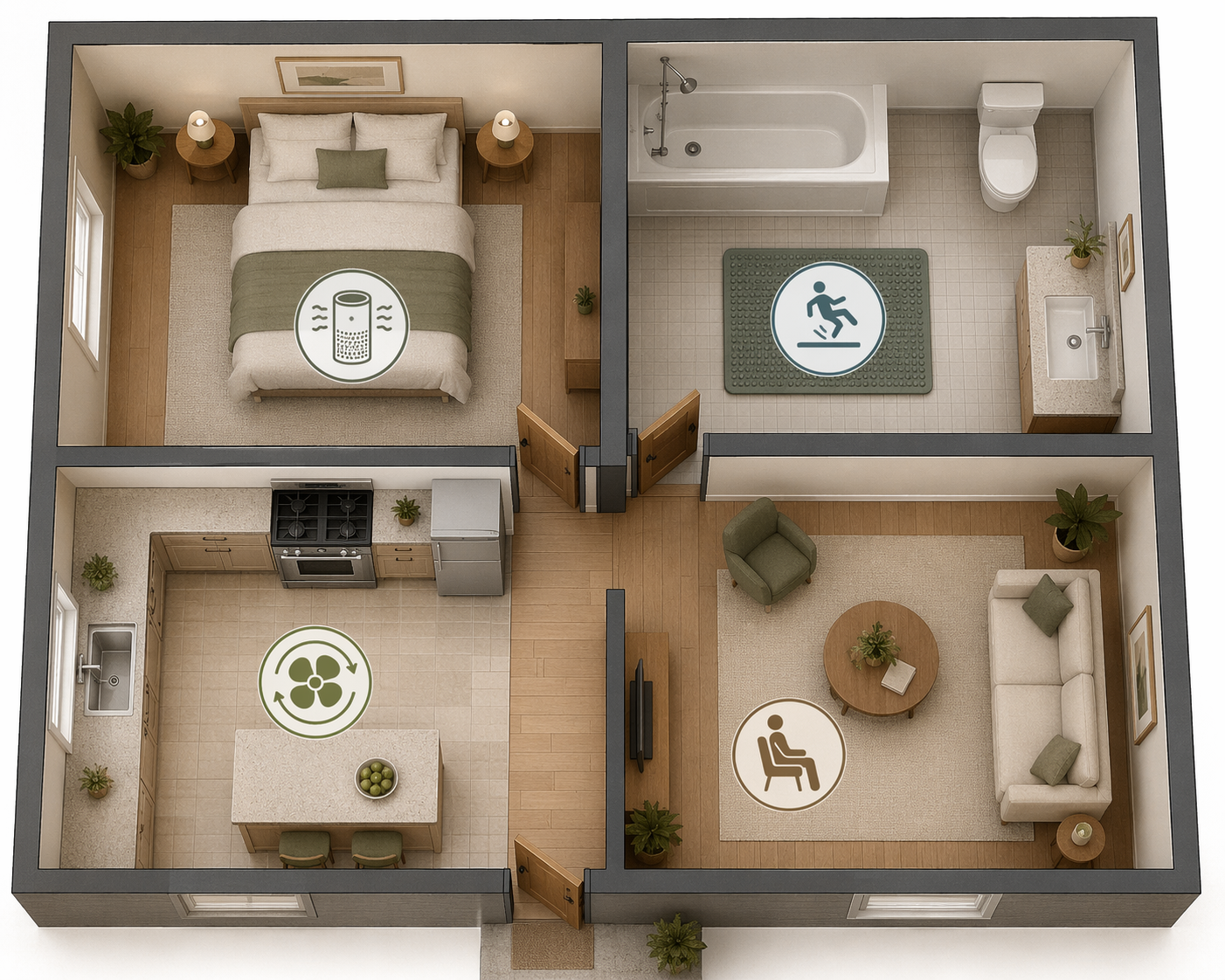
The house does not become equally risky all at once. The bathroom has slippery surfaces. The kitchen creates particles. The bedroom has nighttime transfers. The living room is where people sit too long, stand too fast, and insist they can get their own tea. Each room needs a slightly different response.
Bedroom: Make Rest Safer Than Pacing
The bedroom is often the best clean-air zone because it already supports rest. That only works if the room is set up for safe transfers. Put the phone, water, tissues, medications, inhaler if prescribed, glasses, and mobility aid within reach. Clear the path from bed to door and from bed to bathroom. If the older adult uses oxygen or other prescribed equipment, keep tubing routed so it does not cross the walking path.
The most important bedroom rule during Code Purple is slow position changes. Sit at the edge of the bed before standing. Pause after standing. Start walking only after breathing and balance feel steady. If the older adult is more tired than usual, nighttime bathroom trips deserve extra attention: a nightlight, footwear, the walker at the same side of the bed every time, and no loose blankets trailing to the floor.
Bathroom: Treat Dizziness as a Slip Hazard
The bathroom is where Code Purple symptoms become dangerous quickly. Steam, standing, bending, turning, and wet flooring already challenge balance. Add shortness of breath or lightheadedness, and a normal shower can become too much work.
- Postpone long hot showers; use a shorter warm shower or a seated wash-up if symptoms are present.
- Use a shower chair if one is available and the older adult is unsteady.
- Keep the bath mat flat, dry, and slip-resistant.
- Do not let the older adult lock the bathroom door if they are dizzy, confused, or unusually weak.
- Have them sit before grooming tasks that require raised arms, bending, or prolonged standing.
If a parent says, “I just need a quick shower,” listen for the effort behind the sentence. A quick shower still requires standing, turning, reaching, and stepping over a threshold. On a very unhealthy air day, conserving effort is not laziness. It is fall prevention.
Kitchen: Avoid Adding More Particles Indoors
The kitchen can quietly undo the clean-air plan. Frying, broiling, burning food, using scented sprays, and other particle-producing activities can worsen indoor air during an already bad outdoor air event. Public health guidance commonly recommends avoiding indoor particle sources such as smoking, burning candles, using fireplaces, vacuuming, and frying foods when air quality is poor.[2]
Use low-smoke meals: microwave foods, slow cooker meals, cold plates, reheated soup, sandwiches, or anything that does not require frying. Keep the older adult seated while food is prepared if they are symptomatic. If they insist on helping, give them a seated task at a table instead of having them stand at the stove.
Do not turn Code Purple into a deep-cleaning day. Vacuuming and dusting can stir particles into the air. If something must be cleaned for safety, use a damp cloth and keep the walking path dry. A spotless house is not the priority when the person in it is breathing harder and moving worse.
Living Room and Hallways: Shorten the Distance Between Rest and Help
The living room is where “I’m fine” often gets tested. Set up a firm chair with arms, a side table, water, phone, tissues, remote, and any needed mobility aid. Remove throw rugs or tape down edges. Move footstools, pet toys, cords, and baskets out of the route to the bathroom and bedroom.
Hallways should be boring on a Code Purple day: bright, clear, and predictable. Turn lights on earlier than usual if haze darkens the house. If the older adult has to move from room to room, make it intentional. Stand. Pause. Breathe. Walk with the cane or walker. Sit before fatigue catches up.
What to Pause Until the Alert Improves
The hard part is that some “healthy” routines are wrong for the day. A walk around the block may usually be good. During Code Purple, it is unnecessary exposure. A big cleaning session may usually help the house feel safer. During Code Purple, it can stir up particles and exhaust the person you are trying to protect.
- Pause outdoor exercise, gardening, sweeping, porch sitting, and nonessential errands.
- Postpone vacuuming, fireplace use, candle burning, incense, aerosol sprays, and frying.
- Avoid long hot showers, strenuous chores, and stairs unless necessary.
- Delay rearranging furniture or lifting storage bins; this is not the day for projects.
- Keep visitors brief if opening doors repeatedly would bring more smoke indoors.
If the older adult must go outside, use the shortest route and the least exertion. A cloth face covering or loose surgical mask should not be treated as smoke protection. For fine particles from wildfire smoke, the more appropriate choice is a well-fitting respirator such as a NIOSH-approved N95 or P100, or a comparable high-filtration mask such as a KN95 or KF94 when that is what is available. Fit matters: gaps defeat the point.
Do Not Let “Stay Indoors” Become “Do Not Move”
Avoiding outdoor exertion is not the same as spending the whole day motionless. Too much sitting can leave an older adult stiffer, weaker, and more unsteady by evening. The safer replacement is short, low-exertion indoor movement in clean air, with a chair or counter nearby and no rush.
Good options are simple: ankle pumps while seated, gentle marching in place beside a counter, sit-to-stand practice only if it is already safe for that person, slow hallway walks with a walker, or range-of-motion movements from a chair. Keep the session short enough that breathing stays comfortable. If dizziness, chest tightness, severe fatigue, or unusual confusion appears, stop.
For families already working on strength and balance, adapt the routine rather than abandoning it. The goal is the same as any good mobility plan at home: preserve safe movement without asking the body to fight bad air at the same time.
Medication, Hydration, and Chronic Conditions
Code Purple is a good time to check the basics that become emergencies when missed. Is the older adult drinking enough? Did they take breathing, heart, blood pressure, or diabetes medications as prescribed? Are rescue inhalers or other clinician-prescribed treatments easy to reach? Are they eating enough to avoid weakness?
Do not change medications because of an air alert unless a clinician has told you to. The caregiver’s job is to notice whether symptoms are breaking through the usual routine: more wheezing than normal, swelling, chest discomfort, unusual sleepiness, blood sugar problems if monitored, or confusion that is new or clearly worse.
For an older adult with dementia or early cognitive change, the plan needs more supervision, not more explanation. They may forget why windows are closed, try to go outside from habit, or misread dizziness as a need to “walk it off.” Keep doors secure as appropriate, keep the clean-air room comfortable, and use familiar routines. If wandering is already a concern, a room-by-room safety approach like a dementia wandering home safety audit becomes even more important during smoke events.
Symptoms to Watch, and When to Escalate
Symptom monitoring should be plain enough to use while dinner is late and the air purifier is humming. Check breathing, balance, alertness, and energy several times during the day. Ask less, observe more. Some older adults underreport symptoms because they do not want to be fussed over.
| Watch for | Why it matters for falls | What to do |
|---|---|---|
| Dizziness or lightheadedness | Standing and turning become less reliable | Have them sit, hydrate if appropriate, and pause walking until steady |
| Unusual fatigue | Steps shorten and transfers get sloppy | Reduce activity and keep essentials within reach |
| Shortness of breath | They may hurry, panic, or abandon safe technique | Move to the clean-air zone and follow their medical action plan if they have one |
| Coughing, wheezing, or chest tightness | Breathing strain can weaken balance and stamina | Call a clinician if symptoms are more than mild, worsening, or unusual for them |
| New confusion or mental slowing | They may forget walker use, door safety, or transfer steps | Increase supervision and seek medical guidance if it is new or concerning |
Seek urgent medical help if there is severe trouble breathing, chest pain, fainting, blue lips or face, sudden severe weakness, signs of stroke, or confusion that is abrupt and alarming. Call the older adult’s clinician for worsening cough, wheeze, dizziness, headache, fatigue, or breathing symptoms that do not improve after moving to cleaner indoor air, especially if they have COPD, asthma, heart disease, diabetes, or frailty.
The best Code Purple air quality precautions for older adults are not vague. Create one clean-air zone. Stop outdoor exertion. Avoid indoor particle sources. Make the bedroom, bathroom, kitchen, and hallways easier to move through. Keep safe indoor movement brief and deliberate. Watch symptoms as fall warnings, not just breathing complaints. Code Purple is not merely an indoors day; it is a balance-risk day, and the response should protect breathing and movement at the same time.
References
- Air Quality and Your Health, DC Health.
- Protecting Yourself From Poor Air Quality, National Council on Aging.
Related reading
Noticed something outdated or inaccurate on this page? Flag a correction. We review every report against CDC, NIA, and AARP HomeFit guidance before updating a page.
Part of the Fall Prevention section.