
Evidence-Based Fall Prevention Programs: A Caregiver's Guide to Choosing Senior Health Services That Actually Work
Many family caregivers rely on generic fall-prevention tips and checklists, but structured evidence-based programs like Otago, CAPABLE, and Stepping On reduce falls by over 50% and save thousands per participant. This guide profiles and compares the leading programs to help you choose the right one for your parent's situation and navigate access through Medicare, AAAs, and community organizations.
Why 'Just Be Careful' Isn't Working
My father-in-law took a tumble in the kitchen last spring. No broken bones, just a bruised hip and a jolt of fear that lingered for weeks. The hospital discharge sheet said, "Be more careful. Remove throw rugs. Wear non-slip shoes." Sound advice, as far as it goes. But the numbers say something else entirely.
In 2021, falls among adults 65 and older caused over 38,000 deaths and brought nearly 3 million people to emergency departments. One in four older adults falls each year, and falling once doubles the risk of falling again. The total annual healthcare cost of non‑fatal falls: $80 billion, with Medicare picking up two‑thirds of that tab.
But here is the number that stopped me. Participants in evidence‑based fall prevention programs experienced a 52% reduction in falls and a 56% reduction in fall‑related injuries. That is not a small improvement; it is a complete shift in risk. Yet most family caregivers never hear about these programs. The default advice — a list of home hazards and a vague suggestion to "exercise more" — keeps us stuck in a world where 3 million people still go to the ER every year.
Generic advice might work for someone who is still steady. But if your parent has already fallen, or is frail, they need a structured, clinically tested program. The rest of this guide walks through exactly what is available, how to compare programs, and — most importantly — how to actually get your parent into one.
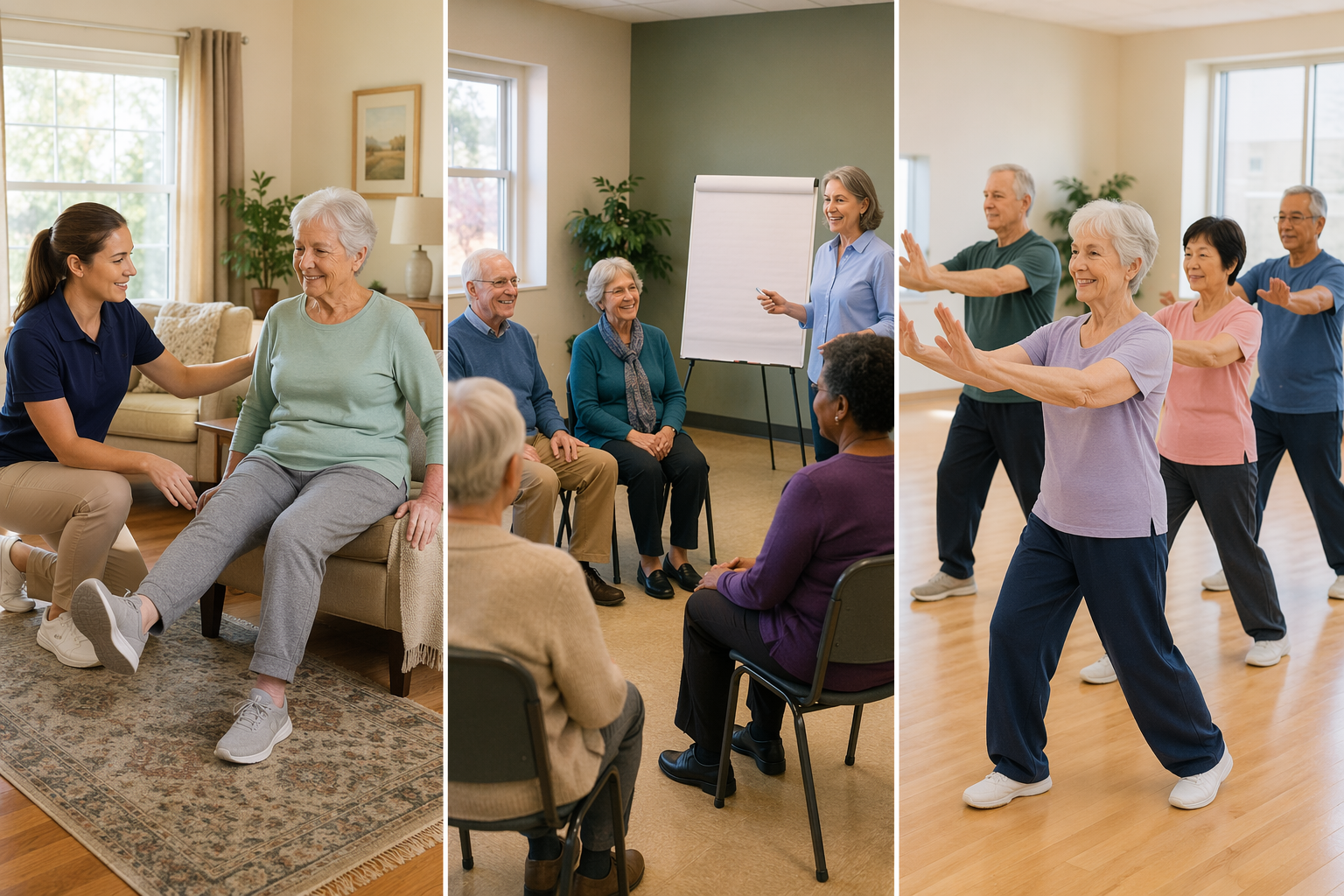
What Works: Seven Programs with Real Data
An evidence‑based program is not a generic senior aerobics class. It is a specific protocol tested in peer‑reviewed studies, with published outcomes, that has been replicated across multiple sites. The National Council on Aging (NCOA) maintains a list of programs that meet this bar, and the Healthy Aging Programs Integrated Database (HAPID) tracked over 275,000 participants between 2014 and 2024. These are not experiments. They have real‑world data behind them.
Below are the seven leading programs. I'll give you the essentials, then a comparison table. Pay attention to the delivery format, duration, and evidence strength — these determine whether a program is realistic for your parent.
The Otago Exercise Program is a series of 17 strength and balance exercises delivered by a physical therapist — typically at home, though it can be done in outpatient settings. It reduces falls by 35 to 40 percent for frail older adults. Medicare Part B covers the PT sessions when medically necessary, which makes this one of the most accessible home‑based options.
CAPABLE (Community Aging in Place – Advancing Better Living for Elders) is a five‑month program delivered entirely at home. An occupational therapist makes six visits, a nurse makes four visits, and a handyman spends up to a full day making safety modifications. It targets both the person's physical abilities and the home environment. CAPABLE is funded in some areas through Medicaid HCBS waivers and the Older Americans Act, but availability is limited.
Stepping On is a seven‑week group program held in community settings. It aims to break the cycle of inactivity after a fall — roughly 30% of older adults who fall lose confidence and start going out less, which actually increases risk. The group format helps rebuild confidence while learning practical strategies.
A Matter of Balance is an eight‑week structured group intervention focused on reducing the fear of falling and increasing activity levels. It is widely available through senior centers and Area Agencies on Aging.
Tai Chi for Arthritis and Falls Prevention (often offered as Tai Ji Quan: Moving for Better Balance or YMCA Moving for Better Balance) is one of the most studied exercise forms for fall prevention. Classes run twice a week for 12 to 24 weeks, depending on the variant. Tai Chi improves strength, flexibility, and balance — and the evidence is strong enough that many community centers offer it at low cost.
Stay Active and Independent for Life (SAIL) is a strength, balance, and fitness class held three times a week, one hour each. It is designed for adults 65 and older and is often found at senior centers or YMCAs.
Bingocize combines a bingo‑like game with exercise and health education over 10 weeks. It is a good option for older adults who might be reluctant to join a traditional exercise class — the game format lowers the barrier.
| Program | Format | Duration | Fall Reduction | Typical Cost | Medicare/Medicaid | How to Find |
|---|---|---|---|---|---|---|
| Otago Exercise Program | Home‑based PT | Ongoing (17 exercises) | 35–40% | Covered by Part B if prescribed | Medicare Part B (PT) | Ask your parent's doctor for a PT referral |
| CAPABLE | Home‑based (OT + nurse + handyman) | 5 months | Significant risk reduction | Free in funded areas; limited availability | Medicaid HCBS, OAA grants | Contact your local AAA or Medicaid office |
| Stepping On | Community group | 7 weeks | 30–50% (varies by study) | $0–$50 (grant‑funded) | Not covered by Original Medicare | Ask AAA or senior center |
| A Matter of Balance | Community group | 8 weeks | Fear reduction; fall reduction varies | $0–$40 | Not covered by Original Medicare | AAA, senior centers |
| Tai Chi for Arthritis / Moving for Better Balance | Community group | 12–24 weeks (2x/week) | 30–50% (multiple studies) | $0–$100 (often grant‑funded) | Some Medicare Advantage plans cover | YMCA, senior centers, parks & rec |
| SAIL | Community class | Ongoing (3x/week) | Improved strength & balance | $0–$60/month | Not covered by Medicare | Senior centers, YMCA |
| Bingocize | Community group | 10 weeks | Improved fitness & balance | $0–$20 | Not covered by Medicare | AAA, senior centers |
A few things jump out. Otago is the easiest to access because Medicare Part B covers the PT visits if the doctor prescribes it. CAPABLE is the most comprehensive but it's only available in about 30 states, and even then only in certain counties. The group programs are often free or cheap, but your parent has to be able to get to a senior center or YMCA. The table gives you the landscape. Now you need to narrow down.
Matching and Access: The Real Work
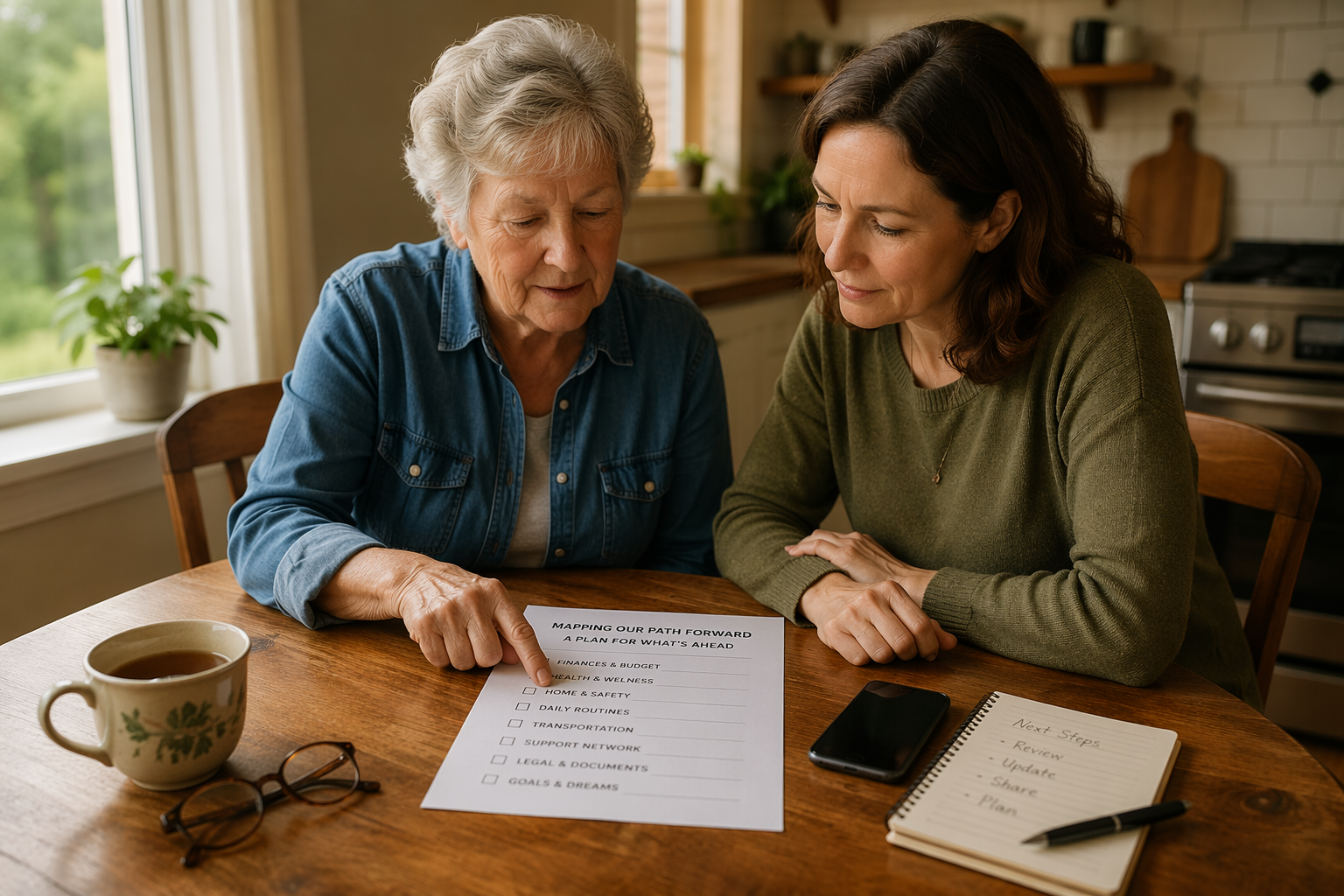
Here are the four factors that matter most when matching a program to your parent. Use them to filter the table above.
- Mobility level. If your parent can walk independently but is unsteady, a community group program like Stepping On or Tai Chi may work. If they need assistance walking or rarely leave the house, the home‑based Otago program is a better fit.
- Cognitive status. Programs that require following multi‑step instructions (Tai Chi, Stepping On) may be difficult for someone with moderate dementia. Otago and CAPABLE, delivered individually by a therapist, can be adapted more easily.
- Fall history. If this is the first fall and they are still active, a group program that rebuilds confidence (A Matter of Balance, Stepping On) may be sufficient. If they have fallen multiple times or were injured, start with a PT‑based program like Otago.
- Home environment. If the home itself has hazards (loose rugs, poor lighting, no grab bars), CAPABLE is designed to address both the person and the house. If the home is already safe, you can focus on exercise‑based programs.
Once you have narrowed to one or two programs, the real work begins: finding them and getting your parent enrolled. Here is the honest picture. Otago is the most straightforward — ask the primary care doctor for a physical therapy referral citing fall risk. Group programs are typically offered through Area Agencies on Aging, senior centers, YMCAs, and sometimes health systems. Many are grant‑funded and free or low‑cost, but availability depends on your region.
CAPABLE is the hardest. It requires a specific funding stream (Medicaid HCBS waivers or Older Americans Act grants) and is available in roughly 30 states, only in certain counties. If it is an option, it is transformative, but do not count on it unless you confirm it is offered where your parent lives.
Before You Enroll, Ask These Three Questions
- "Is this program a licensed evidence‑based program with fidelity monitoring?" Fidelity means the program follows the original protocol — not a watered‑down version. Programs on the NCOA list must maintain fidelity.
- "What is the total cost, and who pays?" Ask about out‑of‑pocket fees, whether Medicare or Medicaid covers it, and whether the program is grant‑funded (free) or requires a copay. If they say "free," ask who is funding it.
- "What outcomes do you track, and can I see your data?" Legitimate programs track falls, confidence levels, or functional improvements. If they cannot produce any outcome data, it may not be a true evidence‑based program.
To find programs, start with these steps:
- Call the local Area Agency on Aging: "Do you offer or know where I can find [program name]?"
- Check the NCOA evidence‑based programs page for a program locator.
- Ask the senior center or YMCA if they run Tai Chi, Stepping On, or SAIL.
- If your parent has Medicare Advantage, call the plan and ask about fall prevention benefits.
For a deeper look at how AAAs coordinate these services, read our article on senior health services coordination.
The $3,904 Reason to Act
Now for the numbers that make the financial case. The NCOA ROI report calculated that each participant in an evidence‑based program saved an average of $3,904 in healthcare costs. The total estimated savings across all participants exceeded $1.07 billion. And the return on every dollar invested in program delivery ranged from $8.36 to $38.04.
Compare that to the cost of a single fall. The average inpatient stay for a fall‑related injury runs $18,658. Emergency department visits average $1,112. Even a low‑cost program like a $40 Tai Chi class looks like a bargain.
Now What?
The evidence is clear: generic advice is not enough for someone truly at risk. These programs exist, they work, and they save money. The biggest barrier is simply that most caregivers do not know they exist.
Now you know. You have the map: the programs, the costs, the evidence, the questions to ask. The next step is yours. Call the Area Agency on Aging. Call your parent's doctor. Pick one program that fits and start the enrollment process this week.
The choice is between hoping for the best and using a tool that cuts falls by half.
Related reading
Noticed something outdated or inaccurate on this page? Flag a correction. We review every report against CDC, NIA, and AARP HomeFit guidance before updating a page.
Part of the Fall Prevention section.